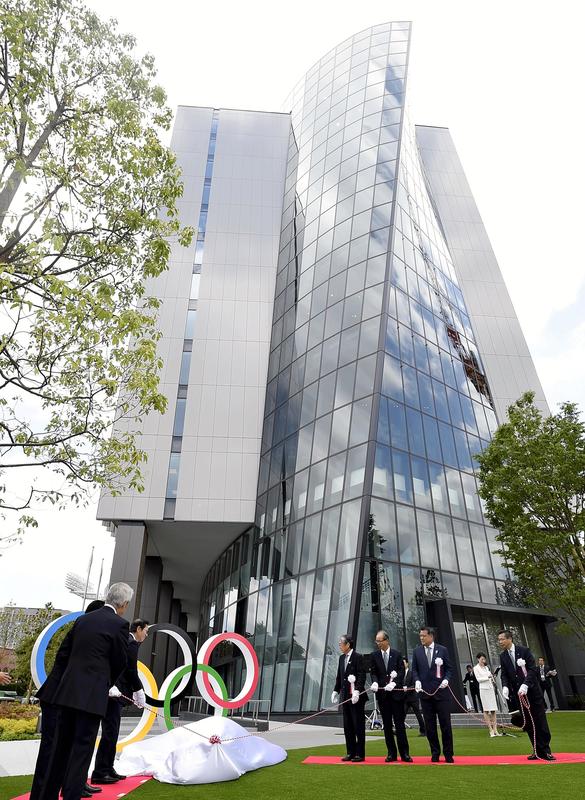
The ongoing outbreak of the new coronavirus continues to seriously impact the fiscal condition of sports associations in Japan.
"We can't suspend our consecutive measures to enhance athletes' performances, so we will continue as though we were under 'a wartime regime.' This is a life-or-death problem for sports associations like ours," said a senior member of a domestic Olympic sports association.
The association, with a relatively small operation scale, forecasts that its fiscal 2019 recurring revenue would be about 370 million yen.
Of that amount, roughly 200 million yen, more than half of the total, would be financed with subsidies and other types of aid from both the government and the Japanese Olympic Committee.
The association has continued to struggle, relying on such financial support.
Most of the association's expenditures go toward the training of its athletes, including sending them to overseas competitions, holding training camps, managing competitions in Japan and promotional activities.
The total expenditures are about 336 million yen, which account for roughly 90% of the association's total annual revenue.
Because other expenses, such as employee salaries and office rental costs, are also a part of the expenditures, the association forecasts its fiscal 2019 total balance to be a deficit of about 27 million yen.
Performance enhancement subsidies, which the government distributes to each of the sports associations, had seen a steady increase ahead of the Tokyo Olympic and Paralympic Games.
The total fiscal 2020 subsidy amount slightly increased from the previous year to 10.1 billion yen.
However, it remains uncertain just how the fiscal 2021 government budget will look due to the new coronavirus outbreak. As a result of this situation, sports associations have been unable to make clear enhancement programs for their respective athletes.
Sports associations voiced their concerns about a decrease in their revenues during an online conference with the JOC and the same has been done with the International Olympic Committee and the International Sports Federations.
According to sources, the amount of the dividends from the IOC to each international sports federation are primarily set for a four-year period, and the money for each individual year is distributed as an installment paid at a year-end.
Each international sports federation is ranked in accordance with its sport's viewer ratings during the Games and its total ticket sales. The amount of money allocated differs based on the ranking.
Many international sports federations invest their allocated funds in the European and U.S. stock markets. One federation's asset value has fallen by roughly 40% due to a worldwide deterioration of economic conditions.
One of the sources said: "Dividends received from the IOC are lifelines for small-scale international federations. If international federations collapse, negative impacts on domestic sports associations are unavoidable."
In the midst of the situation, there are sports associations that have made efforts to establish self-reliant organizational management by reducing reliance on subsidies.
The Japan Swimming Federation predicts that fiscal 2020 will see a recurring revenue of about 2.3 billion yen. Of this amount, subsidies and the like will come to about 500 million yen. The federation caps the percentage of the subsidies and the like at slightly more than 20% of the total. The federation's revenue sources are widely diversified, including registration fees for athletes and sports organizations, ticket sales from competitive events and subscriptions to its journal.
As the all-Japan swimming championship scheduled for early April has been canceled, it is feared that the current situation could adversely affect the swimming federation's revenue from sponsors. The federation's annual revenue from sponsors of such events amounts to about 700 million yen.
However, the swimming federation has shifted its focus to measures for overcoming the current hardship.
"As we are currently unable to predict future conditions, it cannot be helped," a senior official of the swimming federation said. "Rather, what is important for us is to flexibly consider measures to be taken in the latter half of this fiscal year."
Read more from The Japan News at https://japannews.yomiuri.co.jp/