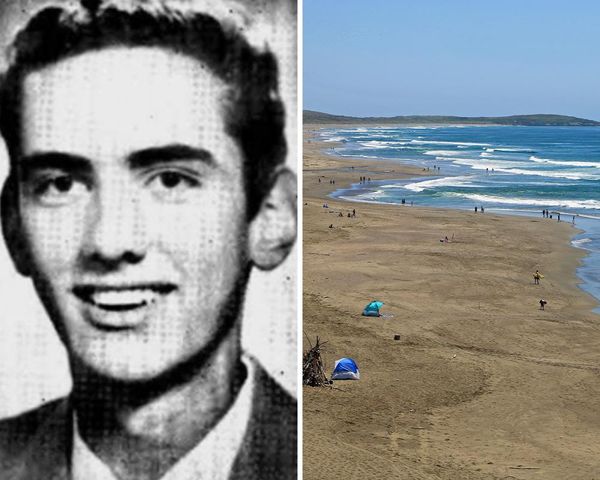
Thinking back on my boyhood in West Richland, Wash., I sometimes wonder how growing up during the Cold War shaped my worldview.
Probably not much.
My eyes were filled with wonder when I saw thousands of army troops covering our whole area in war games. But even though news accounts of the day spoke of our U-2 spy plane being shot down over Russia, the Cuban missile crisis, and Khrushchev pounding the UN podium with his shoe, it wasn't anything I worried about.
At Jason Lee Elementary on Van Giesen Street, our class would regularly file into the halls, giggling and delighted to leave our schoolwork and lie face down for nuclear bomb drills. Just miles from our family home, President John F. Kennedy himself made a speech at the groundbreaking ceremony for the 100N Nuclear reactor. Only two months later, he was cut down by an assassin's bullet.
Even though these were epic times filled with vast, dangerous, world-shaping events, I'm afraid most of it went right over my head. I was more interested in riding my bike, hiking Flat Top hill, fishing in the Yakima River, and chasing lizards in the desert.
That's the way it is with us busy human beings. We miss huge truths with incalculable implications for our contemporary world because we're preoccupied with a thousand other distractions. Winston Churchill once wrote: "Men occasionally stumble over the truth, but most of them pick themselves up and hurry off as if nothing had happened."
In these days of highly partisan media reports and "fake news" from seemingly countless platforms and outlets, it's hard to get a handle on the truth about the people and events in our daily world. And difficult as it may be to admit, we're probably not very careful with the truth we do possess. Who is really immune from stretching, exaggerating, embellishing, overstating or "coloring" the facts in our possession?
None of us, however, like being lied to. And unless our conscience has ceased functioning, we feel bad when we do lie. Our most treasured relational collateral is trust, and when we lose it, even once, the damage isn't easily or quickly repaired.
In an address at Yale University, President Kennedy said, "The great enemy of the truth is very often not the lie, deliberate, contrived and dishonest but the myth, persistent, persuasive and unrealistic."
Jesus never spoke the language of lies or myths. He spoke truth because he was and is Truth. Just before he left the planet, he clearly told his followers, "I am ... the truth" (John 14:6). After his arrest, standing before Pilate, the man who would either crucify him or release him, Jesus said that speaking truth was the very reason he had come into the world (John 18:37).
We are living in a time when it's tough to tell truth from lies, right from wrong, fact from fiction, and opinions from honest accounts. There are more shades of gray than I care to count.
As Christ followers, we should follow Jesus in speaking and living the truth in love (Ephesians 4:15). That is only accomplished in the place where we live and work, and among the people we rub shoulders with every day. Pastor Rick Renner suggests we gain perspective by asking ourselves this question: How would I want the truth spoken to me? Brutally? Harshly? Impatiently? Sarcastically? Kindly? Gently? Humbly?
Redemptive, healing truth ... the kind that's rooted in love ... only happens in the crucible of up-close human relationships. Whether we acknowledge it or not, we need the one who is both Truth and Love to accomplish it.
And that's the truth.