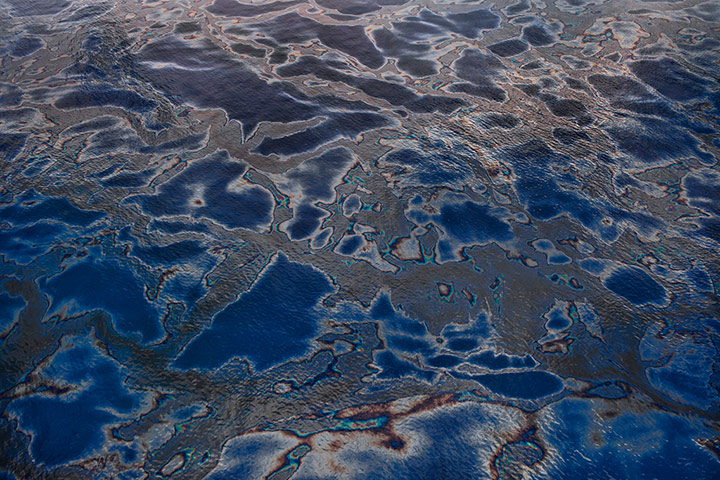
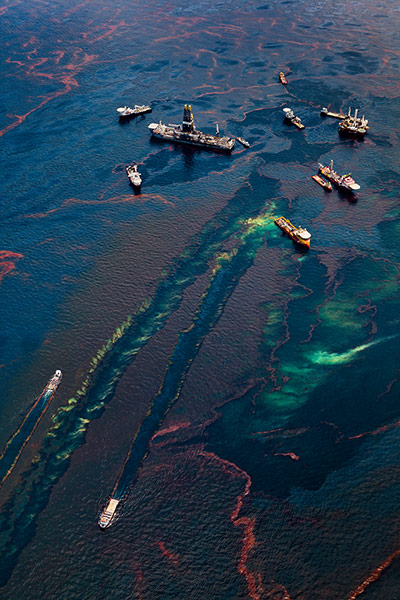
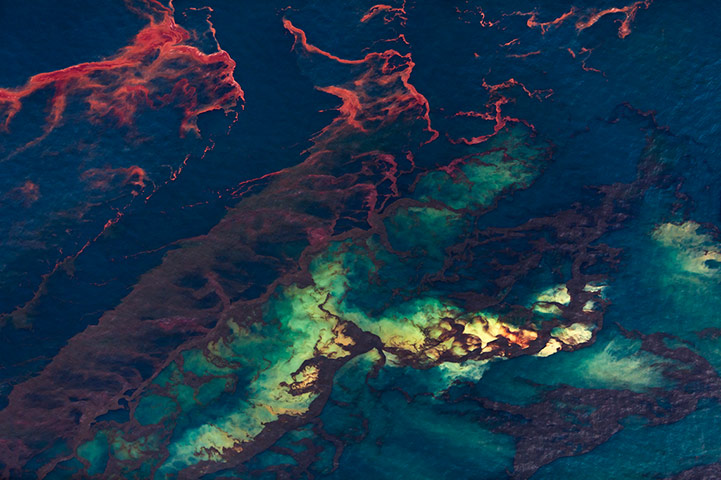
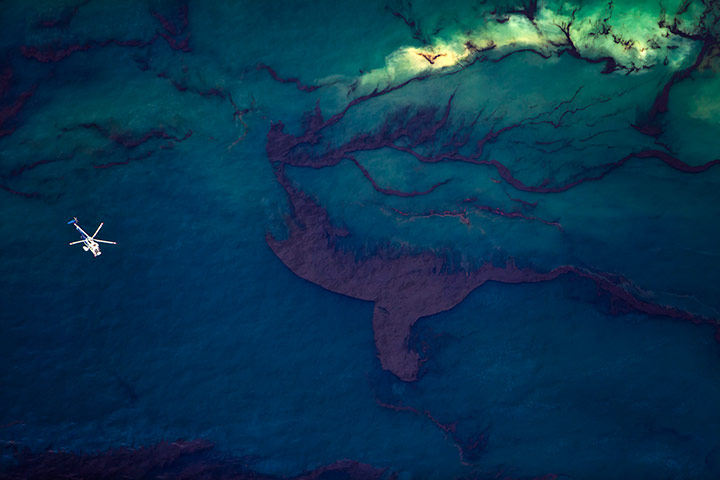
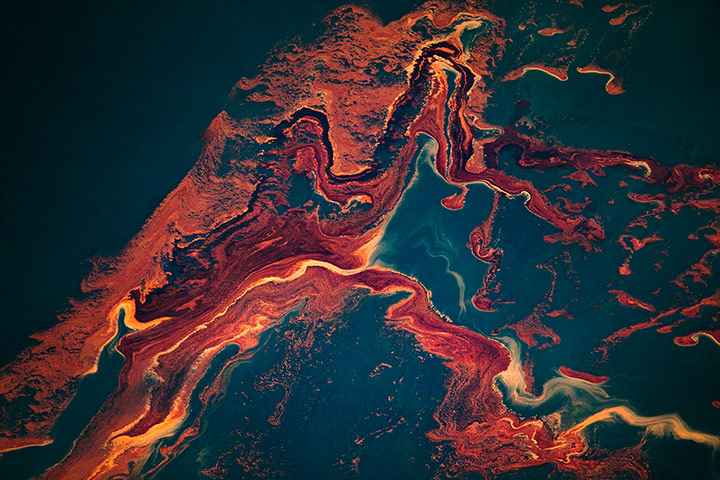
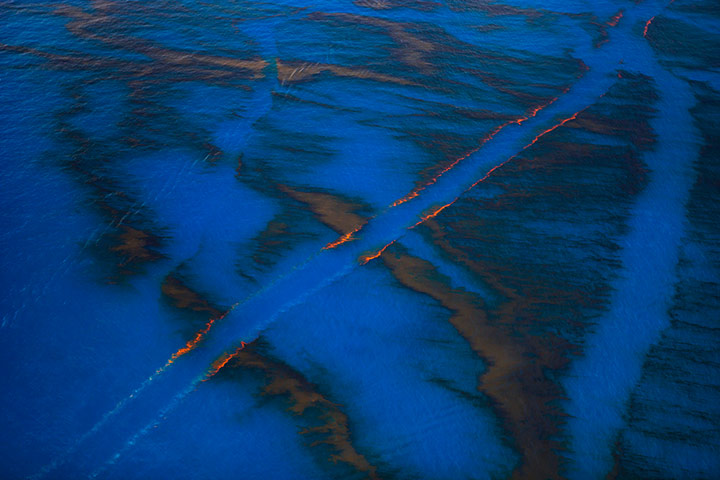
Oil covers the surface of the Gulf of Mexico near the source of the Deepwater Horizon spill Photograph: Daniel Beltra for Greenpeace/SpillBoats gather near remaining oil platforms near the site of the Deepwater Horizon wellhead, leaving oily wakes as they move through the polluted water. Nearly one-third of all US oil production comes from 3,500 such platforms in the Gulf of Mexico Photograph: Daniel Beltra for Greenpeace/SpillThe spill sent 210m gallons of oil into the Gulf of Mexico, causing a black tide covering 68,000 square miles of ocean and spreading along 16,000 miles of coastlinePhotograph: Daniel Beltra for Greenpeace/Spill
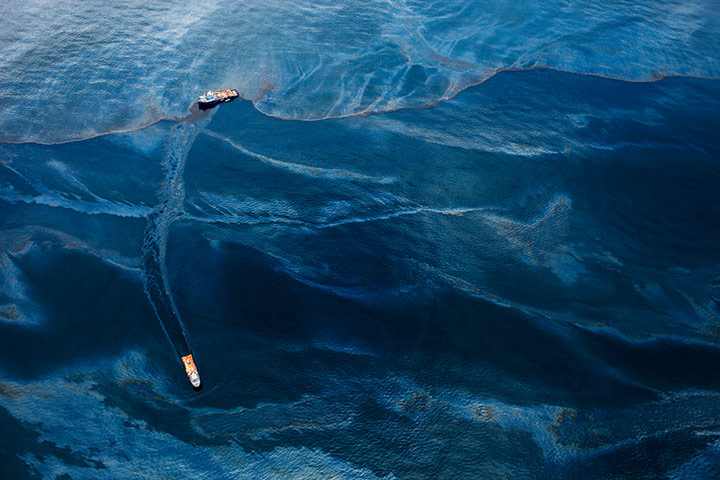
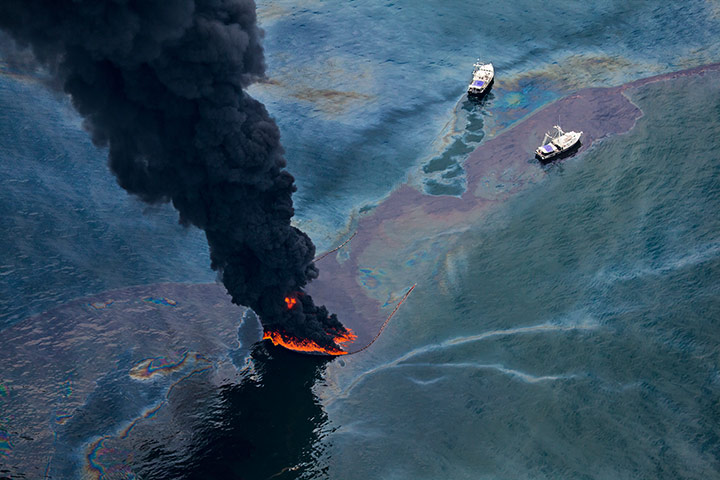
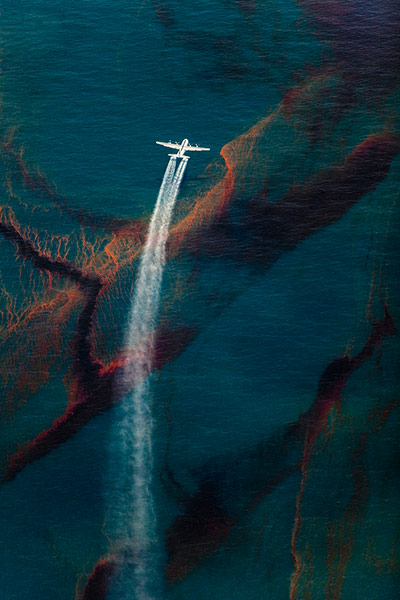
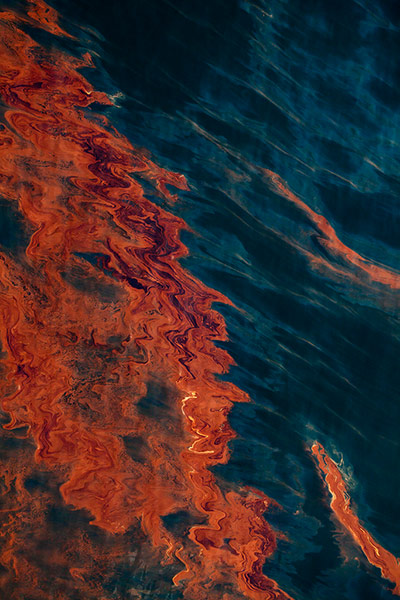
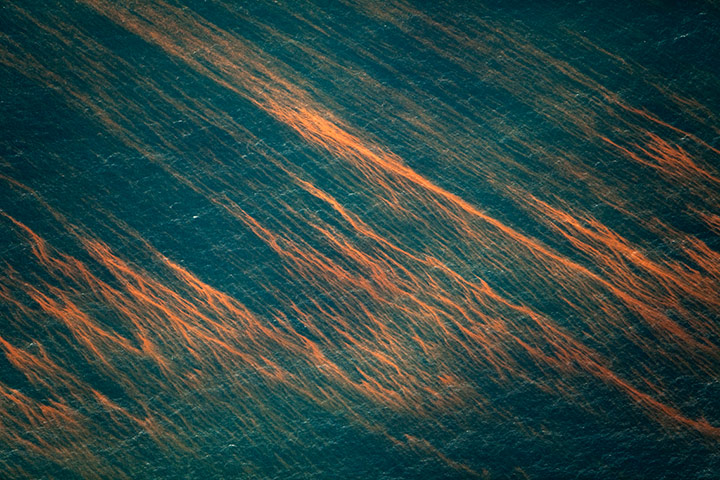
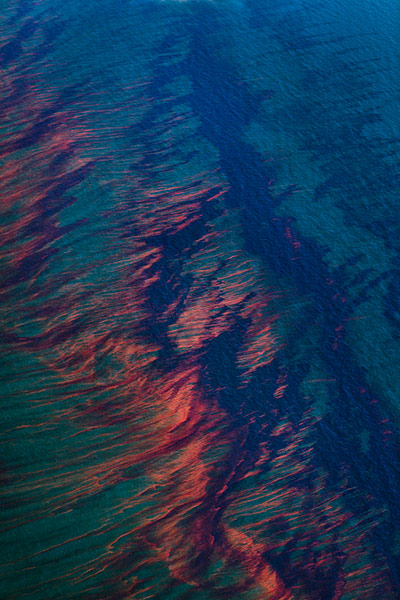
Two ships monitor a controlled burn from oil that was spilled from the wellhead. To aid in clean-up efforts, 5,300 vessels of opportunity were hired from around the area. Many strategies were used to attempt to clean up the oil. The most obvious were 411 controlled burns, where huge noxious plumes of inky smoke rose out of the red-hot fires on the surface of the water Photograph: Daniel Beltra for Greenpeace/SpillA C-130 plane sprays dispersant on oil leaked from the Deepwater Horizon wellhead in the Gulf of Mexico. More controversial and ultimately more destructive than the fires was the use of the toxic chemical Corexit, a solvent that breaks down lipid membranes of cells. Despite the Environmental Protection Agency telling BP to find a less toxic dispersant, ultimately more than 1.8m gallons were used, despite its toxic naturePhotograph: Daniel Beltra for Greenpeace/Spill'Corexit spreads across the surface like long, serpentine brushstrokes of rust red'Photograph: Daniel Beltra for Greenpeace/SpillAfter the Deepwater Horizon platform sank on the 22 May, it began a spill that released over 60,000 barrels of crude oil every day for the next three monthsPhotograph: Daniel Beltra for Greenpeace/Spill'Taken as a whole, the works in the Spill series engender a kind of "sublime melancholy", a reflection of our current self-imposed alienation and careless neglect of our natural environment,' writes art curator Barbara Bloemink in the book's essayPhotograph: Daniel Beltra for Greenpeace/Spill'Spill exists as an evocative, aesthetically striking body of work, as well as the factual documentation of a specific incident,' the book saysPhotograph: Daniel Beltra for Greenpeace/SpillThe full consequences of the incident remain unknown - up to 33% of the oil from the disaster still remains thickly spread over miles of the ocean floor. It has destroyed unknown quantities of plant life, fish and dolphins Photograph: Daniel Beltra for Greenpeace/Spill'The saturated, rich colours - and the interesting lines and forms they create - result it what appear, seen from a distance, like contemporary abstract expressionist paintings'Photograph: Daniel Beltra for Greenpeace/SpillPaths of oil-free water remain in the calm waters of the Gulf of Mexico from boats attempting to clean up the crude spill off the coast of LouisianaPhotograph: Daniel Beltra for Greenpeace/Spill
Sign up to read this article
Read news from 100’s of titles, curated specifically for you.