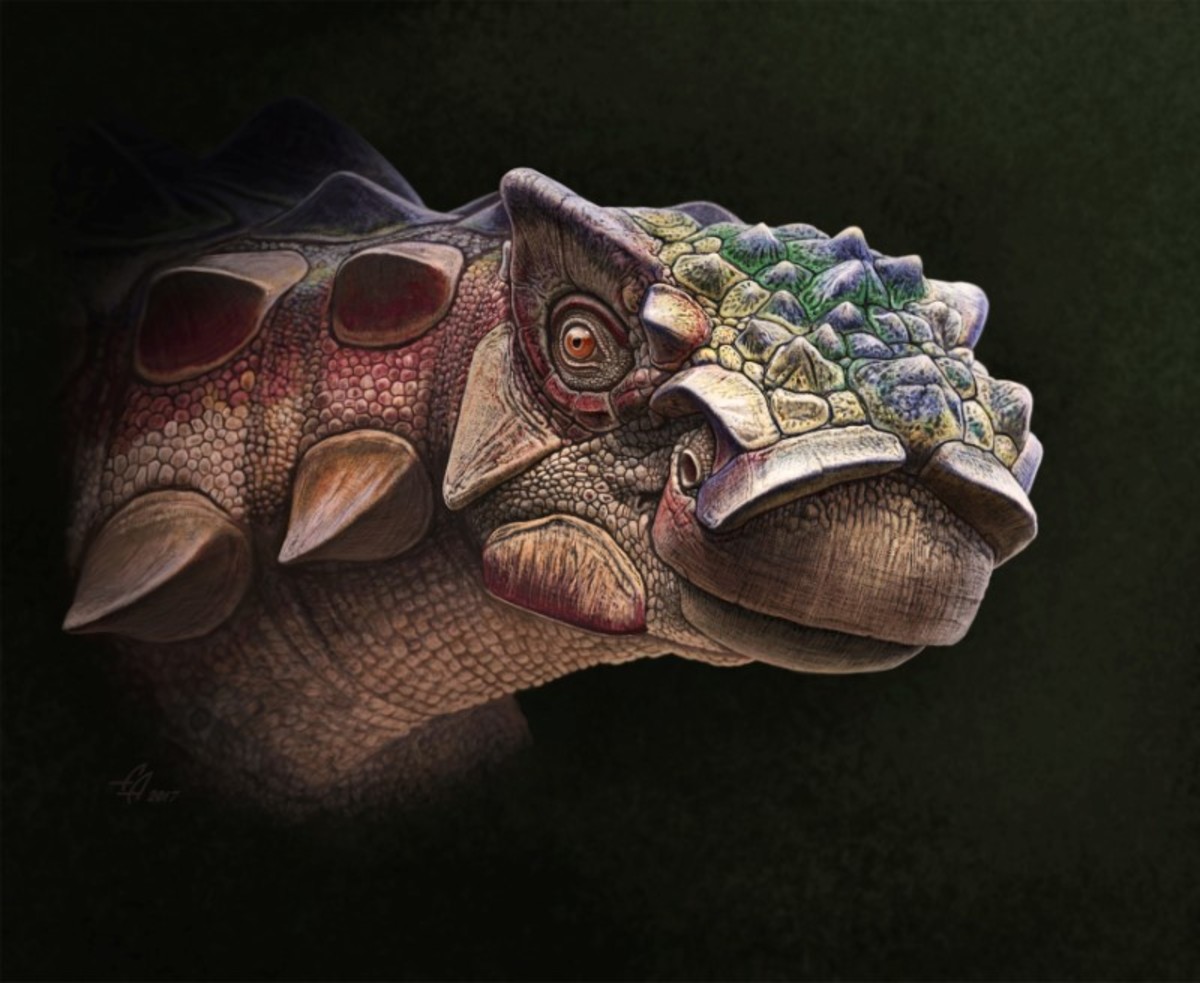
WASHINGTON (Reuters) - With its head and snout covered in bony armor shaped like cones and pyramids, a spiky tank-like dinosaur unearthed in southern Utah was not just another pretty face.
Scientists on Thursday announced the discovery of fossils of a dinosaur named Akainacephalus johnsoni that lived 76 million years ago during the Cretaceous Period. It was a four-legged, armor-studded plant-eater with a menacing club at the end of its tail.
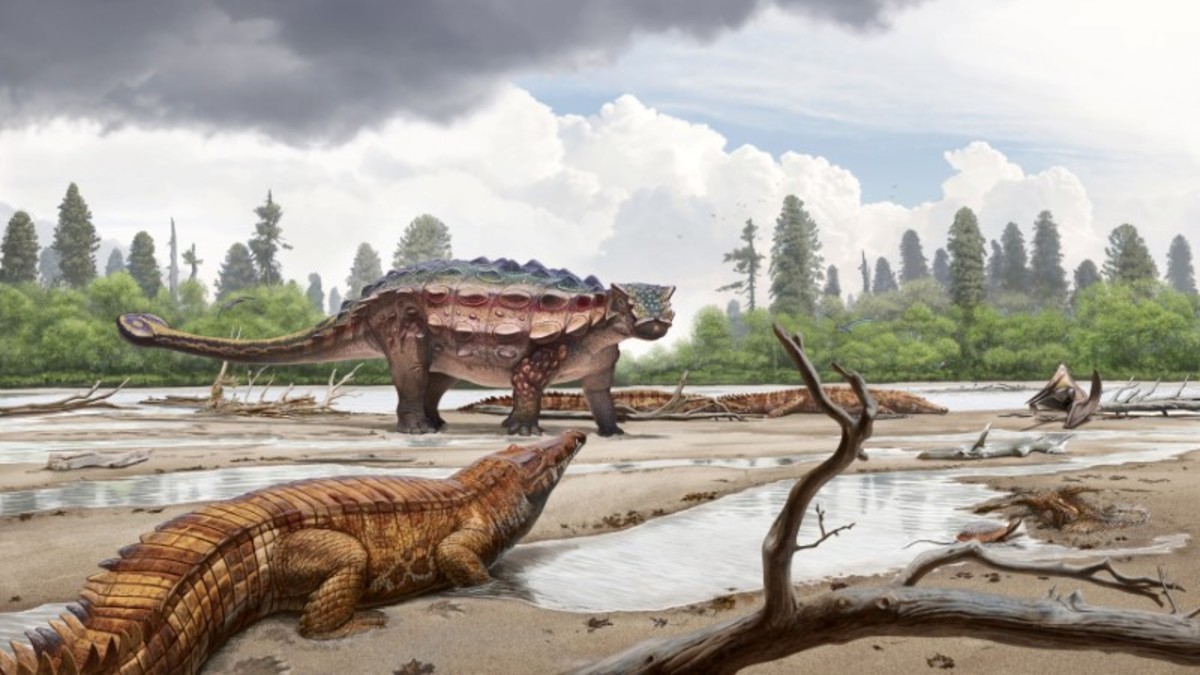
It was a member of a dinosaur group called ankylosaurs, among the most heavily armored animals ever on Earth - and for good reason, considering the predators around at the time.
The unique shape and arrangement of its head and snout armor may be its most intriguing trait, the researchers said, giving clues about the Asian ancestry of some of the ankylosaurs that roamed western North America near the end of the dinosaur era.
"Someone once told me that Akainacephalus, and ankylosaurs in general, were quite ugly and had a face only a mother could love. I must say that I wholeheartedly disagree. These are quite extraordinary and beautiful animals," said paleontologist Jelle Wiersma of James Cook University in Australia.
Akainacephalus was a medium-sized ankylosaur, about 16 feet (5 meters) long, with a short boxy head covered in bony armor and a beak and small teeth for cropping vegetation, said paleontologist Randall Irmis of the Natural History Museum of Utah and the University of Utah.
It had a short neck and wide torso, walked on four short stout legs, and may have whacked predators with its bony tail club. It inhabited a warm, humid environment similar to southern Louisiana's bayous, with slow-moving streams and rivers and associated swamps. The largest predators were the 30-foot-long (9-meter-long) Tyrannosaurus rex cousin Teratophoneus and 42-foot-long (13-meter-long) crocodilian Deinosuchus.
The extensive skeletal remains, including a complete skull, were excavated in Grand Staircase-Escalante National Monument.
Akainacephalus, as well as a cousin called Nodocephalosaurus that lived in New Mexico a couple million years later, possessed spiky head armor similar to Asian members of this dinosaur group. Other related North American dinosaurs such as Ankylosaurus had relatively flat armor covering the head.
This indicates Akainacephalus and Nodocephalosaurus wereclose kin to Asian ankylosaurs and that multiple emigrationevents involving this group occurred from Asia to North Americalate in the Cretaceous Period, the researchers said. This resulted in two distinct lineages in North America of club-tailed ankylosaurs.
The research was published in the scientific journal PeerJ.
(Reporting by Will Dunham; Editing by Sandra Maler)