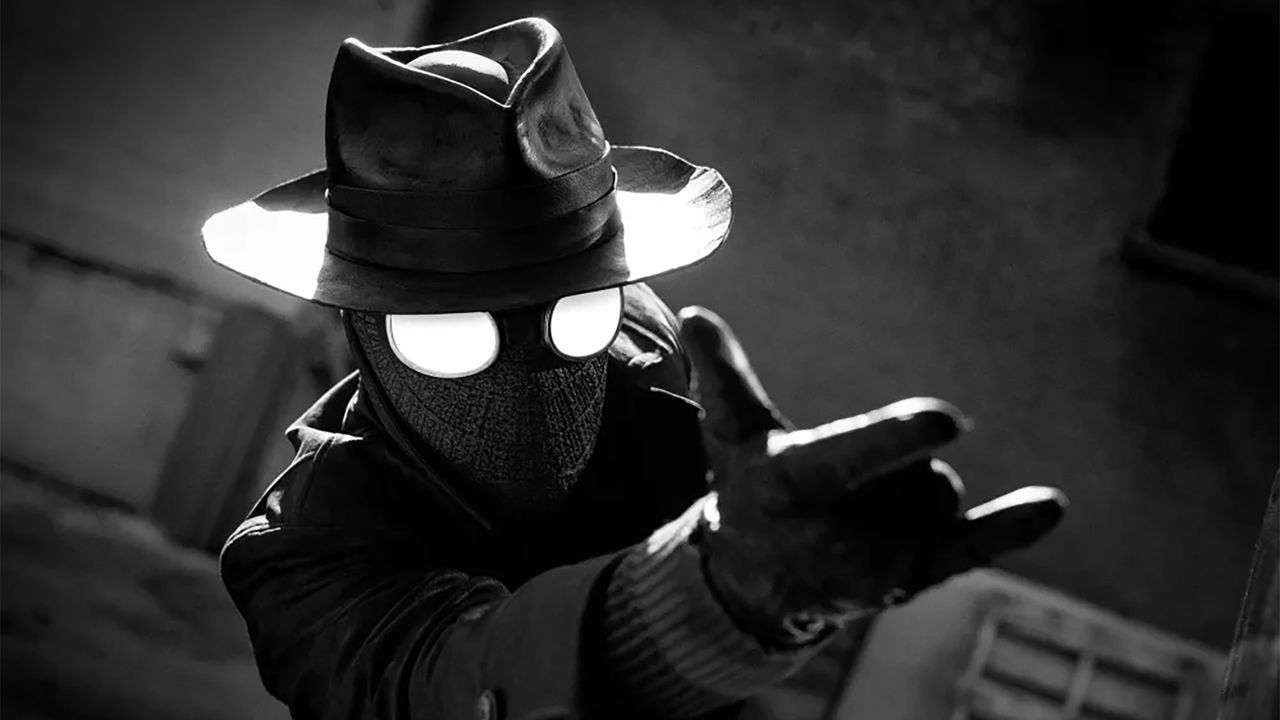
I'll be honest with you: I have superhero fatigue. I'm a little tired of seeing a plucky, likable guy (played by a plucky, likable guy in real life) with moral ambiguity, a dead or estranged significant other, and some kind of multiversal dilemma that culminates in a big ol' fight to the death with a predictable outcome. Enter Spider-Noir, which, from the very first line of the very first episode, wants to be the cure to your incurable superhero fatigue. You've heard of "With great power comes great responsibility," but how about, "With no power comes no responsibility?"
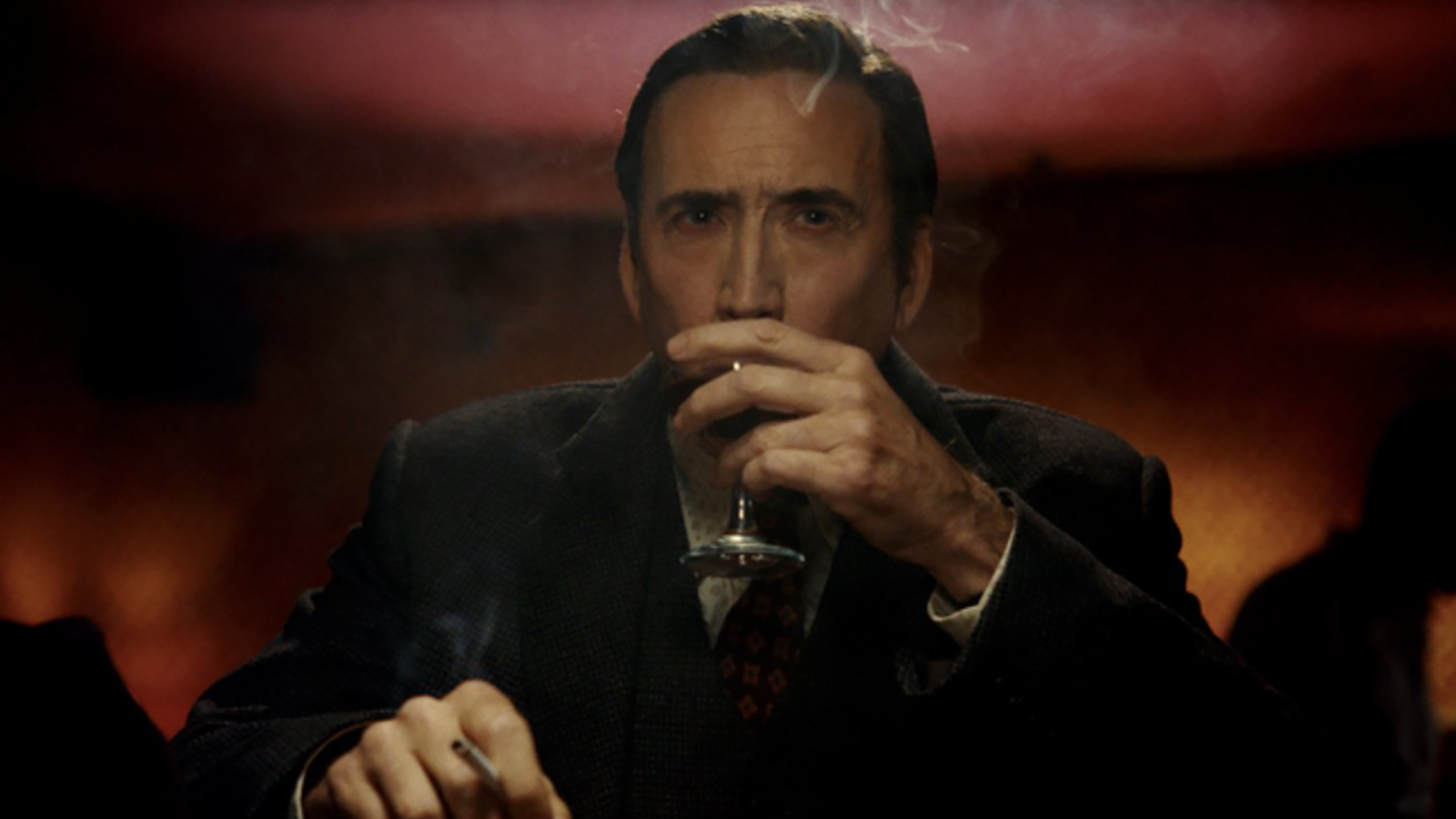
That's Ben Reilly for you: a hero that doesn't really feel all of the moralistic burden that comes with being a hero. He's a dude who solves mysteries (kind of badly) and wants to feel good. He's also played by a 62-year-old Nicolas Cage in his first lead television role, and it's not lost on me that this is the same man who played Ghost Rider, but always dreamed of being Kal-El from the planet Krypton.
Nicolas Cage's Spider-Noir is sort of the antithesis to Tom Holland's Spider-Man, and that's kind of what makes the series work. That, and a supporting cast that includes a no-nonsense secretary (who's a much better gumshoe than her boss) and a roving reporter with a heart of gold who believes in the power of the press. There's also the fact that Cage is fighting Brendan 'In Bruges' Gleeson, but more on that below.
You're an investigator... investigate
The year is 1933 and Ben Reilly is far from your friendly neighborhood Spider-Man. In fact, he's kind of a jerk. But he's the Looney Tunes version of a jerk a la Daffy Duck or Yosemite Sam… which makes him entirely lovable despite his unyielding pessimism and inability to pay his own secretary, Janet (played by the bright and witty Karen Rodriguez). The show takes place five years after the death of Ben's beloved wife Ruby, and it's her death that made him hang up the suit and cease to be New York City's only superhero.
When we first meet Ben, the detective biz isn't doing too well, though he's too wrapped up in his own snarky misery to care. When a case comes across his desk that he can't pass up, however, he has no choice but to put on the suit (which he buried in the wall of the apartment he and Ruby used to share) and save the city from mob boss Silvermane (Gleeson), who has surrounded himself with a few superpowered villains that the avid comic book reader (and watcher of Spider-Man: The Animated Series) might recognize.
FAST FACTS
Release date: May 27 (Prime), May 25
Available on: MGM Plus and Prime Video
Showrunners: Orien Uziel and Steve Lightfoot
Episodes viewed: 8 of 8
Cage has previously said that the character is a blend of Humphrey Bogart and Bugs Bunny, but that he mainly wanted to play Ben Reilly as "a spider pretending to be a human." As much as I think the latter is supposed to explain why Ben is a bit stiff and weird, I think Ben was probably stiff and weird before he got powers (we'll keep the precise nature of Ben's origins under wraps, as it's a fun surprise). And I love that about him. Cage even has that dramatic, Old Hollywood leading-man tone of voice down.
The rest of the characters don't feel very 1930s, but that in and of itself adds to the delightful campiness of the entire show, even if it does contribute to the overall inconsistency in tone. Cat Hardy (played by the enchanting Li Jun Li) thinks she's Dorothy Vallens in Blue Velvet, and Dirk Leydon, aka Megawatt (Andrew Lewis Caldwell), thinks he's Max Cady from Cape Fear, but he's actually Quint from Jaws. And you might be wondering: who the heck is Megawatt? Don't you mean Electro? Nope.
It would've been easy to incorporate the entire Sinister Six into the mix, because they're arguably some of the most recognizable among Spidey's Rogues gallery. Megawatt was introduced in a 1993 Spider-Man comic and has never been in an animated or live-action anything. And though his facial markings seem similar, that's not Rhino… that's Tombstone (Abraham Popoola). The most recognizable out of the bunch is Flint Marko aka Sandman (played by none other than Boardwalk Empire's Jack Huston). Each bad guy wears their powers on their face and arms in the form of veins that look lightning strikes or patches of sand that look like scales.
While I'm sure some might find the costumes, or lackthereof, underwhelming (as only Spider-Noir is allowed wear a proper superhero costume, it seems), I found it pretty unique. Though these features become even more muted in black and white.
Black and white and red all over

Speaking of which, the show has two viewing options: "Authentic Black and White" and "True-Hue Full Color." Now, the show was not filmed in black and white, and it was actually Cage who thought it'd be fun for the series to be shown in both black and white and color: the first option meant to emulate those truly gritty, pulpy noir vibes from classic movies, and the second meant to appeal to a younger viewers who aren't used to grayscale. I can't believe I'm saying this at my big age, but Cage made the right call in having color be an option (and it helps that the colors are very bright and comic book-y).
For some reason, my eyes have always associated black and white with "in memoriam," and it's harder for me to stay focused. I played around with switching back and forth while watching the series (nearly three times through, mind you), and I don't think the black-and-white option really adds to the 1933s, soft-boiled detective mood the show is going for. It's another element that makes the show unique, but it doesn't really do much else. Plus, you can't see Robertson's colorful attire, or Cat Hardy's absolutely stunning makeup and golden stage attire.
I don't know, I think he's still got it
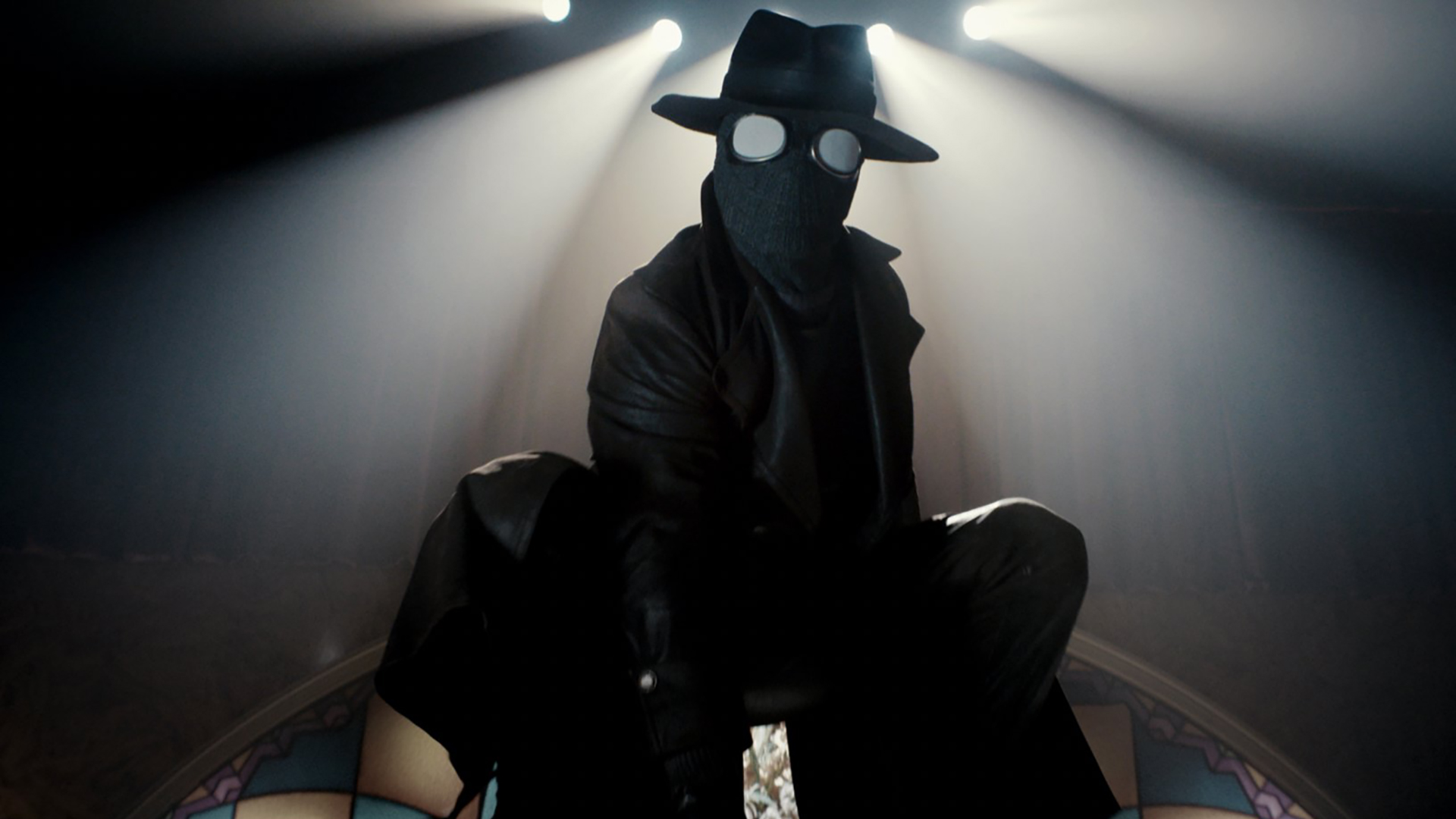
There are a handful of moments throughout the season that are presented as big, dramatic plot twists to the viewer (and I won't share any of those here, as we're keeping this spoiler-free), but even the characters themselves don't seem very fazed by what's going on. I don't know if this is purposely meant to illustrate that each character lives in their own little world, nor do I know if it's the writing or direction that truly fails these moments. It could also be the way the show is paced. But it's the lack of gasps and wows that make the show more of a fun, low-stakes romp rather than say Marvel prestige TV.
Is that totally fine for what it is? Yes. Do I wish the show felt bigger, and maybe more on par with that of a Disney Plus or even a pre-Disney Netflix Marvel show? Also yes. The danger just doesn't hit the way I want it to, and that's okay. This is all part of the whole curing your superhero fatigue thing: it's all meant to hit differently.
Nicolas Cage's Spider-Noir is sort of the antithesis to Tom Holland's Spider-Man, and that's kind of what makes the series work.
And if you want something to hit differently, Nicolas Cage is definitely the man for the job. One of the highlights of the entire series is Ben's chemistry with Janet, who I loved more than anyone else and was genuinely delighted every time we cut to a scene of her sitting behind the front desk at Ben's office. I would happily watch a spin-off about Janet and her own wacky detective adventures.
Should a second season be greenlit, I hope we get something much, much bigger (and, if we're going by the Spider-Man Noir comics, I would really like to see 1933s Depression-era Norman Osborn enter into the mix somehow). But between Spider-Noir and Wonder Man, I hope this is a sign that superhero TV is moving into a different direction, ushering in a new formula-less era. Then again, I would also watch Nicolas Cage read aloud from an old phonebook for eight 45-minute-long episodes – even in black and white.
Spider-Noir premieres in its entirety on MGM Plus in the US on May 25. It drops globally via Prime Video on May 27. For more, check out our list of upcoming Marvel shows.