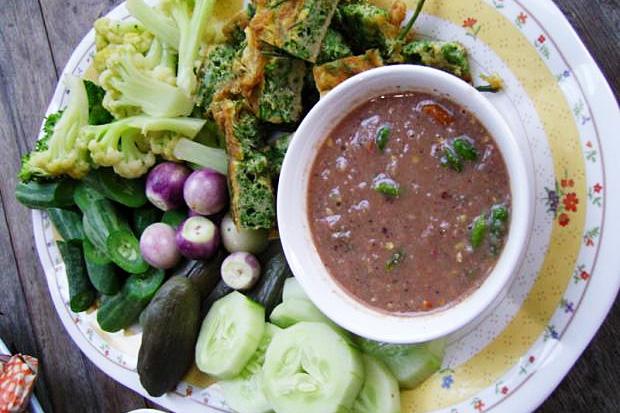
An old Thai national dish that will continue to excite palates long into the future is nam prik -- or spicy dip. Every region in Thailand has its nam prik with its own unique characteristics. It can be consumed daily and it's affordable. It's quite nutritious, too, despite some seasoning to spice up the flavours.
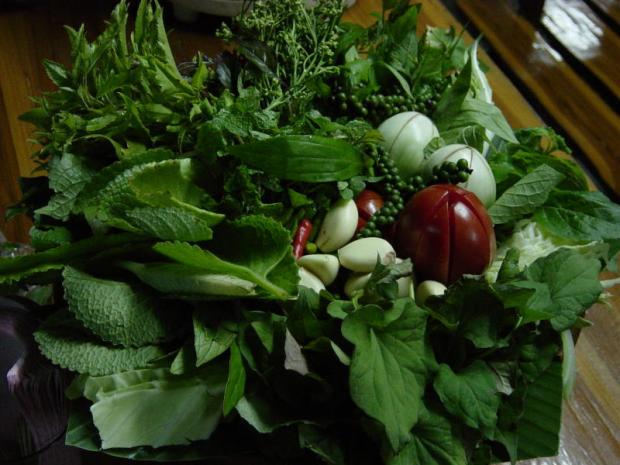
Nam prik is an easy food. In the past, its flavour was salty and spicy only. People only used easy-to-find local ingredients to make it. Because of its salty and spicy taste, we need fresh vegetables to tone the rich flavour down. These fresh local vegetables are good for health.
As per custom, with nam prik and vegetables, there needs to be fish as well. The fish can be grilled, deep fried, smoked or sun dried. There are also soups, such as vegetable soup or tom yum. All these come together as a means to achieve balance in a meal. Most importantly, they make you eat a lot of rice, to fill your body up as it is needed. This is how nam prik lives in the lifestyle of Thai people in all regions.
To portray how people consume nam prik in different regions, let's look first to the North. Nam prik noom is a true delicacy of the North. Locally sought chilli, which is very big and hot, is grilled with shallots and garlic. They are then mixed together in a mortar, with some salt added. That is all. People usually eat this with pork crackling, boiled egg and chicken curry. This is typically the way of the North.
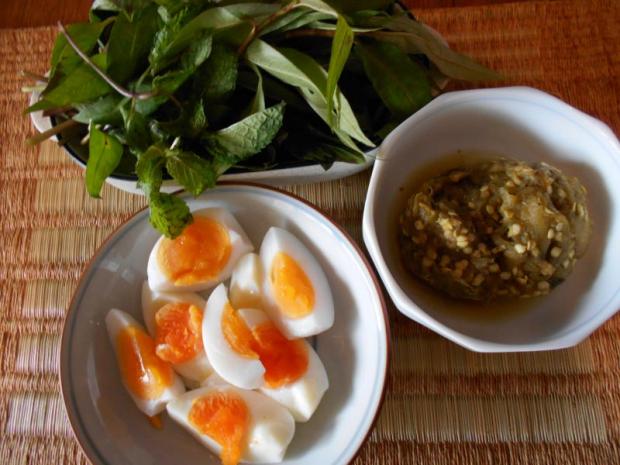
In Isan, nam prik is made easily using dried chilli, shallots, garlic and sour tomato. All of them are grilled and pounded, mixed with chopped pla ra (fermented fish) and its jus. People call it nam prik jaew and eat naturally grown vegetables with it. If they have fish, they steam it with vegetables. If they also want some soup to go with it, they make kang om with chicken, and even shell and green frog. Isan people eat steamy hot sticky rice. This is considered a perfect meal for them.
In the North and Isan, it can be seen that people tend to use salt because it is easily found. On the other hand, fish sauce is more for people living in the Central Region. In Isan, people use fermented fish with salt and roasted rice to make pla ra that is as salty as they want. Another aspect to note about people in these two regions is that their nam prik tends to have a coarse texture. This is because people use a wooden mortar.
The Central Region, with its many seaside communities, uses shrimp paste, many types of chilli, sour fruits, palm and coconut sugar, and more. But despite having it all, their nam prik is also made with dried chilli, shallots and garlic. Grilled together and mixed with tamarind and shrimp paste, and you get nam prik ta daeng.
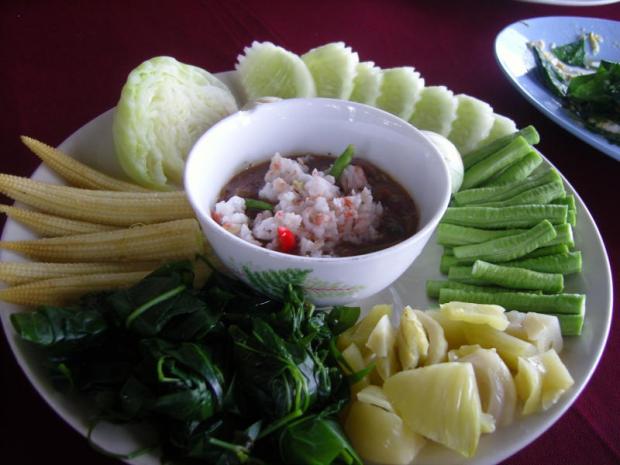
One type of nam prik that speaks of the Central Region's inclination towards diversity in flavour is nam prik kapi. It's spicy, sour, salty and sweet. Ingredients include chilli, shallot, garlic, lime, fish sauce and palm sugar.
There are also other seasonal fruits added into the mix such as hairy-fruited eggplant, madan, bilimbi, young tamarind, kumquat and mango. People also eat nam prik kapi with fried mackerel.
For vegetables, they can be fresh, soft boiled and pickled. For soup-based dish, try tom yum, spicy curry and fried vegetables.
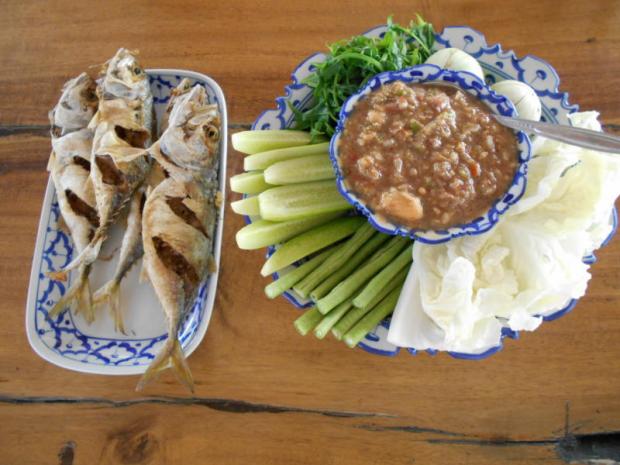
In the East and South, nam prik kapi is popular. In the East, like in Chantaburi and Trat where it's near the sea, locals put crab in their dip. In the South, it's just typical nam prik kapi. But in Phuket, people also put grilled, dried shrimp, making the dip known as nam prik koong siab.
This is how traditional nam prik is structured. In later generations, every region began tweaking their own delicacy, which started out from individual personal preferences. When that became widespread, the practice and recipes were adapted per region. For example, in the North, people now add grilled eggplant to make nam prik makhuea yao. Some recipes use dried shrimp and lime. In Isan, there is nam prik pla ra, which uses steamed mackerel, everything pounded together, and then stir fried.
From different types of nam prik, came a society of people who make nam prik. In every region, people mostly make their own to eat within their family. They eat it with almost every meal. Everyone eats it together. Kids eat it until they become adults. They also get to know local vegetables. The know-how is passed down from their parents and other adults in the family, and soon they learn how to make nam prik, too.
People throughout the country move around and relocate for many reasons such as work, education and marriage. And their habit of eating nam prik follows them everywhere. Aside from nam prik in their own region, they also get to learn about nam prik from other regions.
In Bangkok, despite being a hub for people from all regions, people often lack the time to cook their own food or make their own nam prik. They may not get to eat with their family. Instead they purchase nam prik from places like a shop in a fresh market, an eatery in a gas station, or a food centre inside a shopping mall. Most nam prik being sold is nam prik kapi of the Central and South. What is missing are local vegetables. Most shops tend not to sell local vegetables with nam prik. And when nam prik comes without fresh veggies, its quality is then somewhat lacking.
Nam prik remains a Thai national dish. But a national dish should also be a healthy one where you get to eat lots of vegetables with it. This is what makes it worth eating.