The Speaker of the House of Representatives and the Senate president have told Labor they are happy to chair a working group to help determine how and when the federal parliament should sit, given the rising risks from Covid-19 infections.
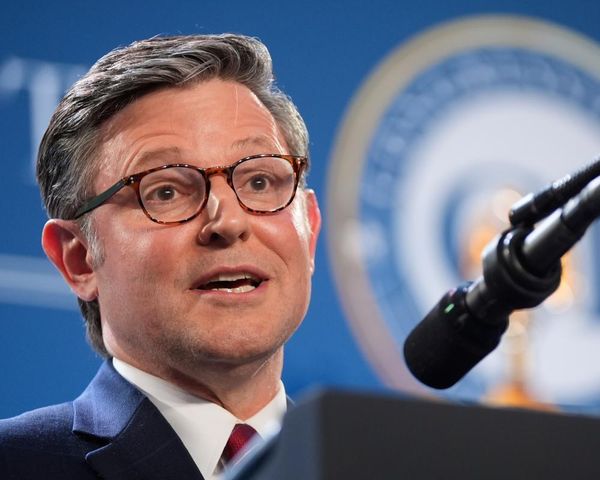
Guardian Australia understands Tony Smith and Scott Ryan wrote to the opposition on Wednesday signalling in-principle support for the proposal that Labor floated after the government cancelled the next sitting fortnight on medical advice.
The presiding officers noted there were different arrangements governing those decisions in the two chambers, and those principles needed to be respected. But the two said they were happy to continue a practice of broad engagement, and would “jointly chair a working group”.
Smith and Ryan suggest the chief medical officers of the commonwealth and the ACT should address the group to outline the risks that need to be mitigated. After that briefing, “specific options” could be developed.
The presiding officers suggest the working group should be comprised of the leader of government business and the leader of opposition business in the House and the Senate, and the leader of the House and the Senate and their opposite numbers.
They say they have written to Scott Morrison and the ACT chief minister, Andrew Barr, to request that the medical officers be made available. The presiding officers also want parliamentary staff involved in the discussions.
Labor responded to the government’s decision on Saturday to cancel the sittings in early August by pressing for better protocols to ensure the legislative program continues with as little interruption as possible.
Tony Burke and Katy Gallagher, the managers of opposition business in the House and the Senate, wrote to Smith and Ryan asking them to convene a working group to ensure the chambers could continue to sit amid a second wave of Covid-19 infections, arguing “the parliament can’t get cancelled every time there’s an outbreak”.
With Victoria battling a substantial outbreak, Morrison said on Saturday he had received advice from the acting chief medical officer, Paul Kelly, that there was “significant risk associated with a meeting of parliament in the context of the increased community transmission of Covid-19 in Victoria and the trends in New South Wales”.
Morrison also suspended sittings in Canberra during the opening phase of the pandemic, which prompted public criticism. But the chambers later resumed in scaled-back form to conform with social distancing guidelines.
Gallagher said over the weekend there needed to be a better system than ad hoc cancellations.
“At the end of the day, we need to put in place things that are going to make the parliament safe so that the parliament can sit, because the parliament can’t get cancelled every time there’s an outbreak, if what we’re being told by the medical experts is that outbreaks are going to continue to occur,” she said.
Gallagher said there were limits on what the parliament could do virtually, but she noted governments liked “less transparency, less accountability”. She said having parliament sit in a Covid-safe way was “an important part of our democracy”.
Smith and Ryan said they were happy to develop arrangements ensuring the chambers could sit “in the safest manner possible”.