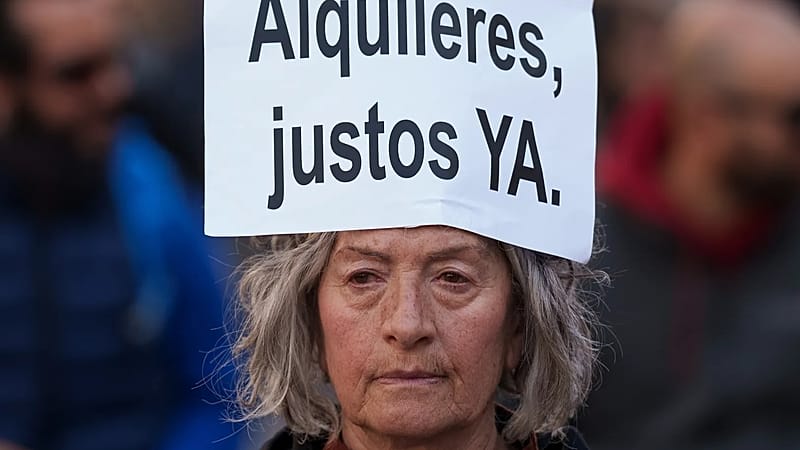
The suffocating surge in rental prices is driving a structural shift in the psychology of the Spanish housing market. With monthly rents systematically hitting all-time highs, public perceptions are crystallising in a clear direction: seven out of ten private individuals (71%) believe that, at current levels, it is financially more cost-effective to pay a mortgage than to rent.
This is the main conclusion of the report X-ray of the housing market in 2026 (source in Spanish), produced by Fotocasa Research. The data show the strongest consensus in the entire study (with an average score of 7.6 out of 10) and point to a slight increase compared with the first half of 2025, when 70% of people active in the market agreed with the statement.
Property as a "safe haven" amid the imbalance in renting
The analysis shows that the preference for buying is not just a cultural trait but a financial survival strategy in the face of the rising cost of renting.
"Although getting onto the housing ladder remains difficult because of a lack of savings and high purchase prices, more and more people feel that, if they can afford to take the plunge, paying a mortgage is a more profitable option than putting a monthly payment into rent that keeps increasing. This perception reflects the huge imbalance currently affecting the rental market," explains María Matos, Head of Research and spokesperson for Fotocasa.
This environment has reinforced other traditional indicators of the Spanish market:
- Safe investment: 68% of respondents maintain that buying a property is still a good investment (7.2 points out of 10).
- Attachment to ownership: another 68% say that the desire to own a home remains deeply rooted in Spanish society. However, this conviction has weakened compared with the first half of 2025, when support reached 72%.
- Housing as an inheritance: 59% of private individuals still believe that a home is the best legacy you can leave your children, a measure that has slipped slightly from 61% the previous year.
The spectre of a new property bubble is growing
The flip side of this preference for buying is fear. The speed at which both purchase and rental prices are rising has set off fresh alarm bells among citizens. 56% of respondents fear that the market is heading towards a new property bubble, up two percentage points on the 54% recorded in 2025.
Meanwhile, the cultural perception of renting remains stuck in pessimism. Half of active private individuals (50%) still insist that living in rented accommodation is "throwing money away", the same proportion as last year. In line with this, expectations that Spain will converge towards the European rental model are falling: the belief that the market will evolve towards a greater weight of renting versus ownership has slipped to 40% (from 41% in 2025).
The Housing Law fails to convince the property market
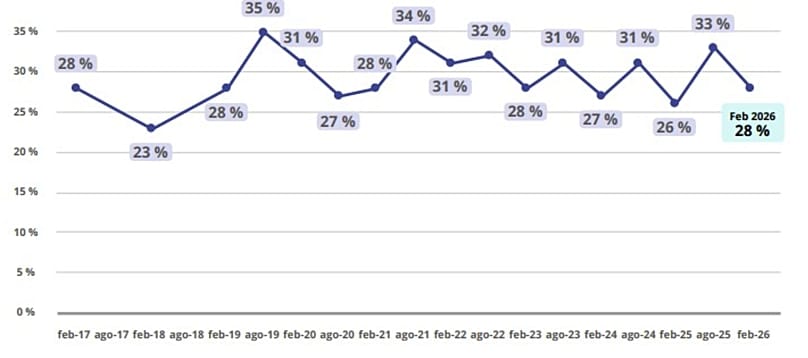
The report also again highlights the widespread failure of the current regulation to win public approval. Assessments of the Housing Law remain firmly in negative territory. Although the share of private individuals who approve of it edged up from 27% to 28% over the past year, the average rating is stuck at 4.7 out of 10.
The macroeconomic factor to bear in mind
It is crucial to put this snapshot from the study into context: the Fotocasa survey was carried out in February 2026. The responses therefore reflect the impact of the 2023–2025 biennium, marked by a gradual easing of interest rates that made mortgages cheaper, alongside a parallel rise in rents.
The recent increase in interest rates by the European Central Bank (ECB) last June adds a new layer of uncertainty. The impact of this tightening of mortgage credit on citizens' perception of profitability will have to be examined in upcoming reports on the sector.
This text was translated with the help of artificial intelligence. Report a problem : [feedback-articles-en@euronews.com].