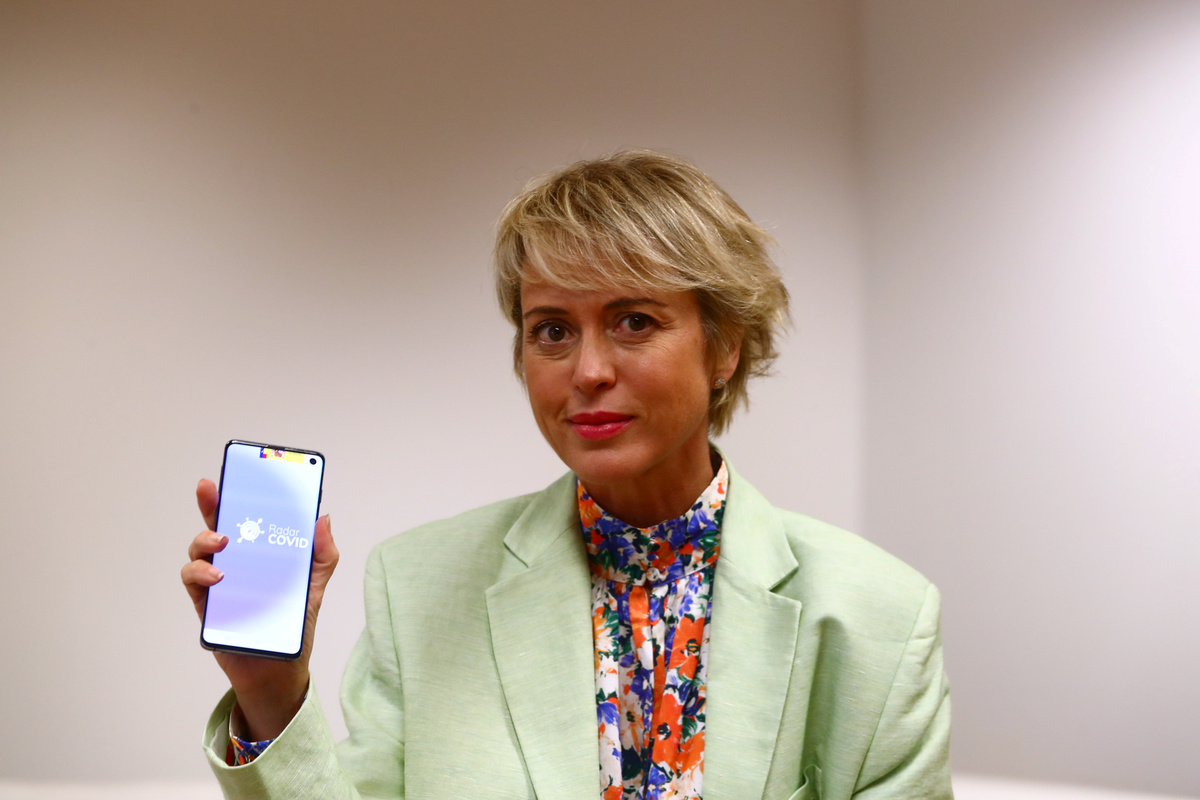
"What does RadarCOVID not do?" a promotional video for Spain's contact-tracing app asks. The answer: while navigating the country's decentralised healthcare system, it does not locate users, identify them, record personal details, or send data.
Without a vaccine or a cure for the coronavirus, which has killed nearly 1 million people worldwide, countries around the world have unleashed such technology to help break the chain of infections.
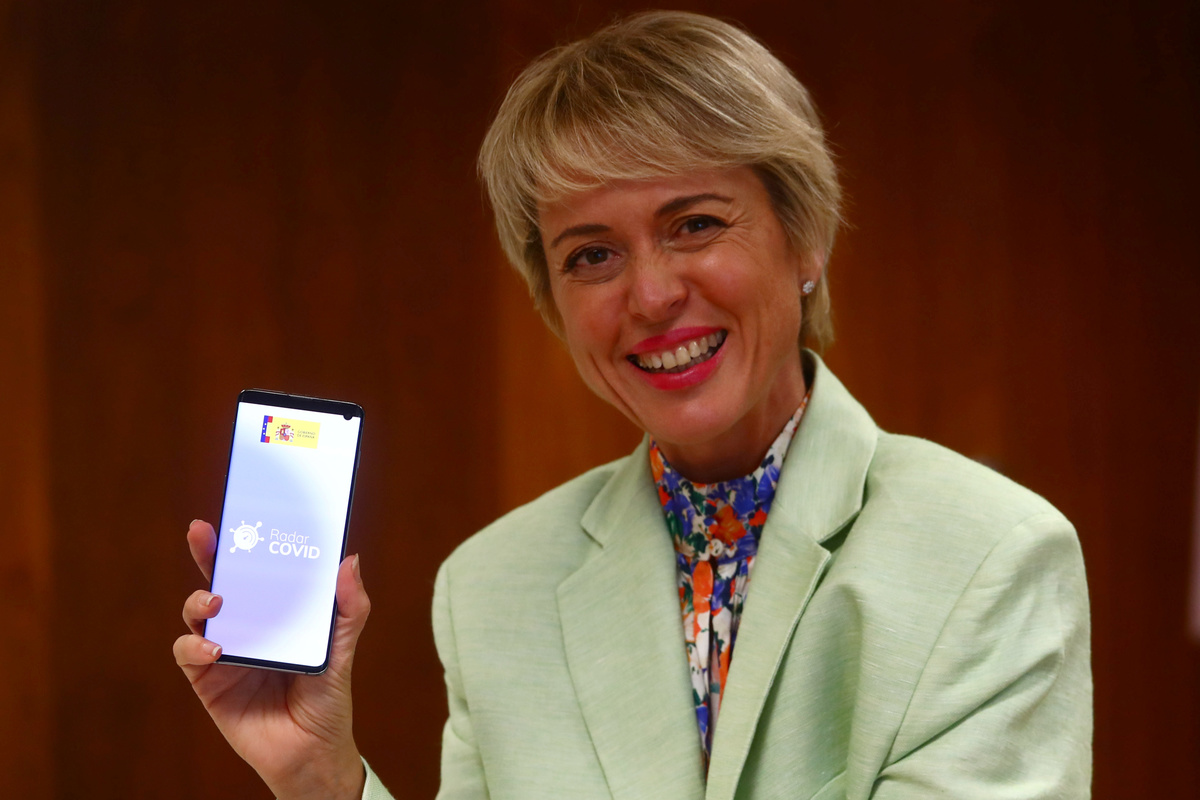
Some governments' contact-tracing tools use location data. But that tool is not available under European privacy laws in countries like Spain. Instead, they use Bluetooth to generate anonymous codes logging proximity between people's phones.
Most of the region's apps, many based on a structure designed by Apple <AAPL.O> and Google <GOOGL.O>, prioritise data protection, making it difficult to gauge their usefulness.
RadarCOVID's developers also had to navigate Spain's healthcare system, which devolves responsibility to 17 regions.
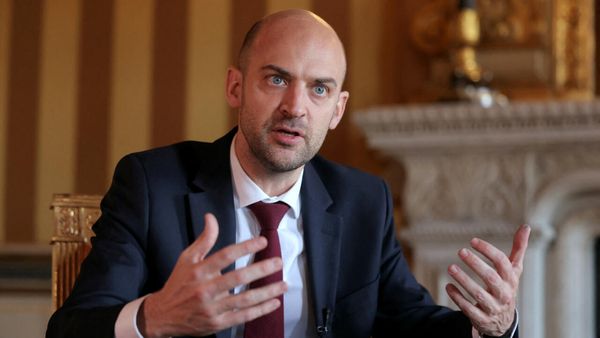
"Our system is so complex that we have to simplify as much as possible," Carme Artigas, head of the state digital and artificial intelligence unit, told Reuters in her Madrid office.
"It works in the background. You forget about it and it is your protective shield," she said.
More than 4 million people have downloaded the Spanish app, Artigas said, halfway to the 20% of the population that a pilot conducted in July on a tiny island suggested is needed for the app to be useful.
Now it is up to regional authorities to incorporate the technology into their systems, Artigas said, a process already completed in 75% of the country.
With cases rising faster and its visitor-dependent economy sagging, Spain also has a particular interest in developing ways to allow European apps to exchange data.
Artigas said that Spain would help test such "roaming" capacity in October, and that the app was designed with goals like this in mind.
"We launched it in English from the beginning," she said.
(Reporting by Isla Binnie. Editing by Gerry Doyle)