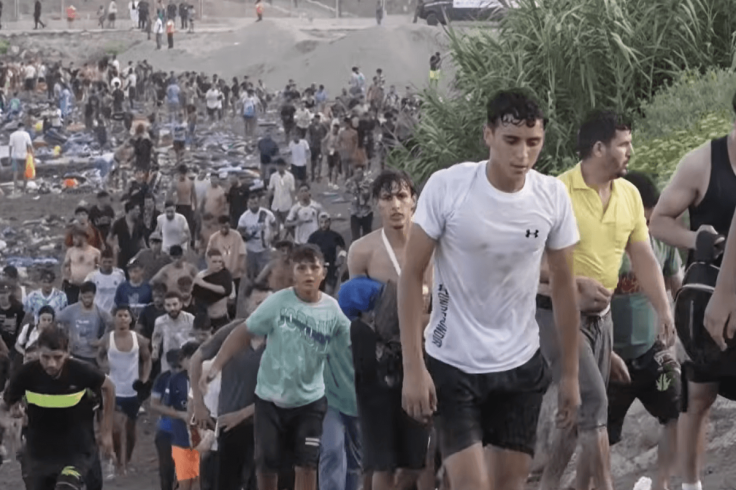
Spain has ordered troops to its North African enclave of Ceuta after a sudden wave of migrants overwhelmed border authorities, leaving at least nine people dead and prompting officials to describe the unfolding emergency as 'absolute chaos'.
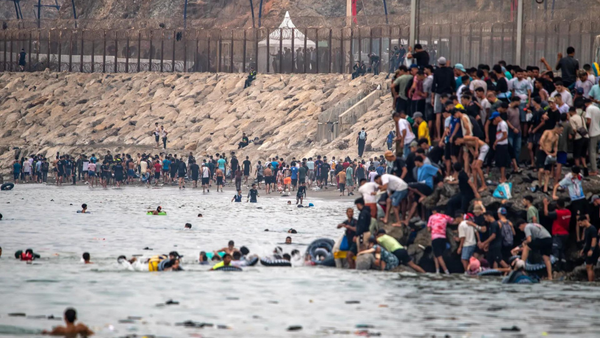
The decision to deploy troops to Ceuta came after thousands of people crossed from Morocco into the Spanish territory on Thursday, overwhelming the Civil Guard and pushing local authorities to plead for urgent reinforcements.
The escalating Ceuta border crisis has become one of Spain's most serious migration emergencies in years, prompting Prime Minister Pedro Sánchez to travel to the enclave alongside Interior Minister Fernando Grande-Marlaska.
'Spain deploys military to Ceuta after thousands of people breach Morocco’s border and at least 9 die.' pic.twitter.com/pgLKFcH0cs
— R U Widme (@LeevitArt) July 30, 2026
Border Control Breaks Down
The defining image of the crisis did not come from Madrid; it came from the officers trying to hold the line.
'The situation is absolute chaos,' Rachid Sbihi, head of the association representing Spain's Civil Guard officers in Ceuta, told AP.
He said there were simply too many people crossing to count, adding that 'the border had totally collapsed'.
Those words explain why Spain made the extraordinary decision to involve the military. While the Civil Guard remains responsible for policing the Spain-Morocco border, the Armed Forces have now been deployed to support security operations after local authorities warned the situation had spiralled beyond their control.
Deadly Crossing Shocks Spain
The human cost has made the crisis even more alarming.
Spain's government confirmed that at least nine people died during Thursday's crossings. Officials have not disclosed exactly how each person died, but bodies were seen floating in the water near the Tarajal crossing, underlining the dangers faced by migrants attempting the journey.
The tragedy is not an isolated event. Dozens of people have already died this year trying to reach Ceuta, one of only two Spanish territories on the African mainland and a key gateway into the European Union for migrants seeking safety or better economic opportunities.
Spain deploys troops to Ceuta following a massive surge of hundreds of migrants crossing from Morocco, leaving at least 9 dead. It marks the largest influx into the enclave since 2021. pic.twitter.com/Q6muoVxHaG
— Curtis (@Curtis_MVP) July 31, 2026
Thousands Pour Into Ceuta From Tarajul Beach
Footage from Tarajal beach showed crowds streaming around the breakwaters before walking into Ceuta. Most appeared to be young men, but families, women and small children were also among those making the crossing.
Some migrants shouted 'Viva España!' as they entered Spanish territory, while officers struggled to manage the sheer volume of arrivals.
The latest Ceuta migrant surge came after days of rising crossings, but the scale of Thursday's influx caught both Spanish and Moroccan authorities off guard.
Mystery Surrounds Border Opening
One of the biggest questions remains unanswered: what triggered such an unprecedented surge?
Achraf Maimouni, a member of the Moroccan Association for Human Rights in northern Morocco, described the situation as 'exceptional' and said the Tarajal border had been opened 'under unusual circumstances'.
Moroccan authorities have yet to publicly explain what happened, leaving uncertainty over why thousands were suddenly able to cross.
Spain's Interior Ministry said Morocco was cooperating to stop further crossings and both governments had agreed to work towards returning people who entered Ceuta illegally as quickly as possible.
Emergency Appeals Reach Madrid
Even before Thursday's dramatic scenes, Ceuta was struggling to cope.
Juan Jesús Vivas, president of Ceuta's regional government, had warned that migrant reception centres were already overwhelmed after more than 1,500 people entered the territory during the previous week. Hundreds were sleeping outdoors because facilities had run out of space.
As the Ceuta migration crisis worsened, Vivas urged Madrid to declare a national emergency, send additional police officers and deploy the army to protect the frontier.
Although Spain's Interior Ministry said migration does not legally qualify as a national security emergency, it acknowledged that government agencies were coordinating an urgent response. Sánchez's decision to visit Ceuta himself signalled the political importance of the crisis and the pressure now facing his government.
Europe Watches Closely
The repercussions are already reaching beyond Spain.
Italian Prime Minister Giorgia Meloni threatened to suspend Italy's participation in the Schengen open-border agreement with Spain, arguing that stronger measures were needed to protect Europe's external borders.
The latest Morocco border crossing has also revived memories of the 2021 Ceuta crisis, when more than 8,000 migrants entered the enclave within just two days, triggering a major diplomatic dispute between Madrid and Rabat.
Officials have also debated whether a recent Spanish Supreme Court ruling, which prevents migrants arriving by sea from being immediately returned without due process, may have encouraged more people to attempt the dangerous journey. However, some migrant rights advocates dispute that theory, arguing most migrants would have been unaware of the legal decision.
For now, the immediate priority is restoring control after Spain deploys troops to Ceuta, but the deeper questions remain unresolved. Why did the border suddenly open? Will more migrants cross into Ceuta in the coming days? And can Spain and Morocco prevent another humanitarian tragedy at one of Europe's most sensitive frontiers?