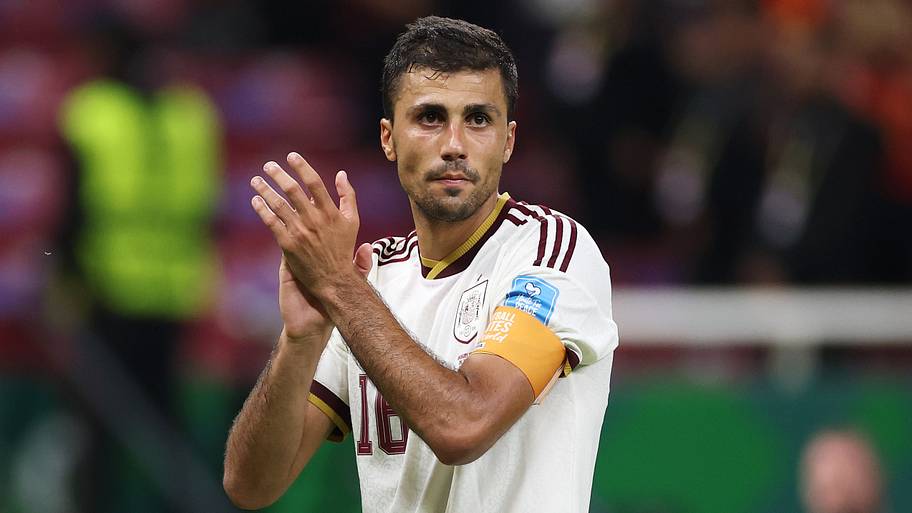
GUADALAJARA, MEXICO — The chants coming down from the stands from the predominantly pro-Spain crowd at the Estadio Akron near the end of La Roja’s 1–0 victory against Uruguay on Friday night were telling.
“Cabo Verde, Cabo Verde, Cabo Verde!” sang the nearly 50,000 in attendance, who were clearly more interested in the island nation’s clash against Saudi Arabia that was transpiring simultaneously in Houston, TX, than the match they were witnessing live—one that many believed had the potential to be the best of the 2026 World Cup group stage.
Spain and Uruguay instead decided to drop the curtain on Guadalajara’s 2026 World Cup chapter with a drowsy affair which saw each team register one attempt on goal and evenly combine to produce 28 fouls that made for a Copa Libertadores-worthy contest.
Fernando Muslera’s latest blunder turned a routine Álex Baena shot into the match-winner in what was Spain’s only attempt on goal of the night. La Roja is undefeated heading to the round of 32, but everything isn’t sunshine and rainbows for Luis de la Fuente’s side.
“That was a disaster,” a concerned José, who travelled from Seville to support La Roja in North America this summer, tells Sports Illustrated as he heads for the nearest exit. “You can understand a poor first game against Cabo Verde with a team that’s so young, but this feels like a step back.”
It was tension, not elation, that defined the atmosphere as Spain supporters walked out of the Akron towards the rainy Guadalajara night. The reigning European champion and the odds-on favorite to win the 2026 World Cup before the start of the tournament, delivered a pedestrian group stage—one that brought back memories of recent failures.
It’s No Longer the Good Old Days—and Spain Knows It
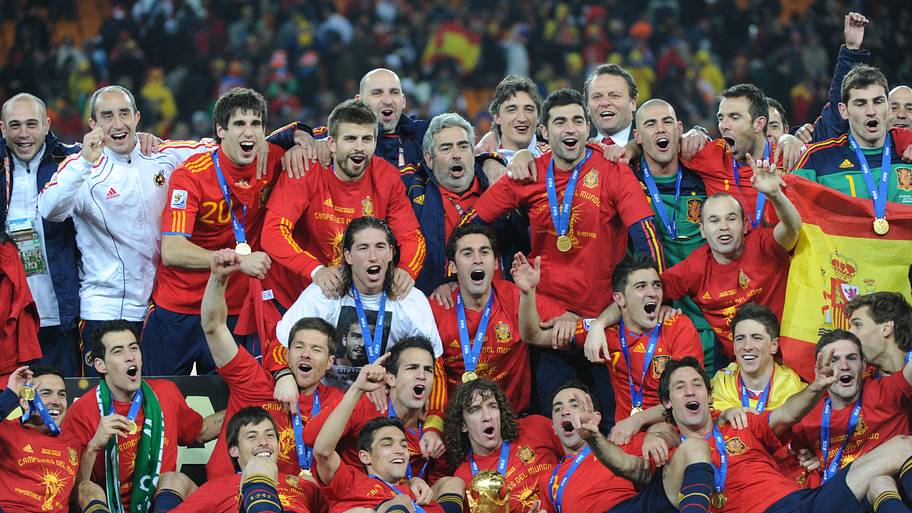
The golden era of Spanish soccer saw La Roja dominate international soccer between 2008 and 2012, winning two European championships and a maiden World Cup title playing a revolutionary style of possession-based soccer now famously known as “tiki-taka.”
With dominant midfielders such as Sergio Busquets, Andrés Iniesta, Xavi Hernández, Xabi Alonso, David Silva and Cesc Fàbregas leading the charge, plus David Villa and Fernando Torres at their peak, La Roja thrived during that period like few national teams in history ever had.
But after conquering Europe for the second consecutive time in 2012, Spain’s golden generation met its demise at the 2014 World Cup, shockingly crashing out of the group stage in Brazil to vacate its crown.
Entering the 2026 World Cup, Spain had won just three of its last 11 matches on the world stage, failing to win a single knockout round clash ever since it lifted the trophy in 2010.
The inability to break down low blocks with slow, mostly horizontal possessions defined Spain’s last two tournament exits in the 2018 and 2022 rounds of 16. La Roja completed almost 2,000 passes combined against Russia and Morocco, but mustered only one goal across the pair of games and was eliminated in a penalty shootout in both matchups.
Simply dominating possession was no longer a recipe for success. Evolution was needed, Spain needed a spark. Then, less than two years after the heartbreak in Qatar, La Roja found it.
The 2024 Revolution
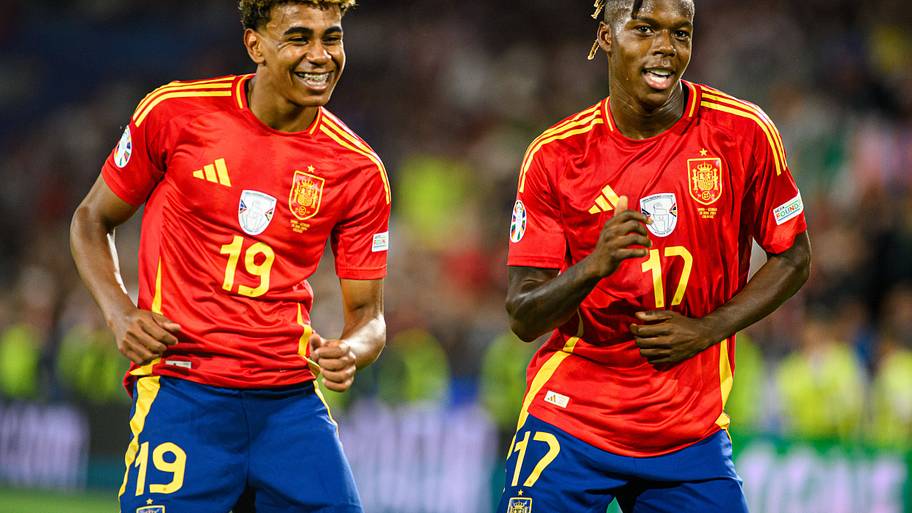
Spain re-established its continental reign at the 2024 Euros still obsessed with controlling games through sustained possessions, but with an added layer of dynamite on the wings thanks to the emergence of Nico Williams and Lamine Yamal.
A team keeping control of the ball for three quarters of a game suddenly had two arrows down the flanks capable of exploiting space while also perfectly able to manipulate—and even humiliate—defenders with their world-class dribbling skills. Spain, as a result, became an absolute force.
Two days after Williams turned 22 and a day after Yamal turned 17, Spain defeated England in the 2024 Euros final, with the latter assisting the former in Spain’s opener.
De la Fuente, who took over as manager from Luis Enrique after the 2022 World Cup, found the formula to adapt and turn a previously lethargic side still stuck in the early 2010s into a modern juggernaut.
Following this blueprint, Spain hasn’t lost a a 90-minute match since a friendly against Colombia in March 2024.
But it’s the inability to have this layer of directness, incisiveness and dynamism in attack that’s hindering Spain this summer.
The Injured Difference Makers
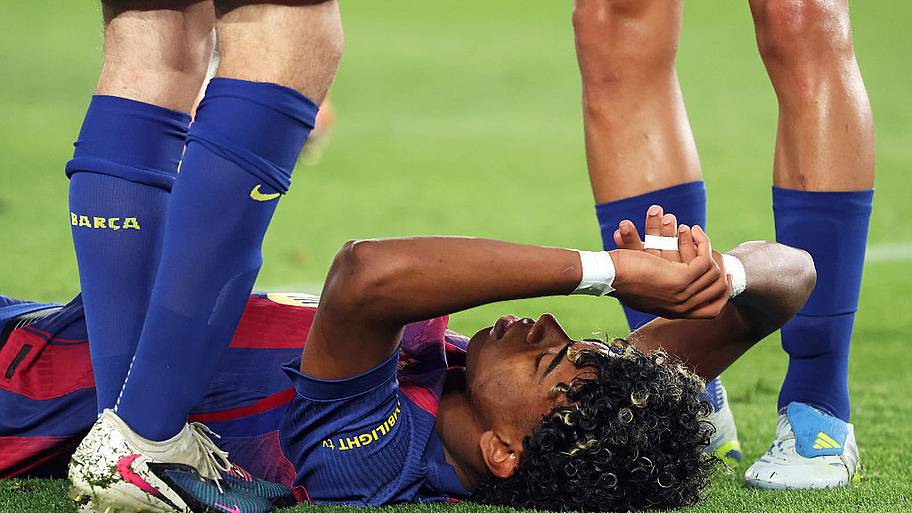
Yamal, the face of Spanish soccer’s latest revolution, blossomed into one of the best players in the world in the aftermath of the 2024 Euros. But a hamstring injury suffered during the final month of the 2025–26 season threatened to spoil the 18-year-old’s World Cup dreams.
He managed to recover in time and has played in all three games of tournament so far with his minutes gradually increasing. Yet, the inactivity clearly took a toll on him, and although he scored the opener in the second game against Saudi Arabia, he looked rusty against Uruguay, much to the audible sighs of the crowd who rose in excitement whenever the ball came to him only to be left wanting more more often than not.
“They looked good for 45 minutes [against Saudi Arabia] when Lamine was on the pitch,” Javier, a Spanish-born Guadalajara resident stated before the match vs. Uruguay. “[Spain] will go as far as his [Yamal] injury lets him take it. When Lamine doesn’t appear, there’s no rock and roll.”
Regardless of the noticeable rust, at least Yamal seems to be slowy regaining full fitness. The same, though, can’t be said about other key pieces that are essential for Spain to showcase its full potential.
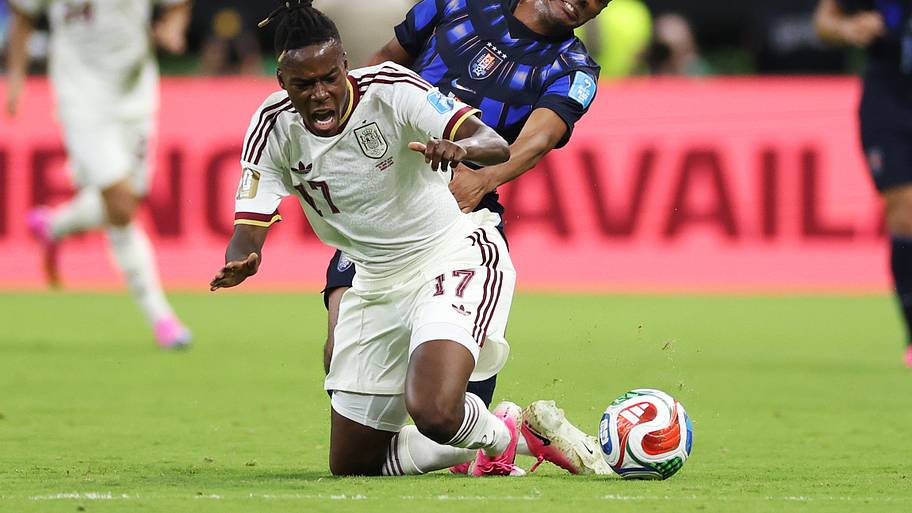
Williams limped through the mixed zone at the Estadio Akron without saying a word on his way to Spain’s team bus, simply shaking his head with a grin on his face after getting asked, “hurt or injured?” The 2024 Euros hero has made three brief and inglorious appearances from the bench this summer, clearly nursing issues after an injury ravaged 2025–26 term.
Crystal Palace winger Yéremy Pino was wearing an arm sling as he left the stadium after finishing the game in visible pain with his arm tucked to his side following fall. “He probably has a broken collarbone,” De la Fuente admitted following the match.
New Liverpool winger, Víctor Muñoz, kept it brief saying, “it’s going,” and sharing a smile as he walked past Spanish reporters who wanted to know how his recovery from a nagging muscular injury that’s denied him from making his tournament debut was, indeed, going.
Spain is suddenly battling multiple fitness issues at the position that became so crucial to it’s new attacking style. With Fermín López, an attacking midfielder capable of agitating opposing defenses based on pure energy, also missing from the roster through injury, La Roja’s attacking variants are starting to appear slim, leading to old problems resurfacing.
Spain Must Find a Way
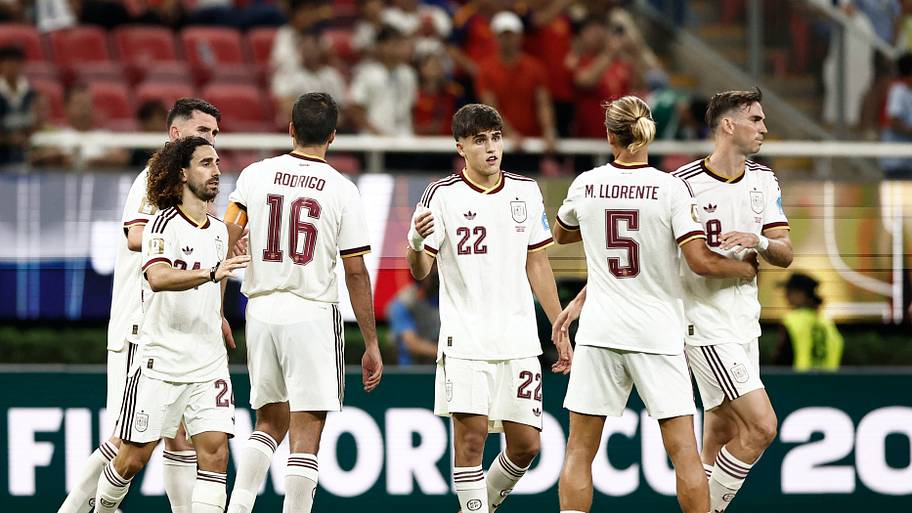
Much like during the eliminations against Russia and Morocco, Spain struggled tremendously against Cabo Verde and Uruguay’s low block. This summer, La Roja has resembled its previous two World Cup sides more than De la Fuente’s novel 2024 version.
Yet, defeating Uruguay—a side historically gritty, tenacious, rocky and who needed a win to avoid elimination—by any means possible, has its merit.
“Today wasn’t the best day to show off that [attractive] style,” Baena declared post match. “[Uruguay] man-marked us, it’s a very tough game where we can’t bring out that style of combination-play we have. But I’m very proud of the job we did, the way we competed.”
Winning ugly can be more than enough. Spain’s 2010 World Cup winning side won all four of its knockout stage matches 1–0, not necessarily playing its most attractive brand of soccer. Spain is yet to concede during the World Cup and it only allowed its group stage opponents to manufacture a combined xG of 0.54 from three total shots on goal.
But it’s evident that De la Fuente must find answers to unlock an extra attacking gear once the level of opposition rises. Whether it’s Dani Olmo returning to the XI to add a player that can operate in tight spaces between the lines, making Mikel Oyarzabal, who has 22 goal contributions in his last 16 games for Spain, a bigger focal point of the team’s game plan, or simply playing at a higher tempo. La Roja has the quality available to perform at a much stronger level.
Spain will face either Austria or Algeria in the round of 32, two rivals it should be able to overcome. There’s still time for La Roja to reach its peak potential and live-up to the pre-tournament hype, but it must happen quickly.
“I think from now on every game will be very similar,” Baena stated. If that's the case, then Spain must find a way to rediscover the attacking spark that's made it so formidable over the last two years. Or else, La Roja could be doomed to the same fate that’s defined its recent World Cup history.