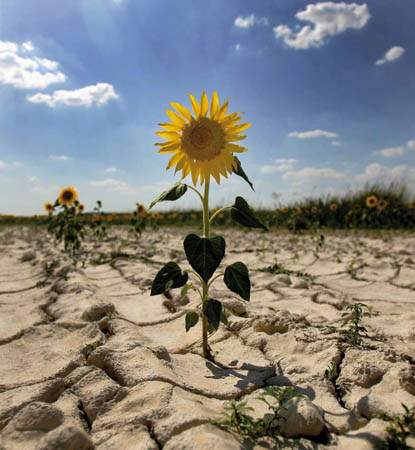
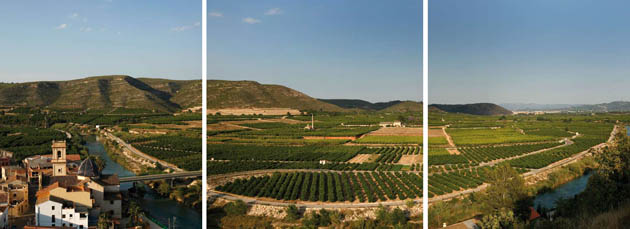
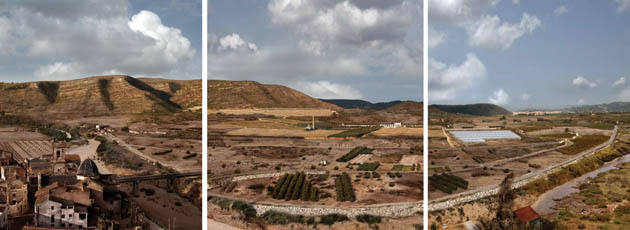
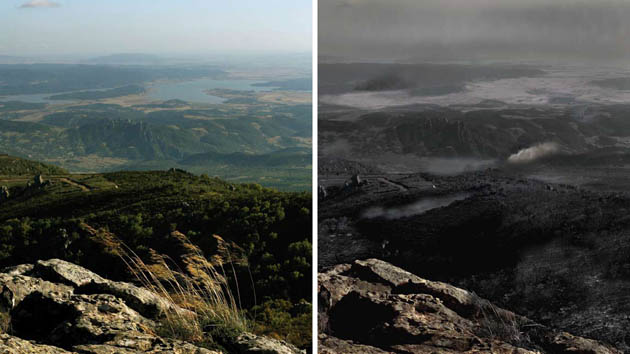
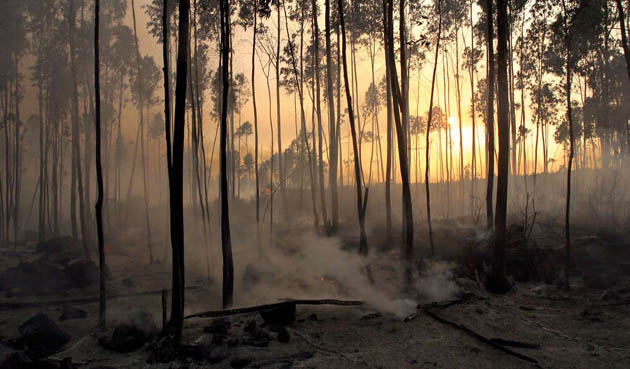
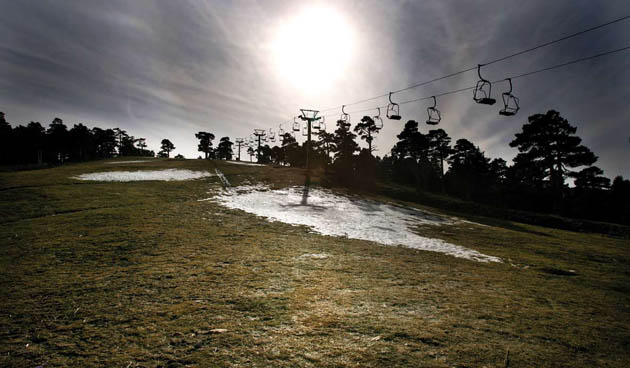
Greenpeace hopes to scare Spain into action with the book, which uses statistics from the UN panel on climate change and comparative photomontages prepared by Pedro Armestre and Mario Gómez to show the landscapes of a changed climatePhotograph: GreenpeaceThe fields of Valencia, which have provided Spain with oranges for centuries, as they look now. Agriculture in Spain will be dramatically affected by climate change, with reduced crop yields likely in the Mediterranean, the Balkans and in the south of European Russia due to water shortages and rises in temperaturePhotograph: GreenpeaceBy 2070, the photos show, the fields have almost completely disappearedPhotograph: Greenpeace
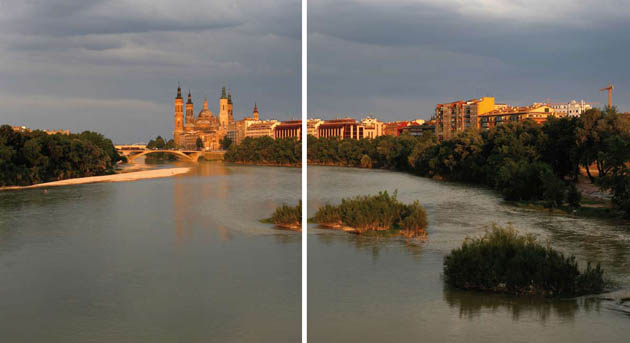
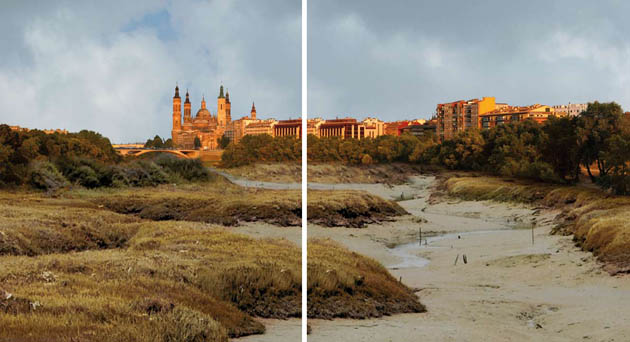
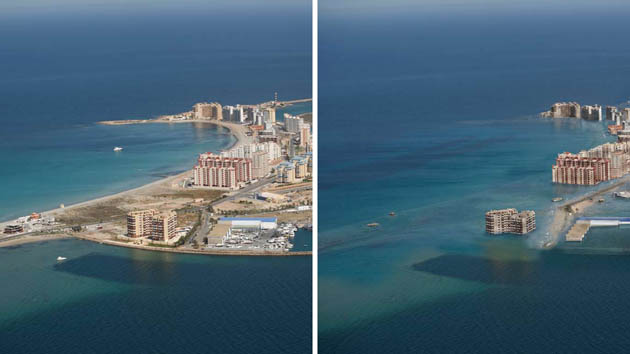
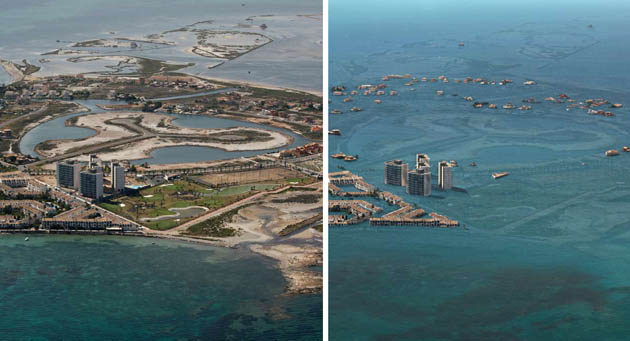
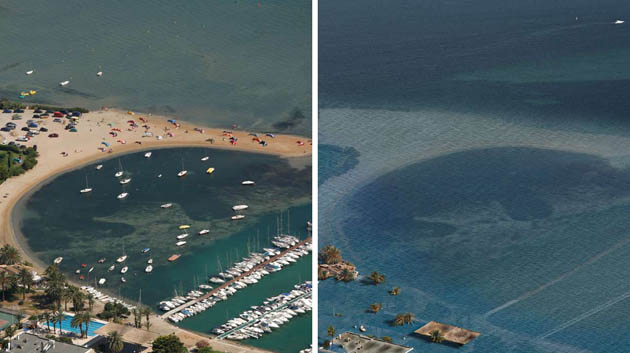
Parque Nacional de Las Tablas de Daimiel, Ciudad Real. Greenpeace's director in Spain, Juan López de Uralde, said the intention of the book was not to use "scientific rigour" but to "create alarm and a call to action"Photograph: GreenpeaceThe Ebro river in Zaragoza now ...Photograph: Greenpeace... and as a dried-up riverbed in 2070Photograph: GreenpeacePerhaps the most dramatic image is that of La Manga de Mar Menor in Murcia, where hotels and apartment blocks abut the MediterraneanPhotograph: GreenpeaceIn a few decades, according to Greenpeace, most of this will be underwaterPhotograph: GreenpeaceThe rise in sea level due to climate change will bring flooding, land loss, salinisation of ground water and the destruction of buildings and infrastructure across Europe, the book says. Projections studied estimate an average overall rise in sea level of 0.09-0.88m by 2100Photograph: GreenpeaceAlcornocales Nature Reserve, Cádiz, before and after a forest fire. Climate change means that the length of forest fire periods, their frequency and severity will probably increase in the MediterraneanPhotograph: GreenpeaceFires in scrubland across Europe will possibly multiply, Greenpeace says, and the increase in torrential rainfall will boost the risk of erosion, due to the reduction of plant regeneration after frequent fires. In Spain, the risk of fire will rise, as well as the likelihood that fires will be on a larger scale Photograph: GreenpeaceClimate change will affect Spain's colder areas. In the high Pyrenees, indicators show that current glaciers will be liable to drastic reductions in size and may disappear towards the middle of the 21st century, between 2050 and 2060Photograph: Greenpeace
Sign up to read this article
Read news from 100’s of titles, curated specifically for you.