Spain will send its armed forces to Ceuta after thousands of migrants entered the Spanish territory from Morocco this week, the Spanish government said in a statement on Thursday evening. The troops will support the Civil Guard, which polices the border, after local authorities said the situation had spiralled out of control.
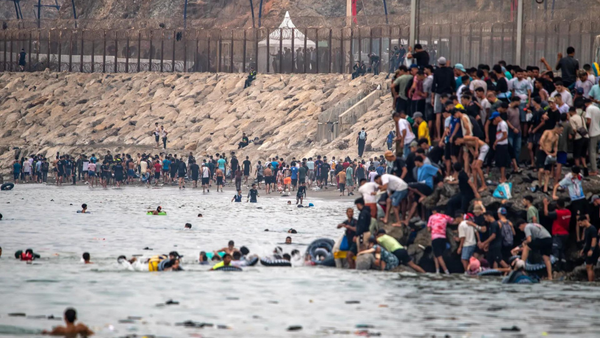
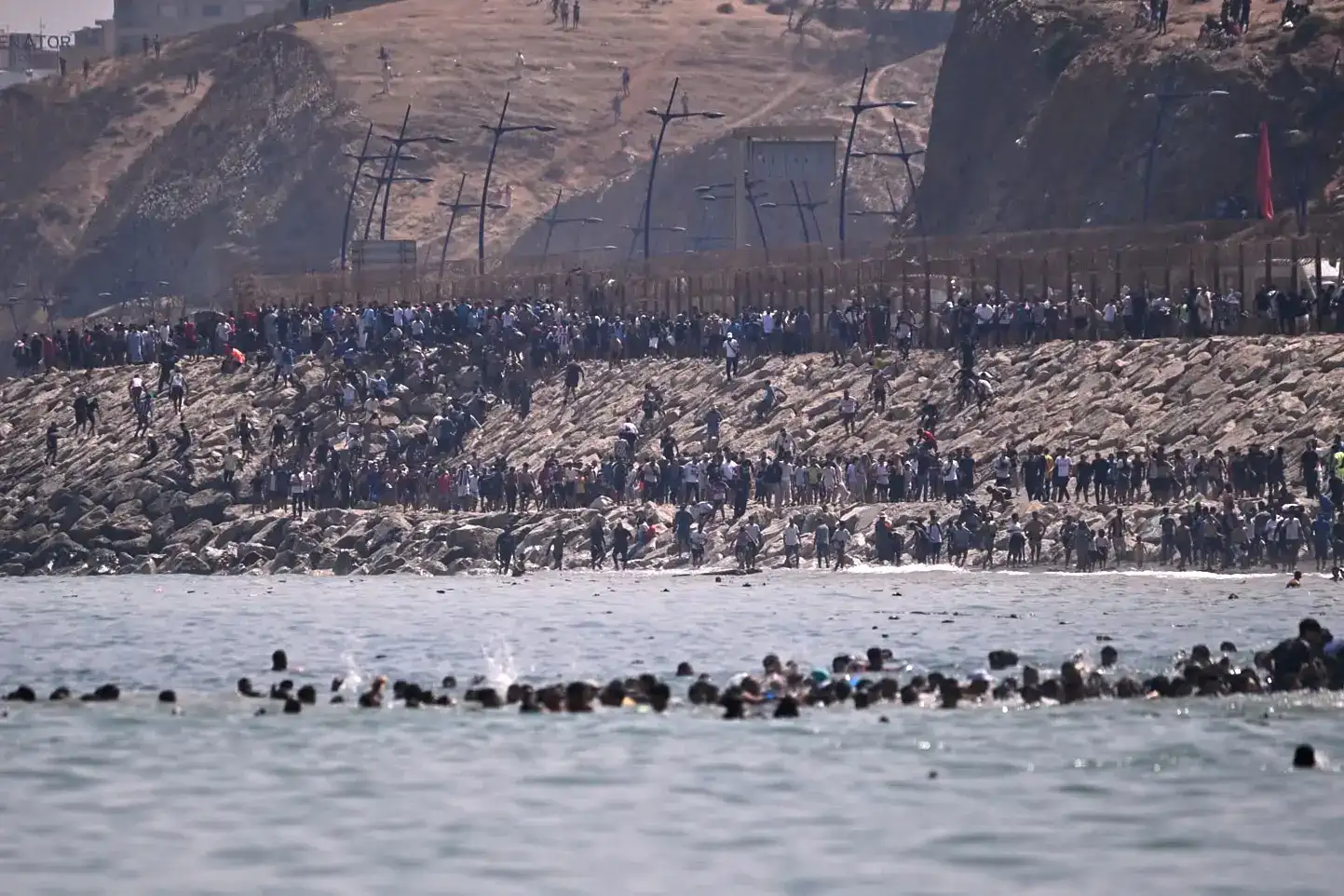
The deployment follows a request from Ceuta's regional government, which had asked Madrid for more police and army personnel to manage the crisis. Video footage from the scene showed large crowds, mostly young men but also families with women and children, walking past the breakwaters at Tarajal beach and onto local roads.
Officials describe border as overwhelmed
Rachid Sbihi, who heads the association representing Spain's Civil Guard officers in Ceuta, said, “The situation is absolute chaos.” He added that exact numbers were hard to establish. “It's not possible to give precise numbers, but there are thousands of migrants crossing,” he said, describing the border as having “totally collapsed.”
In Morocco, Achraf Maimouni of the Moroccan Association for Human Rights called the situation “exceptional” and said the Tarajal crossing point had opened under unusual conditions on Thursday morning, allowing people to cross.
Some migrants shouted “Viva España!” to a photographer at the scene. It remains unclear what triggered the surge in crossings.
Rise in arrivals follows days of smaller crossings
The mass crossing on Thursday followed a build-up over the previous days. On Wednesday, migrants attempting to swim to Ceuta led to at least three deaths at sea, according to Sbihi and activists on both sides of the border.
Moroccan authorities have not commented publicly on the crossings. Spain's Interior Ministry said Morocco was cooperating closely and that Moroccan police were stopping large numbers of people from crossing. Both governments have agreed to work on returning migrants who entered Ceuta without authorisation as soon as possible.
Spain's Interior Minister, Fernando Grande-Marlaska, is scheduled to visit Ceuta on Friday to assess the situation. The ministry has said it will keep the border secure and protect residents, but has ruled out declaring a national emergency, since migration is not classified as a national security risk under current law. The ministry said different government departments are working together to respond to the situation quickly.
Ceuta authorities had earlier linked the rise in crossings to a Spanish Supreme Court ruling this month, which found that migrants arriving by sea cannot be sent back across the border without due process, unlike those who cross by climbing the border fence on land. Some activists in Morocco questioned this explanation, arguing that most migrants would not have known about the court decision.
City has faced similar crises before
Ceuta sits on the northern coast of Africa and is one of the main entry points into Europe for migrants seeking work or fleeing violence. Many cross by swimming roughly 5 kilometres from the Moroccan town of Fnideq, while others attempt a shorter swim from nearby Belyounech.
The current surge recalls a similar episode in May 2021, when more than 8,000 migrants entered Ceuta within two days. That crisis followed Spain's decision to allow Polisario Front leader Brahim Ghali to receive medical treatment in a Spanish hospital, which strained relations between Madrid and Rabat. The Polisario Front has long claimed to represent the Sahrawi people in the disputed territory of Western Sahara.
Regional government presses for stronger response
Juan Jesús Vivas, head of Ceuta's regional government, had called on Madrid to declare a national emergency on security grounds and to send additional police and troops. He said the reinforcements were needed “to guarantee the inviolability of the frontier and citizen safety.”
Vivas had warned earlier in the week that reception centres in Ceuta were full, leaving hundreds of migrants sleeping on the streets after more than 1,500 people entered the territory in the previous week. Thousands more crossed overnight and through Thursday.
The Interior Ministry has not confirmed how many migrants reached Ceuta in the past few days and said it would release its next migration figures on August 3. As of July 15, close to 3,000 migrants had entered Ceuta by land or sea this year, according to ministry data.
Ceuta has been under Spanish control since 1580. It has a mixed population of Christian and Muslim, Spanish and Moroccan residents, separated from Morocco by a border fence that migrants from across Africa have long tried to cross in search of a better life in Europe.
(Inputs from agencies)