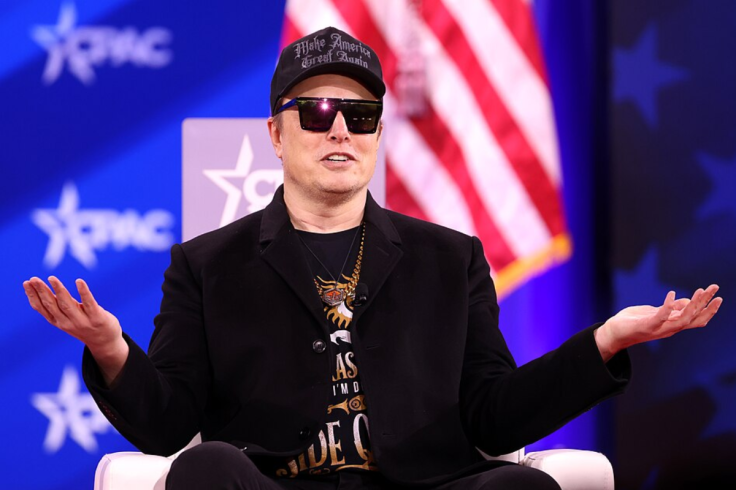
Tesla CEO Elon Musk is known for making high-risk decisions, especially when he is confident in the ventures he is pursuing. Against that backdrop, plans to set a fixed IPO price for SpaceX at $135 per share may come as little surprise.
The plans were unveiled on Wednesday in a filing with the Securities and Exchange Commission. Musk is seeking to raise around $75 billion through the initial public offering of SpaceX's stock, a move that would value the rocket and satellite communications company at approximately $1.77 trillion, according to Reuters.
The blockbuster debut could make Musk the first trillionaire in the world. Coming as several other high-profile companies prepare to test public markets, the business mogul's move is widely viewed as both strategic and timely.
Musk Going All-In
In the eyes of some observers, Musk is making a risky move. But with no rule preventing SpaceX from setting a fixed price for its IPO, the 54-year-old has broad discretion over how the offering is structured.
'Musk is simply taking a "take-it-or-leave-it" approach, which works for his followers and is also sensible given current market conditions and the lack of direct comparables,' Weiheng Chen, a senior partner in Hong Kong at US law firm Wilson Sonsini Goodrich & Rosati, said in a Reuters report.
Set against this backdrop are two AI-centric companies, Anthropic and OpenAI. With artificial intelligence investment booming, the anticipated filings are being interpreted as efforts to raise capital to help fund data centres required to power AI technology.
Once made official, the SpaceX filing would become the biggest public offering since 2019. At the time, Saudi Aramco completed the world's largest initial public offering, raising a record $29.4 billion by selling 1.5% of its shares on the Saudi domestic exchange, Tadawul. The offering initially valued the energy giant at $1.7 trillion and briefly pushed its market capitalisation to $2 trillion, according to another Reuters report.
SpaceX IPO Part of a Bigger Goal?
Aside from cementing its position amid rising AI investment, the planned SpaceX IPO is also widely seen as one of Musk's steps towards the commercialisation of space travel and the establishment of human outposts on Mars and the Moon.
In a previous post, Musk outlined two milestones required to reach a $7.5 trillion market capitalisation and establish a permanent human colony on Mars with at least one million inhabitants on the Red Planet.
'For the entirety of its existence (...) human civilisation has lived on a single celestial body: Earth. The current paradigm, in which human civilisation is confined to one planet, exposes humanity to existential threats that are unpredictable and uncontrollable on a planetary scale,' a section of the filing with the SEC read.
These were also conditions that Musk was required to meet to attain what has been described as the biggest pay package in corporate history. Massive investments are needed, particularly in orbital computing and autonomous systems that would be critical to ensure operations on Mars could run smoothly.
Musk has acknowledged the risks involved and remains optimistic. Critics such as Paul Sutter, a NASA adviser and Johns Hopkins research scientist, have questioned the feasibility of the initiative, raising concerns about the goals of the SpaceX CEO and chief engineer.
SpaceX has yet to turn a profit, incurring losses to date. In the first quarter of 2026 alone, the company reported a $4.3 billion net loss, much of which was attributed to heavy investment in artificial intelligence technology.
The ambitious IPO listing could help ease those losses and over time potentially support revenue generation. Given the AI boom, opportunities are emerging, and Musk appears intent on capitalising on them to determine where SpaceX ultimately stands.