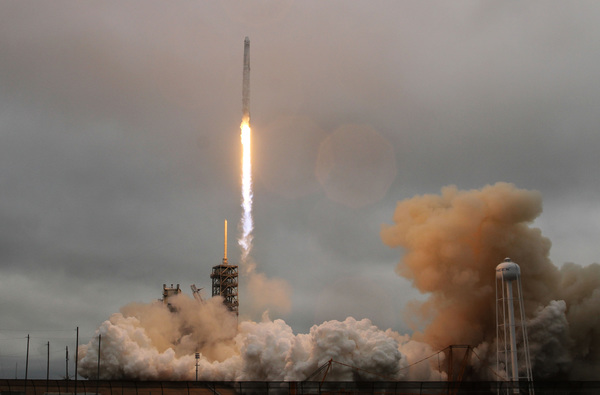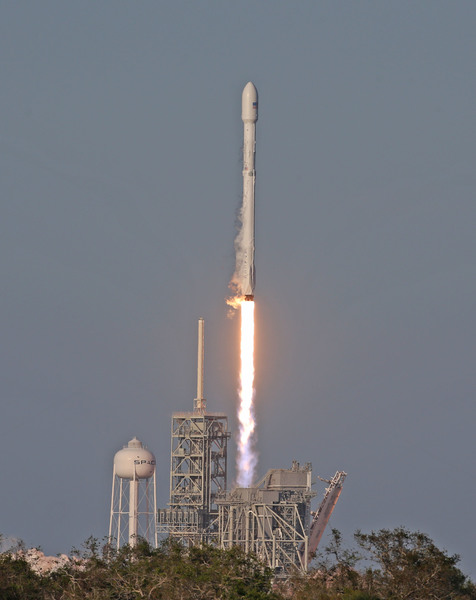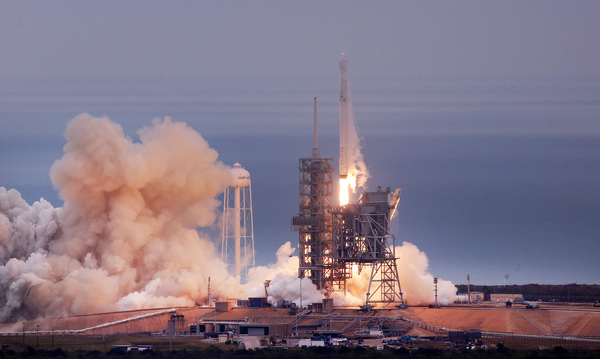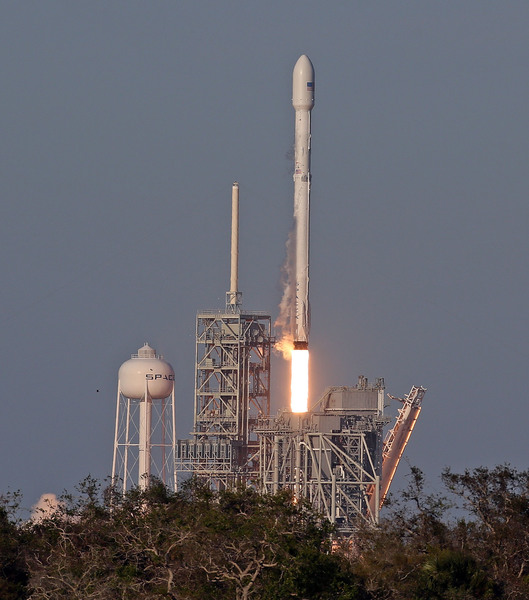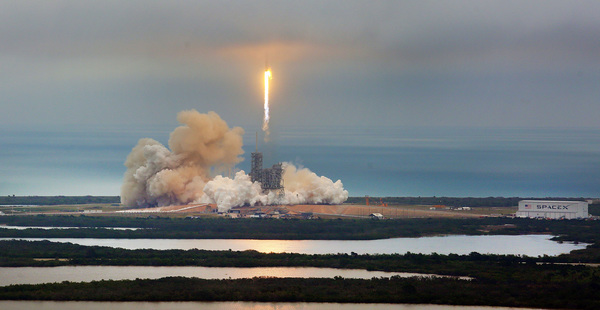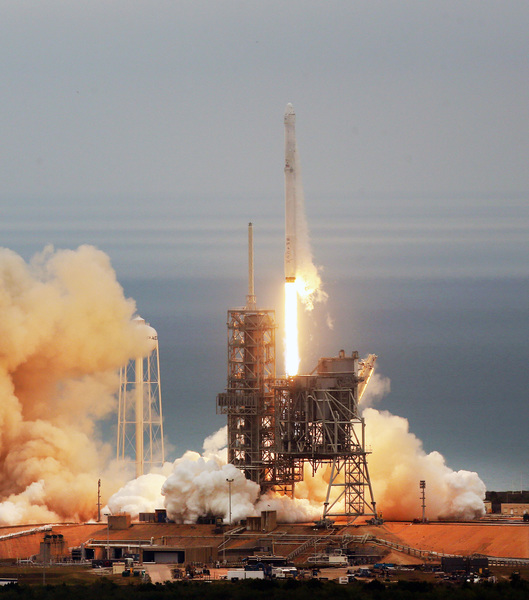
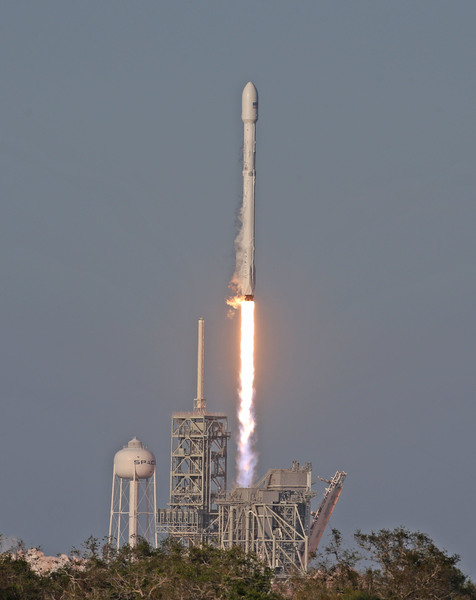
In a first, SpaceX has launched and landed a first-stage rocket booster that previously flew.
The successful launch of the commercial communications satellite on the Falcon 9 rocket could signal the beginning of lower launch costs for the Hawthorne, Calif.-based space company and a potential new era of cheap space flight.
SpaceX said the first-stage booster went through an extensive evaluation process, including a thorough inspection of the entire booster and individual engine testing.

Once it landed after its earlier flight, the first-stage booster traveled via ground transport to Florida for refurbishment before heading to SpaceX's McGregor, Texas, development facility for testing and then, finally, the launch site at Kennedy Space Center in Florida.
The company tweeted in January that it had completed a successful static fire test of the first-stage booster in Texas. On Monday, SpaceX said it test-fired the entire rocket, including the recycled booster, on the launch pad.
The launch occurred at 6:27 p.m. Eastern time from Pad 39A.
The 11,600-pound satellite operated by Luxembourg-based SES will replace two existing satellites and will provide broadband and high-definition video capabilities throughout Mexico, Central and South America and the Caribbean.
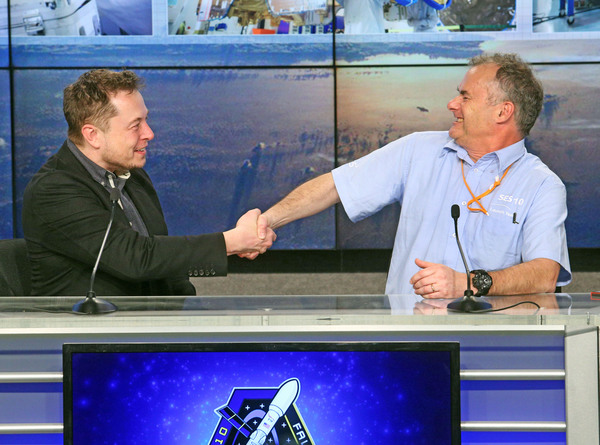
SpaceX Chief Executive Elon Musk said last April, when this booster landed, that the Falcon 9 first-stage booster could potentially be reused for 10 to 20 missions.