The recent explosion of an Antares rocket, and the tragic disintegration of Virgin’s SpaceShipTwo three days later, remind us that spaceflight is a dangerous endeavour.
While these failures may soon be overcome, a more intractable problem is the growing amount of debris and redundant craft in orbit. Moving at up to 8km per second, even a small shard of so-called space junk could disable a satellite on impact.
Estimates have put the number of orbiting objects down to 1cm in size at perhaps a half million, with more than 20,000 objects being tracked that exceed 10cm and pose the greatest risk.
Fortunately the bulk of this debris is above 700km in height, safely above the current 415km height of the International Space Station. Even so the ISS sometimes manoeuvres to avoid passing debris – as it did on Wednesday.
The fear, dramatised in the film Gravity, is that one collision might set off a chain reaction that could render the whole of low-Earth orbital space a no-go zone – the so-called Kessler Syndrome.
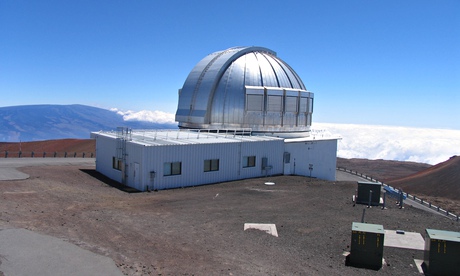
Now the UK Infrared Telescope (Ukirt) in Hawaii, its funding sadly withdrawn by the UK’s Science and Technology Facilities Council, is to help monitor orbital debris. Its new owner, the University of Hawaii, has joined with the University of Arizona and Lockheed Martin Space Systems to maintain Ukirt’s operation.
In fact, Lockheed Martin and Raytheon are reported to be competing to build the next generation of ground-based systems to track objects in orbit.