The era of space tourism is nearly upon us.
With companies increasing their efforts (and budgets) to make space tourism a reality, it definitely feels like mankind’s final frontier is closer than ever.
You’ve likely heard of the two companies leading the pack: Richard Branson’s Virgin Galactic, which has been aiming to take civilians on recreational space flights for a few years now, and Amazon creator Jeff Bezos’ Blue Origin. Then of course there’s Elon Musk’s SpaceX, which aims to “enable humans to become a spacefaring civilization and a multi-planet species by building a self-sustaining city on Mars.”
Even luxury brands are getting in on the act, creating products that space tourists can enjoy. It was thanks to one of these that I got to try my very first zero gravity flight.
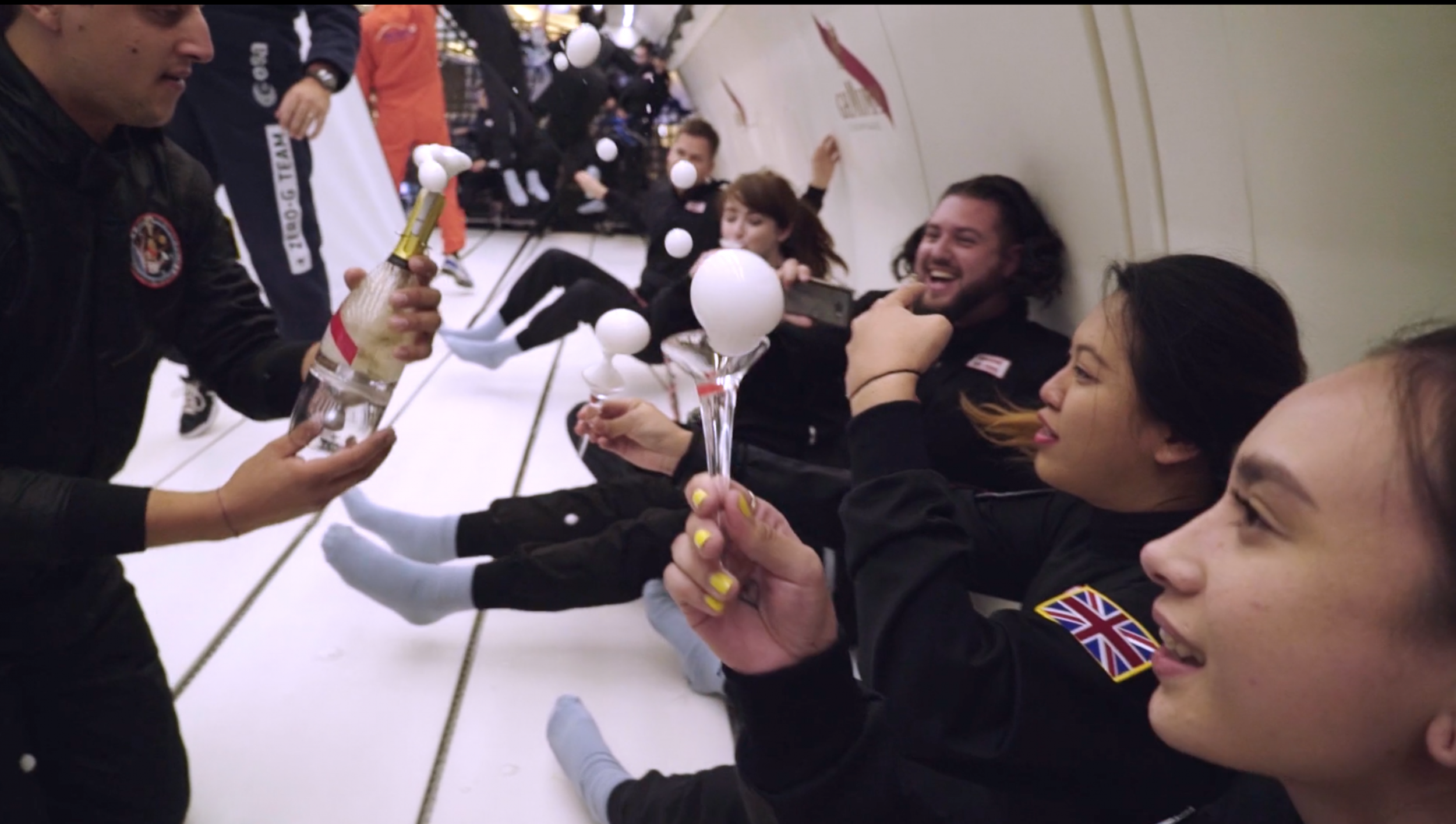
I was lucky enough to be invited to the launch of Grand Cordon Stellar, champagne designed to be drunk in space or in zero gravity conditions through a specially designed bottle. Olympic champ and GH Mumm’s new chief entertainment officer Usain Bolt was behind the launch, which took place in – where else? – an Airbus Zero-G.
The plane is a flying laboratory run by Novespace, specially designed for parabolic flights where you can experience complete weightlessness on board – perfect for training astronauts and, more frivolously, trying a glass of zero gravity bubbly.
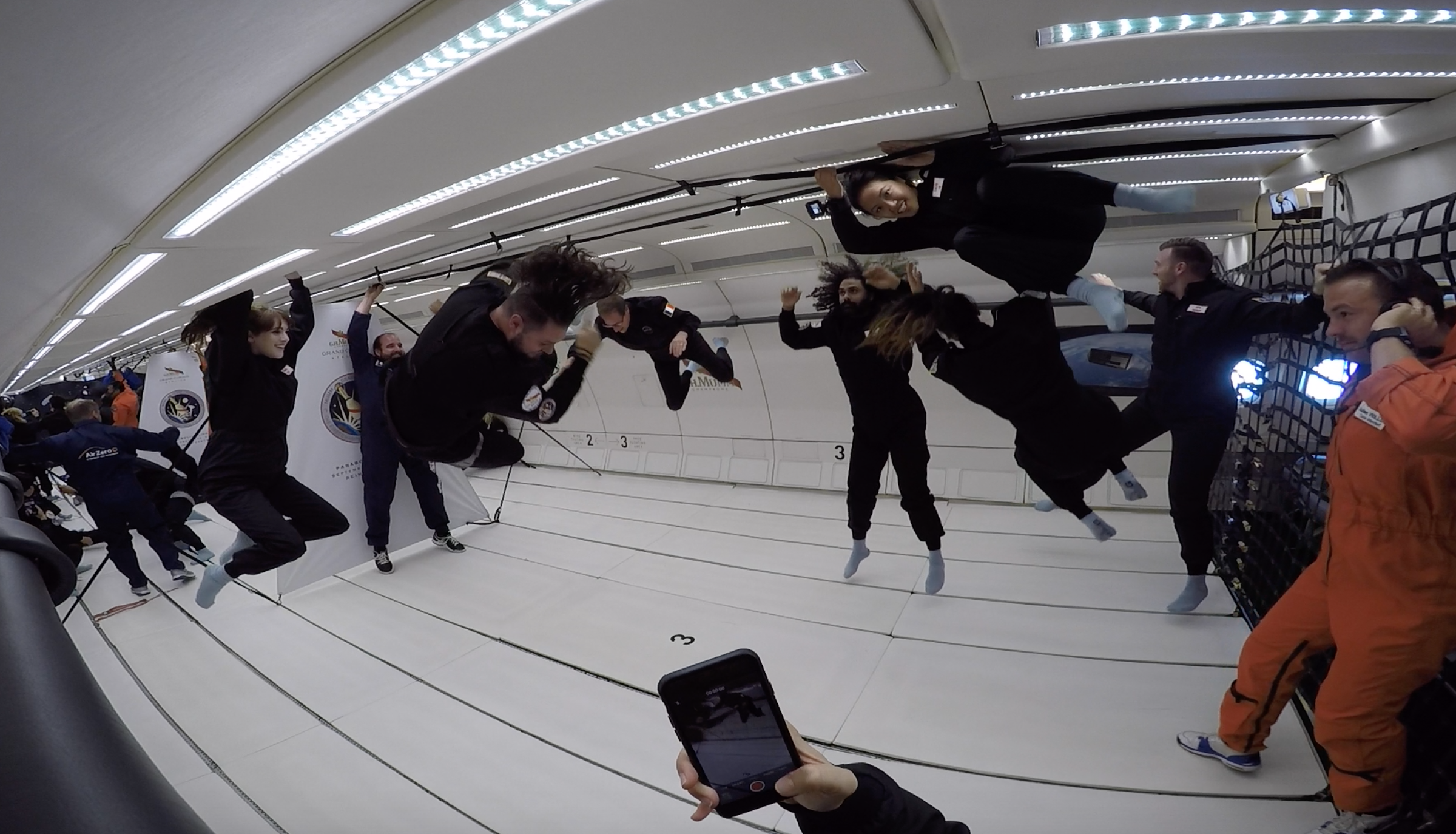
On the day of the flight, I was nervous but excited at the prospect of looking as graceful as Sandra Bullock in a scene from Gravity, or as cool as the folks in OK Go’s Upside Down and Inside Out music video.
Departing from Chalons Vatry Airport in north eastern France, I was ready to fly thousands of feet over the Atlantic, clad in my own “space suit” as we waited for further briefing before the flight.
The craft is notoriously dubbed the “vomit comet” for obvious, if disgusting, reasons, so I’d strategically eaten a light breakfast – accompanied by an anti-sickness tablet.
On board, it was like any other flight. The only difference? The padded free floatation area, which we’d be enjoying later in the flight.
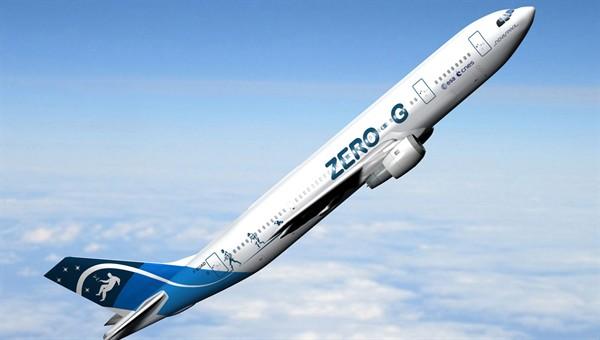
So, how does it work? Here comes the science bit…
Parabolic flights follow a flight profile alternating manoeuvres of climbs and descents. These manoeuvres, called parabolas, each produce up to 22 seconds of weightlessness. During these periods, objects and people on board no longer feel gravity, and can float freely in the cabin of the plane.
Before the parabolic manoeuvre, the aircraft flies horizontally at an altitude of 20,000ft. The plane’s speed is gradually increased to about 810 km/h, the maximum allowed for this type of aircraft.
Then the pilot pulls gradually on the handle and the aircraft nose reaches a pitch of 47° at an altitude of about 25,000ft. During this phase, called “input resource”, a heavy apparent gravity or hypergravity is established; passengers feel 1.8 times their weight on Earth.
The plane is then “pushed over”, which means the pilot significantly reduces the engine speed. This moment, called the injection, is when the aircraft enters a reduced gravity phase, inducing weightlessness.
At the beginning of the weightlessness round, the aircraft continues to climb until reaching an altitude of 28,000ft before descending for 22 seconds. Passengers float during this time, experiencing the incredible sensations of freedom normally only felt by astronauts in space.
When the aircraft reaches 30°nose-down, a gentle pull out is started and the pilot returns to the initial flight level. Passengers are able to stabilise themselves as normal gravity sets in.
According to the instructors, the compression you feel during hypergravity is exactly like being on top of a rocket going into space. “Imagine Neil Armstrong,” one of them said. “This is what he went through when he went to the moon.”
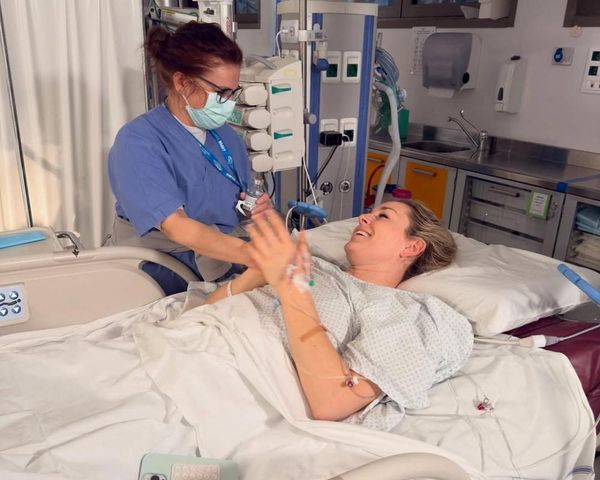
What I experienced went beyond words. No, I was not as poised as I’d imagined, most closely resembling a tadpole caught in a strong undercurrent – but it didn’t matter.
It was astonishing to see everything in slow motion during each parabola. Just like in the movies, the champagne on board floated in magical globules around the cabin, ready to drift into passengers’ open mouths.
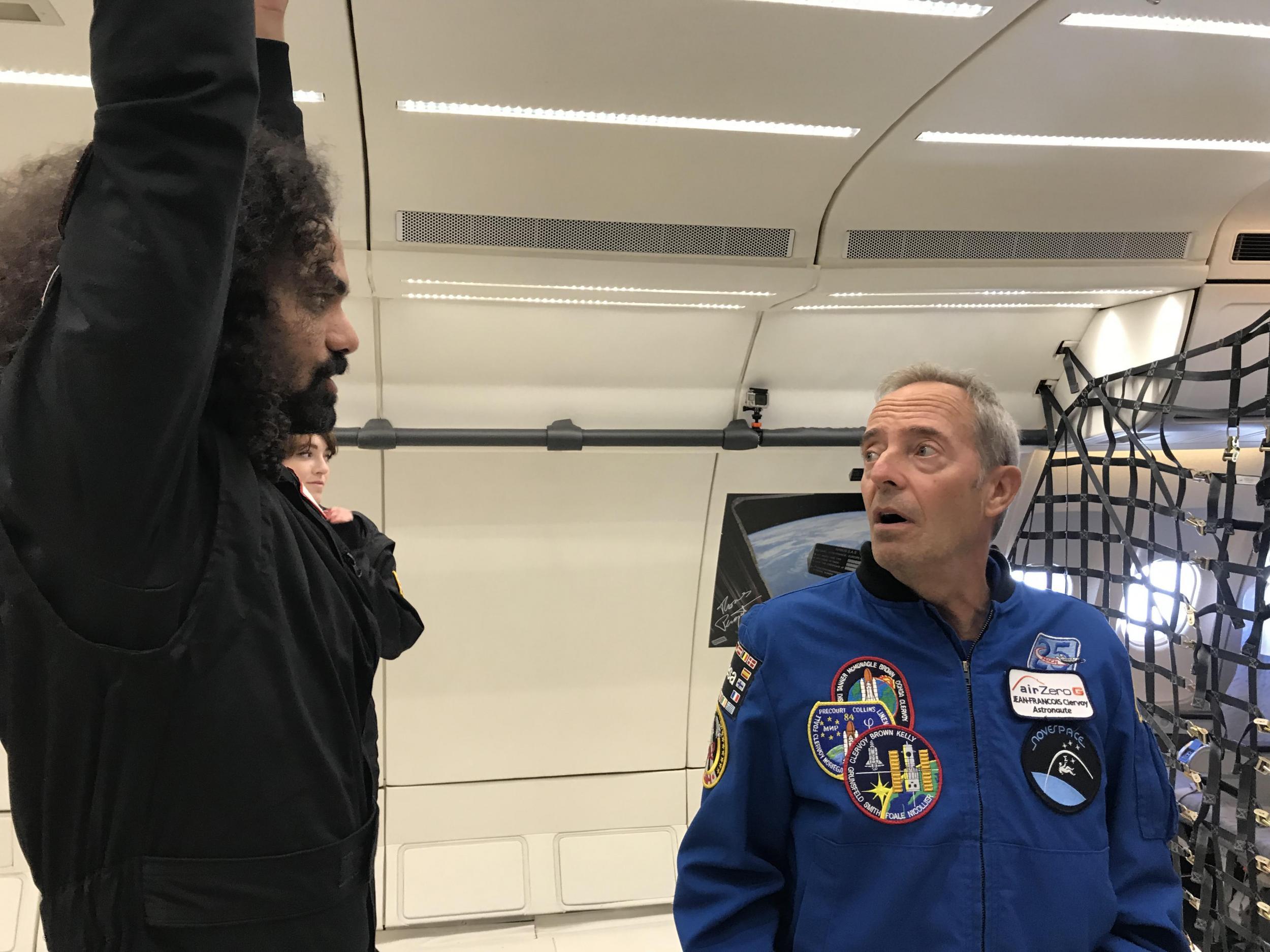
European Space Agency astronaut and Novespace’s chairman Jean-Francois Clervoy – the fifth French man to be sent into space – was also on board.
The initiator of parabolic flights in Europe, he dished out some tips to enjoy the experience more: “Stay relaxed and during the pull up and the pull out, don’t move your head because you disturb your vestibular system; this is what makes you sick.
“And last but not the least, listen to the announcement in the cabin over the loudspeakers because we are telling you what we are doing.”
Although you don’t get a view of the Earth and the inky black wonders of space with this kind of flight, I’m still in awe of the whole experience.
I may not be a real astronaut, but playing the part for a day was the ultimate bucket list experience. Sandra Bullock, eat your heart out.
How much hand baggage can you take on a Ryanair flight? Where should you be travelling in 2019? Can you claim compensation for a delayed flight?
Travel expert Simon Calder will be answering all your questions at our upcoming event, Ask Simon Calder.
Register your place today by logging into Independent Minds