Besides high-precision watchmaking, Rolex is involved and supports various domains from arts and culture to exploration and sports.
The multifaceted Swiss company has been synonymous with speed since 1935, when Briton Sir Malcolm Campbell broke the 300mph (483kph) barrier at the wheel of his World Land Speed Record car, Bluebird, with a Rolex watch on his wrist.
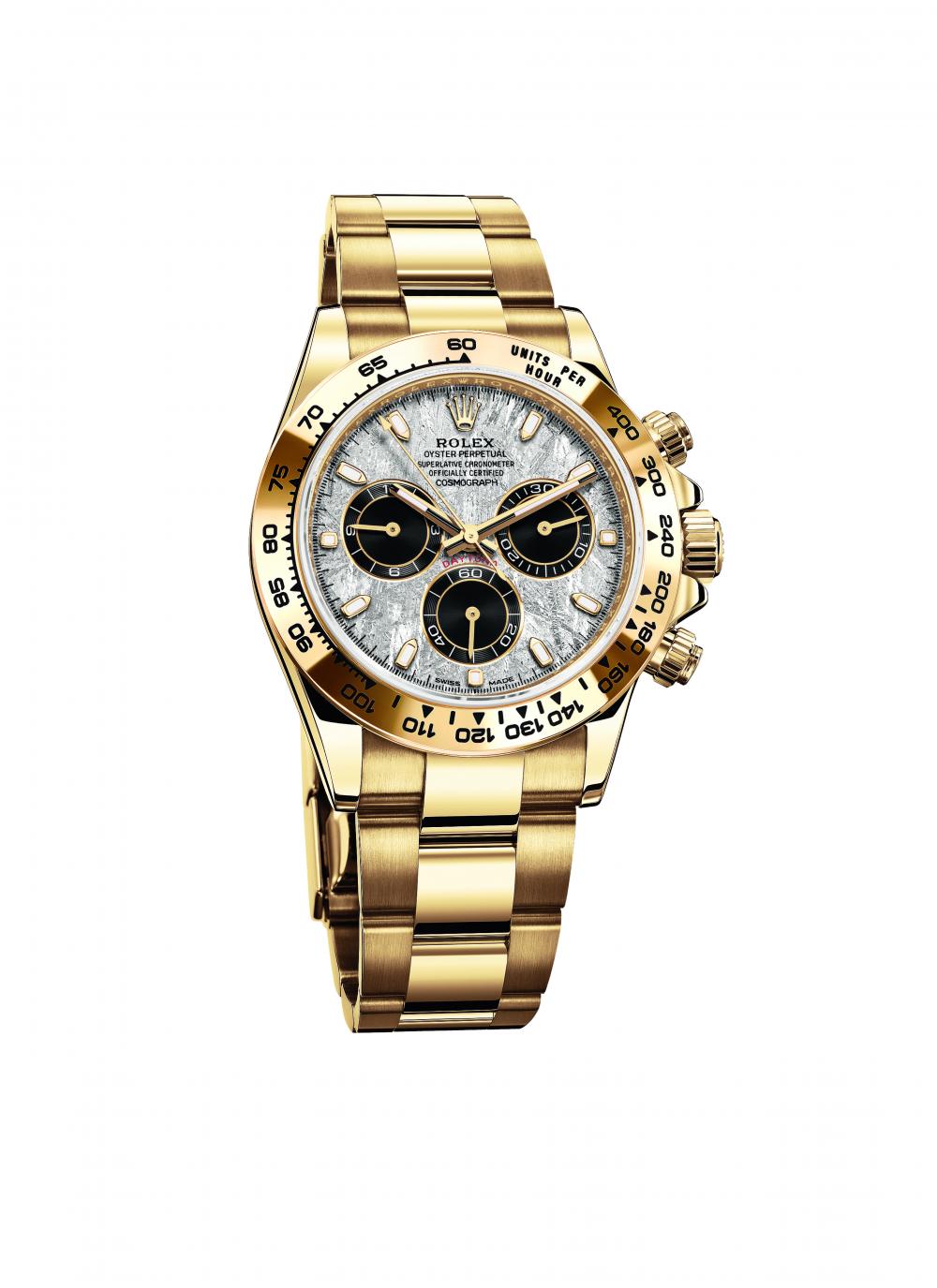
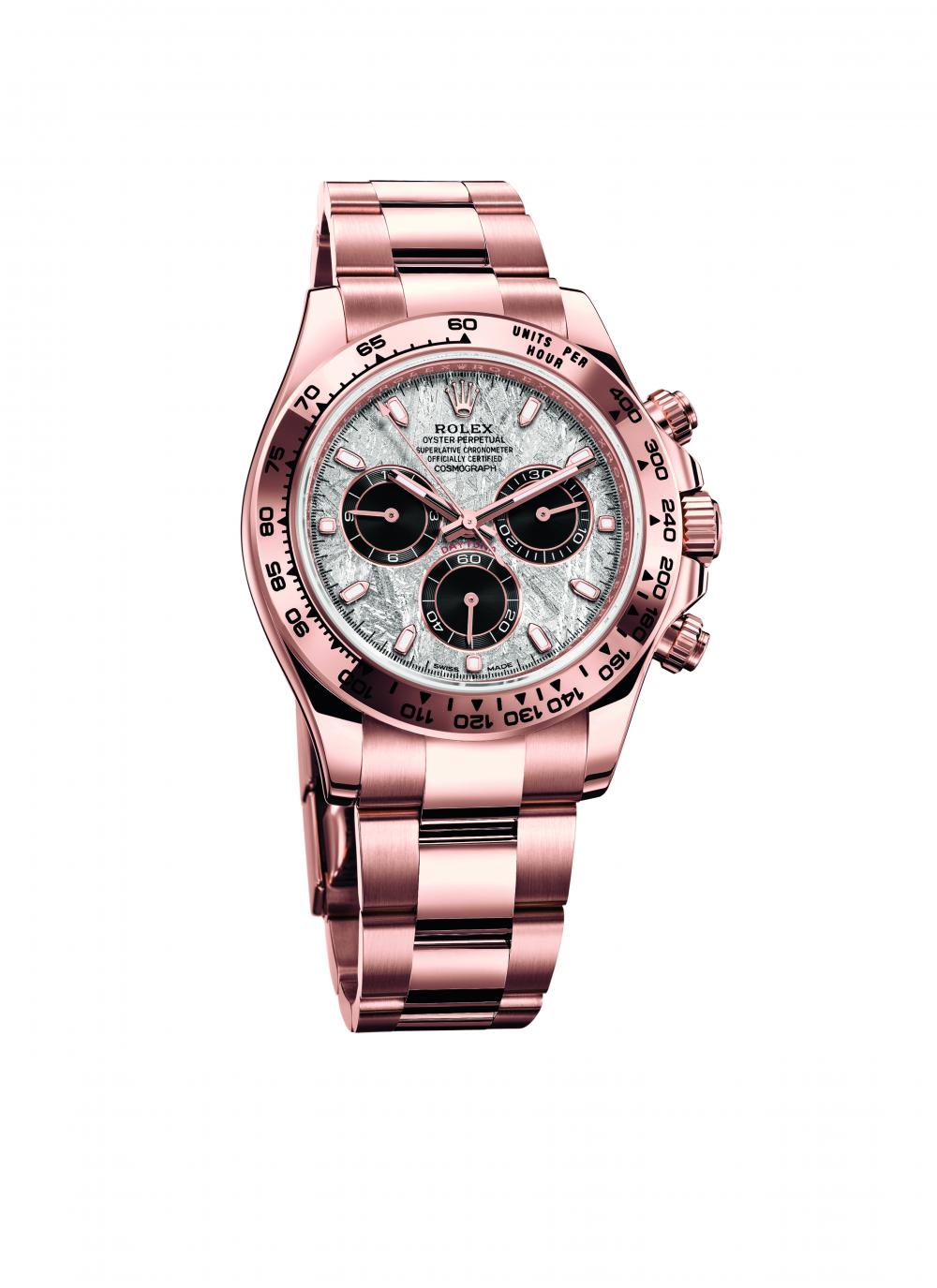
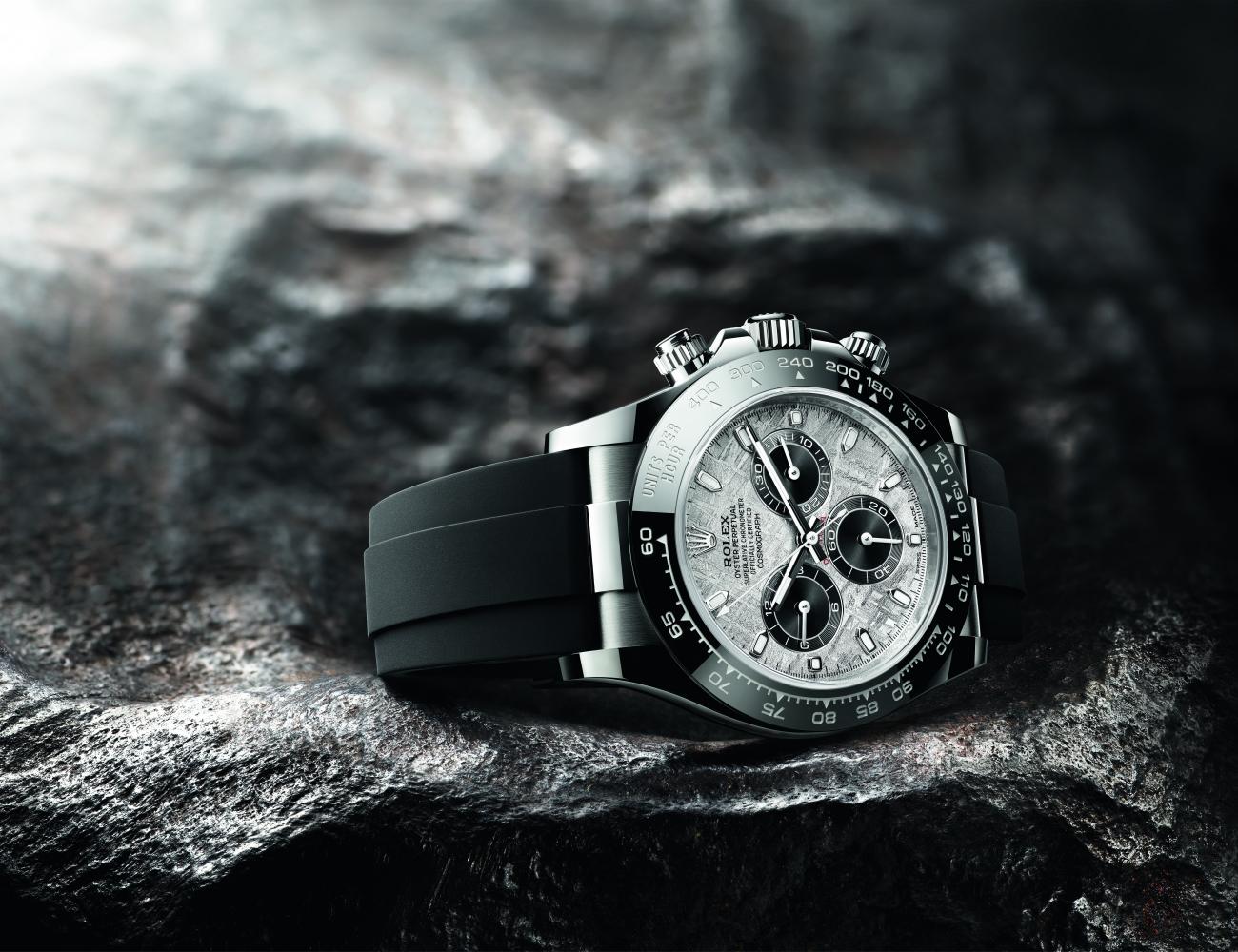
This heritage of professional watches transcends in three new versions of the Oyster Perpetual Cosmograph Daytona boasting a dial made from metallic meteorite.
Rolex's association with the Daytona International Speedway began in 1959, and the Oyster Perpetual Cosmograph was launched to meet the needs of professional racing drivers in 1963. Later, Daytona was added to the name of the chronograph that can be used to measure time intervals or calculate average speeds thanks to the tachymetric scale on the bezel.
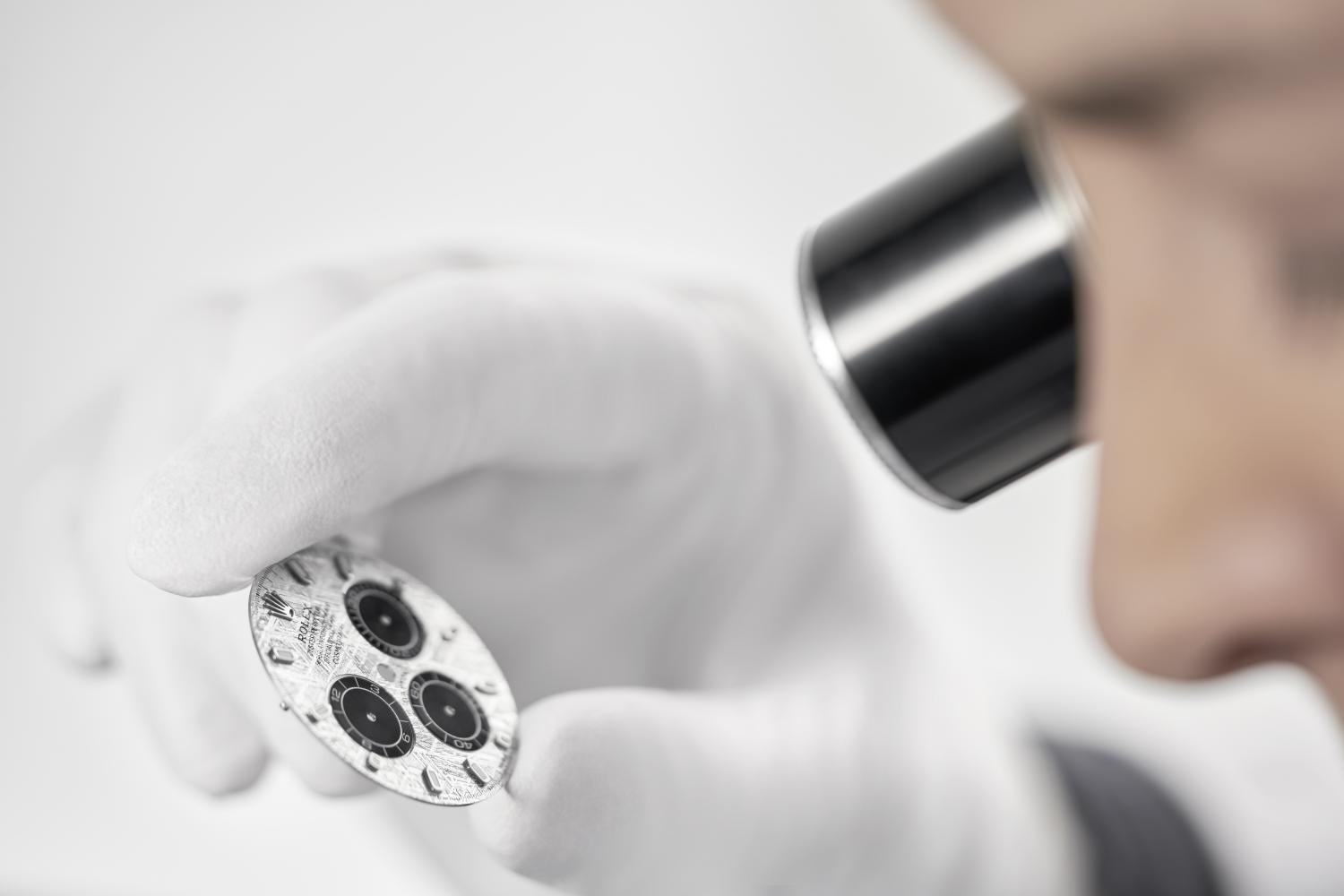
On the latest Oyster Perpetual Cosmograph Daytona, the black chronograph counters at 3, 6 and 9 o'clock contrast against the mesmerising meteorite dial.
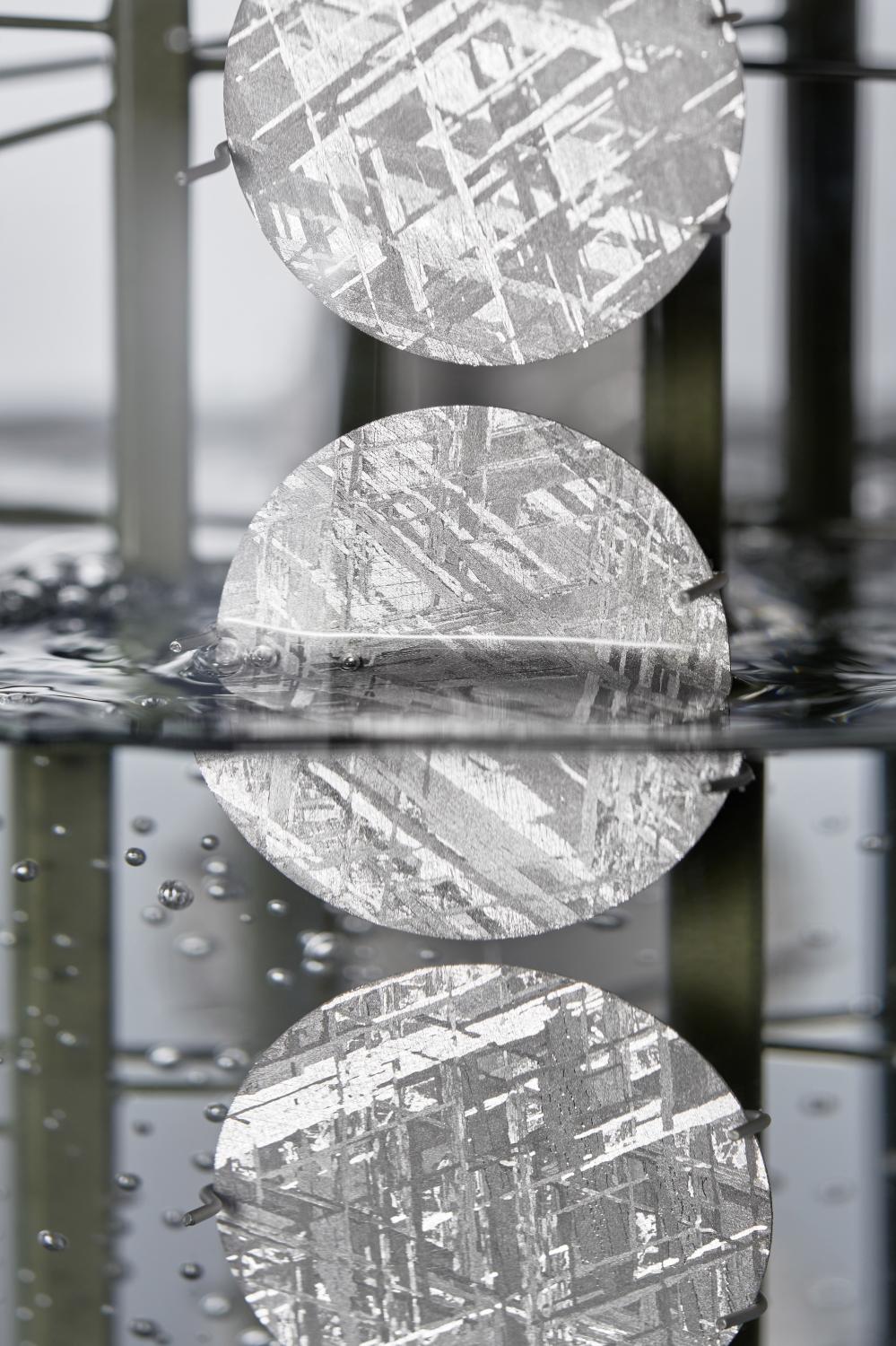
Originating in the far reaches of the solar system, the metallic meteorite comes from an asteroid that exploded millions of years ago.
On the voyage between planets, fragments of this natural extraterrestrial material -- primarily composed of iron and nickel -- cool by a few degrees Celsius every million years, resulting in a unique, distinctive crystallisation within the material.
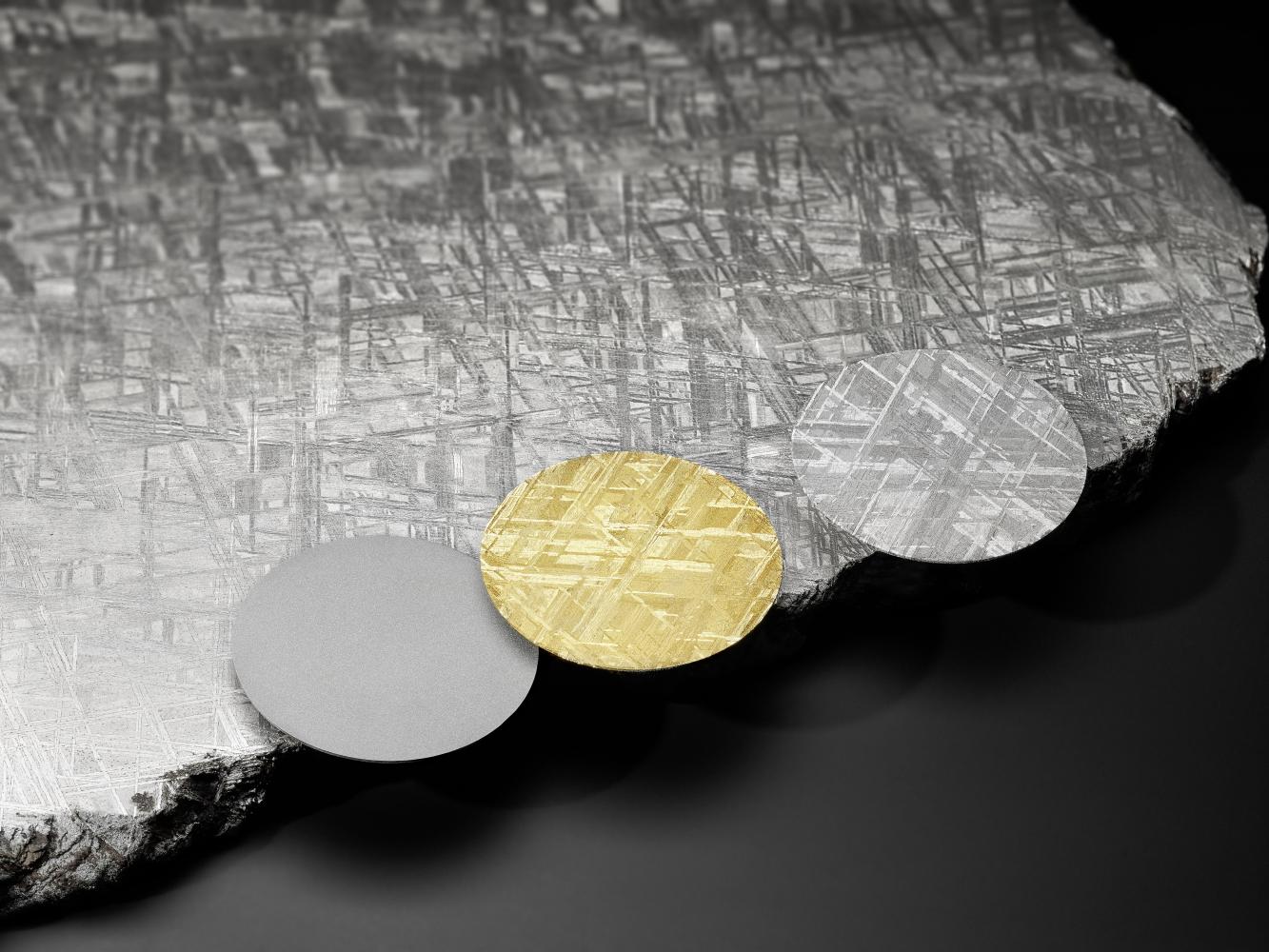
The metallic meteorite is a rare and challenging material to work with, but once it is cut into thin sections and a chemical treatment is applied, the beauty of its interwoven internal structure is revealed. These fascinating and varied formations are known as Widmanstätten patterns.
For its dials, Rolex works with leading experts in the field and selects only the sections of meteorite with a particularly well-formed surface rich in different shapes and reflections.
The cosmic material is coupled with high-tech ceramic in the white gold model featuring a monobloc Cerachrom bezel in black ceramic with a tachymetric scale. The moulded, recessed graduations, numerals and inscriptions are coated with platinum via PVD (Physical Vapour Deposition).
As a matter of fact, Rolex played a pioneering role in the development of special ceramics for the monobloc bezels and bezel inserts. Not only virtually scratchproof, these materials offer intense colours and are highly resistant to corrosion and environmental effects.
Moreover, the company has developed expertise and innovative manufacturing methods that grant its complete independence in the production of these ceramic components.
The white gold Cosmograph Daytona is fitted with an Oysterflex bracelet, which singularly combines the robustness and reliability of a metal bracelet with the flexibility, comfort and aesthetics of an elastomer strap.
The yellow gold and Everose gold versions are matched with a robust Oyster bracelet, characterised by three-piece links. On the latter, the Oyster bracelet includes ceramic inserts inside the links to enhance its flexibility and longevity. In addition, a concealed attachment system ensures seamless visual continuity between the bracelet and case.
The 40mm Oyster case is guaranteed waterproof to a depth of 100m while ensuring optimum protection for the watch's movement.
Since 2000, the Oyster Perpetual Cosmograph Daytona has been powered by Calibre 4130, a self-winding mechanical chronograph movement entirely developed and manufactured by Rolex.
A consummate demonstration of technology, it incorporates a chronograph function with a reduced number of components, thereby enhancing the movement's reliability. The robust mechanism with a column wheel and vertical clutch further allows an instantaneous and extremely precise start.
A blue Parachrom hairspring, manufactured by Rolex in a paramagnetic alloy, makes it up to 10 times more precise than a traditional hairspring in case of shocks. The blue Parachrom hairspring is equipped with a Rolex overcoil, ensuring the calibre's regularity in any position.
Providing a power reserve of approximately 72 hours, the Calibre 4130 is equipped with a self-winding module via a Perpetual rotor.
Like all Rolex watches, the Oyster Perpetual Cosmograph Daytona is covered by the Superlative Chronometer certification redefined by Rolex in 2015. This designation testifies that every watch leaving its workshops has successfully undergone a series of tests conducted by the brand in its own laboratories according to its own criteria.
These certification tests apply to the fully assembled watch, after casing the movement, guaranteeing superlative performance on the wrist in terms of precision, power reserve, waterproofness and self-winding.