The Southbank Centre will mount a festival of history, studying the changes over Britain’s past 70 years, on the weekends leading up to and immediately following the general election in May next year.
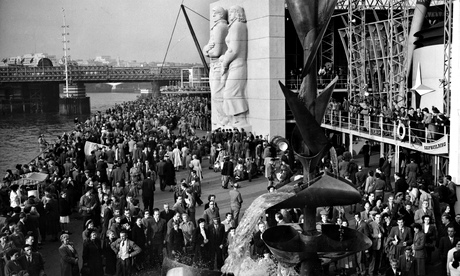
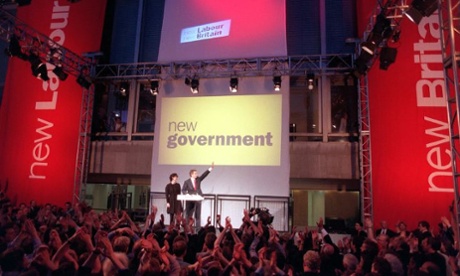
The festival will be on the site where in 1951 the Festival of Britain celebrated a joyful vision of the postwar future, and where on a rosy dawn in May 1997 Tony Blair came to celebrate his Labour victory to the soundtrack of Things Can Only Get Better.
The festival, which will include art, music, literature and philosophy, is inspired by the monumental series of postwar histories by David Kynaston, who has published on the themes of Austerity Britain, Family Britain and Modernity Britain, and is still only half way through his chronicle of Britain from the end of the war to the rise of Margaret Thatcher in 1979.
Kynaston, who describes himself as a child of the Festival of Britain, born in 1951, said he was “honoured, and thrilled and touched” by the accolade.
The festival is intended not just to study history but to urge people to engage in the political process, and whoever wins the election will be confronted by an instant demand from artists assembled at the Royal Festival Hall for a commitment to the importance of creativity.
Despite Kynaston’s conviction that the best prime minister in British history died 116 years ago – William Ewart Gladstone – and that the greatest one who got away was the Labour leader Hugh Gaitskell who died in 1963, he remains resolutely optimistic.
“Politics is about more than eating bacon sandwiches,” he said. “Politics is about things that really matter.”
Southbank artistic director Jude Kelly added firmly: “We don’t do pessimistic festivals.”
Changing Britain 1945-2015 will include an exhibition at the Hayward gallery, with seven artists, including Richard Wentworth and Jane and Louise Wilson, tackling a decade each.
Kelly announced an ambitious programme for next year, with 14 festivals including one celebrating the work of the poet TS Eliot to mark the 50th anniversary of his death. Alchemy, which is now the largest festival of Indian and South Asian culture outside India, will tour to Doncaster, Oldham and the Black Country, and there are tentative plans to take it to Mumbai.
The highlight of next summer will again be a Festival of Love, with a “big wedding weekend”. Last year, 70 couples married on the ballroom floor in front of hundreds of their friends and families.
Less joyful is the state of the building complex: the Grade I listed Royal Festival Hall itself is still shining from its major £111m refurbishment, but parts of the surrounding concrete terraces and buildings including the Hayward Gallery and the Queen Elizabeth Hall are in a sad state: journalists picked their way into the programme launch through a quagmire of deep puddles.
The victory by the skateboarders, backed by Mayor Boris Johnson, allowed to keep their skatepark in the dank undercroft instead of it being converted into more shops and cafes, stymied an ambitious £120m redevelopment project that would have included a lofty glass pavilion providing an orchestra rehearsal space.
Chief executive Alan Bishop said the refurbishment would now be a gradual but essential process. The Arts Council and the Heritage Lottery Fund have promised to help, but the centre still has £4m to raise towards the £24m cost of the first phase, which will tackle prosaic but urgent problems including leaking roofs, grotty backstage spaces, and electrics so ancient that in some places lights have gone out because spares are no longer obtainable and parts have had to be cannibalised for repairs.
“It’s not an enormous sum of money, but it’s going to be tough to raise it,” Bishop said. “This is not glamorous work – you dont get many billionaires who want to put their name on a downpipe.”