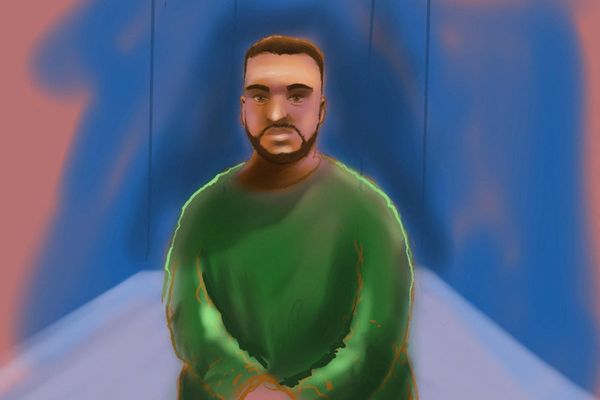
When Zahra first heard lockdown restrictions would see police presence increased in her region of south-west Sydney, her initial reaction was dread rather than surprise.
The 22-year-old Liverpool resident, who did not want her surname published, said she understood the reason why authorities wanted more precautions taken in the largely multicultural region.
"[Those from] immigrant and refugee backgrounds are expected to not abide by Australian laws," she said.
Since a major police operation began in Sydney's south-west to combat New South Wales' latest outbreak of COVID-19, Zahra says she feels this perception has become amplified.
The decision sparked many mixed views among community leaders, with some in agreement while others stated the decision discriminated against the minority groups that predominantly populate the area.
Zahra said Premier Gladys Berejiklian's recent plea to south-west Sydney's many multicultural communities was "quite upsetting".
The Armenian-raised premier acknowledged the region's ethnic diversity and asked the community to not "mingle with family" or "visit cousins (or) have sleepovers".
Essential workers under added pressure
Zahra has been no stranger to negative opinions based on where she lives.
Eessa Abdallah, 20, who lives in south-west Sydney and works for one of the biggest supermarket chains in Australia, says he was confronted by a police officer at his workplace for momentarily not having his mask over his nose.
"I had a customer who didn't understand English and couldn't hear me behind my mask, so I kept my 1.5-metre distance and pulled the mask away from my nose whilst covering it with my hand to speak Arabic to them," he said.
Afterwards, he said a police officer approached him and threatened to give him a fine for moving his mask away from his nose.
Mr Abdallah said this was not fair given supermarket workers "are the literal punching bags of the public regarding [complaints about] lockdown restrictions".
He said the lockdown restrictions had constantly been shifting and confusing to the public.
On Friday, the NSW government announced that many non-essential retail premises would be required to close under the latest tightened measures of the lockdown impacting Greater Sydney and its surroundings.
Prior to this announcement, Mr Abdallah had posted a TikTok video calling for this change.
Mr Abdallah said non-essential retail stores should have been shut down much earlier to avoid an extended lockdown period that was affecting the mental health of individuals.
Experts call for better approach
Western Sydney University senior research fellow specialising in migration and diversity, Sukhmani Khorana, said the stigma surrounding diverse ethnic communities, who were predominantly essential workers, was also demonstrated in Melbourne's public housing tenants' locking down in July 2020.
"The way that these communities were being cast and are being cast now is that [Australia] can't rely on them to do the right thing, and therefore there needs to be an increased surveillance compared to when you have a COVID outbreak in other parts of Sydney or Melbourne, which are perceived as more affluent," she said.
Following the major police operation announcement, Ms Berejiklian met privately with key multicultural leaders from south-west Sydney.
Ms Khorana said this consultation should have been the state government's first response to the mounting cases in the region.
"They could argue there wasn't enough time to do that, but the cons of over-surveillance far outweigh the pros.
"If you have an increased police presence and are excessively punitive towards communities who already have a history of feeling let down by authorities, you're not going to get compliance."
She also said what was needed was a measured response in line with consultation with local community leaders to ensure that government-led measures were adapted and adopted, not rejected by the locals.