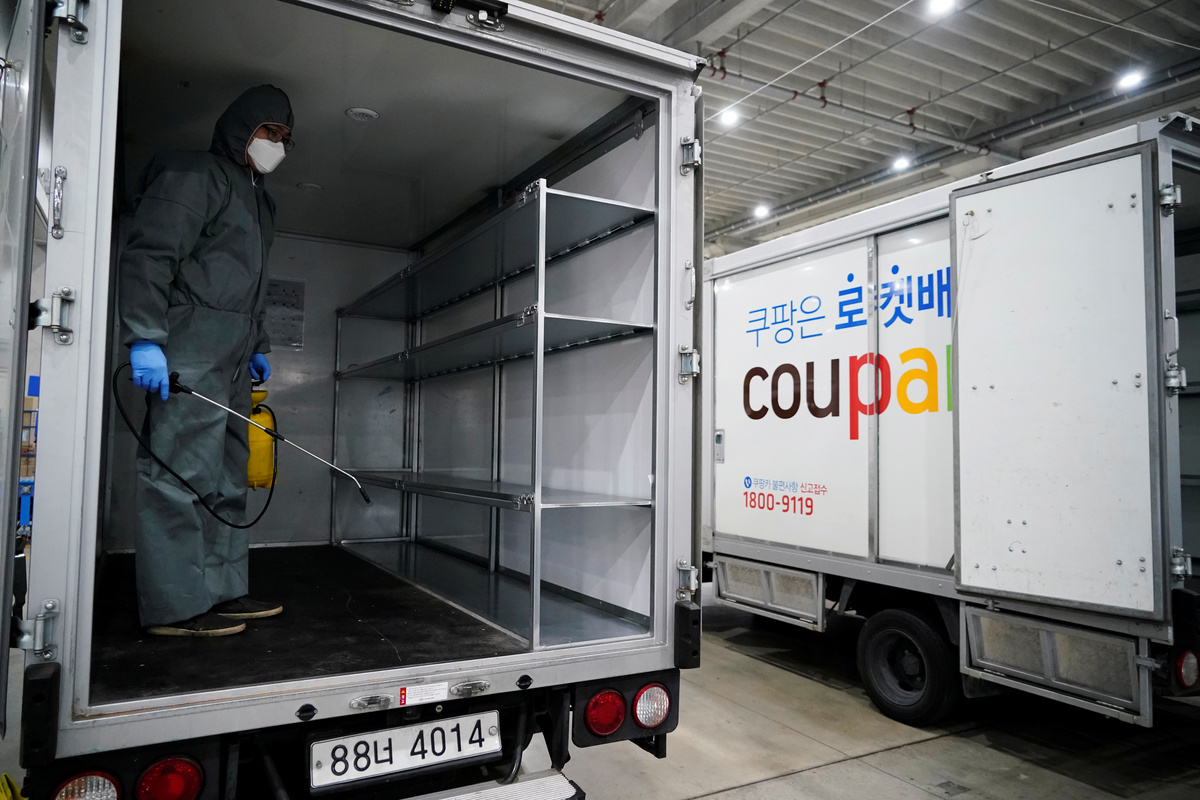
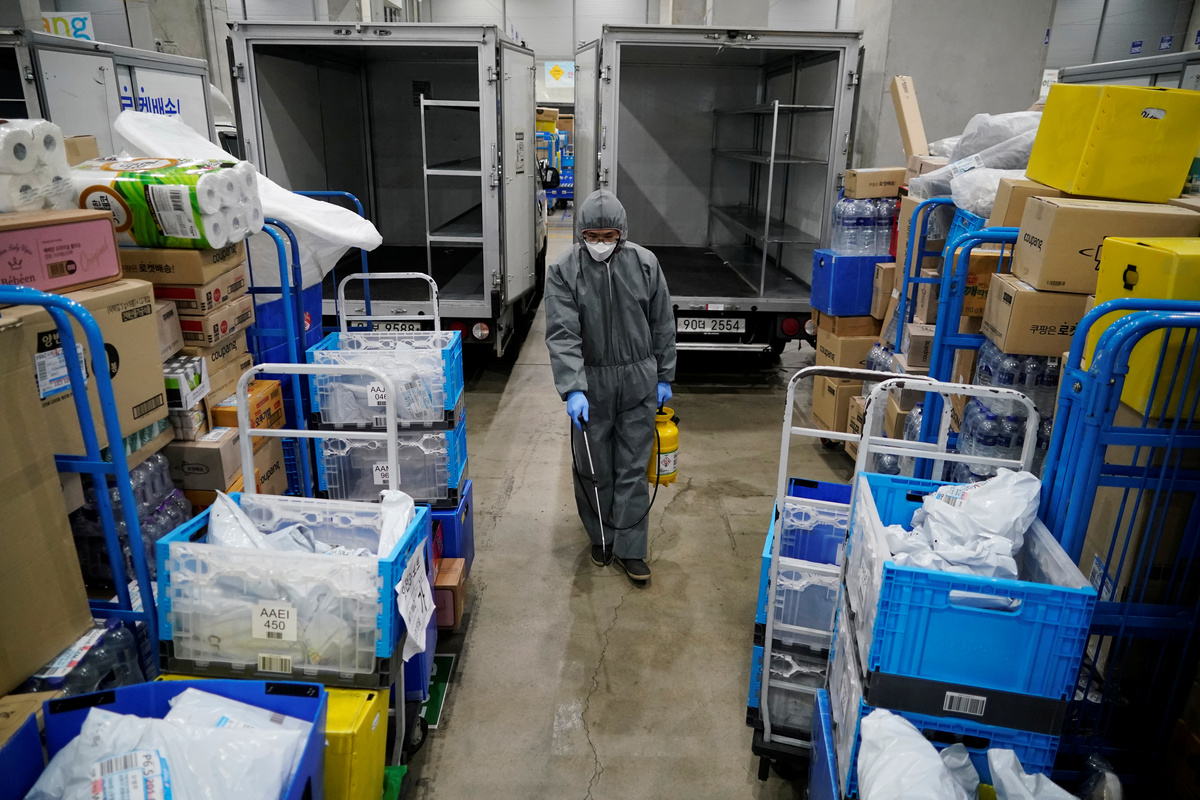
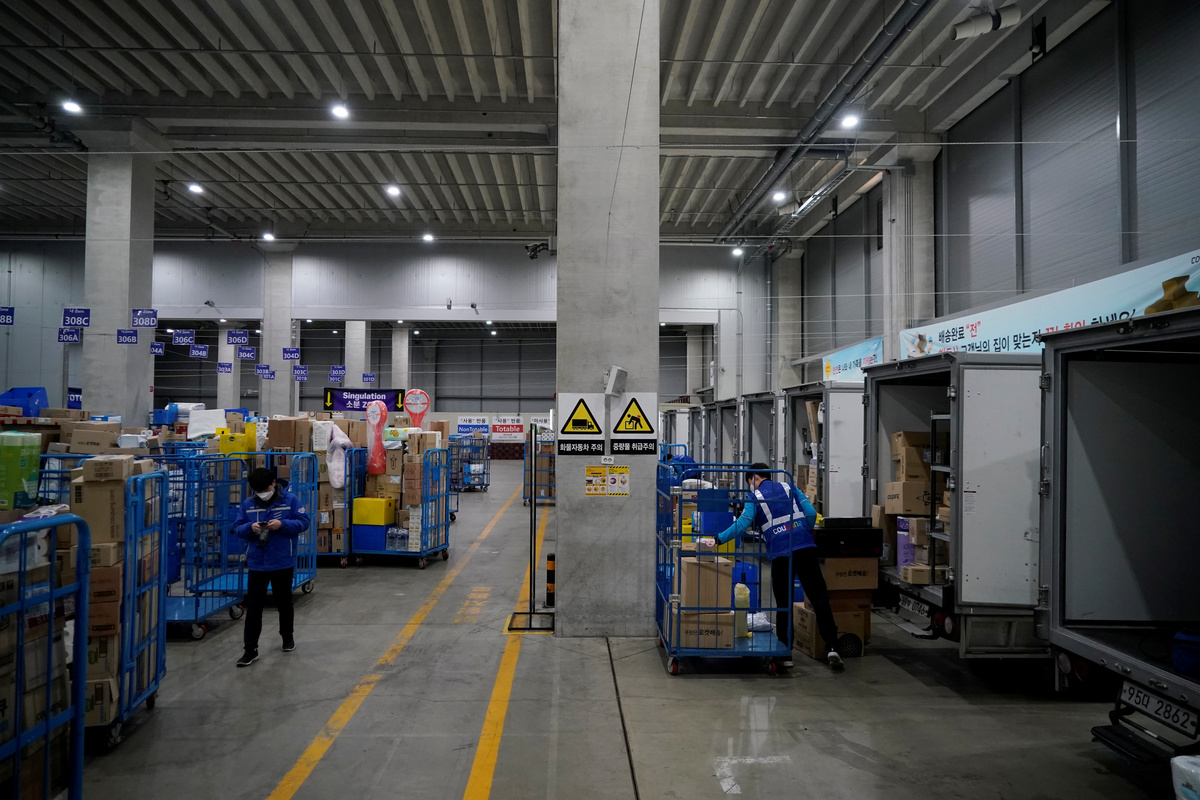
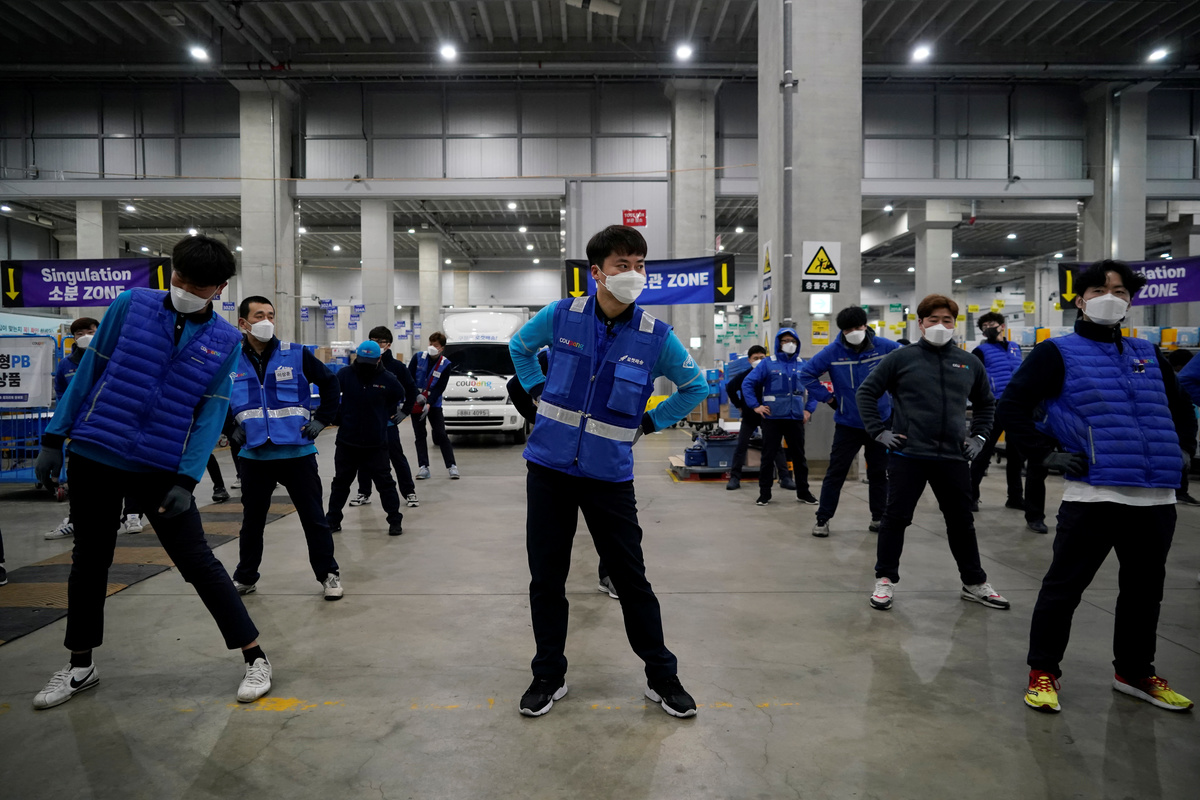
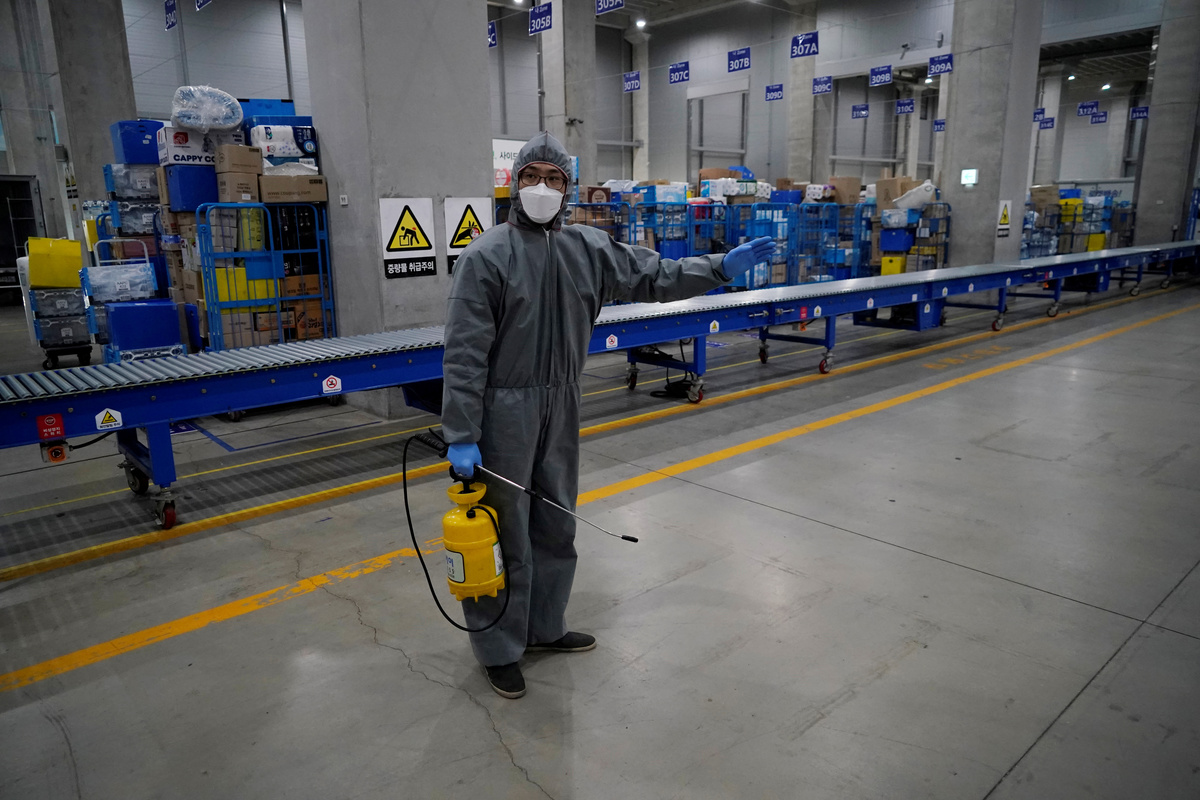
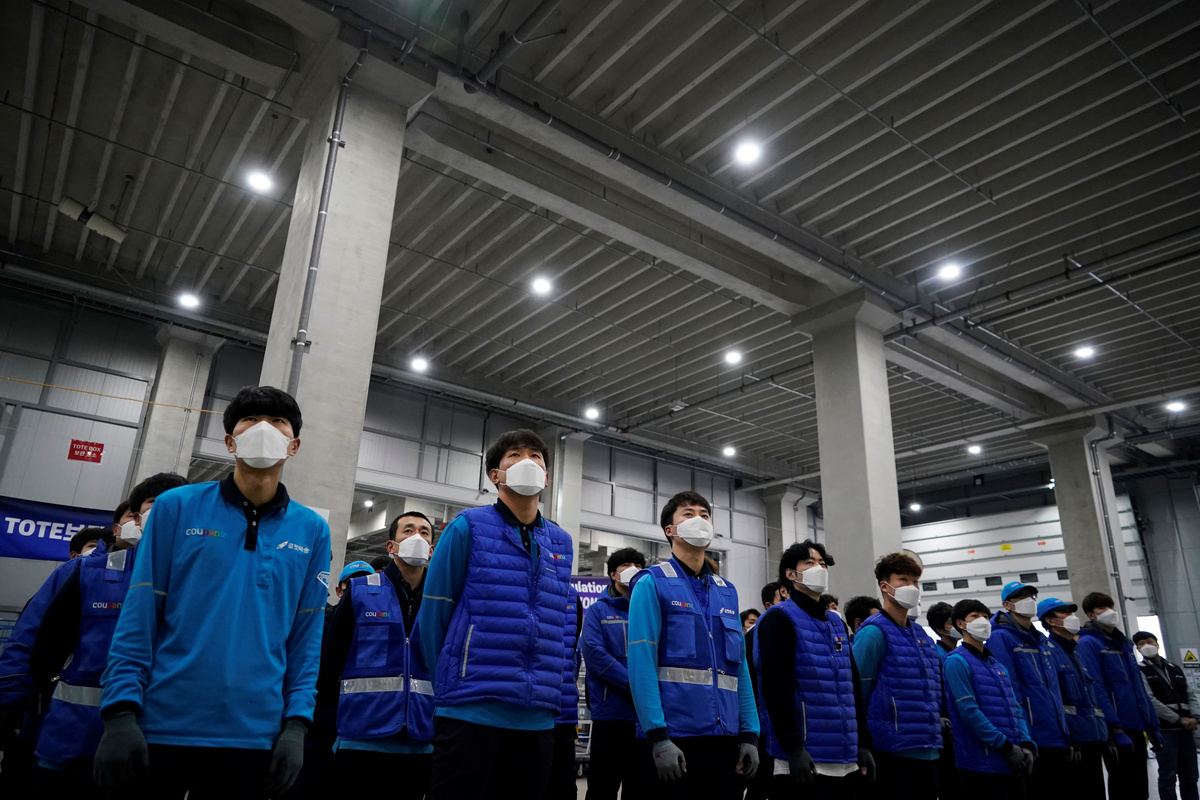
As South Korea's coronavirus cases leapt above 5,000 this week, mask-wearing workers at a logistics center run by e-commerce firm Coupang Corp raced to disinfect trucks and load thousands of boxes of microwavable rice, disposable diapers and kitchen towels.
"In the past, we used to go out with the truck half full, but these days, there's so much to deliver there are leftover packages after filling the truck completely," 27-year-old Jung Im-hong, a contract delivery driver, told Reuters.
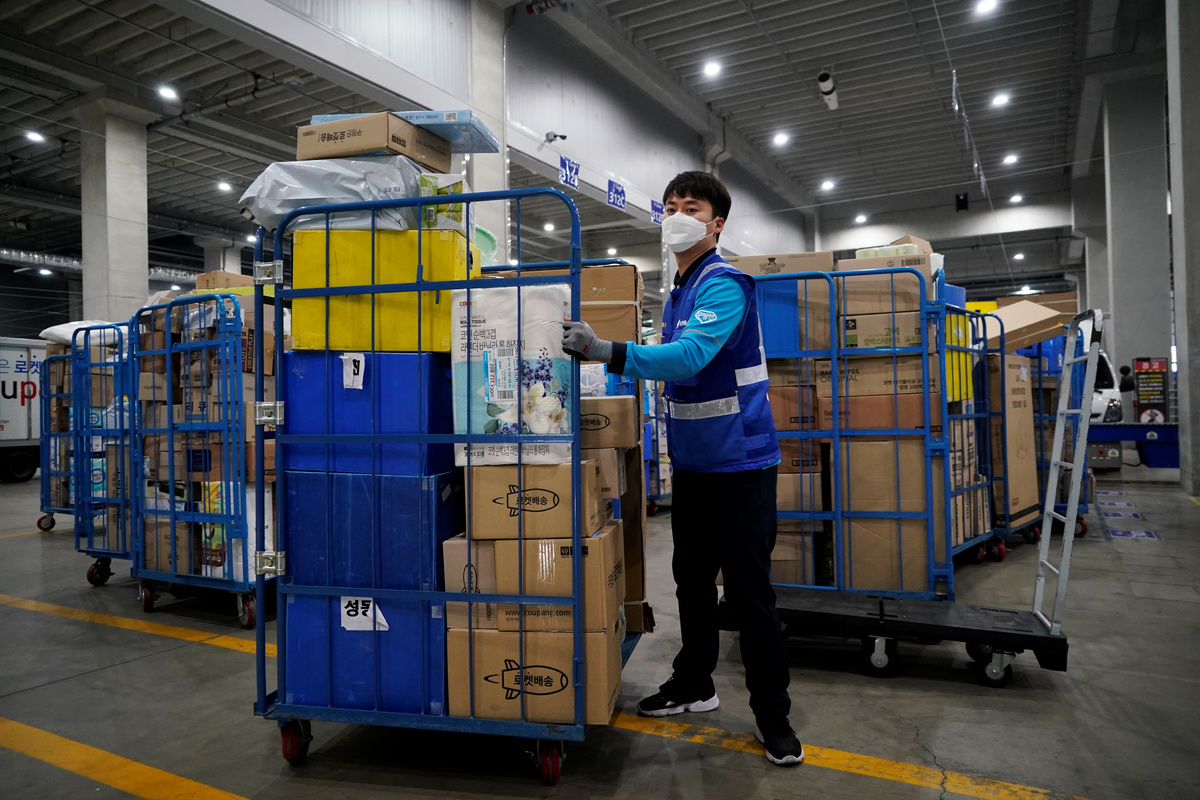
Even before the epidemic, South Korea was expected to become the world's No. 3 e-commerce market this year after China and the United States, according to Euromonitor, a remarkable statistic for a nation of just 51.7 million.
Now as the country emerges as critical hotspot in the global epidemic with the most cases outside China, its shift to online shopping is only gathering speed.
Coupang, which has secured $3 billion in investment from SoftBank <9984.T> and its Vision Fund, has seen deliveries climb to 3 million daily since mid-February from around 2.2 million per day late last year.
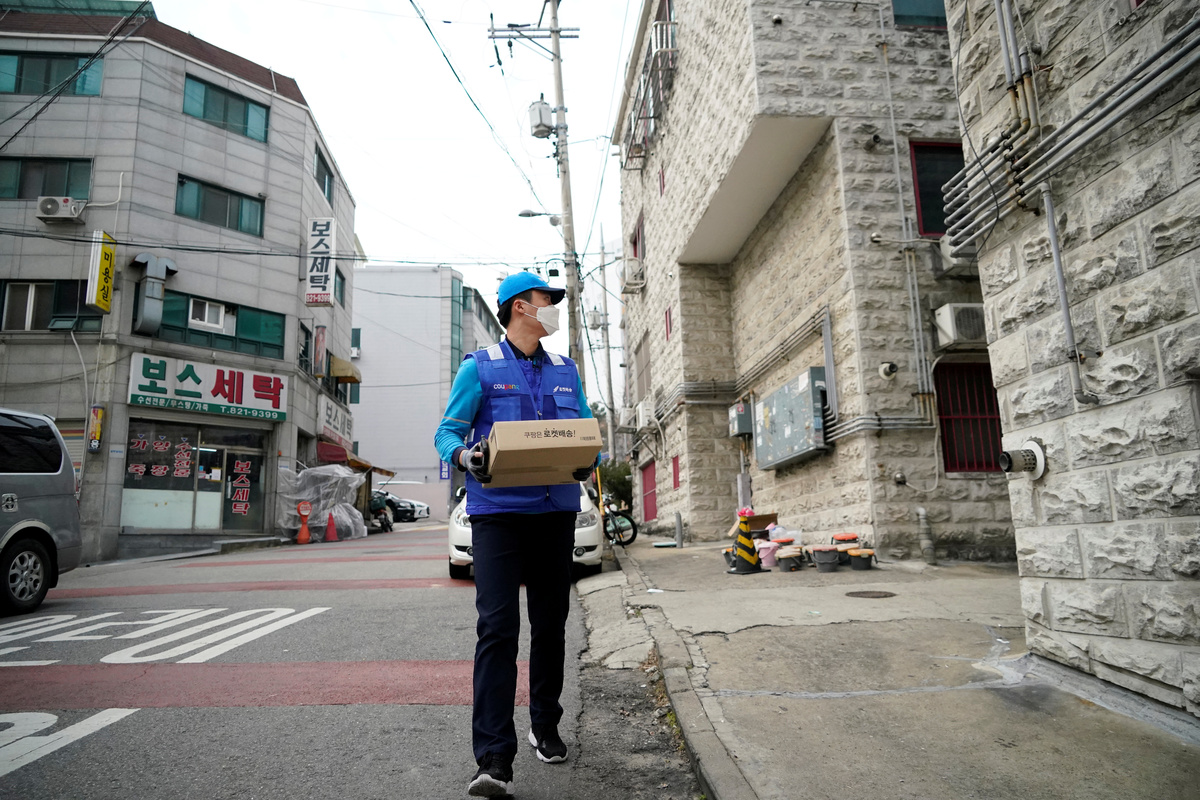
But the surge in orders, mostly for low-margin goods such as household items and fresh produce, may be a double-edged sword as delivery costs also balloon, potentially setting the 10-year old firm even further back in its quest for profitability, analysts said.
"It's difficult, there's so much to deliver," said Yoo Min-hyuck, who oversees one of Coupang's logistics centers in Incheon.
For each shift, the center can now call on about 100 part-time workers, who use their own cars to handle overflow, whereas previously about half that number would line up for work.
GROWTH IN SALES AND LOSSES
Founded by 41-year-old Harvard graduate Bom Kim, Coupang made a splash with its 'Rocket Delivery' service that promised delivery within 24 hours and dealt a sharp blow to the country's family-owned retail conglomerates including Shinsegae and Lotte. Lotte Shopping Co Ltd <023530.KS> announced last month it will close about 200 of its 700 offline stores in the next 3-5 years.
At the time of the Vision Fund's $2 billion investment in late 2018, Coupang was valued at around $9 billion.
But Coupang's history suggests that the more it sells, the more losses it makes. Although revenue soared 65% to 4.4 trillion won in 2018, operating losses expanded 72% to 1.1 trillion won, according to its latest public filing.
And established players are not going quietly: Shinsegae, which owns country's largest big-box store chain E-Mart Inc <139480.KS>, last year set up a dedicated e-commerce unit and a logistics center with a built-in bakery.
It must also compete with eBay Inc's <EBAY.O> South Korean unit and online search portal Naver Corp <035420.KS> which has partnered with a multitude of independent online shopping malls to become the national leader in e-commerce market share, according to Seoul-based SK Securities.
The competition with cash-rich players could be an uphill battle for Coupang, said Han Tae-il, analyst at Korea Investors Service, a unit of credit rating agency Moody's.
"For Coupang to keep holding on, it may need more funding before long," he said.
The company declined to comment on when it may reach breakeven point or whether it will soon need more financing. When asked about possible IPO plans, a spokeswoman said Coupang does not have a concrete plan to conduct an offering at this moment.
What's clear, however, is that the coronavirus outbreak is having an unprecedented impact on the e-commerce market in Asia as millions are either being forced to work from home or are choosing to.
"And this is placing a tremendous strain on e-commerce markets as well as suppliers of daily goods," said Jared Conway, head of research at Euromonitor International, adding that the epidemic could permanently change how consumers think about what they order online.
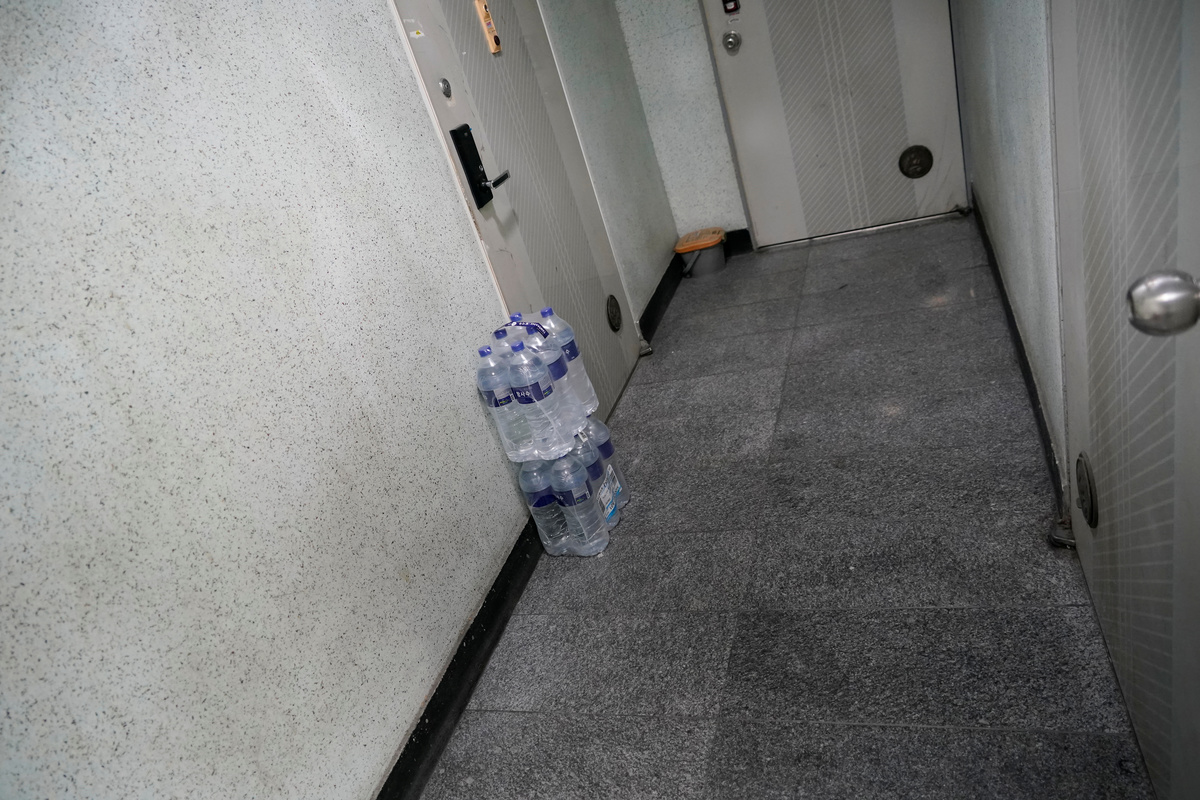
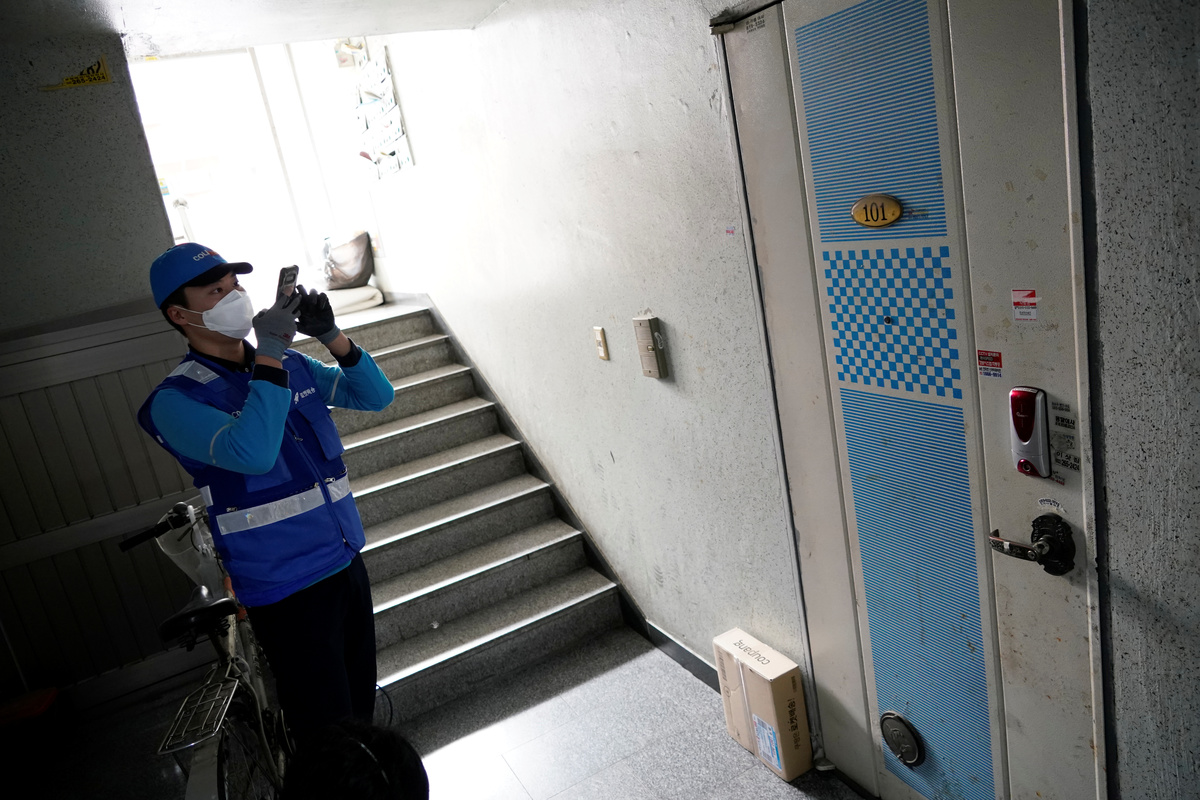
Demand has skyrocketed so much, especially in Daegu, the South Korean city with the most coronavirus cases, that deliverymen often receive thank-you notes and sometimes gifts from customers.
Coupang deliveryman Jung, wiping the sweat off his brow as he loaded bottled water into the truck, said he's just focused on getting necessities to people isolated at home - despite the worries of his wife, with whom he's had a new baby.
"Customers use us a lot because they can't leave the house," he said. "I think it would have been harder for people without same-day delivery service."
(Reporting by Joyce Lee and Heekyong Yang; Additional reporting by Hyunjoo Jin; Editing by Jonathan Weber and Edwina Gibbs)