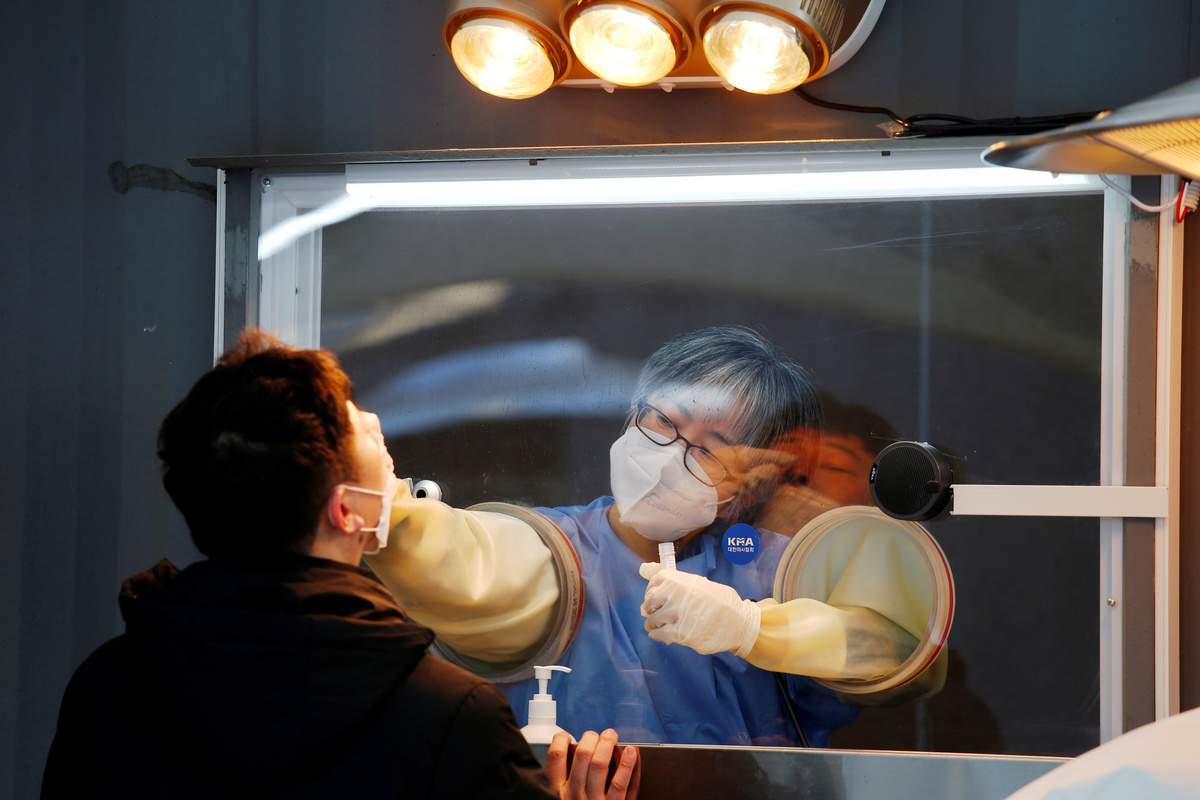
South Korea granted conditional approval on Friday that will allow the public to use two coronavirus self-test kits for the first time, as a surge in infections has rekindled calls to step up testing.
The decision comes as a nationwide rise in cluster infections has prompted authorities to demand tougher enforcement of distancing rules to avert a fourth wave of the pandemic.
The makers of the kits, SD Biosensor Inc and Humasis Co Ltd, got approval on condition that they provide further clinical trial data on self-testing within three months, the drug safety ministry said in a statement.
Although the products have been available in European countries since last year, South Korea had limited their use to medical specialists.
The kits could yield results within 15 minutes with an accuracy of 90%, the ministry added, versus the 98% proven for industry-standard PCR tests and rapid tests by specialists.
"Despite the differences in accuracy, there is a need to use those kits as a supplementary tool," Acting Prime Minister Hong Nam-ki told a daily meeting on virus fighting efforts.
"If PCR tests offer microscopic examinations with almost 100% accuracy, self-test kits can be compared to results made with naked eyes."
While health authorities have said the kits have a greater risk of generating false negatives when handled by non-professionals, officials in recent weeks have backed limited use.
Some officials have urged their use in homes, restaurants, shops and places of worship as a quick and easy way to detect possible infections.
On Friday, a Gallup Korea survey showed the first overall negative view of the government's handling of the pandemic, versus an 85% favourable rating last May, when daily infections were in the single digits.
Media have criticised the government for not doing enough to get sufficient vaccine, inoculating just 3% of the population, because of tight supplies and limited access.
About 2 million people have received the first vaccine dose, with another million targeted by the end of April, so as to cover 12 million in the first half.
Thursday's 797 new infections were the highest health authorities have reported since Jan. 7, when a third wave of infections began to abate after the daily figure topped 1,200 in late December.
The nationwide tally stands at 117,458 infections, with 1,811 deaths.
(Global vaccination tracker:
(Reporting by Hyonhee Shin, additional reporting by Sangmi Cha; Editing by Clarence Fernandez)