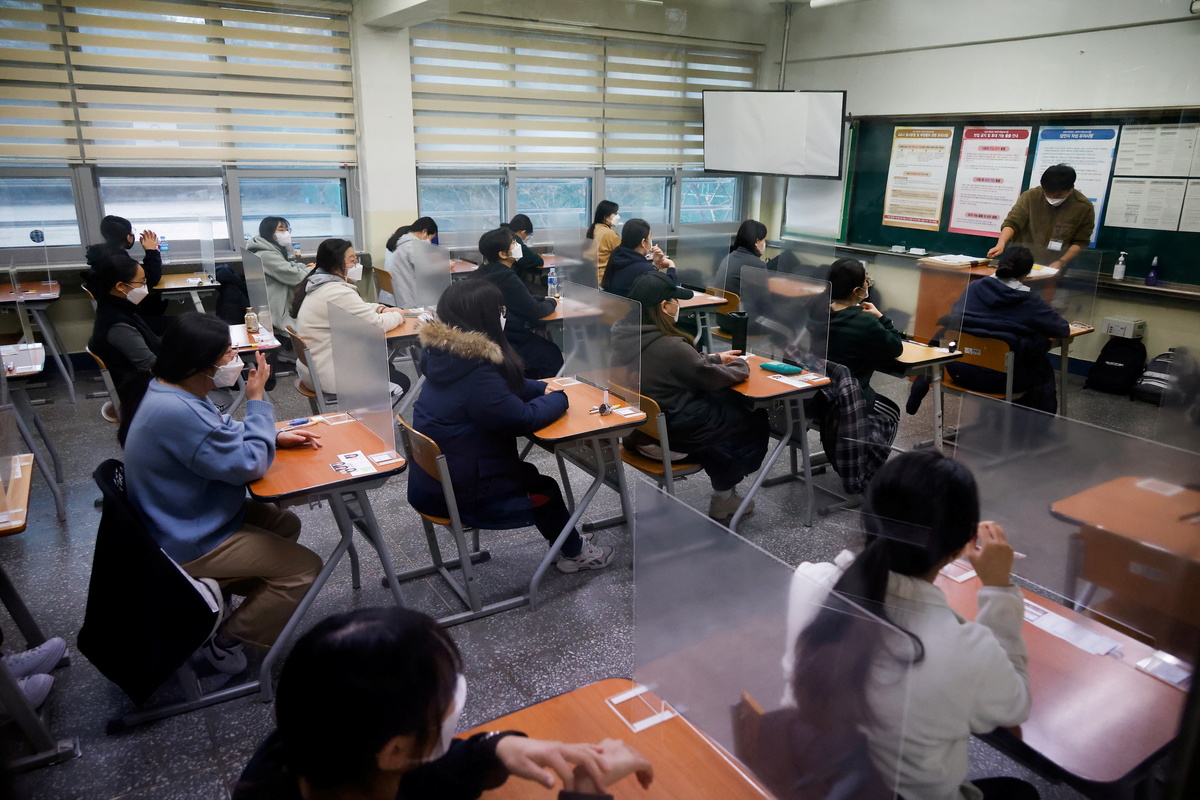
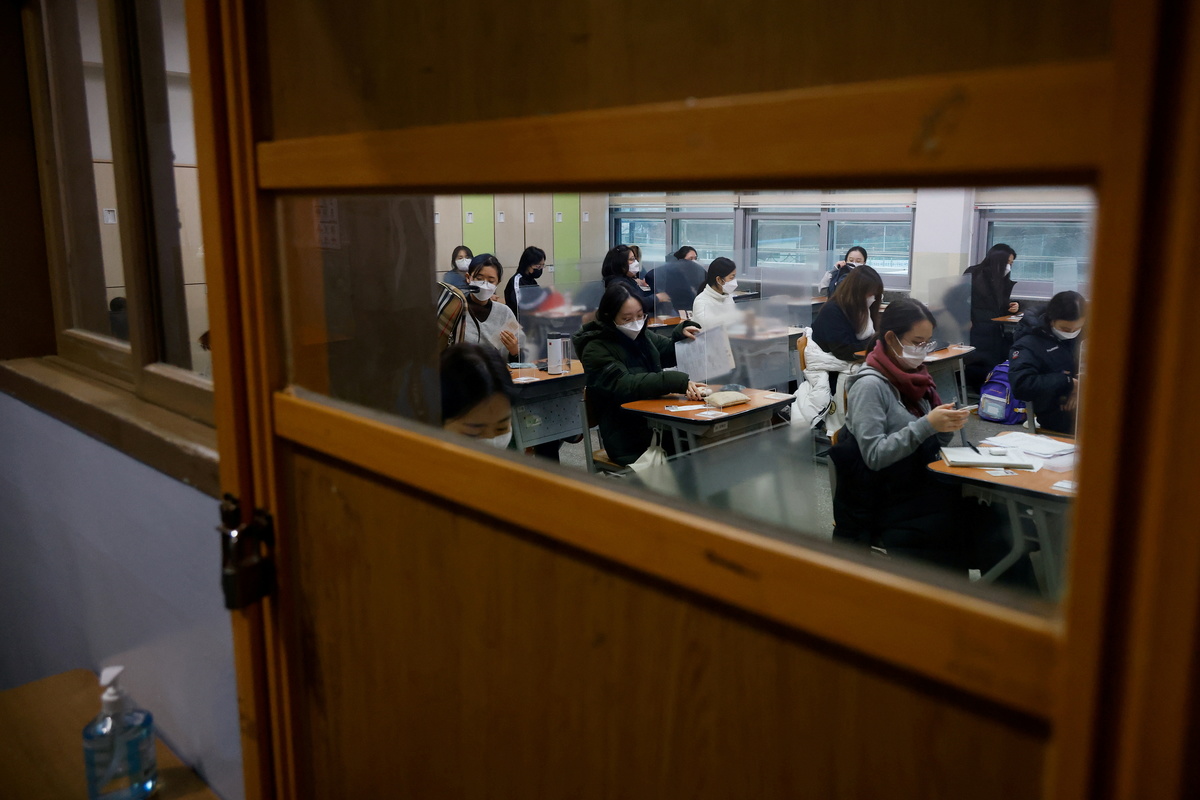
Nearly half a million South Korean students took university entrance exams on Thursday, with COVID-19 students sitting in hospital and others separated by transparent screens.
South Korea is battling a third wave of coronavirus infections and authorities have taken strict steps to ensure all students can safely take the test, deemed a life-defining event for high school seniors to win a degree that could help land a good job.
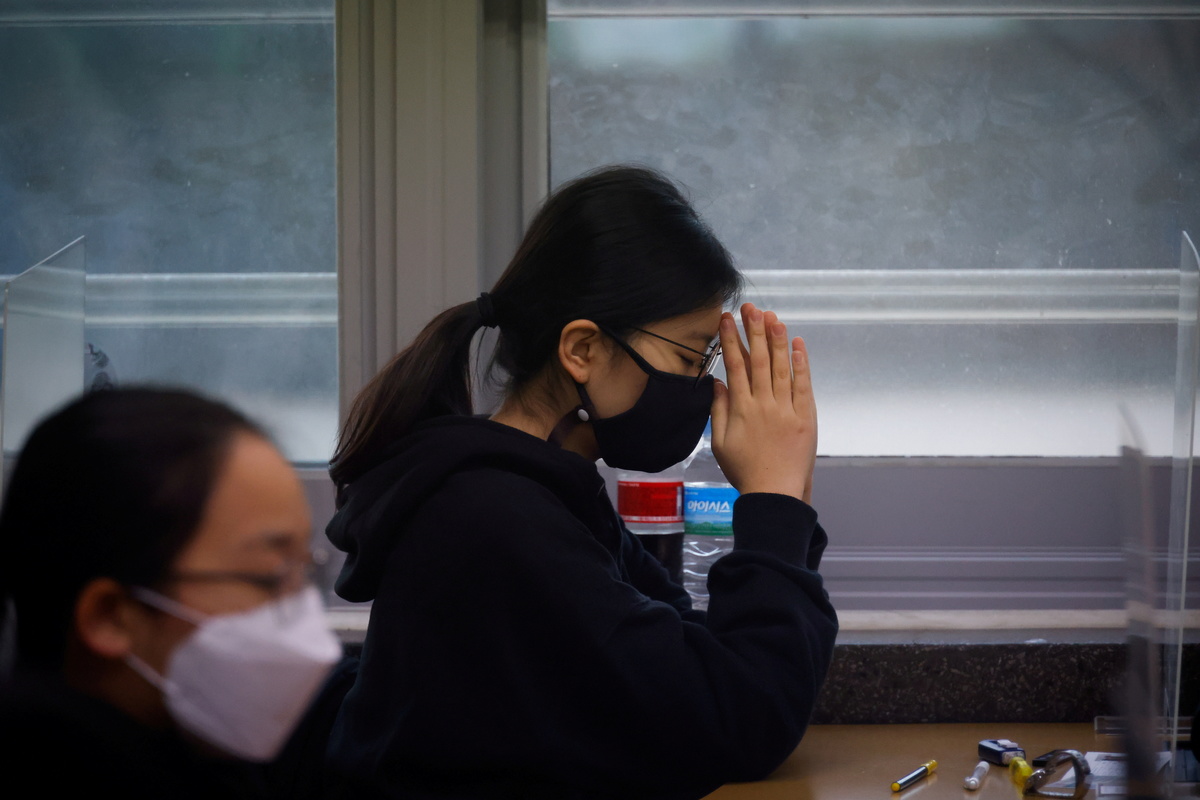
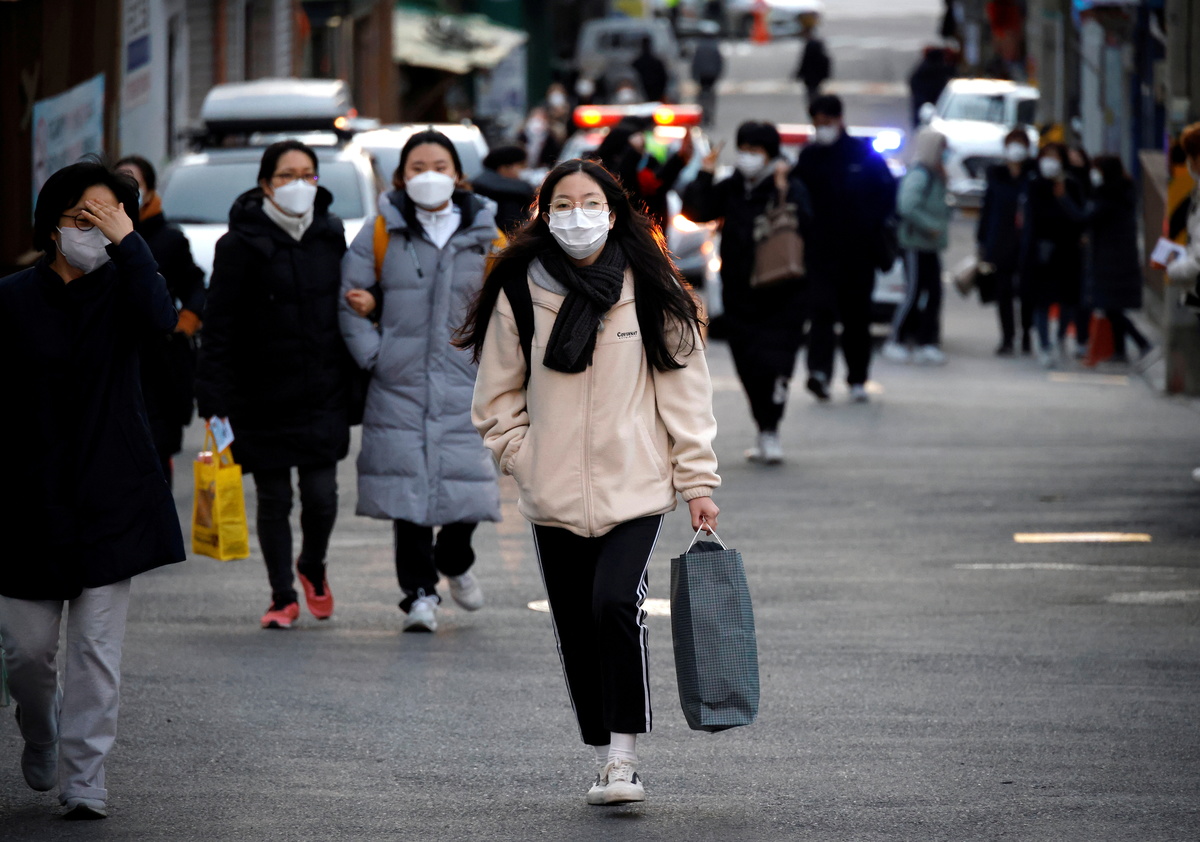
Police and school officials guarded some 31,000 test venues across the country, which in normal years are usually filled with praying parents and cheering squads distributing hot drinks and snacks.
"It's my second test, and I just wanted to get it done despite the risks of contracting the coronavirus. That's all I was thinking about coming here," Jeon Young-jin, 19, told Reuters in front of a test venue in Seoul.
Of the 491,000 applicants, 45 confirmed COVID-19 patients sat for the test at designated hospitals, while special rooms were provided to help another 616 who were in self-isolation. Almost 65,000 did not show up, marking the highest-ever absence rate at 13.2%, the education ministry said.
Proctors for the confirmed and suspected cases were required to wear protective equipment and collect exam papers in plastic bags and wipe them before handing over to the staff outside.
At a high school in central Seoul, students lined up for temperature checks and disinfection before entering the venue, and transparent barriers were installed at all desks, according to video released by the Seoul Metropolitan Office of Education.
Won Seon-hun, father of a high school senior, said he had not even had a meal with his son over the past week though he minimised outside activity due to coronavirus concerns.
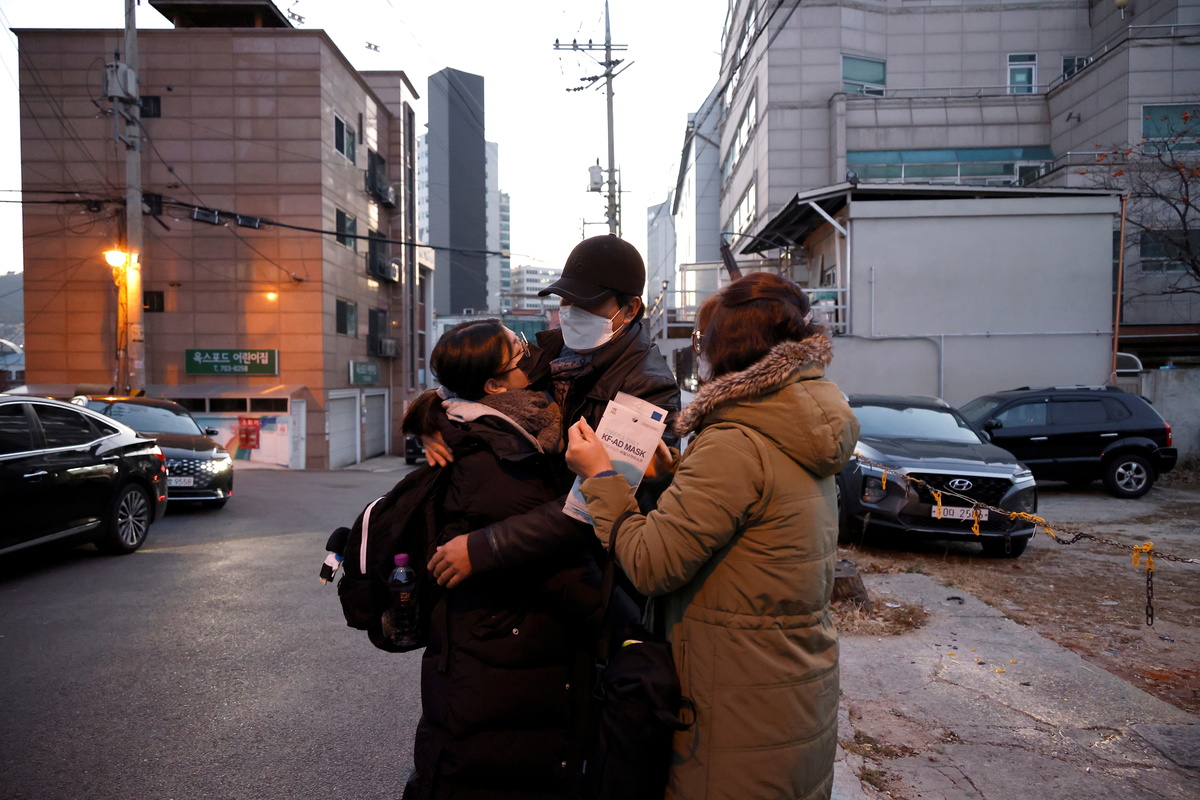
"My wife bought all the groceries online, and I never went out except for work - no friends' gatherings, just staying home," Won said after sending off his son.
The test is a major event in South Korea, with businesses and the stock market opening later than usual to reduce traffic for test-takers, while flights from airports are suspended for a brief period during a language listening test.
The annual exam came as South Korea grapples with a resurgence of coronavirus outbreaks, with the number of daily cases hovering around 500 over the past couple of weeks, a level not seen since March.
The government has tightened social distancing curbs, and declared a two-week special anti-virus period ahead of the exam.
The Korea Disease Control and Prevention Agency (KDCA) reported 540 new cases on Friday, including 516 domestic infections and 24 imported.
Authorities were vigilant as more than 81% of the locally transmitted infections, or 419, were from the capital Seoul and surrounding areas, a record high since South Korea confirmed its first case in January, KDCA data showed.
The country's total tally rose to 35,703, with 529 deaths.
(Reporting by Hyonhee Shin, Soohyun Mah, Daewoung Kim and Minwoo Park; Editing by Michael Perry and Angus MacSwan)