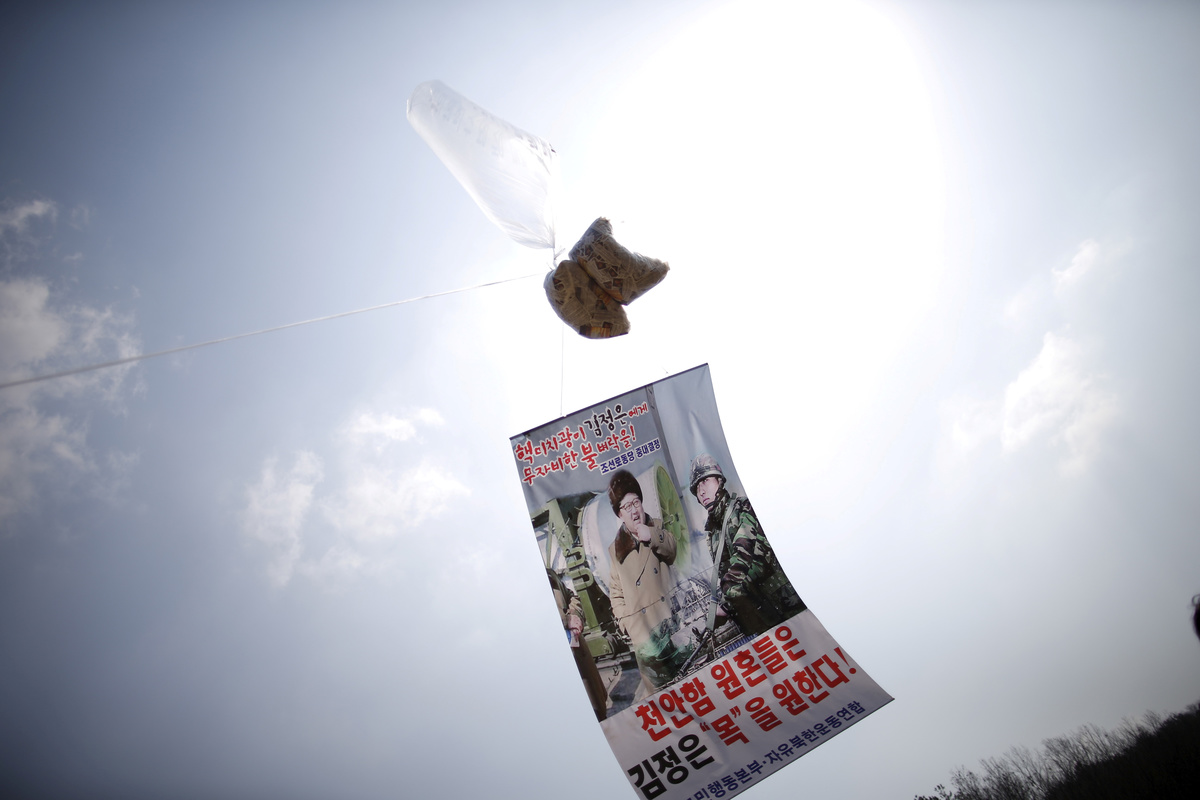
South Korea's parliament passed a bill on Monday to ban the launching of propaganda leaflets into North Korea, a move that was condemned by rights activists as a violation of freedom of speech.
Groups run by North Korean defectors and other campaigners have for decades sent anti-Pyongyang leaflets - alongside food, medicine, $1 bills, mini radios and USB sticks containing South Korean news and dramas - into the North, usually by balloon or in bottles on border rivers. North Korea has long denounced the practice.
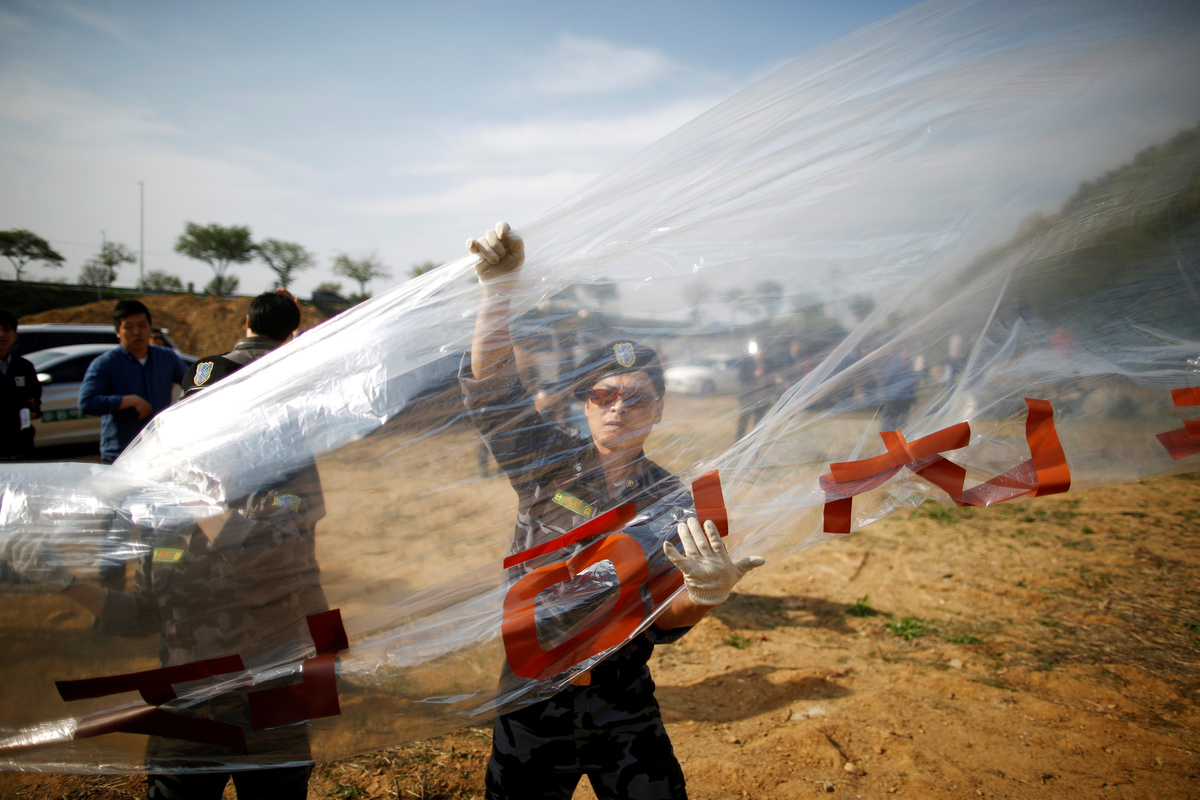
The amendment to the Development of Inter-Korean Relations Act bars any scattering of printed materials, goods, money and other items of value across the heavily fortified frontier.
It also restricts loudspeaker propaganda broadcasts, which the South's military once championed as part of psychological warfare against the North until it withdrew the equipment following a 2018 inter-Korean summit.
Any violation of the law, which will take effect in three months, is punishable by up to three years in prison or 30 million won ($27,500) in fines.
The change was approved despite filibuster efforts from opposition lawmakers to block the super-majority of the ruling party of President Moon Jae-in, who is keen to improve cross-border ties.
CONSTITUTIONAL CHALLENGE
The bill was introduced in June by ruling party lawmakers after Kim Yo Jong, the sister of North Korean leader Kim Jong Un, warned Seoul should enact a law to stop leaflets or face the "worst phase" of relations.
"They were trying to put Kim Yo Jong's order into law at her single word," Tae Yong-ho, an opposition lawmaker and former North Korean diplomat, said in his 10-hour filibuster speech, adding the bill would only help Kim's government continue "enslaving" its people.
More than 20 defectors and rights groups in South Korea vowed to challenge the law's constitutionality, while Human Rights Watch called the ban Seoul's "misguided strategy" to win Kim's favour by cracking down on its own citizens.
Chris Smith, a U.S. Republican congressman co-chairing a bipartisan human rights commission, issued a statement criticising the amendment as "ill-conceived, frightening" for facilitating the imprisonment of people for simply sharing information.
When asked about Smith's statement, Seoul's Unification Ministry, which handles inter-Korean affairs, said the bill was a "minimal effort to protect the lives and safety of residents in border regions".
"It is a blanket ban that criminalises sending remittances to families in North Korea and denies their rights to outside information," said Shin Hee-seok of the Transitional Justice Working Group, one of the 20 groups.
"Such appeasement efforts only risk inviting further North Korean provocations and demands."
(Reporting by Hyonhee Shin; Editing by Alex Richardson)