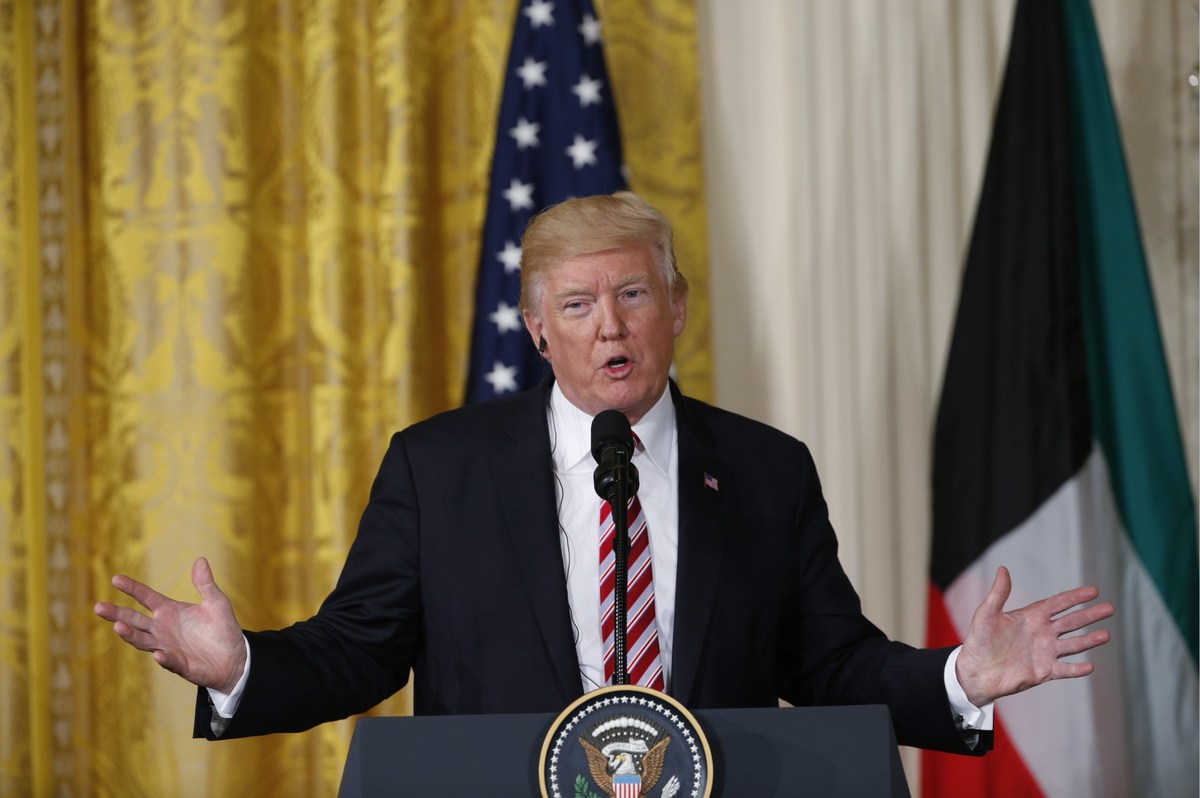
WASHINGTON/BEIJING (Reuters) - U.S. President Donald Trump said on Thursday he would prefer not to use military action against North Korea to counter its nuclear and missile threat but that if he did it would be a "very sad day" for the leadership in Pyongyang.
Trump again pointedly declined to rule out a U.S. military response following North Korea’s sixth and most powerful nuclear test as his administration seeks increased economic sanctions, saying Pyongyang was "behaving badly and it's got to stop."
"Military action would certainly be an option. Is it inevitable? Nothing is inevitable," Trump said during a news conference.
I would prefer not going the route of the military," Trump said. "If we do use it on North Korea, it will be a very sad day for North Korea."
Even as Trump has insisted that now is not the time to talk to North Korea, senior members of his administration have made clear that the door to a diplomatic solution remains open, especially given the U.S. assessment that any pre-emptive strike would unleash massive North Korean retaliation.
While Trump talked tough on North Korea, China agreed on Thursday that the United Nations should take more action against Pyongyang but also kept pushing for dialogue to help resolve the standoff.
North Korea, which is pursuing its nuclear and missile programme in defiance of international condemnation, said it would respond to any new U.N. sanctions and U.S. pressure with "powerful counter measures", accusing the United States of aiming for war.
The United States wants the U.N. Security Council to impose an oil embargo on North Korea, ban its exports of textiles and the hiring of North Korean labourers abroad, and to subject leader Kim Jong Un to an asset freeze and travel ban, according to a draft resolution seen by Reuters on Wednesday.
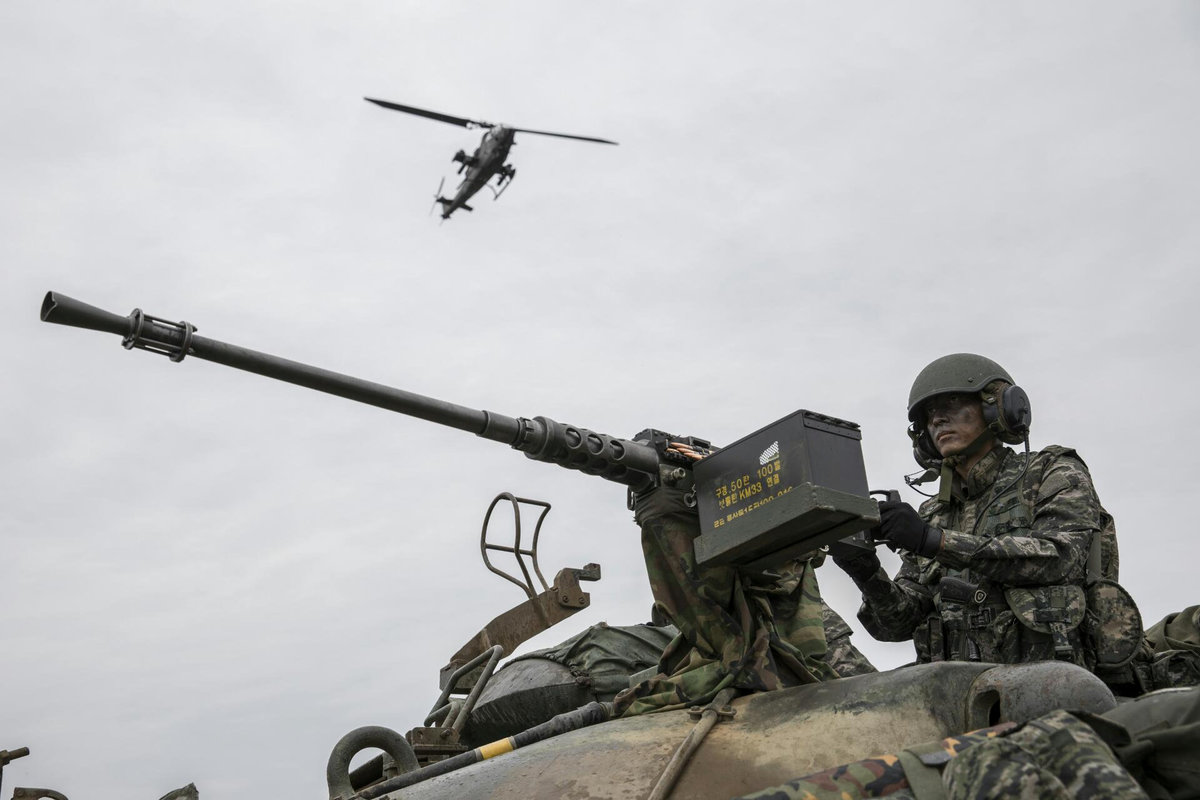
Pressure from Washington has ratcheted up since North Korea conducted its nuclear test on Sunday. That test, along with a series of missile launches, showed it was close to achieving its goal of developing a powerful nuclear weapon that could reach the United States.
"Given the new developments on the Korean peninsula, China agrees that the U.N. Security Council should make a further response and take necessary measures," Chinese Foreign Minister Wang Yi told reporters.
"Any new actions taken by the international community against the DPRK should serve the purpose of curbing the DPRK's nuclear and missile programmes, while at the same time be conducive to restarting dialogue and consultation," he said, referring to North Korea by the initials of its official name, the Democratic People's Republic of Korea.
China is by far North Korea's biggest trading partner, accounting for 92 percent of two-way trade last year. It also provides hundreds of thousands of tonnes of oil and fuel to the impoverished regime.
Trump has urged China to do more to rein in its neighbour, which was typically defiant on Thursday.
NORTH KOREAN THREAT
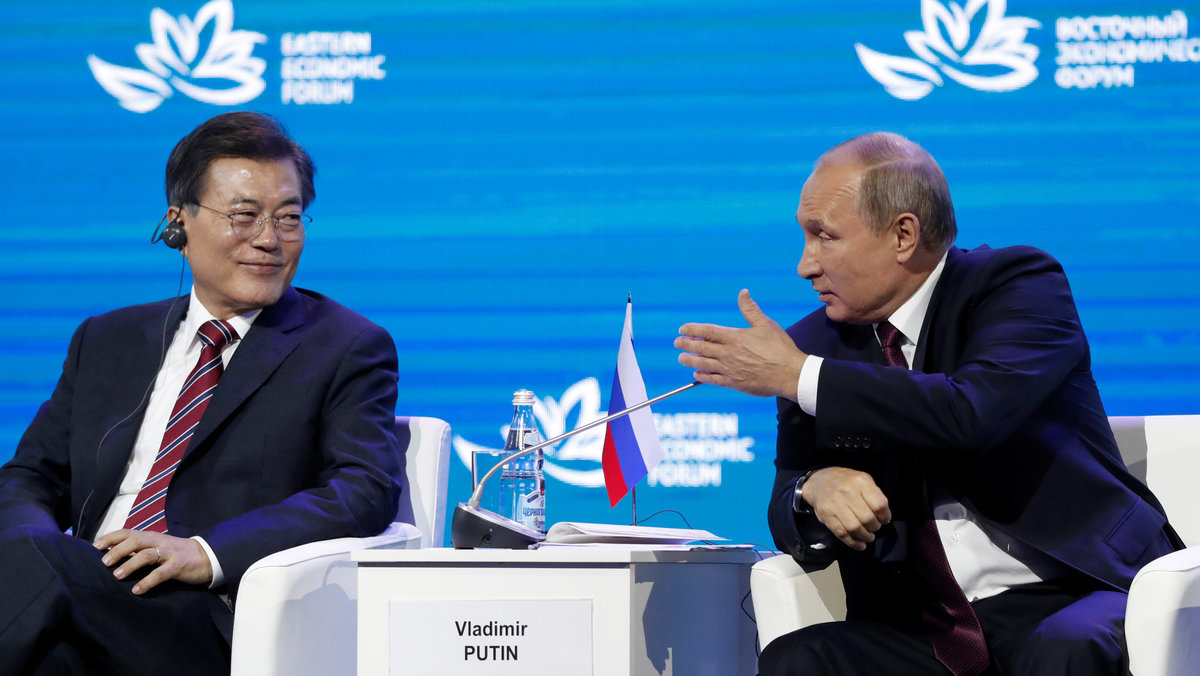
"We will respond to the barbaric plotting around sanctions and pressure by the United States with powerful counter measures of our own," North Korea said in a statement by its delegation to an economic forum in Vladivostok, in Russia's Far East.
A U.N. Security Council diplomat said the U.S. draft was "the 'cutting room floor' resolution, it's everything" and that Russia had questioned what leverage it would leave the Security Council if North Korea continued to conduct nuclear and ballistic missile testing.
"Russia and China are not on board with the content of the resolution," the diplomat said, speaking on condition of anonymity. The United States has said it wants the draft resolution to be voted on Monday.
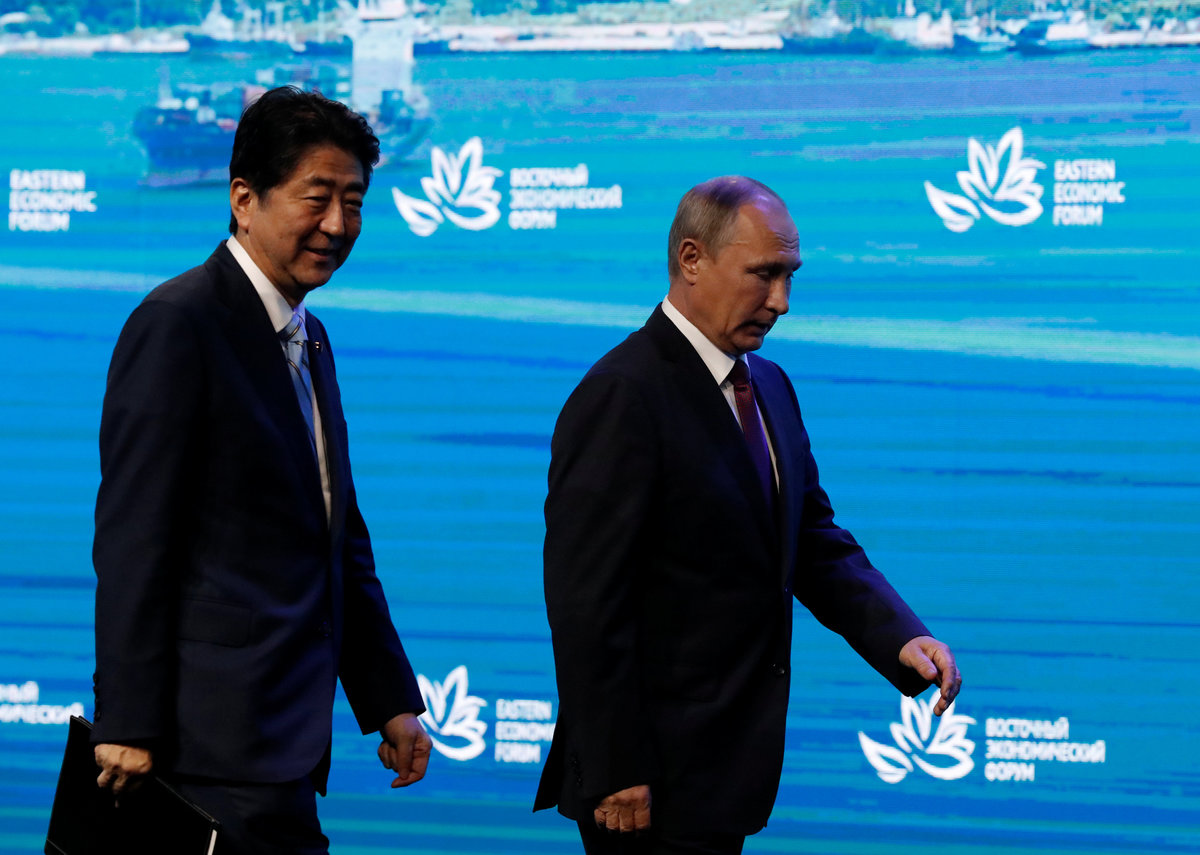
Japanese Prime Minister Shinzo Abe and South Korean President Moon Jae-in spoke in Vladivostok and agreed to try to persuade China and Russia to cut off oil to North Korea as much as possible, according to South Korean officials.
North Korea accused South Korea and Japan of "dirty politics."
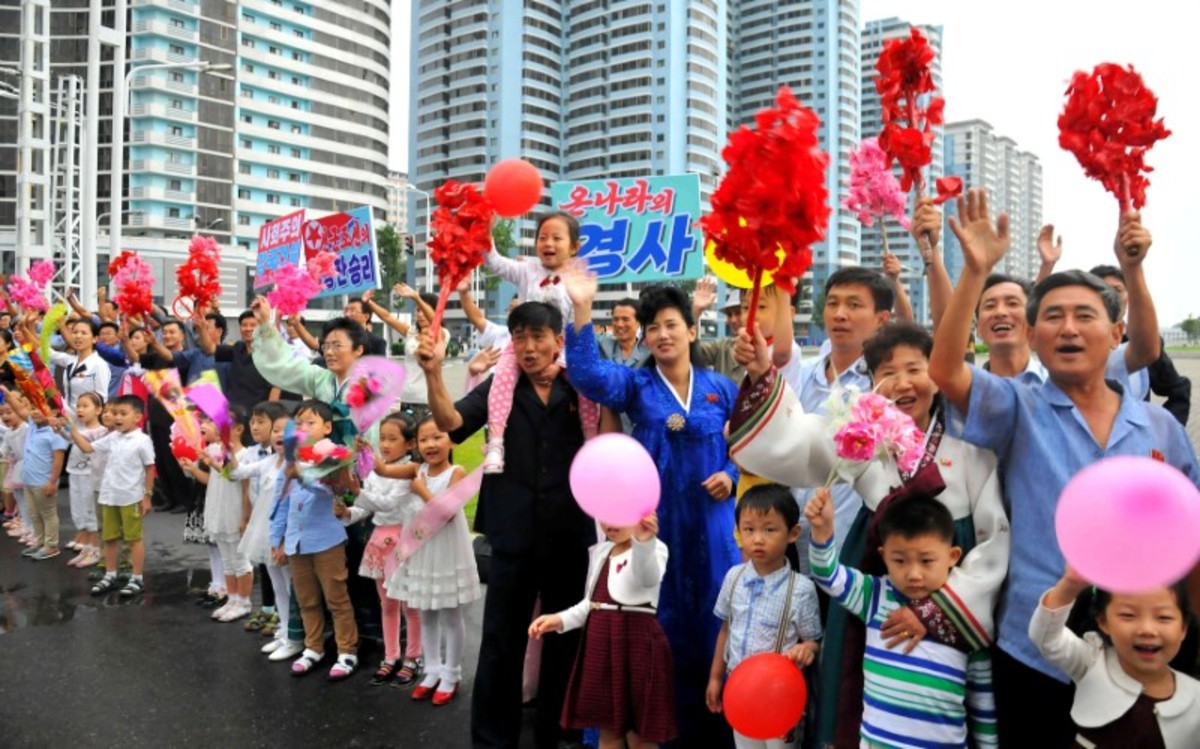
North Korea says it needs its weapons to protect itself from U.S. aggression. South Korea and the United States are technically still at war with North Korea after the 1950-53 Korean conflict ended with a truce, not a peace treaty.
While successive U.S. administrations have insisted they will never recognise North Korea as a nuclear-armed state, Trump declined to answer a question on Thursday on whether he would accept a situation where Pyongyang would be deterred and contained from using its nuclear arsenal, saying he did not want to disclose his negotiating strategy.
A senior U.S. official said afterwards it was unclear whether the Cold War-era deterrence model that Washington used with the Soviet Union could be applied to a rogue state like North Korea.
The official, speaking on condition of anonymity, said there was grave risk that North Korea could "miscalculate" the U.S. response to its weapons testing and warned Pyongyang not to under-estimate Washington's resolve.
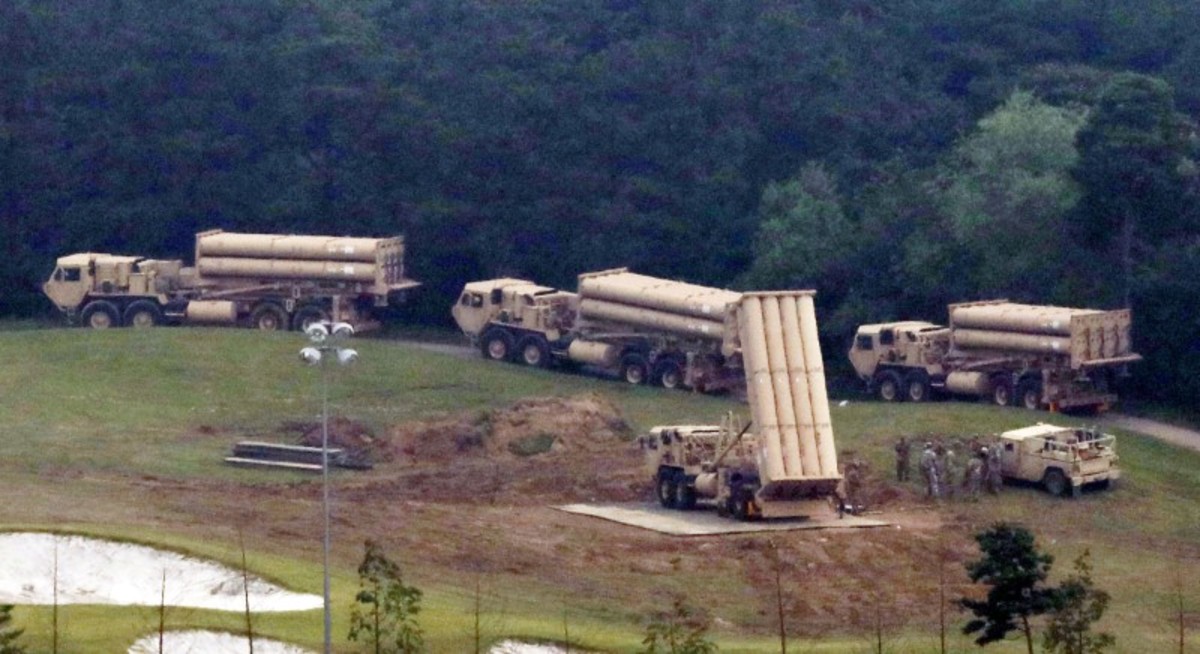
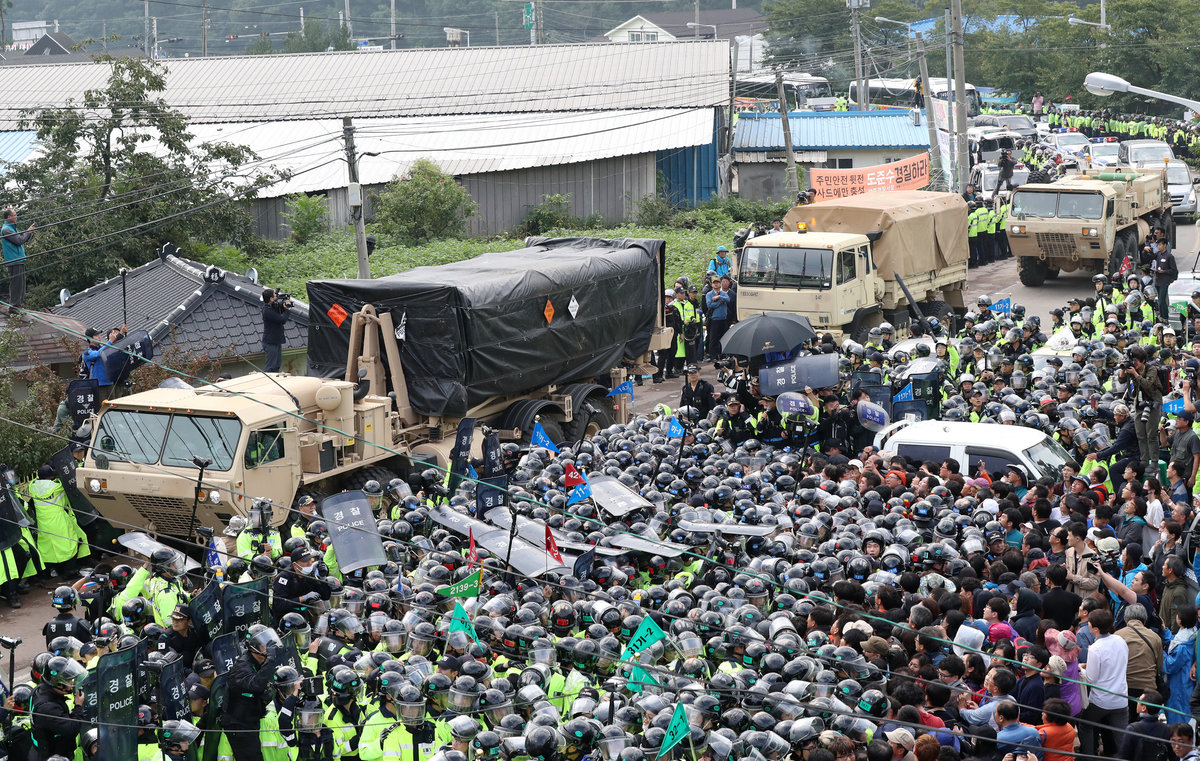
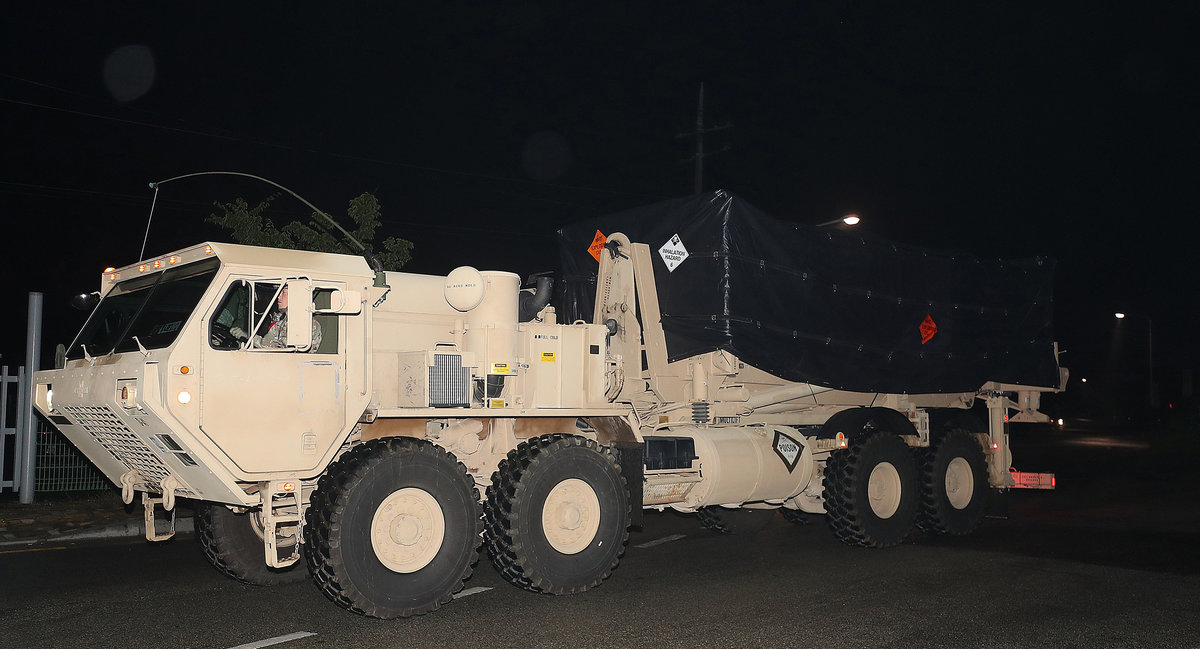
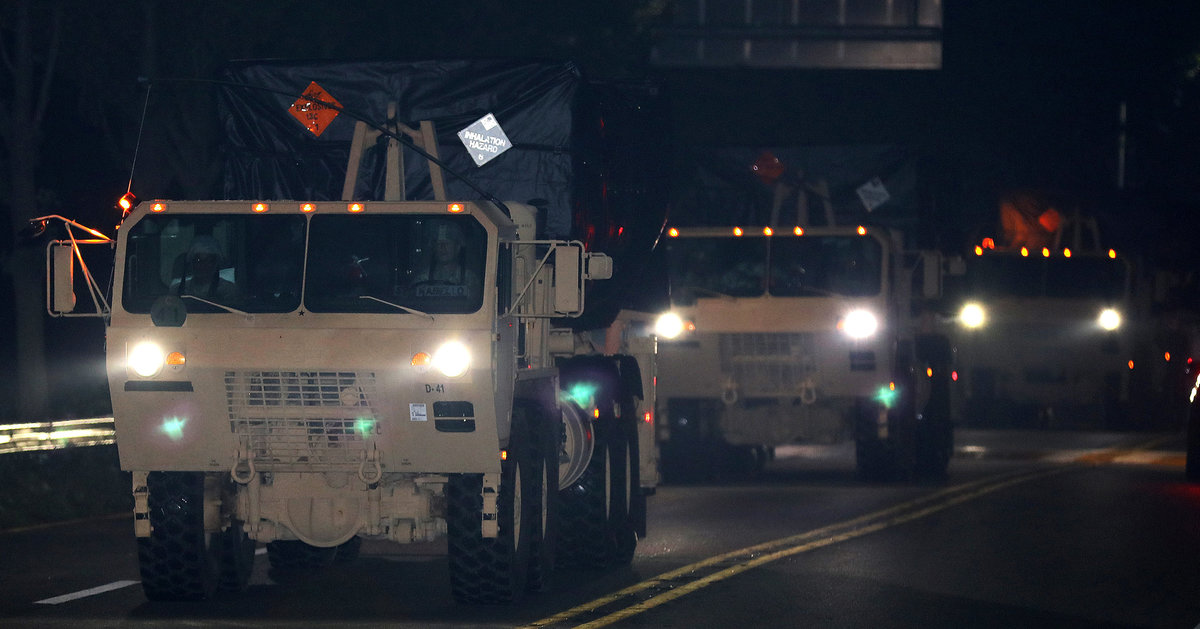
South Korea installed the four remaining launchers of a U.S. anti-missile Terminal High Altitude Area Defense (THAAD) system on a former golf course south of its capital, Seoul, early on Thursday. Two launchers had already been deployed.
More than 30 people were hurt when about 8,000 police broke up a blockade near the site by about 300 villagers and members of civic groups opposed to the deployment, fire officials said.
The deployment has drawn strong objections from China, which believes the system's radar could be used to look deeply into its territory and will upset the regional security balance.
Mexico on Thursday said it had declared the North Korean ambassador persona non grata in protest at the country's nuclear tests and gave him 72 hours to leave the country, an unusually firm step that moved it closely into line with Washington.
"North Korea's nuclear activity is a serious risk for international peace and security and represents a growing threat to nations in the region, including fundamental allies of Mexico like Japan and South Korea," the Mexican government said.
However, an official at the Mexican foreign ministry noted that President Enrique Pena Nieto's government was not breaking diplomatic ties with North Korea.
(Additional reporting by Michelle Nichols at the United Nations, Christine Kim and Soyoung Kim in Seoul, Katya Golubkova in Vladivostok, Christian Shepherd and Vincent Lee in Beijing, Oksana Kobzeva and Denis Pinchuk in Vladivostok, Jim Oliphant, Matt Spetalnick, David Brunnstrom and Phil Stewart in Washington, Kiyoshi Takenaka in Tokyo and Dave Graham in Mexico City; Writing by Matt Spetalnick and Lincoln Feast; Editing by Nick Macfie and James Dalgleish)