The two returned travellers who tested positive to COVID-19 in Canberra this week have the South African variant of the virus, which is believed to be more infectious than other strains.
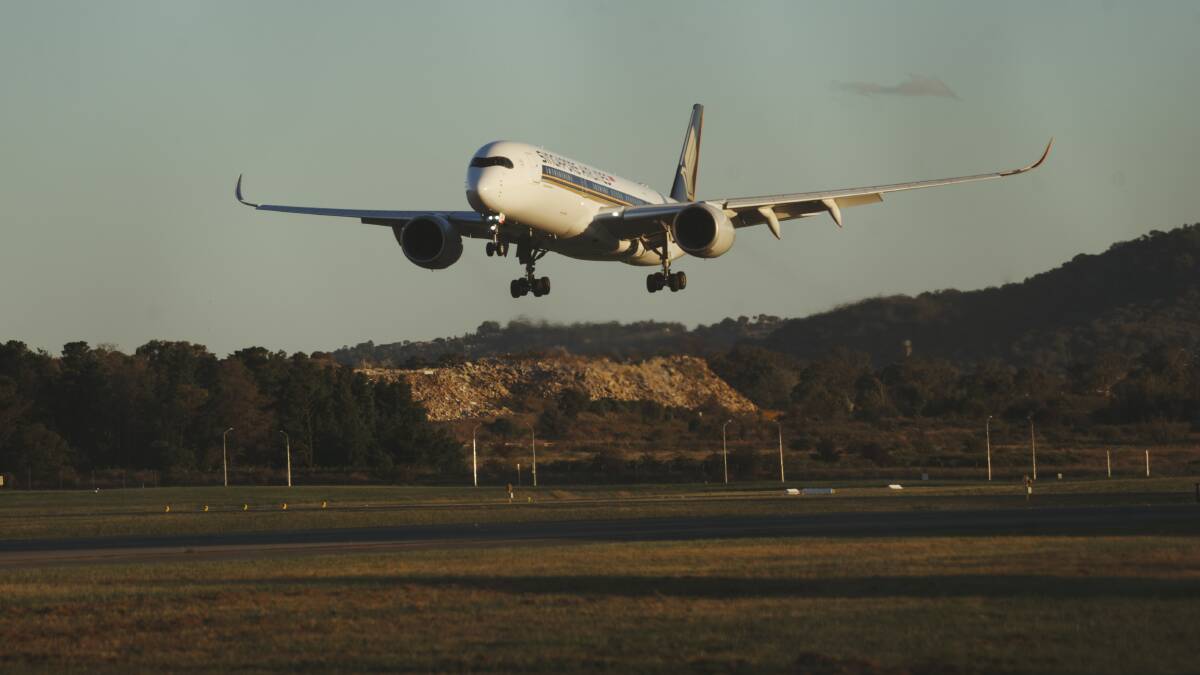
The man in his 40s and a male teenager, who arrived in Australia on the Singapore Airlines repatriation flight on Monday night, returned positive results for COVID-19 on Thursday while in hotel quarantine.
It is believed they caught the virus while transiting to Canberra because both tested negative before beginning their journey to Australia.
An ACT Health spokesperson on Saturday confirmed genome sequencing from the two returned travellers showed they were both infected with the South African variant of the virus, also known as B.1.351, which was considered a strain of concern.
"Available genome sequencing results also show that the strains from the two cases are identical," the spokesperson said.
The two cases have been moved to a separate area of the hotel for further care and support.
There will be stricter criteria for their release from hotel quarantine than if they were infected with a different variant of the virus.
"Additional testing of the other returned passengers has been arranged to take place on day five (today) of their hotel quarantine period to help identify any further cases early during the quarantine period," the spokeswoman said.
"Any returned traveller who experiences any symptoms of COVID-19 at any point during the 14-day quarantine period will also be tested.
"ACT Health is continuing to liaise with NSW Health authorities and Singapore Airlines about the two cases to support other contact tracing efforts."
The spokeswoman said the ACT had strong systems in place for hotel quarantine to reduce the risk of transmission, including stringent PPE and inflection control processes and daily saliva testing for frontline workers.
Early evidence suggested the vaccines in use were less effective against the South African strain of the virus.
As of 11.59pm Friday, the ACT government had administered 1949 COVID-19 vaccinations.
This did not include the number of vaccinated staff and residents in disability and aged residential care in the ACT, which was a Commonwealth responsibility.
Our journalists work hard to provide local, up-to-date news to the community. This is how you can continue to access our trusted content:
- Bookmark canberratimes.com.au
- Download our app
- Make sure you are signed up for our breaking and regular headlines newsletters
- Follow us on Twitter
- Follow us on Instagram