South Africa's first legal rhino horn auction opens
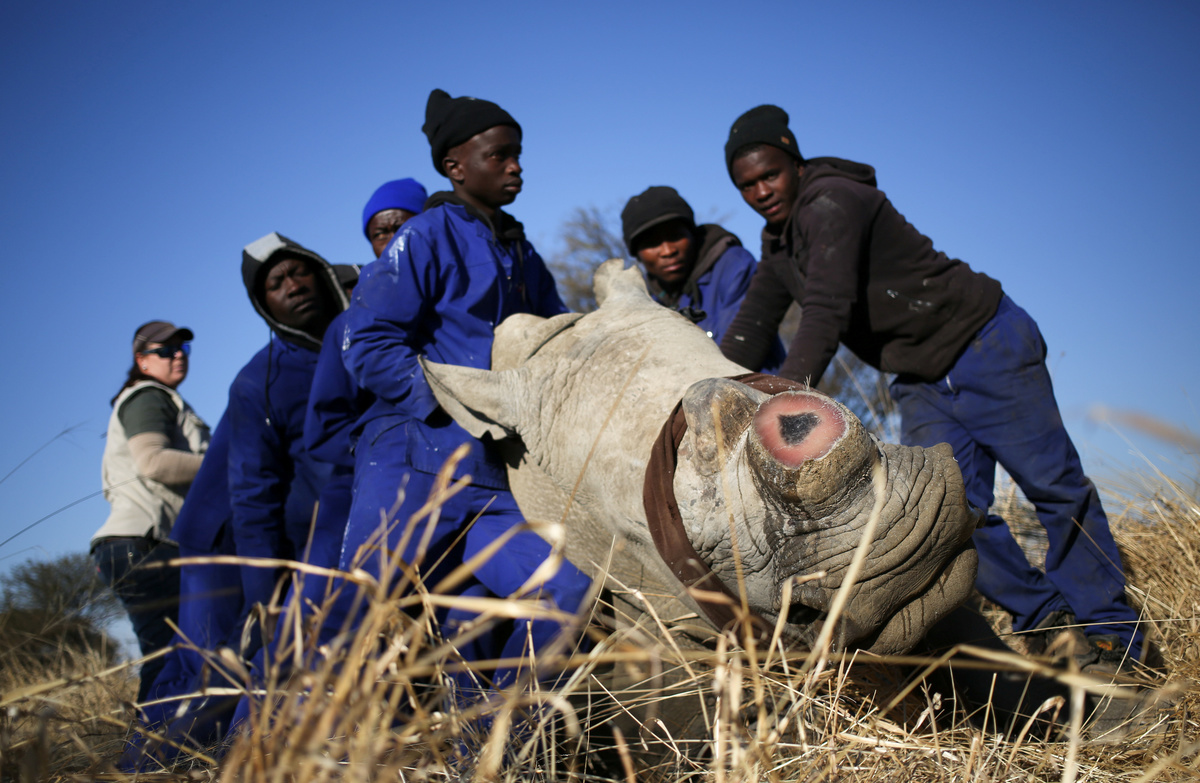
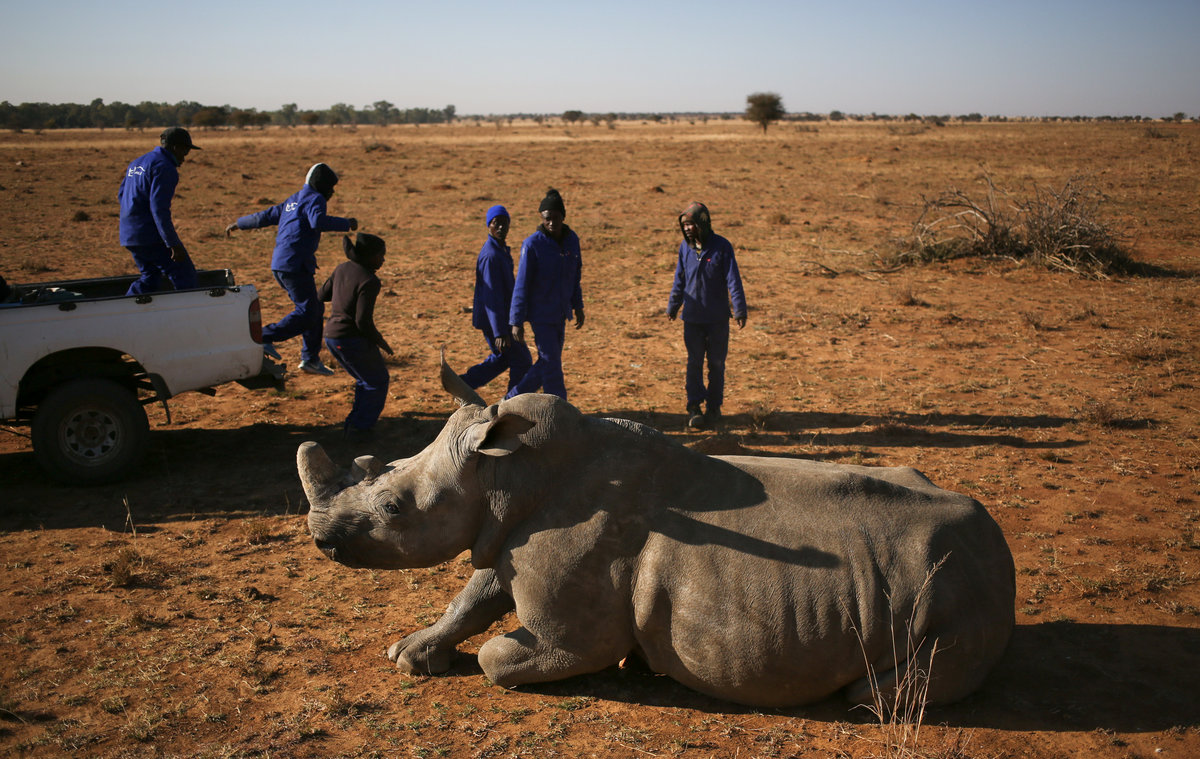
Workers hold a tranquillised rhino after it was dehorned in an effort to deter the poaching of one of the world's endangered species, at a farm outside Klerksdorp, in the north west province, South Africa. REUTERS/Siphiwe Sibeko
JOHANNESBURG (Reuters) - South Africa's first legal auction of rhino horns opened for bids on Wednesday and 264 horns went on sale after the owner of the world's biggest private rhino herd won a court case against the government.
The rhinos were tranquilized before their horns were harvested making the operation painless. It takes up to two years for the horns to grow back, said Pelham Jones, chairman of the Private Rhino Owners Association.
A court handed down the order on Sunday to allow the online auction to go ahead after the government delayed handing over the permit to rhino owner John Hume. Bidding is scheduled to close at 1300 GMT on Friday.
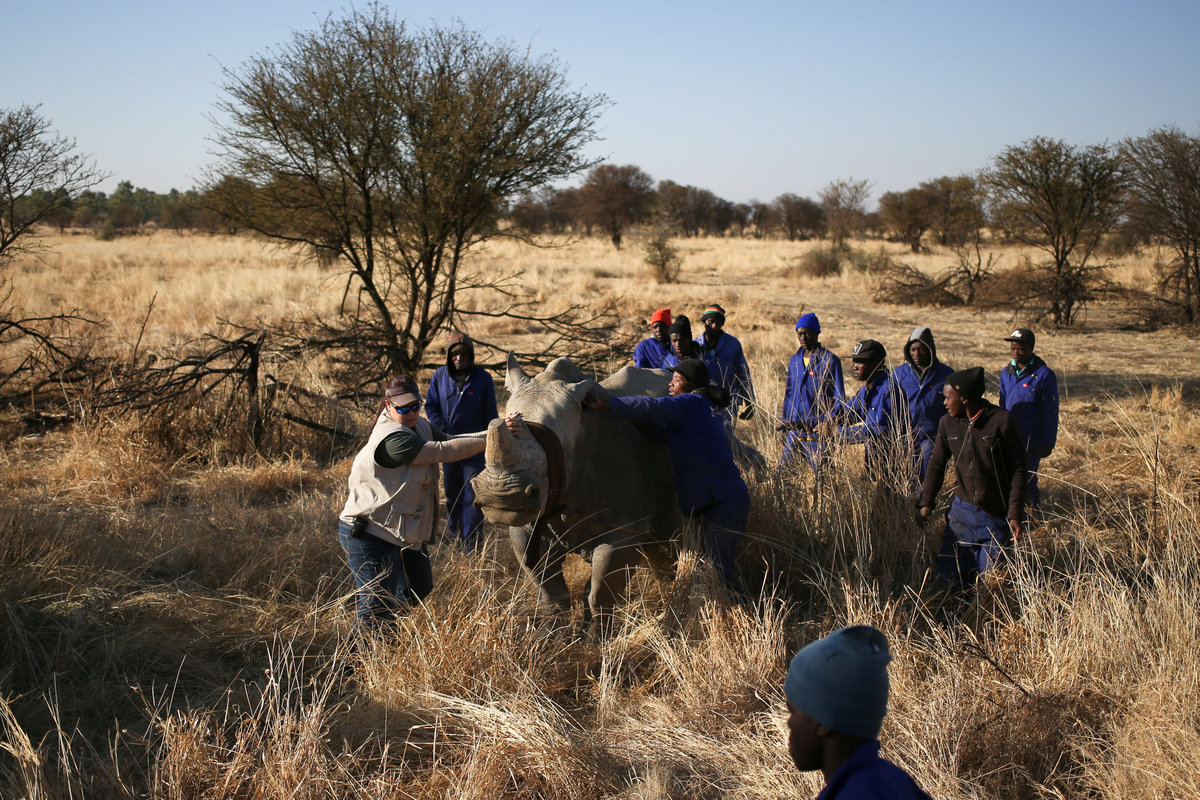
Workers hold a tranquillised rhino before dehorning it in an effort to deter the poaching of one of the world's endangered species, at a farm outside Klerksdorp, in the north west province, South Africa, August 14, 2017. Picture taken August 14, 2017. REUTERS/Siphiwe Sibeko
South Africa is home to more than 80 percent of the world's rhinos, whose population has been devastated by poaching for buyers in Vietnam and China where it is coveted as an ingredient in traditional medicine.
Hume, who owns 1,500 rhinos on his sprawling farm southeast of Johannesburg, has built up a stockpile of rhino horn as he regularly cuts them off his herd to protect against poachers.
Global trade in rhino horn is banned under a United Nations convention. Any horn acquired legally in South Africa could not be exported but conservationists have expressed concerns that domestic buyers could illicitly supply Asian markets.
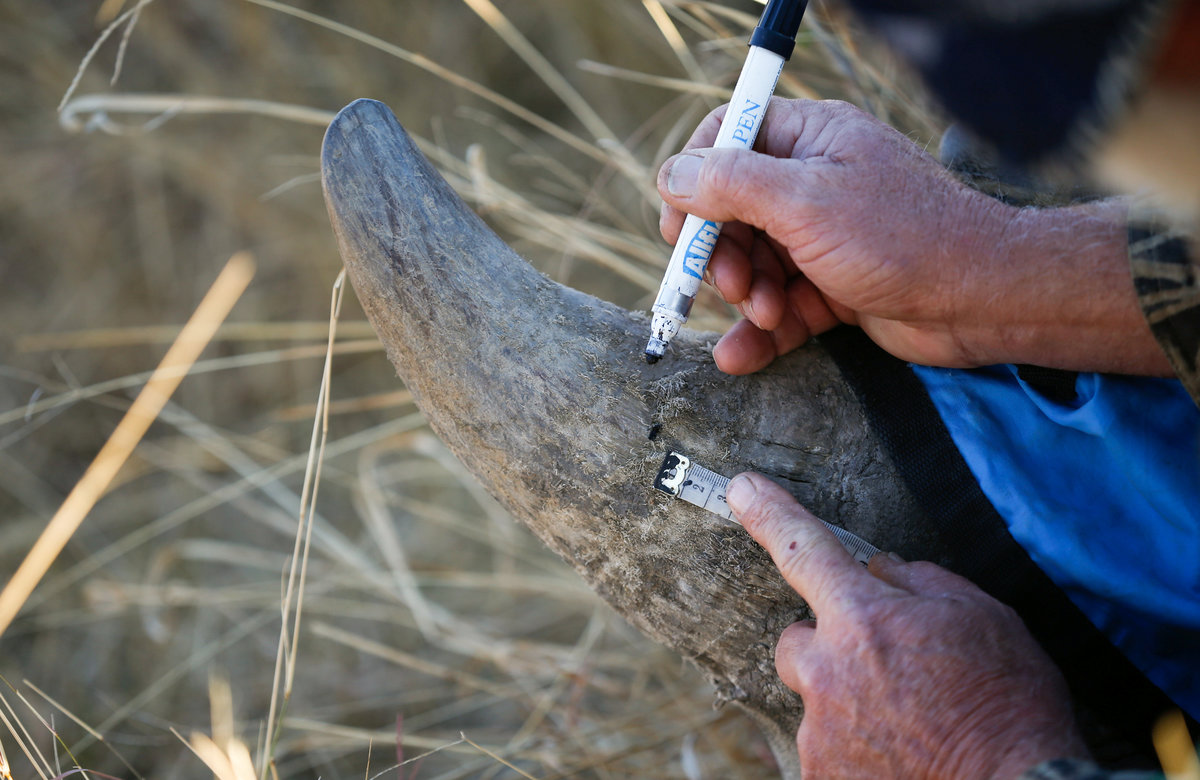
A worker measures a horn of a tranquillised rhino before dehorning it in an effort to deter the poaching of one of the world's endangered species, at a farm outside Klerksdorp, in the north west province, South Africa, August 14, 2017. Picture taken August 14, 2017. REUTERS/Siphiwe Sibeko
Hume has said he needs to sell horn to afford spiraling security costs which include armed patrols, helicopters and electric fencing.
(Reporting by Zandi Shabalala; Editing by Matthew Mpoke Bigg)
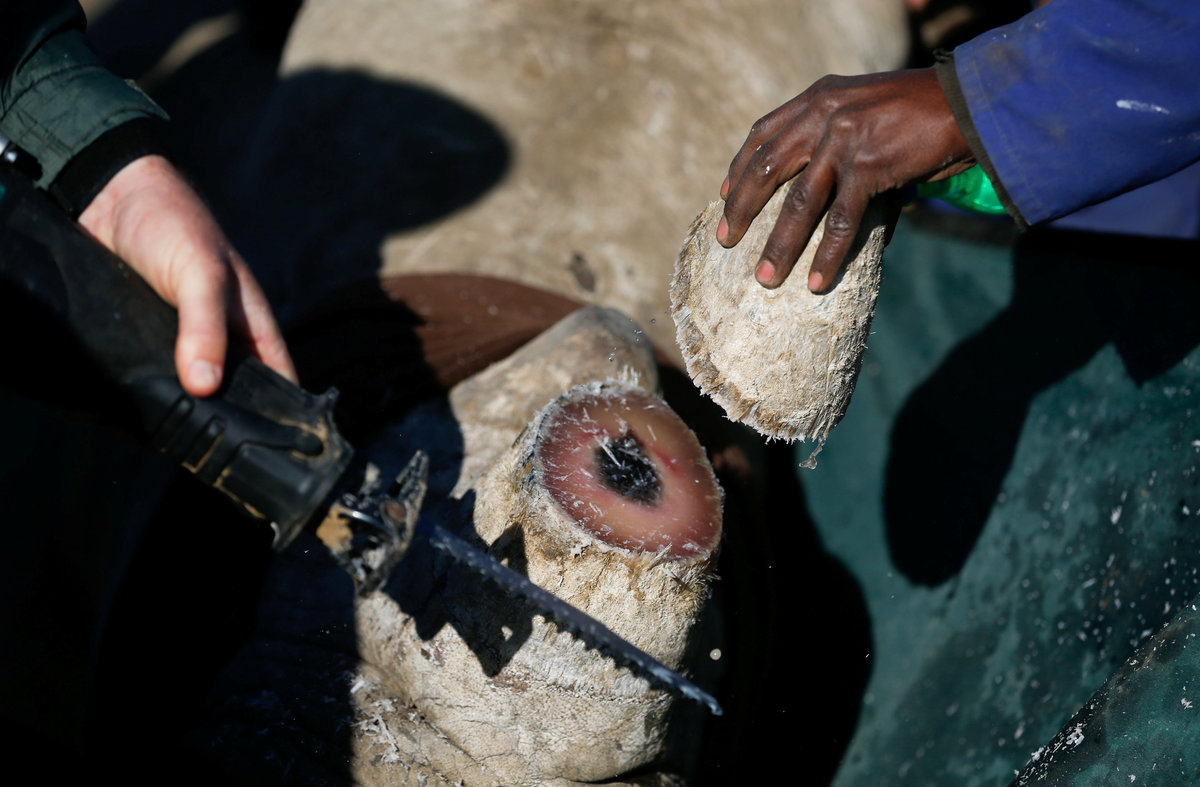
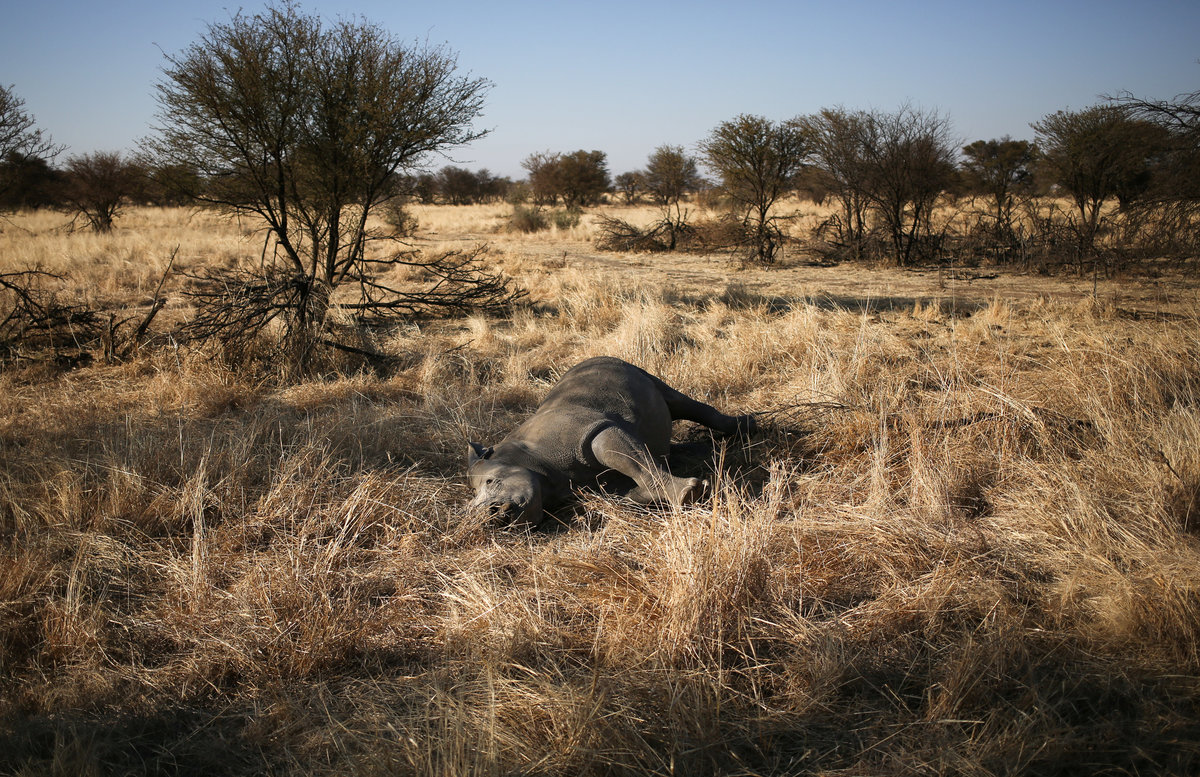
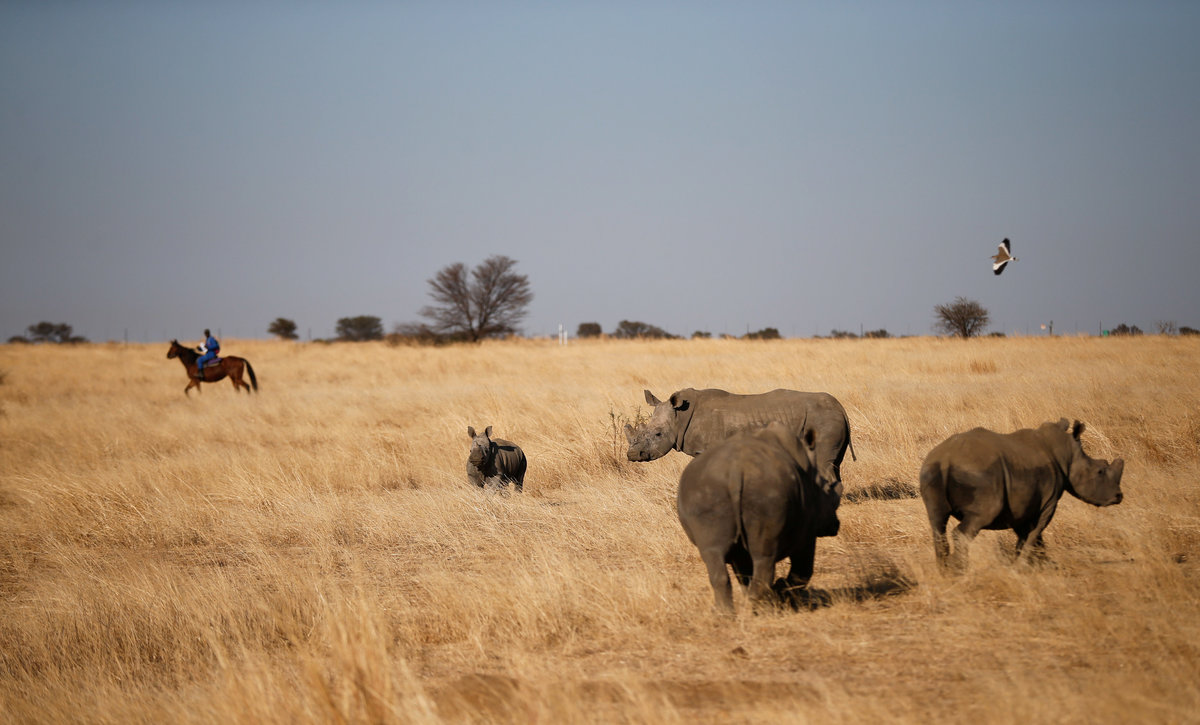
A tranquillised rhino is dehorned in an effort to deter the poaching of one of the world's endangered species, at a farm outside Klerksdorp, in the north west province, South Africa, August 14, 2017. Picture taken August 14, 2017. REUTERS/Siphiwe SibekoWorkers aproach a tranquillised rhino before dehorning it in an effort to deter the poaching of one of the world's endangered species, at a farm outside Klerksdorp, in the north west province, South Africa, August 14, 2017. Picture taken August 14, 2017. REUTERS/Siphiwe SibekoA tranquillised rhino is seen after it was dehorned in an effort to deter poaching of one of the world's endangered species, at a farm outside Klerksdorp, in the north west province, South Africa, August 14, 2017. Picture taken August 14, 2017. REUTERS/Siphiwe SibekoA man on a horse back keeps watch over rhinos at a farm outside Klerksdorp, in the north west province, South Africa, August 14, 2017. Picture taken August 14, 2017. REUTERS/Siphiwe SibekoJohn Hume, the world’s largest private rhino owner and breeder speaks to Reuters at his farm outside Klerksdorp, in the north west province, South Africa, August 14, 2017. Picture taken August 14, 2017. REUTERS/Siphiwe Sibeko
Sign up to read this article
Read news from 100’s of titles, curated specifically for you.