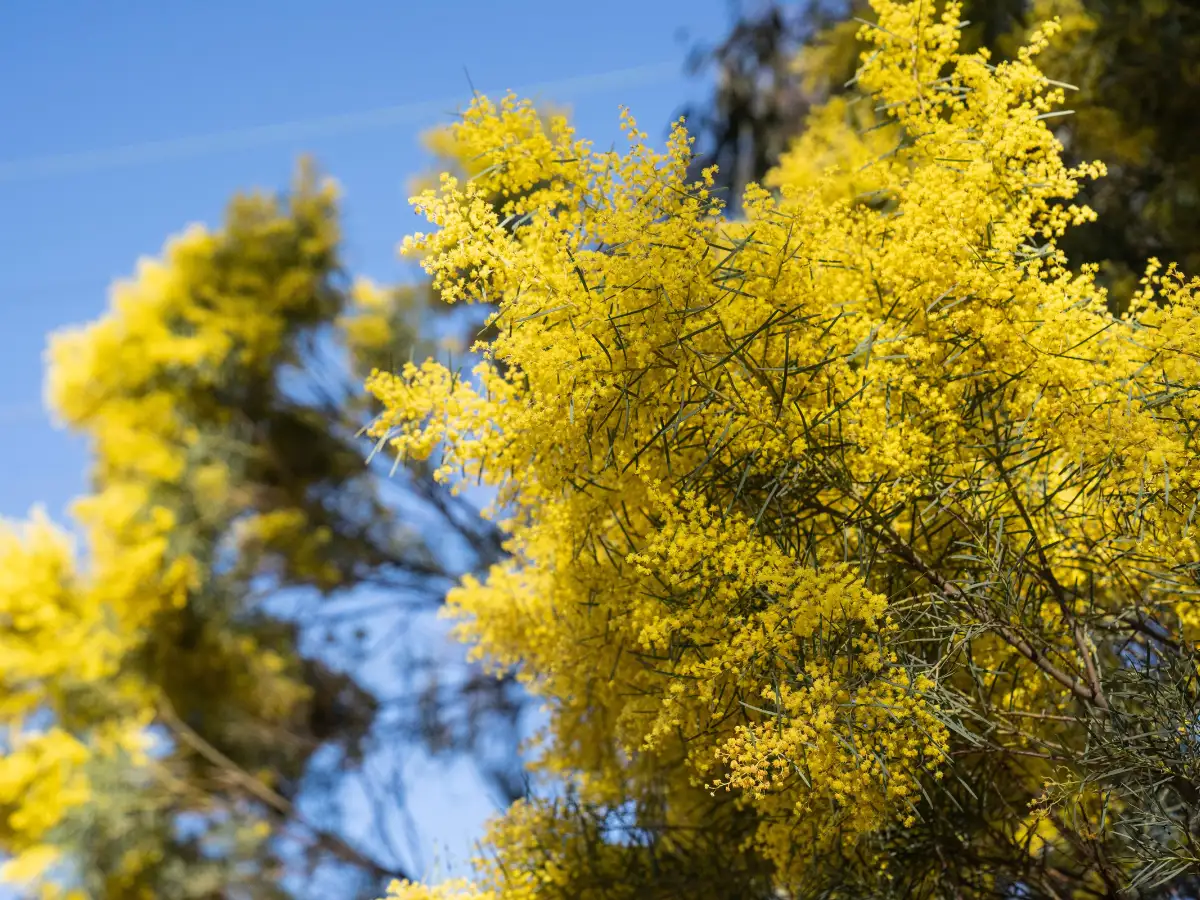
Sometimes, a fix to a problem quietly becomes a much bigger problem decades later. This is exactly what happened along South Africa’s coastline, where a tree brought in to solve a sand problem is now blamed for stealing water from entire river systems.
A 19th-century fix for a very real problem
According to a study, ‘A review of coastal dune stabilization in the Cape Province of South Africa,’ published in Landscape and Urban Planning, organized dune stabilization in the western Cape began in 1845, when Australian Acacia species were introduced because they were considered the most effective plants available for holding down shifting coastal sand. Colonial authorities attempted to anchor the drifting dunes that were consuming farmland and other infrastructure in the area with fast-growing, hardy wattles from Australia. The plantings continued for the rest of the 19th century. For the narrow purpose for which they were planted, they worked: the dunes stopped moving.
The paper notes that the first phase relied on direct seeding of Port Jackson Wattle onto bare sand, but by 1875, managers were spreading city refuse over the dunes first to create a temporary crust before sowing. It adds that a French foredune method introduced in 1896 used wooden poles or Marram Grass barriers, followed by brushwood packing and grass seeding, and says successful stabilization typically took at least five years.
Fast forward to today: the same trees are draining rivers
The same acacia species, along with pines and eucalypts introduced for similar practical reasons, have spread far beyond their original planting sites and are now major water users in South African river catchments, according to a 2002 study, titled ‘Invasive alien trees and water resources in South Africa: case studies of the costs and benefits of management,’ published in the journal Forest Ecology and Management. Acacia species alone account for some 37 percent of all water lost to invasive trees in the Upper Wilge catchment. Black wattle, or Acacia mearnsii, accounts for about 20 percent of the water lost to invaders in the Sonderend catchment and about 21 percent in the Keurbooms catchment.