Get all your news in one place.
100's of premium titles.
One app.
Start reading
Reuters
Reuters
Environment
Siyabonga Sishi and Tim Cocks

South Africa dehorns dozens of rhinos to prevent lockdown poaching surge

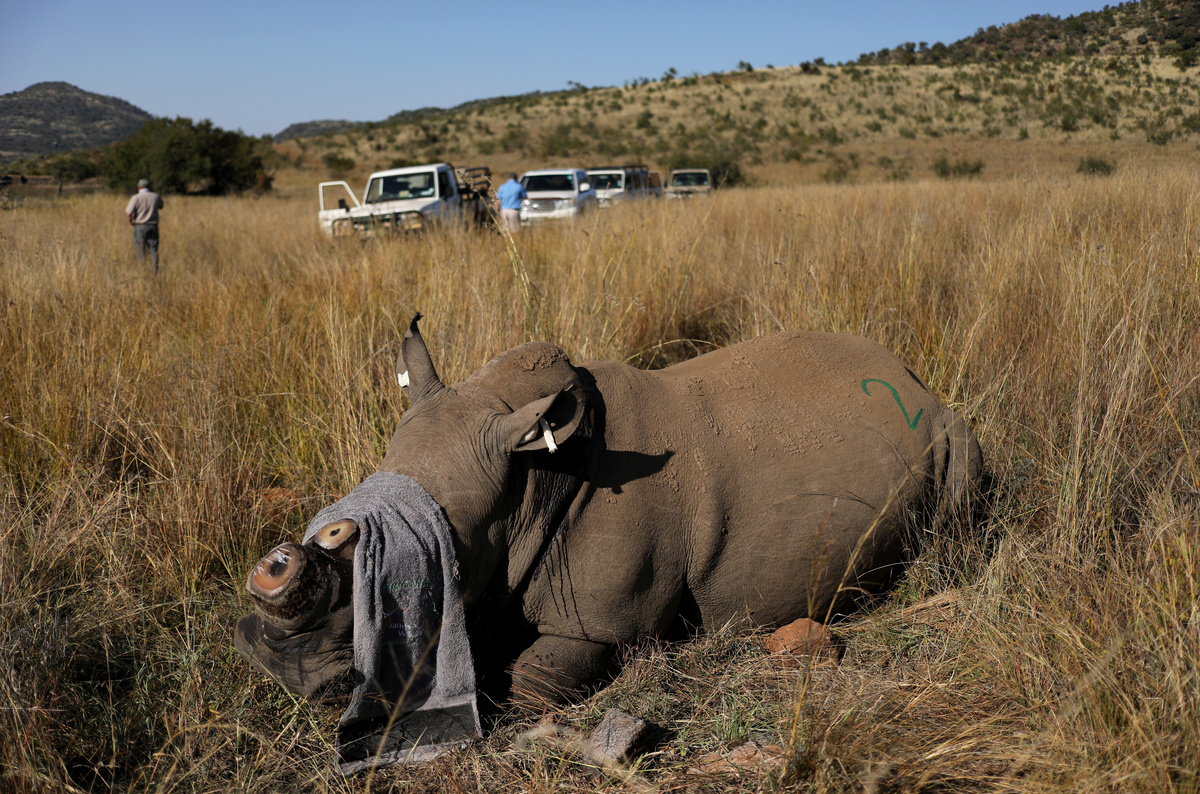
A rhino that has been dehorned in an effort to deter poaching lies on the ground, amid the spread of the coronavirus disease (COVID-19), at the Pilanesberg Game Reserve in North West Province, South Africa, May 12, 2020. Picture taken May 12, 2020. REUTERS/Siphiwe Sibeko

South Africa has dehorned dozens of rhinos in three popular game parks, aiming to prevent armed poachers taking advantage of the post-COVID-19 crash in tourism to kill them for their horns.

The exercise in Pilanesburg National Park and the Mafikeng and Botsalano game reserves -- all northwest of Johannesburg -- leaves the rhinos with horn rumps too small for poachers to bother with, Nico Jacobs, helicopter pilot and founding member of non-profit Rhino 911 told Reuters.
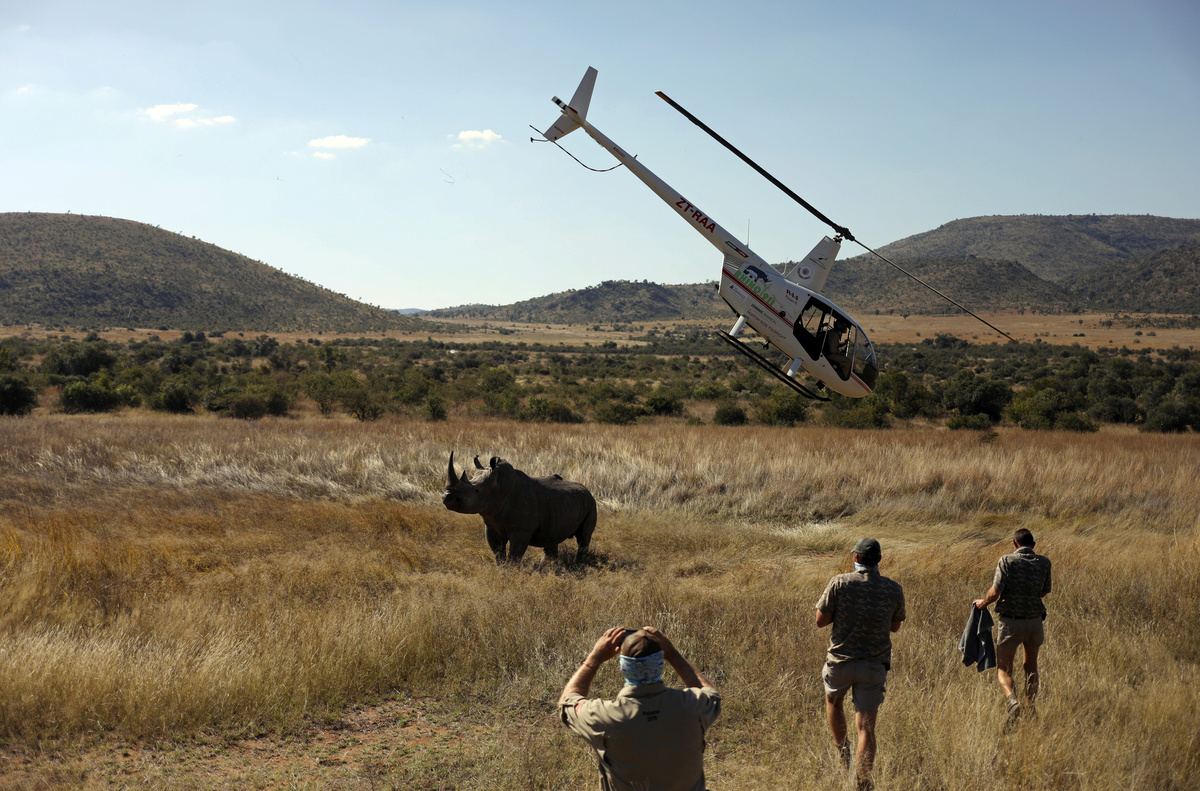
A helicopter flies over as workers approach a tranquillised rhino before dehorning it in an effort to deter poaching, amid the spread of the coronavirus disease (COVID-19), at the Pilanesberg Game Reserve in North West Province, South Africa, May 12, 2020. Picture taken May 12, 2020. REUTERS/Siphiwe Sibeko

As Jacobs flew a helicopter over Pilanesburg last month with Reuters journalists, they spotted a lioness eating the carcass of a rhino that had been poached days earlier. Experts fear the absence of tourists may already have spurred a poaching spike.

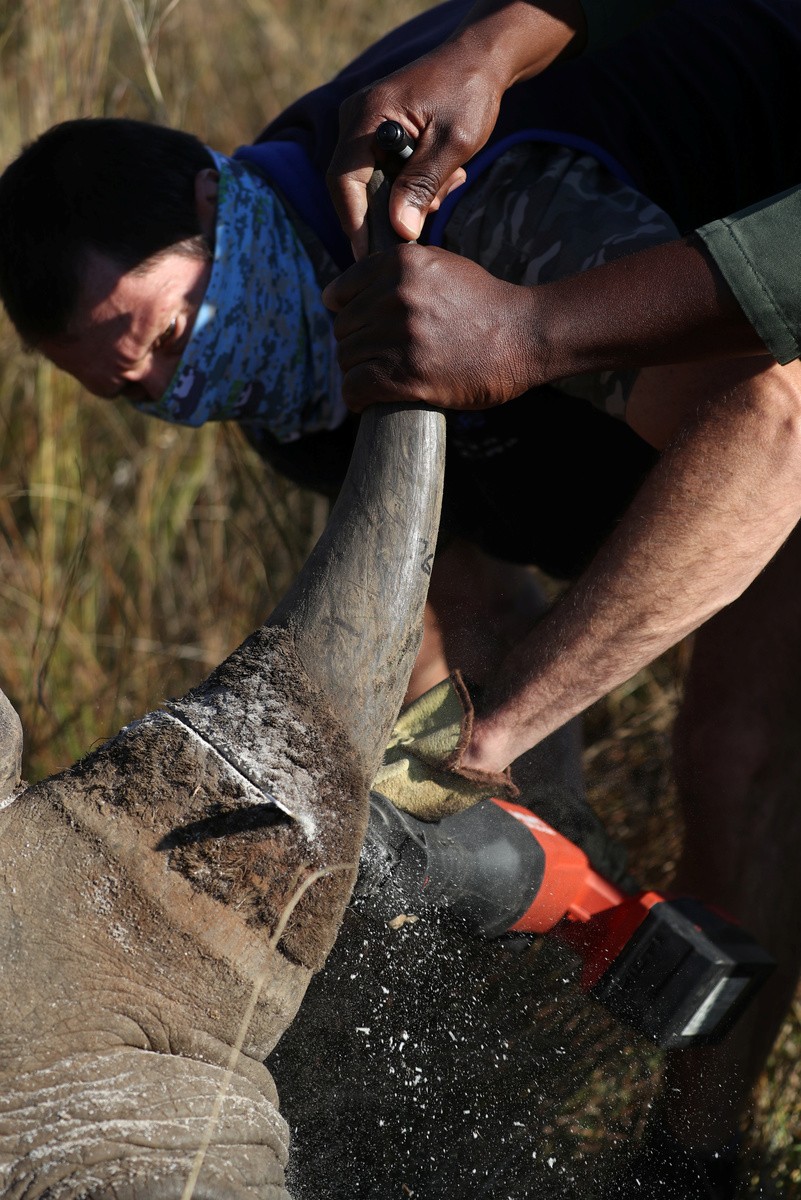
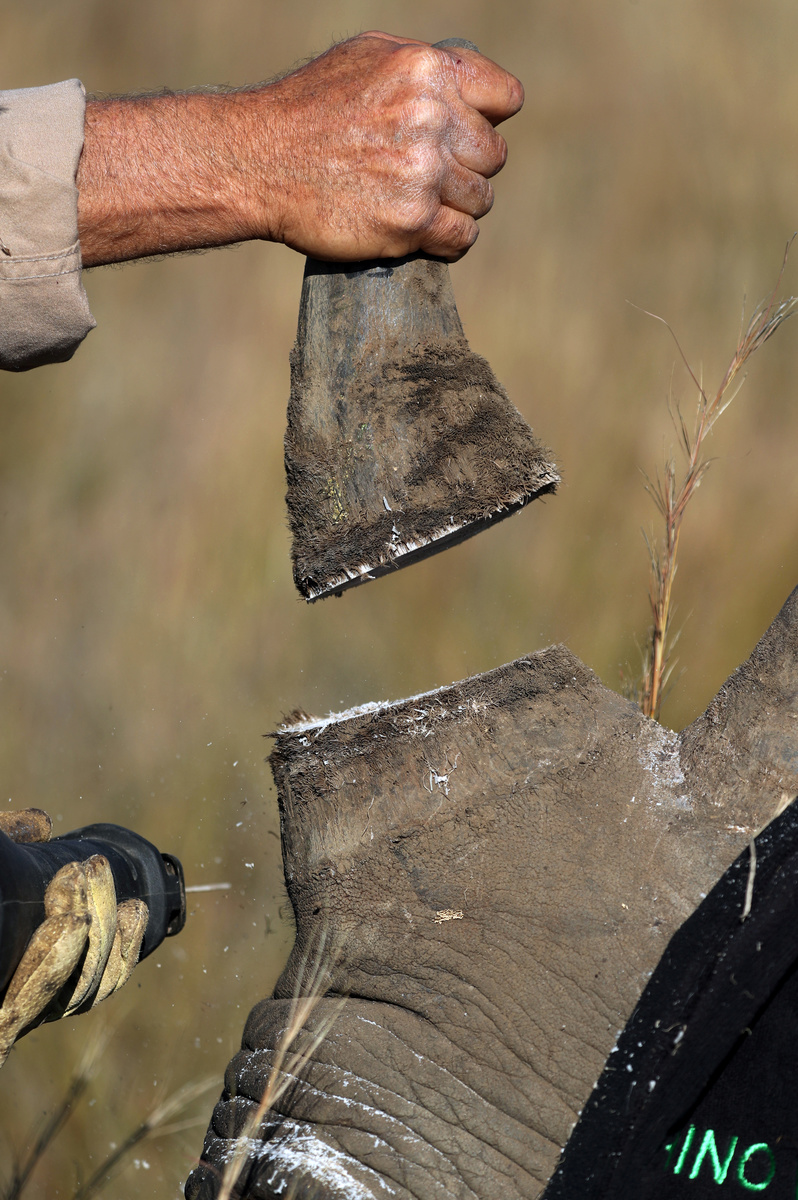
They proceeded to a spot where they tranquilised a female rhino before removing her horn with an electric saw. One of her calves had to be restrained.

Working with authorities, they began dehorning three years ago. Jacobs said they had since seen a drop in poaching. The numbers of rhinos in the parks, and how many have been poached, are kept secret to protect them.
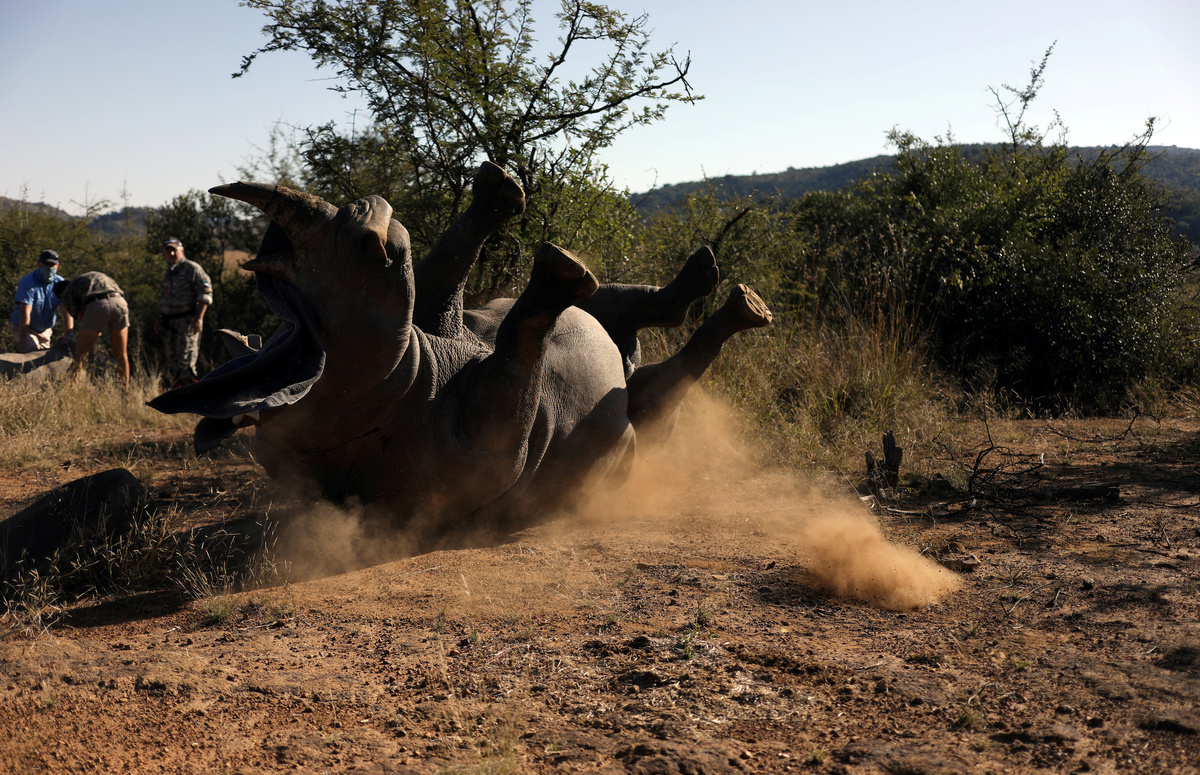
A tranquillised rhino falls before it is dehorned in an effort to deter poaching, amid the spread of the coronavirus disease (COVID-19), at the Pilanesberg Game Reserve in North West Province, South Africa, May 12, 2020. Picture taken May 12, 2020. REUTERS/Siphiwe Sibeko

"I've seen so many slaughtered, butchered rhinos. What is the solution?" he said. "For them (poachers) to come when there's lions, elephants ... It's too much risk for that little piece," he said.

As the world marks World Environment Day on Friday, the threat from humans to other species' survival -- and ultimately our own -- is a growing concern to conservationists.

On Monday, scientists published a study showing that humans are causing mass extinction on a scale unseen since a meteor wiped out the land dinosaurs 65 million years ago, the sixth large-scale extinction in Earth's history.
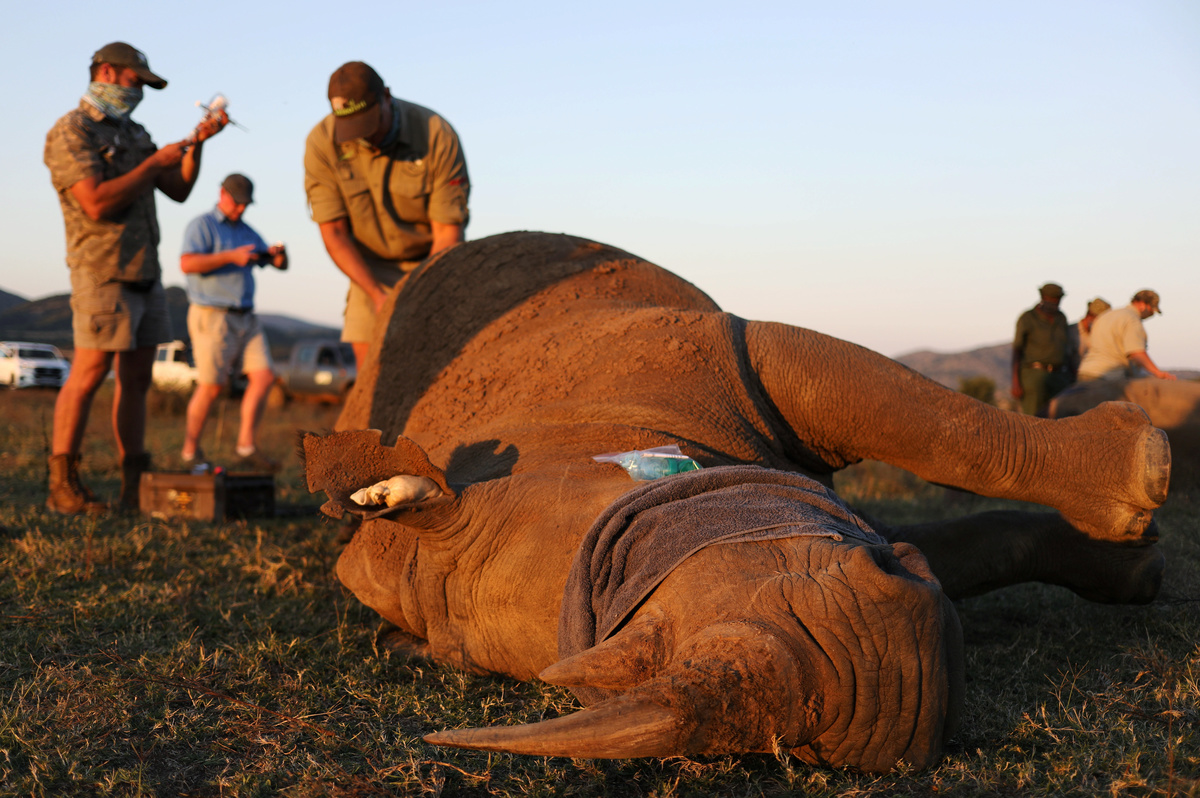
A veterinarian attends to a tranquillised rhino before it is dehorned in an effort to deter poaching, amid the spread of the coronavirus disease (COVID-19), at the Pilanesberg Game Reserve in North West Province, South Africa, May 12, 2020. Picture taken May 12, 2020. REUTERS/Siphiwe Sibeko

Rhinos have been around for 30 million years, but decades of hunting and habitat loss have reduced their numbers to about 27,000 today, according to the International Rhino Foundation. A poaching surge has wiped out thousands in the past three years.

"In order to ... give the population a chance to grow again, we need to relieve the pressure on them ... (by) dehorning," Pieter Nel, acting head of conservation of the North West Parks board, said.

Rhino horn sells for $60,000 a kilogram, more than cocaine or gold. In East Asia, it is used in medicinal potions, despite containing the same key component as human fingernails.
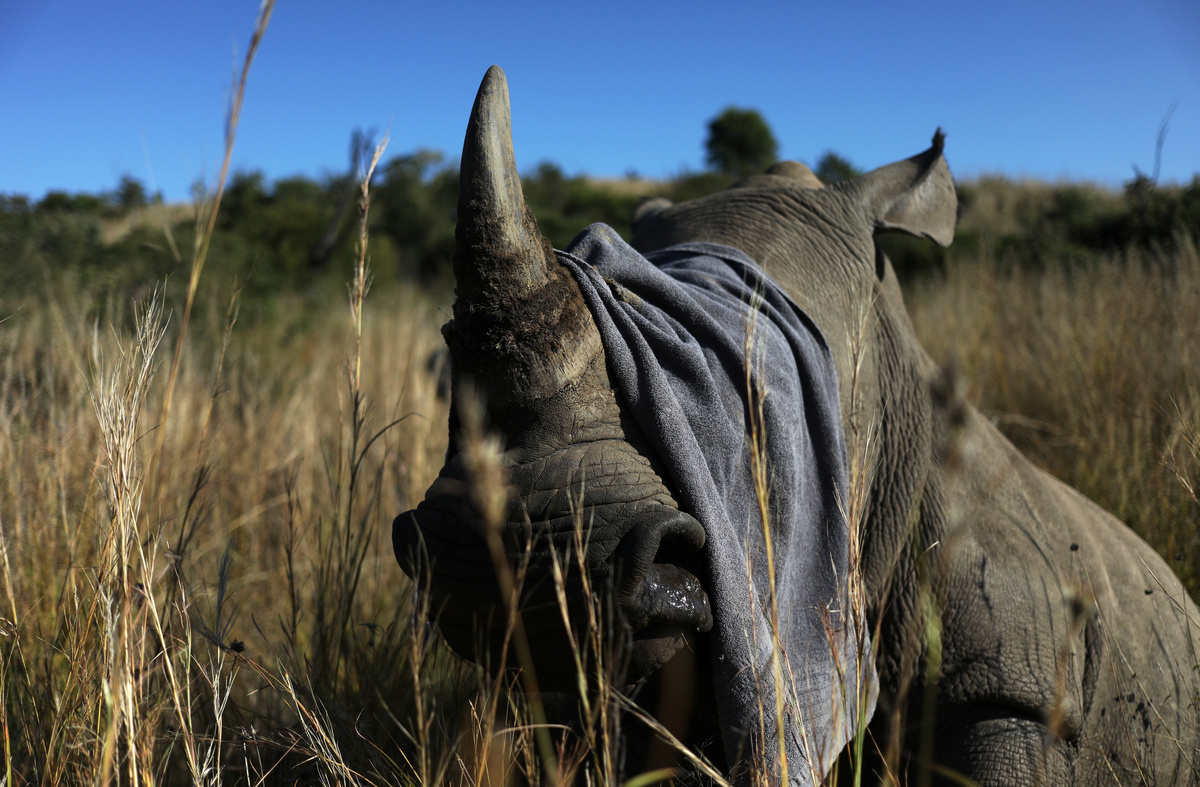
FILE PHOTO: A towel is used to cover the eyes of a tranquillised rhino before it is dehorned in an effort to deter poaching, amid the spread of the coronavirus disease (COVID-19), at the Pilanesberg Game Reserve in North West Province, South Africa, May 12, 2020. Picture taken May 12, 2020. REUTERS/Siphiwe Sibeko

Dehorning is controversial, especially as it makes male rhinos vulnerable in fights. But they are not essential for survival, and, like fingernails, they grow back.

(Editing by Mike Collett-White)
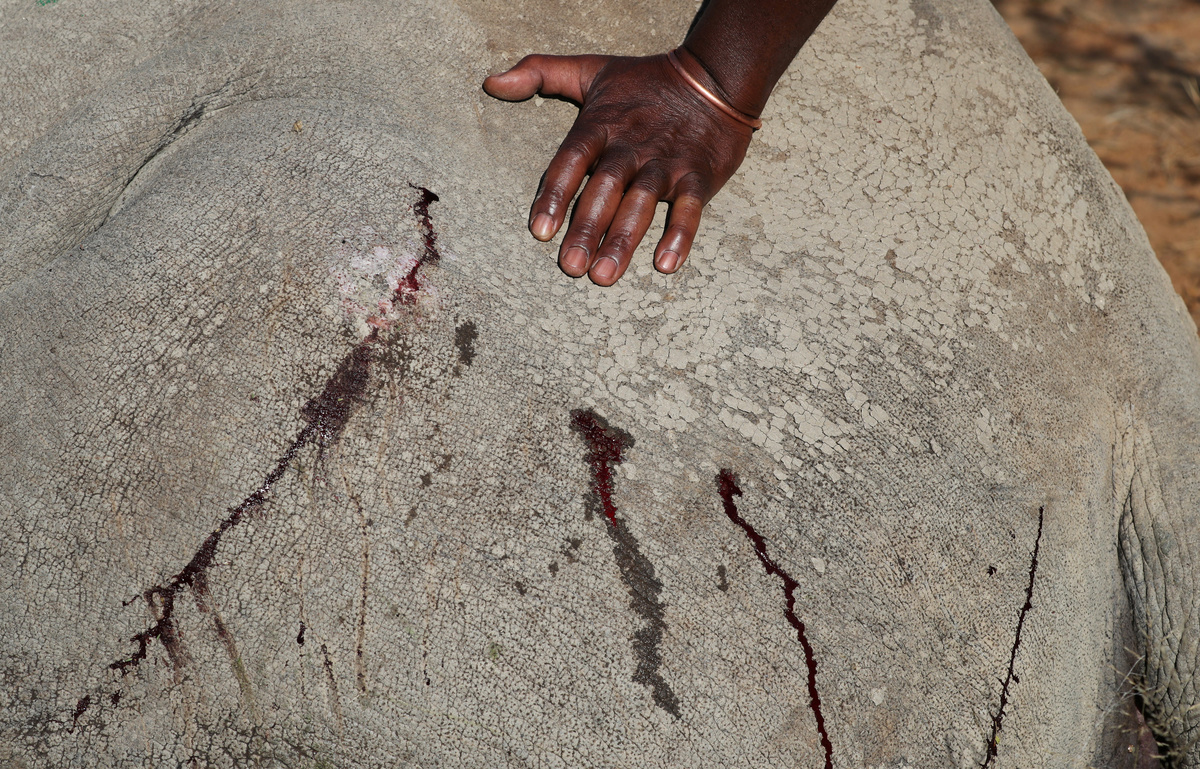
A ranger puts his hand on a tranquillised rhino, before it is dehorned in an effort to deter poaching, amid the spread of the coronavirus disease (COVID-19), at the Pilanesberg Game Reserve in North West Province, South Africa, May 12, 2020. Picture taken May 12, 2020. REUTERS/Siphiwe Sibeko
Workers dehorn a tranquillised rhino in an effort to deter poaching, amid the spread of the coronavirus disease (COVID-19), at the Pilanesberg Game Reserve in North West Province, South Africa, May 12, 2020. Picture taken May 12, 2020. REUTERS/Siphiwe Sibeko
FILE PHOTO: Workers dehorn a tranquillised rhino in an effort to deter poaching, amid the spread of the coronavirus disease (COVID-19), at the Pilanesberg Game Reserve in North West Province, South Africa, May 12, 2020. Picture taken May 12, 2020. REUTERS/Siphiwe Sibeko
Sign up to read this article
Read news from 100's of titles, curated specifically for you.
Already a member? Sign in here
Related Stories
Top stories on inkl right now
One subscription that gives you access to news from hundreds of sites
Already a member? Sign in here
Our Picks
Fourteen days free
Download the app
One app. One membership.
100+ trusted global sources.