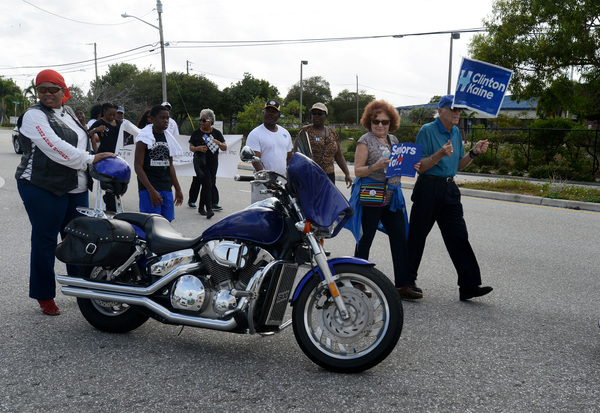
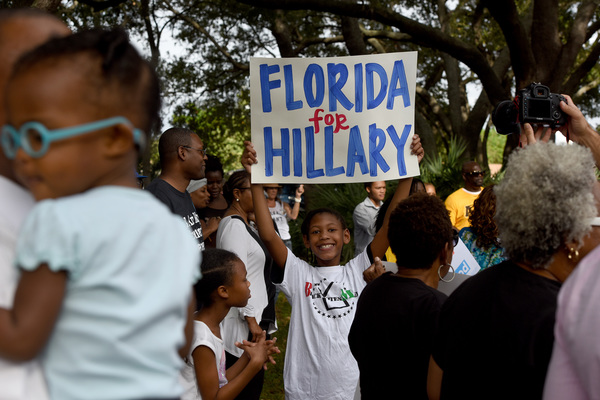
Across South Florida, Democrats made their last big push Sunday to get African-American and Caribbean-American voters to vote with a series of "Souls to the Polls" events on the last day of early voting before Election Day.
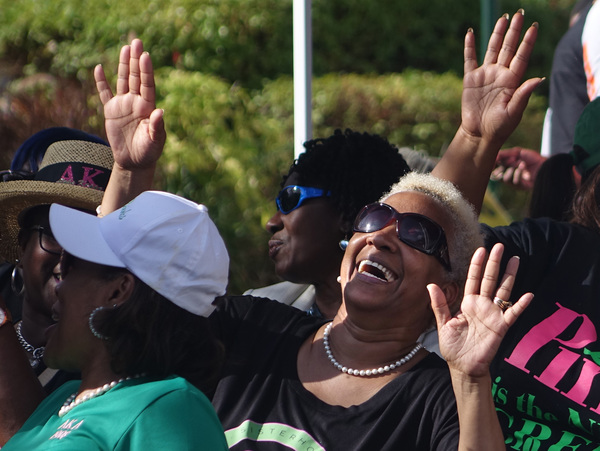
The events were festive and serious.
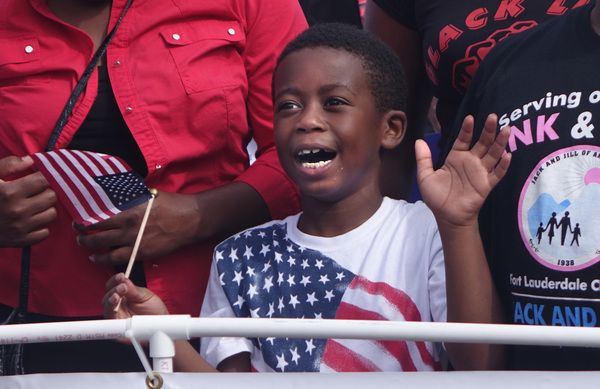
In Fort Lauderdale, about 200 people gathered at New Hope Missionary Baptist Church and marched more than a mile down Sistrunk Boulevard, the main street of the city's historically black neighborhood, to the early voting site at the African-American Research Library and Cultural Center.
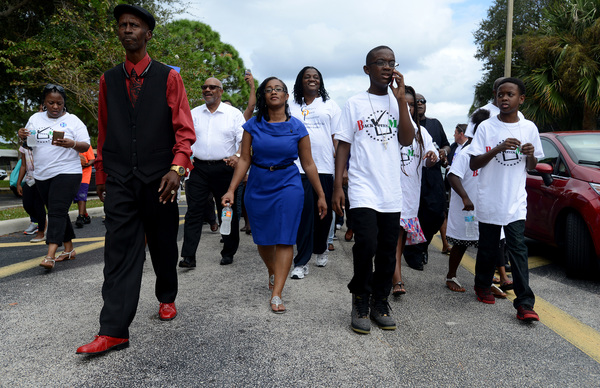
In Boynton Beach, 150 people gathered at St. John's Missionary Baptist Church and marched to the early voting site at the Ezell Hester Community Center.
The message from a range of community, political and religious leaders was direct: vote. The intended beneficiary: Democratic presidential candidate Hillary Clinton.
"This is where the action is. This is the battleground," said Rep. Yvette D. Clarke, D-N.Y. "As we say in Brooklyn, 'Shut it down.' Donald Trump goes nowhere if Florida, if Broward County, shuts it down."
The last Sunday of in-person early voting has become a big election day for black voters in Florida. Efforts to spur turnout started in past elections with pastors at black churches encouraging parishioners to go directly from Sunday services to early voting sites.
The idea has since become a broader effort by politicians, clergy and celebrities to attract attention and make a bigger audience realize they need to vote.
Ricky Scott, pastor of New Hope Missionary Baptist, said he's been regularly pushing voting. "They have a right and they need to use it," he said. By Sunday, he said virtually all his congregants had already voted. But he said they still have work to do: make sure everyone they know gets to the polls. "Grab them by the hand and take them in there and vote," he said.
Kenya McCloud, a physician who lives in Royal Palm Beach and practices in Plantation marched in Fort Lauderdale, where he grew up.
"The purpose is to notify the public that this election is crucial," he said. "Just because Barack Obama is not in the White House, it is crucial to keep his legacy going. We believe staying home is a vote for Donald Trump."
McCloud, 42, said he's confident people his age and older will vote. But he's concerned that black millennials don't see the connection between voting and jobs, equality, justice and the fight against police brutality. "It seems as if their interest is not there. They don't believe that there's still the struggle."
Polling shows Clinton is the overwhelming favorite among black voters, but the mobilization drives are aimed at translating that potential support into actual votes.
Rep. Alcee Hastings, D-Fla., a longtime Clinton supporter, has at times been critical of how his candidate's team has tried to reach black voters. Hastings said in an interview Saturday that he was more comfortable than he was a week ago that the efforts are on track heading into Election Day.
Hastings said he thinks turnout will "hit 60 percent in the African-American community." If that target is reached, he said a growing number of Hispanic Democrats in Central Florida could put Clinton over the top in her competition with Trump for Florida's 29 electoral votes. With Obama on the ballot, Hastings said African-American turnout was 68 percent in 2008 and 66 percent in 2012.
The efforts to reach black voters are varied, and targeted to specific groups. Hastings said one event, for Jamaican-Americans, was "dance to the polls." On Saturday, Clinton visited Miami's Little Haiti neighborhood, where she met with Haitian-American political leaders and described her history of support for Haiti and hopes for the future. Earlier in the week, Clinton courted black voters at Sunday services at Mount Olive Baptist Church, stopped at Betty's soul food restaurant and held a rally at Reverend Samuel Delevoe Memorial Park, all in Fort Lauderdale, and visited an early voting site in Lauderhill.
Monday, efforts will switch to black voters who participated in the 2014 election for governor but hadn't yet voted by the time early voting ended. Democratic state Sen. Chris Smith said he and Hastings have a team of 75 people lined up to reach out to black voters in central Broward, and other political leaders are organizing similar efforts elsewhere.
"We're going to spend the next two days hitting those doors," Smith said.