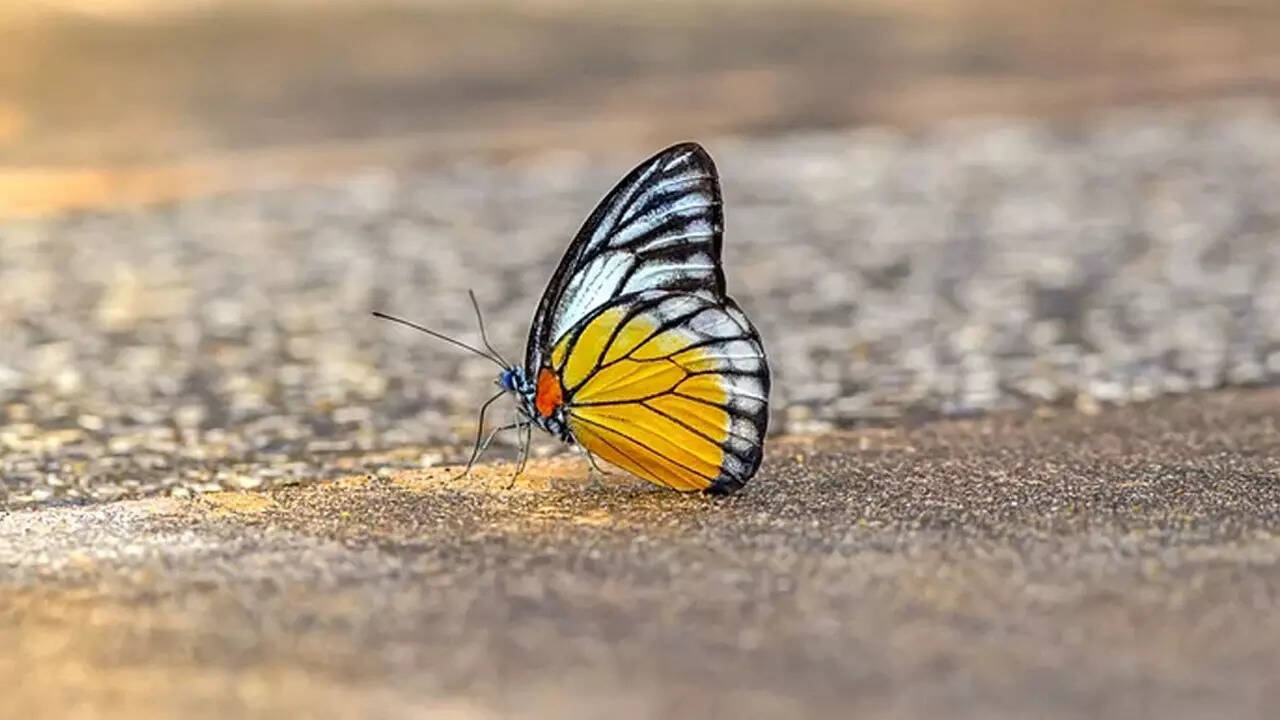
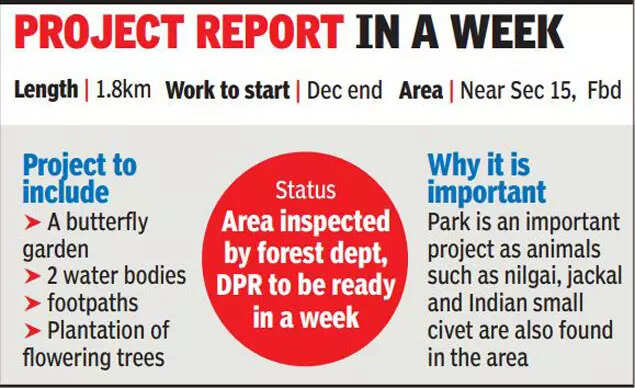
GURUGRAM: The forest department is planning a butterfly garden along the Faridabad bypass road. Forest officials inspected the area and will finalise the detailed project report (DRP) this week.
In the first phase, officials will develop the park along a 1.8 km stretch of the Faridabad bypass road. Two water bodies, walking paths and native flowering trees will also come up in the park.
Plants such as lantana, potter weed, marigold, cosmos, Penta, milkweed, balloon plants, citrus trees, and custard apple, which attract butterflies and enhance their breeding, will get planted at the park. A forest official said that butterflies are a crucial component of our rich biodiversity and a flagship species for conservation. They are indicators of a healthy environment and ecosystem, the official added.
Researchers have studied butterflies for several years to develop the concepts of evolution, mimicry, climate change, habitat loss and fragmentation, and biodiversity conservation, etc. Areas rich in butterflies are generally rich in other invertebrates, as well.
“They collectively provide a wide range of selfless environmental benefits such as pollination and natural pest control,” said Raj Kumar, divisional forest officer, Faridabad.
Butterflies and other insects also play a pivotal role in the sustenance of the food chain, where they are the prime prey base for several other animals such as birds, bats and other insectivores.
The two water bodies at the park will recharge groundwater by percolation. Nestled within the Aravali mountain range, the area already has trees like Salai, Dhau, Kaim.
“The idea was not to turn it into a dense woodland but to create diverse habitats, including grasslands that would support varied forms of life,” he said. The park is an important project, he said, because animals such as Nilgai, Jackal, Indian Small Civet, Indian Hare, various snakes, lizards and skunks live in the area.
“We aim to finish the project in two years. We are hopeful of a natural forest landscape along the roadside, which people from all walks of life can enjoy. The transformation (of the area into the park) will take time as the local Aravali trees usually grow very slowly,” he added.
Another reason the project is much needed is groundwater getting scarcer in the region due to rapid urbanisation and over-extraction. "The groundwater table is receding at the rate of three feet per year, so we are working to create small groundwater recharge zones wherever possible,” he added.