There's a hot new acronym in the world of camera sensors: LOFIC. Standing for ‘Lateral Overflow Integration Capacitor’, the tech is said to increase dynamic range by enabling a sensor to store extra charge from intense highlight saturation when a scene is being exposed. This can then be rendered in the captured image, where otherwise the data would have been clipped, thereby over-exposing the corresponding areas in the image. The result is what's being called ‘ultra-high dynamic range’, achieved without traditional multi-exposure techniques, which have the potential to introduce artefacts when shooting moving subjects.

Until now LOFIC has only been connected to Samsung image sensors, specifically the ISOCELL HP6, which has previously been rumored to appear in the forthcoming Galaxy S27 Ultra. But while that's still just a rumor, Sony has now revealed a new LOFIC-enabled sensor of its own: LYTIA L910. This is a 50 megapixel 1/1.28 stacked CMOS chip capable of high-quality video recording at 4K 60 fps, even when shooting in HDR.
In addition to its LOFIC ability, the L910 also employs Triple Conversion Gain-HDR (TCG-HDR) technology, which is said to read out the charge obtained from a single exposure at three different conversion gains. This further reduces highlight over exposure in bright areas of a scene, along with noise in shadows and mid-tones. Furthermore, Sony's Ultra High Conversion Gain (UHCG) circuits technology is claimed to reduce random noise by approximately 30% compared to Sony's more conventional LYTIA 828 image sensor.
With all these technologies combined, Sony states that the LYTIA 910 can achieve 100 dB high dynamic range images with a single exposure - that equates to 16.6 stops - and with it the ability to easily preview images in HDR quality on a phone screen. Power consumption is also said to be reduced thanks to a reduction in the time required for analog-to-digital signal conversion, which should result in lower battery consumption for phones.
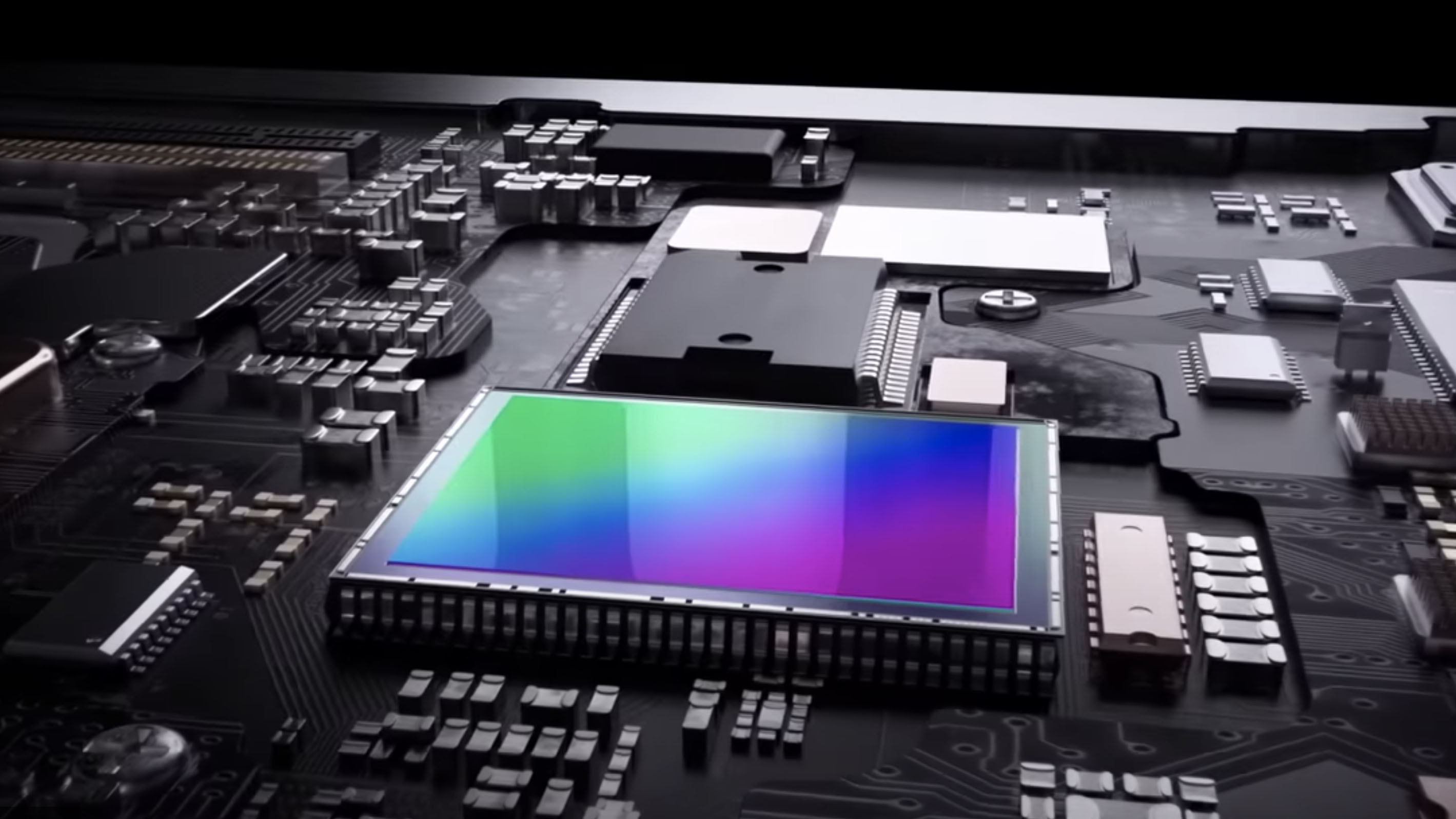
Sony says the LYTIA L910 will be available to camera phone manufacturers in summer 2026, which presumably means its arrival must be imminent. However, we’ll likely have to wait several more months before those first phones actually materialize.