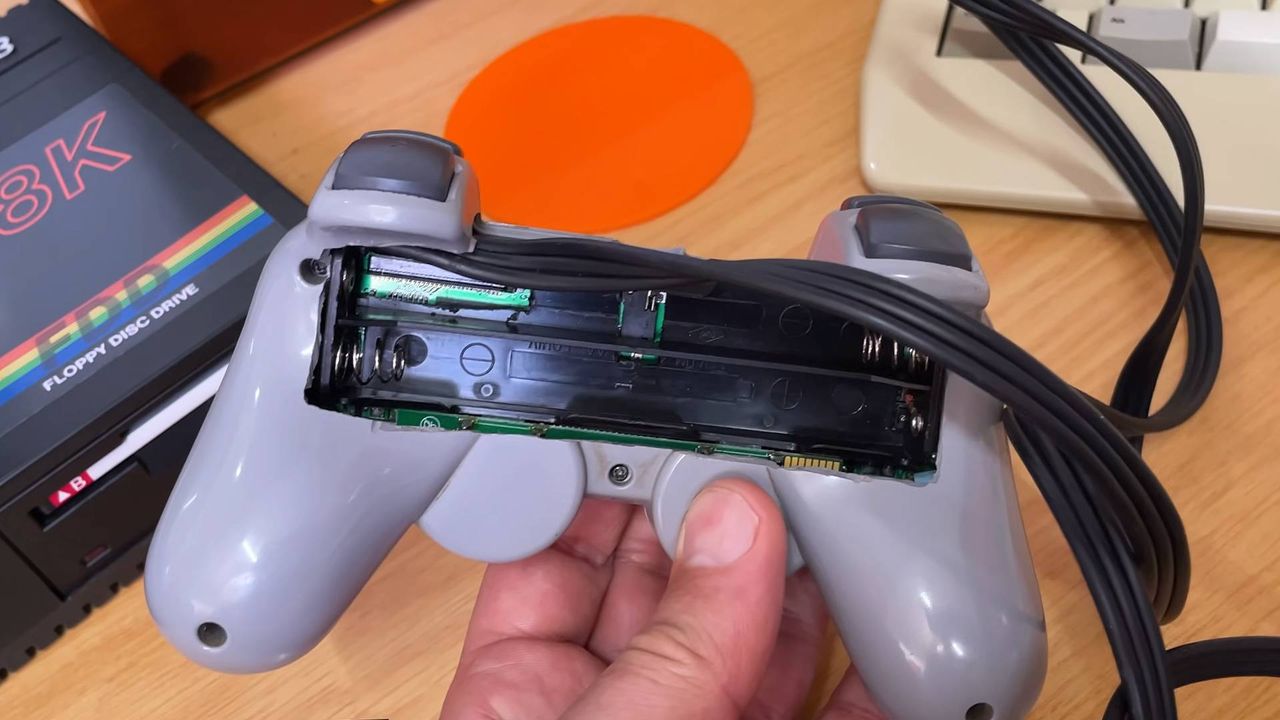
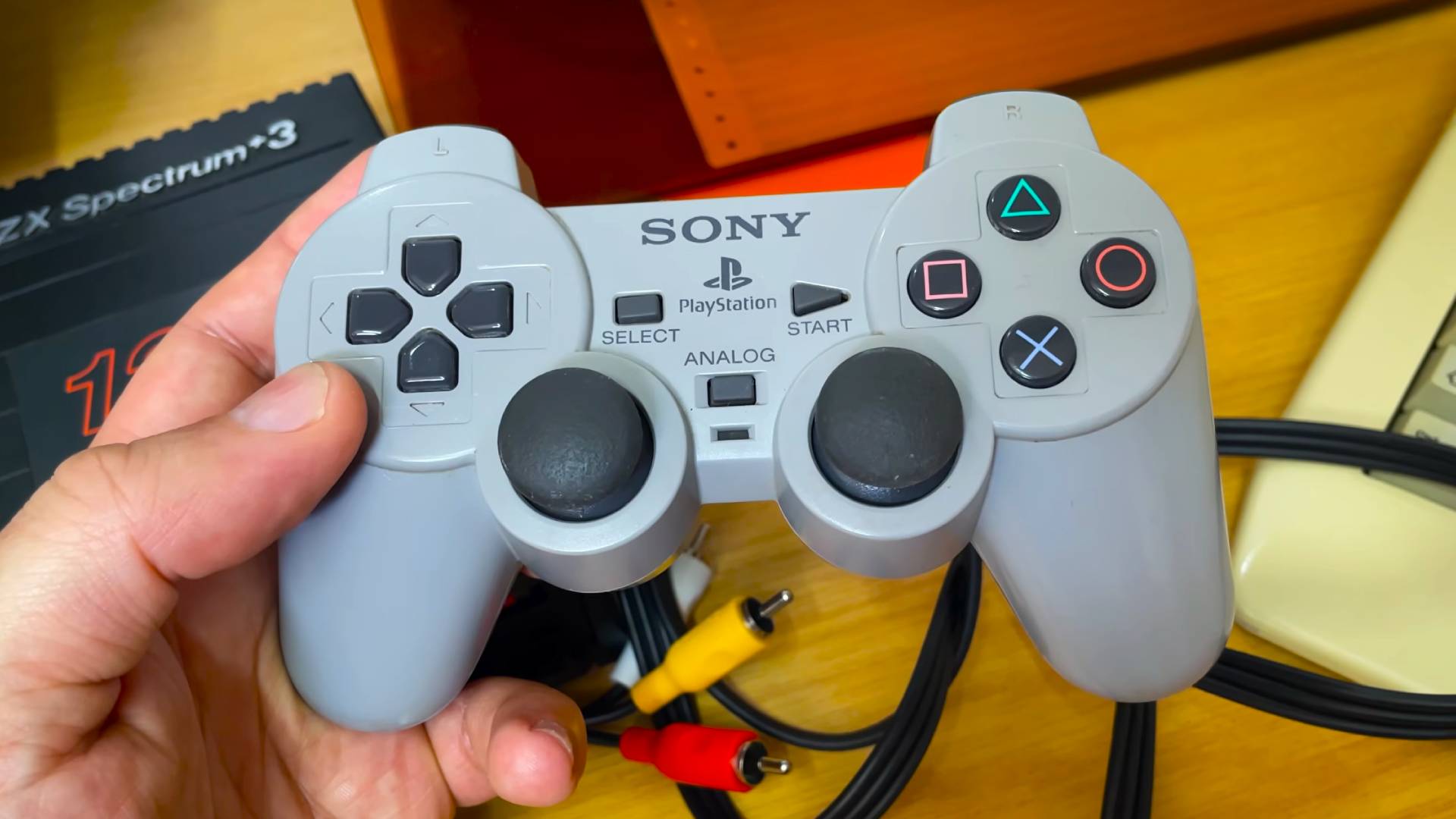
It turns out Sony had plans for a battery-powered PS1 crammed inside a DualShock controller, and it would have been a plug-and-play precursor to the PlayStation Classic. Armed with a memory card slot and a moulded composite video cable, it would have provided the Brazilian market with a way to play ten classic games via a memory card, but "Sony Licensing couldn't get their act together about the royalty terms."
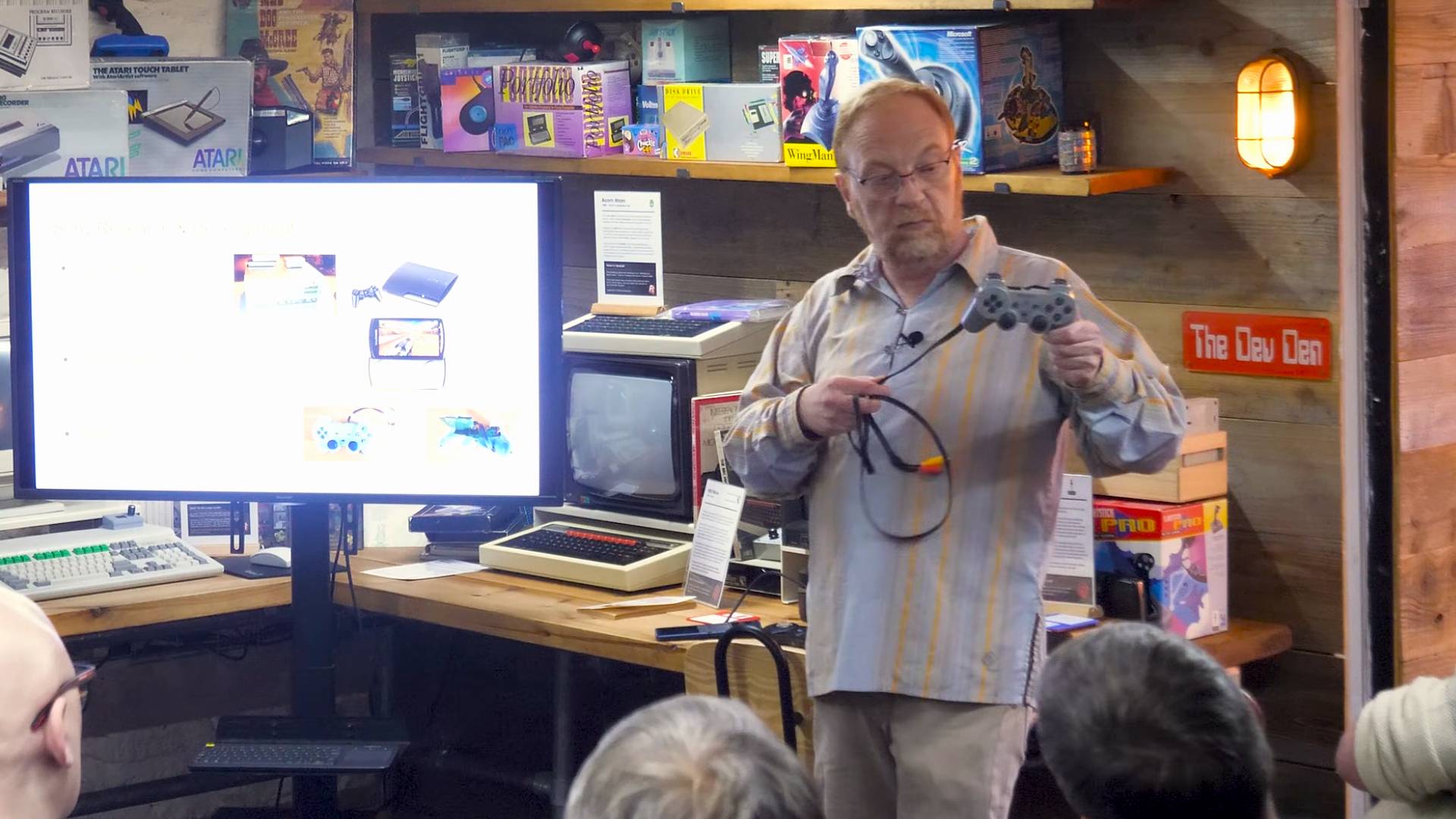
Dubbed the PlayStation PUGA, the retro console Dualshock hybrid features in a talk by legendary game developer Brian 'Biscuit' Watson. Hosted at The Retro Collective vintage computing museum in Chalford, UK, the ex-DMA Design dev spills the beans on their 40-year-long career within the industry, which includes his time at Sony working on PS2 emulation and the cancelled PS1 plug-and-play prototype.
"Yes, it's a PlayStation controller, but it's a PlayStation controller with PS1 inside of it," explains Biscuit as he shows off the prototype. "It worked off batteries; it was specifically for the Brazilian market, because they had import restrictions, so the consoles you could only get on the grey or black market there," adds the Scottish developer.
Elaborating on why the "PUGA" was intended for Brazil, the industry veteran explains that by manufacturing the PS1 plug-and-play in the country, "you got around a lot of their import regulations." This is a strategy that has been used throughout console history, with the likes of Sega teaming up with Samsung to make Mega Drive and Master System consoles in South Korea due to Japanese import bans.
Sadly, Biscuit says the prototype he has to hand no longer works as he doesn't have the software to get it out of debug mode. When it was functional, though, the developer says, "it really was working really well! We had about ten games on a 4GB card," but laments that the project was ultimately cancelled due to licensing issues.
"The unfortunate problem is that Sony licensing couldn't get their act together about the royalty terms for each of the games." That is to be expected when dealing with third-party developers, and Bisucit touches on Rockstar and "a few other places" wanting too much in terms of royalties. However, the dev says that "even if it was a Sony game, they had to negotiate with a separate unit of Sony, and they were never happy about how much royalties they were getting."
To add salt to the wound, Biscuit says that due to the cheap MSRP, the royalties would have been roughly 10 cents per unit, but the internal disputes were enough to end development. "I almost left Sony over that one," he admits, while revealing that it's the first project he worked on that was cancelled.
Delving into specs, the developer reveals that it uses a TI-OMAP 3530 system-on-a-chip with an ARM CPU, meaning it's effectively an older version of the MediaTek MT8167A chipset within the PS1 Classic. While it also appears to have a DC jack in the centre next to its composite video cable and memory card slot, it also has space for four AA batteries around back, and that's apparently enough to keep it running for 20 hours.
Yes, the PlayStation PUGA sounds like it'd be closer to one of those cheap plug-and-play consoles from the 2000s shaped like SpongeBob or a questionable Spider-Man appendage. Yet, the software was later used in the Sony Xperia Play, and I can't help but feel like Sony was doing more to provide access to the classics even in the early 2010s, even if that phone hybrid was a flop.
Given the news this week that Sony will end PlayStation disc production in 2028, it feels like it won't be returning to more physical ideas like the PUGA or even the PS1 Classic anytime soon. Yes, the company's mini console has its issues, but it and its cancelled plug-and-play predecessor at least felt like more of an effort to preserve some sort of offline physicality, and that's something we'll desperately need as we sail to an always online digital future.
Check out the best retro handhelds if you're itching to play PlayStation classics on the go.