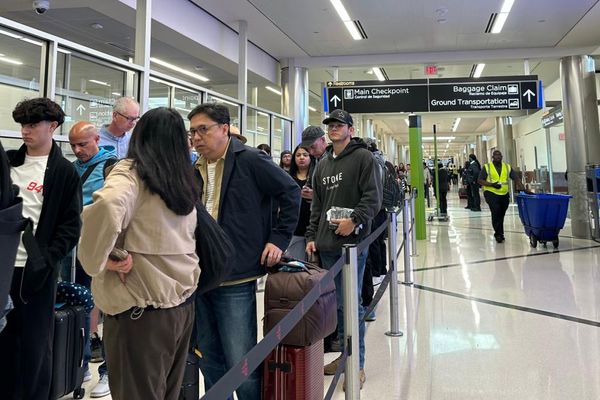
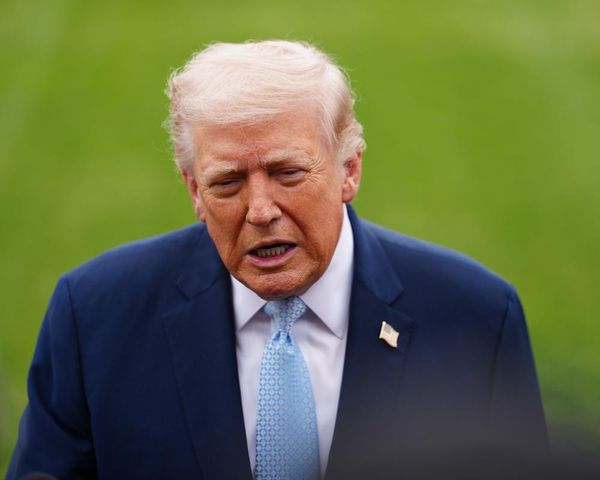
WASHINGTON _ Republicans on Capitol Hill increasingly view an emergency national security declaration by President Donald Trump as a way to end the 19-day partial government shutdown, which was triggered by his demand to use taxpayer funds to build a southern border wall.
"There are only four doors here," said Sen. John Kennedy, R-La. Either Trump gives in, Democrats give in or the government remains closed, he said. "And door No. 4 is the national emergencies act. I don't think anybody will be surprised if the president chooses door No 4."
The Trump administration is considering bypassing Congress and declaring an emergency at the southern border, a proposal that it says would allow it to move money from the Defense Department to fund a wall. Such a plan would likely be met with a lawsuit questioning whether the president has the constitutional authority to do that.
But it would also likely end the standoff over Trump's demand for $5.7 billion to be included in must-pass spending bills needed to reopen closed agencies. And it would effectively shift the controversial issue away from Congress, something that might also appeal to some lawmakers.
"The whole purpose of declaring national emergencies is to protect American lives," said Rep. Mo Brooks, R-Ala. "I believe it's a national emergency in order to protect American lives being lost." Brooks was apparently referring to Trump's claims that a wall would prevent drugs and criminals from entering the U.S. illegally, although experts say a border wall will not stem drug smugglers, who primarily use official ports of entry, and statistics suggest crime rates among immigrants are far lower than overall crime rates.
White House press secretary Sarah Huckabee Sanders told reporters Wednesday that an emergency declaration is "something that we're still looking at" but that "the best solution is to work with Congress to be able to get this done."
Trump said Wednesday that he has the "absolute right" to declare a national emergency and "might go that route."
While an extreme step, a national emergency declaration could be portrayed as a political win for all sides. Democrats could say they held strong and refused Trump's demands for border wall money. Trump and Republicans could say they were keeping their promise to build a wall by using the military instead. The fight over the wall would continue, but it would shift from Congress to the courts, which would then have to decide whether Trump has the authority to do it.
Republicans in the House voiced support for the president's position on border security in a Wednesday morning meeting, including the option of declaring a national emergency, according to lawmakers in the room. But some House Republicans and many of their Senate colleagues are less sure so far.
"I think it adds new layers of complexity because we know that the first thing that will happen is that somebody will file a lawsuit," said Sen. John Cornyn, R-Texas. "I don't think that resolves much of anything."
But several Senate Republicans are pushing to end the shutdown quickly, even if it means giving up on wall money. They include Sens. Cory Gardner of Colorado and Susan Collins of Maine, both of whom will face voters in 2020.
Concerned that Senate Republicans are growing increasingly nervous about the backlash from the shutdown, Trump is slated to meet with them Wednesday afternoon on Capitol Hill.
Mercedes Schlapp, the White House director of strategic communications, told CNN on Wednesday that Trump was ready to negotiate, even on a broader deal that would include relief for some of the so-called Dreamers, whose fate is in legal limbo since Trump terminated an Obama-era program that protected them from deportation. "We are at the table. We are ready to negotiate. We need the Democrats to come on board," she said.
Democrats have rejected those overtures so far, noting that Trump previously reneged on a deal he reached with them to combine border wall money with help for young immigrants brought to the country illegally as children. They are demanding that Trump reopen the government before they negotiate over border security and immigration.