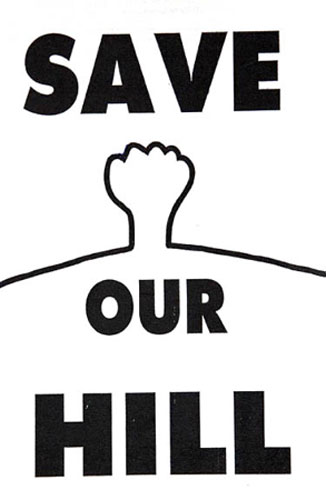
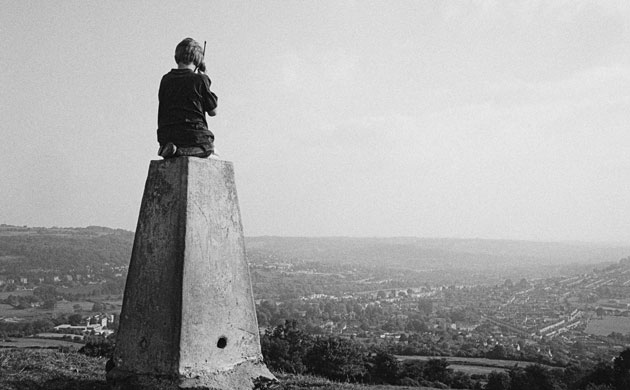
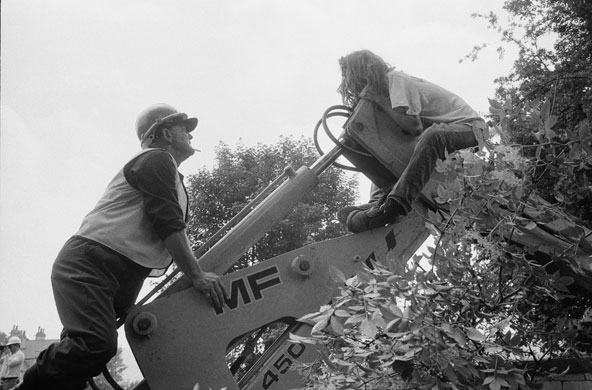
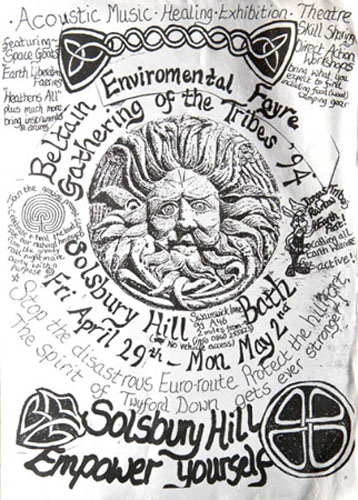
Save our hill. The battle against Batheaston bypass in 1994 was a turning point in the fight against the government’s road building programme, and in the lives of many of the people who became involved in itPhotograph: Adrian ArbibOn the top of Solsbury Hill. This local boy was overheard saying "save the hill, stop the road" into his radio handset. Under Margaret Thatcher, the government had decided to build a network of new motorways and trunk roads in order to realise her dream of universal drivingPhotograph: Adrian ArbibSolsbury Hill was the first of the major 1990s anti-roads protestsPhotograph: Adrian Arbib
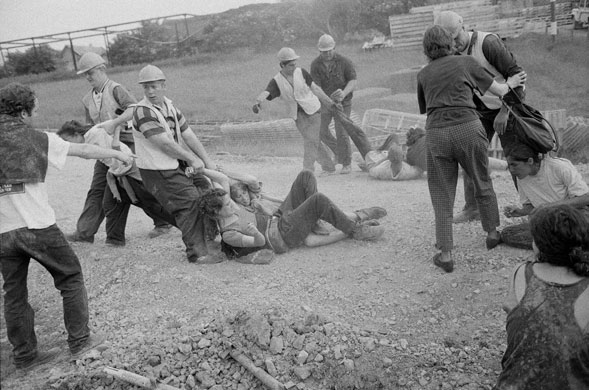
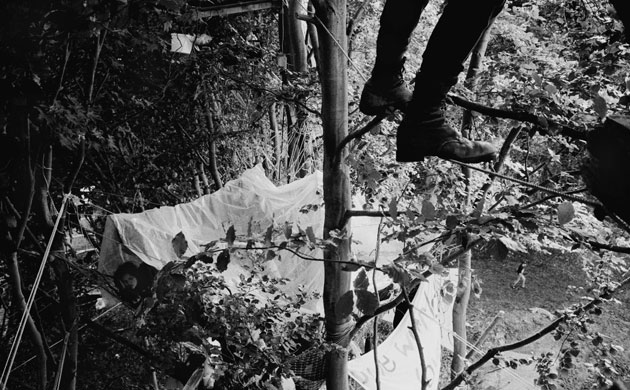
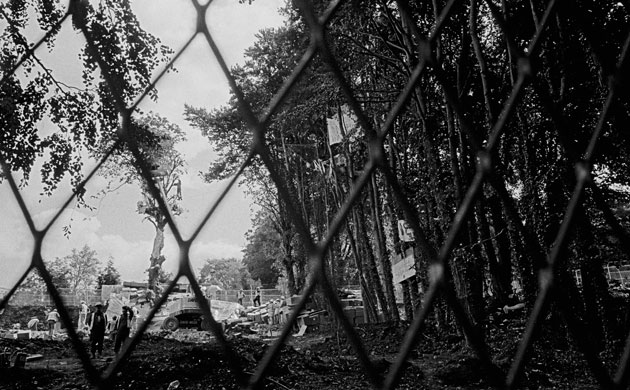
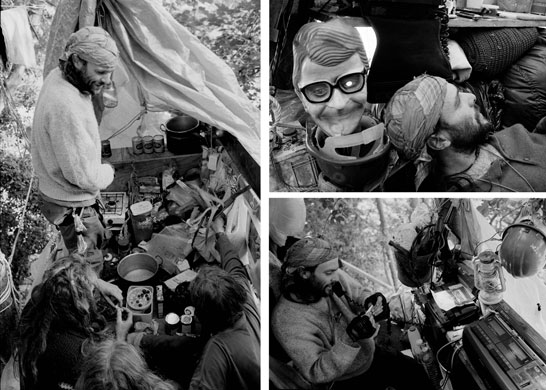
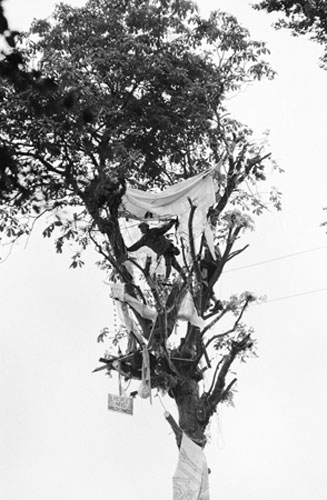
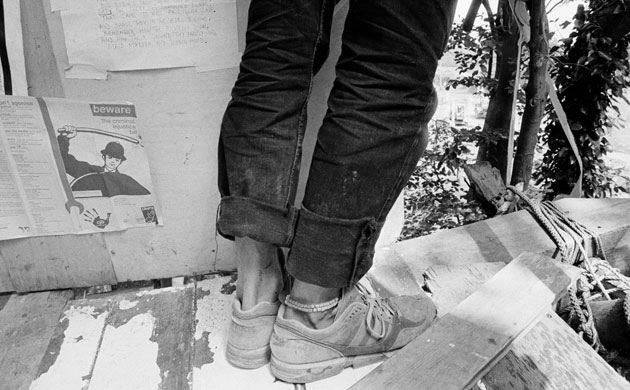
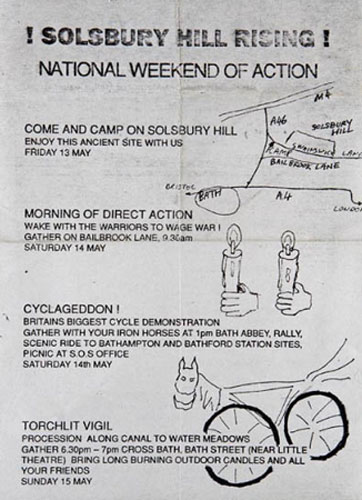
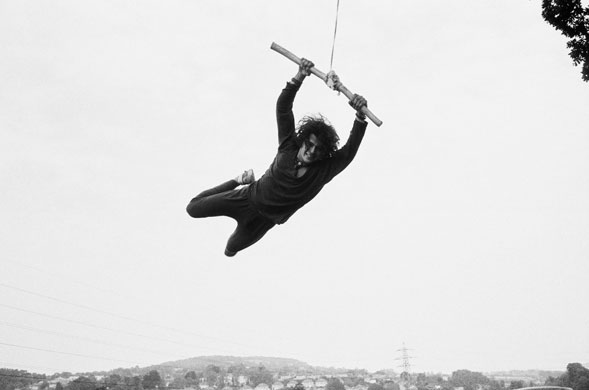
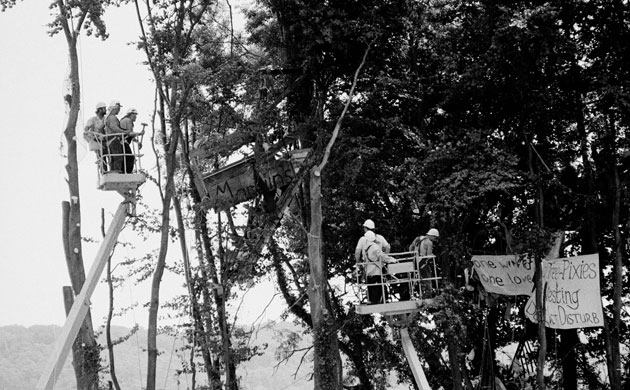
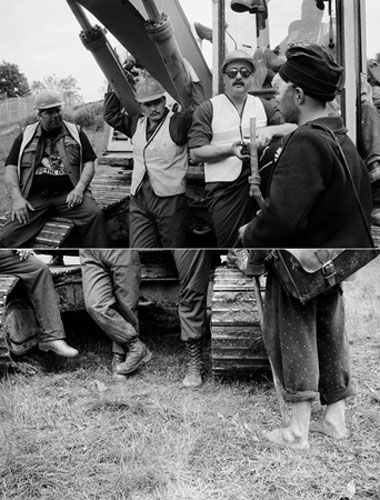
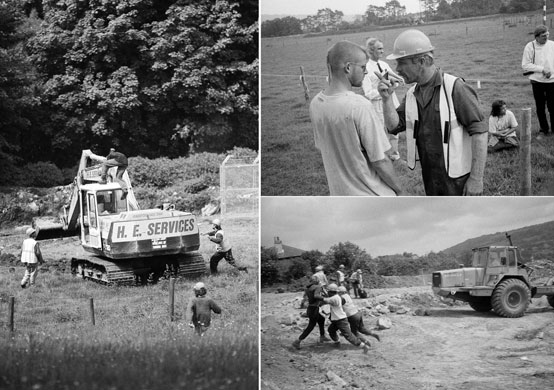
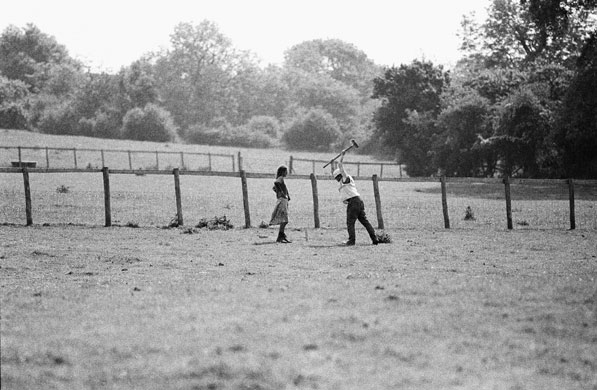
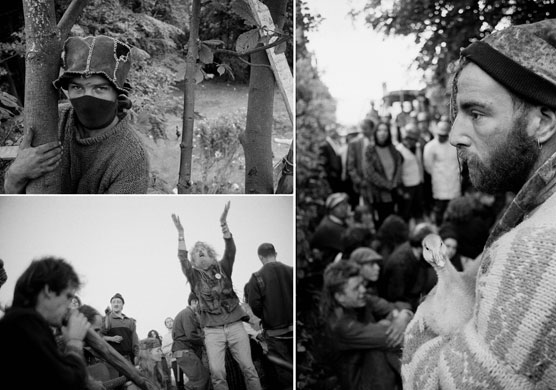
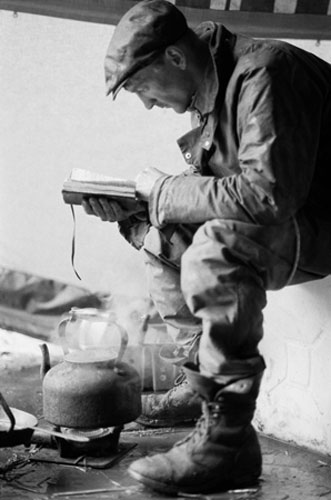
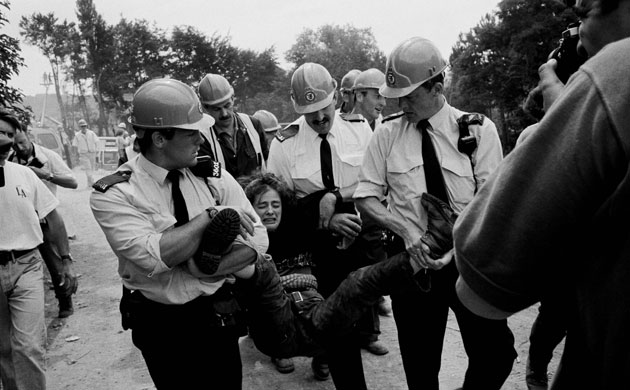
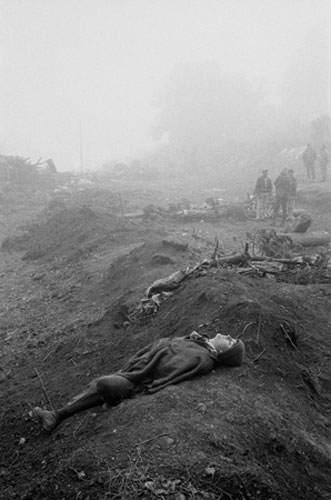
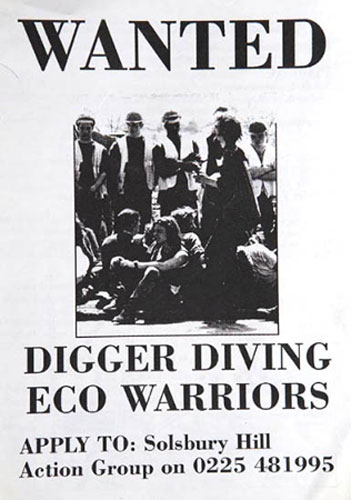
The treetop protesters aimed to stop work on the dual carriageway around Batheaston at a time when campaigns against roadbuilding projects were underway across the country over roadbuilding projectsPhotograph: guardian.co.ukSecurity fenced off the site encasing the trees and its occupantsPhotograph: Adrian ArbibGerry in the trees at Whitecroft. Bottom right: Gerry on the communication platform. Gerry ran a solar powered phone in the days when the mobile was a relatively new invention and needed a suitcase accessory to run itPhotograph: Adrian ArbibA tree pixie at Whitecroft Woods during the evictionsPhotograph: Adrian ArbibThe tree village. Work started in March 1994 and the protests came to a head in May with a march by 1,200 people at Solsbury HillPhotograph: Adrian ArbibA protest poster. By November 1995 the road was built, but because of protests more than 300 road schemes were axed Photograph: Adrian ArbibAndy swinging from a tree in the watermeadows. In the background is the hill Photograph: Adrian ArbibProtesters are evicted from trees Photograph: Adrian ArbibRob the dig chatting to security Photograph: Adrian ArbibReasonable force was used to move the protesters onPhotograph: Adrian ArbibDebbie disrupting a surveying post being put inPhotograph: Adrian ArbibTop left: Kal in the tree. Bottom left: John Pendragon at Kite festival on the hill; Right: “Our clothes got muddy our hair was unwashed and you couldn’t distinguish between people" Photograph: Adrian ArbibNick Pepper reading. "It was a source of constant surprse to those that came to the site that these begraggled people could read ... A huge amount of the time was spent hanging around waiting for things to happen," Arbib saysPhotograph: Adrian ArbibSecurity meets DylanPhotograph: Adrian ArbibAdrian Arbib's photographs document the clash between protesters armed with rope harnesses and mobile phones and private security guardsPhotograph: Adrian ArbibEarly morning mist. A protester lies exhausted having been up all night. After the first ground eviction at Whitecroft security fence were erected overnightPhotograph: Adrian ArbibAlthough the protesters failed in their attempt to stop the building of the A46 Batheaston-Swainswick bypass, they say their stance helped change long-term government transport policyPhotograph: Adrian ArbibThe campaign will be highlighted in photographic exhibitions at the Walcot Chapel gallery and the central library in Bath. The pictures - by Adrian Arbib - are also in an 84-page book documenting the protest.Photograph: Adrian Arbib
Sign up to read this article
Read news from 100’s of titles, curated specifically for you.