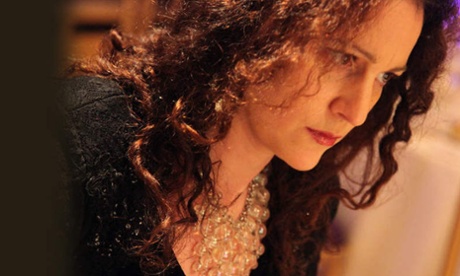
In the 1990s, Robin Holloway came up with his Gilded Goldbergs, a two-piano version of Bach’s famous set of variations, which was not only a four-hand transcription, but incorporated another 30 variations of Holloway’s own. Creative dialogues with music of the past have been a feature of his composing since the start of his career in the 1960s; some of his earliest successes were based on music by Schumann, and Schumann was the starting point for one of a new pair of two-piano works, given their first performances by Marie-Noelle Kendall and Patrick Hemmerlé in the final concert of the St John’s College Music Festival.
Schumann made his own two-piano arrangement of his Andante and Variations Op 46, which was originally written for horn, two cellos and two pianos, but omitted some of the original, including a substantial scherzo-like variation, and much of the original coda. Holloway’s Soldered Schumann not only restores what was jettisoned, but extends and develops some of the work’s other ideas, including its brief quotation from the song cycle Frauenliebe und Leben. The result, he says, is four-fifths Schumann, but his additions are so wonderfully idiomatic and his soldering so seamless that there are no stylistic jolts.
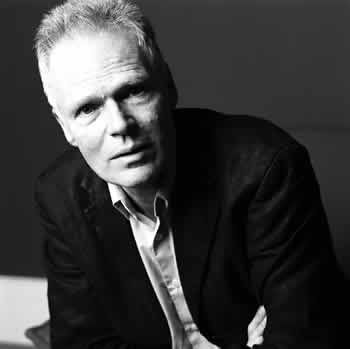
Silvered Schubert is a more ambitious and radical reworking. It takes the least known of Schubert’s three large-scale fantasies, the work in C for violin and piano D934, and attempts to make it into a more convincing continuity, “to help it take up its bed and walk”, as Holloway puts it. A fine performance of the original, by Julia Hwang and James Drinkwater, preceded Holloway’s paraphrase, which creates new transitions between the sections, extends the central set of variations on one of Schubert’s Rückert songs, and later throws in a new meditation on another well-known song, Death and the Maiden. It’s typically deft, and certainly something piano duos will want to explore, though perhaps in privacy.