
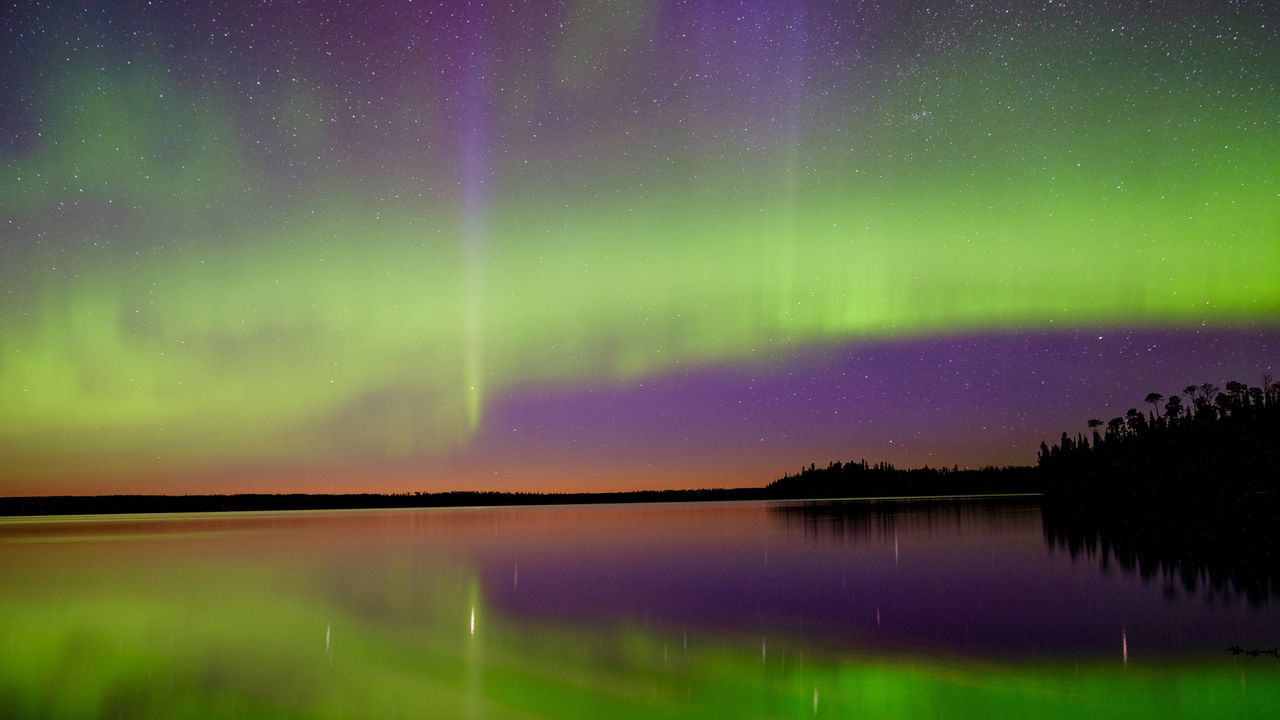
Astrophotographers could be in for some surprise aurora sightings this week if conditions hold. The National Oceanic and Atmospheric Administration (NOAA) predicts solar winds could help bring a G1 solar storm to northern latitudes on November 25 and 26.
The NOAA three-day forecast is dotted with several predictions of KP levels reaching high enough for a G1 geomagnetic storm. A G1 storm is a minor solar storm, but one that could bring potential northern lights sightings to 14 states in the northern US, including Michigan, Wisconsin, Iowa, Minnesota, Maine, and several others.
The MET Office similarly predicts that the northern lights could be spotted in northern and potentially central Scotland and similar latitudes.
The NOAA three-day forecast lists six time periods between November 25 and November 26 that have potential for a G1 storm.
The increased odds of spotting the northern lights this week come as a surprise because solar flare activity has been low, but high-speed solar wind could increase the odds of spotting the northern lights over the next few days. That means photographers located above the red line in the NOAA forecast may want to watch the skies.
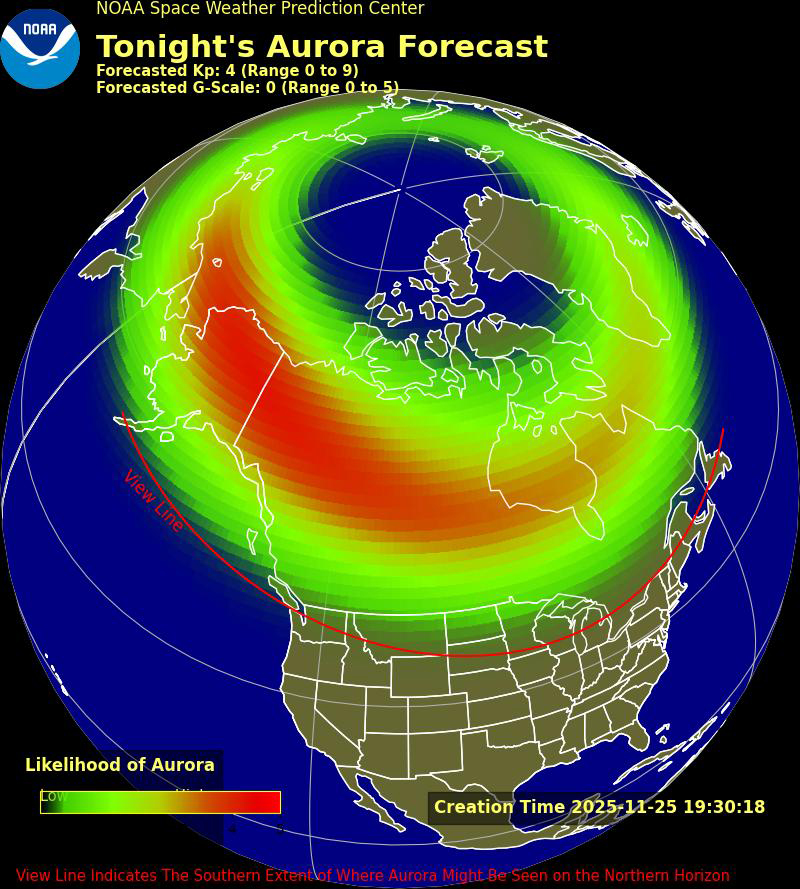
Predicting the aurora is never a guarantee, but the unsettled geomagnetic levels currently predicted could mean a potential sighting. The accuracy of an aurora forecast improves with time, so astrophotographers and skywatchers should monitor the 30-minute aurora forecast before heading out.
Photographers need more than solar winds to spot the aurora – the skies need to be clear, and the solar activity needs to occur during total darkness.
You may also like
Learn how to photograph the northern lights or even how to photograph the aurora with a smartphone.