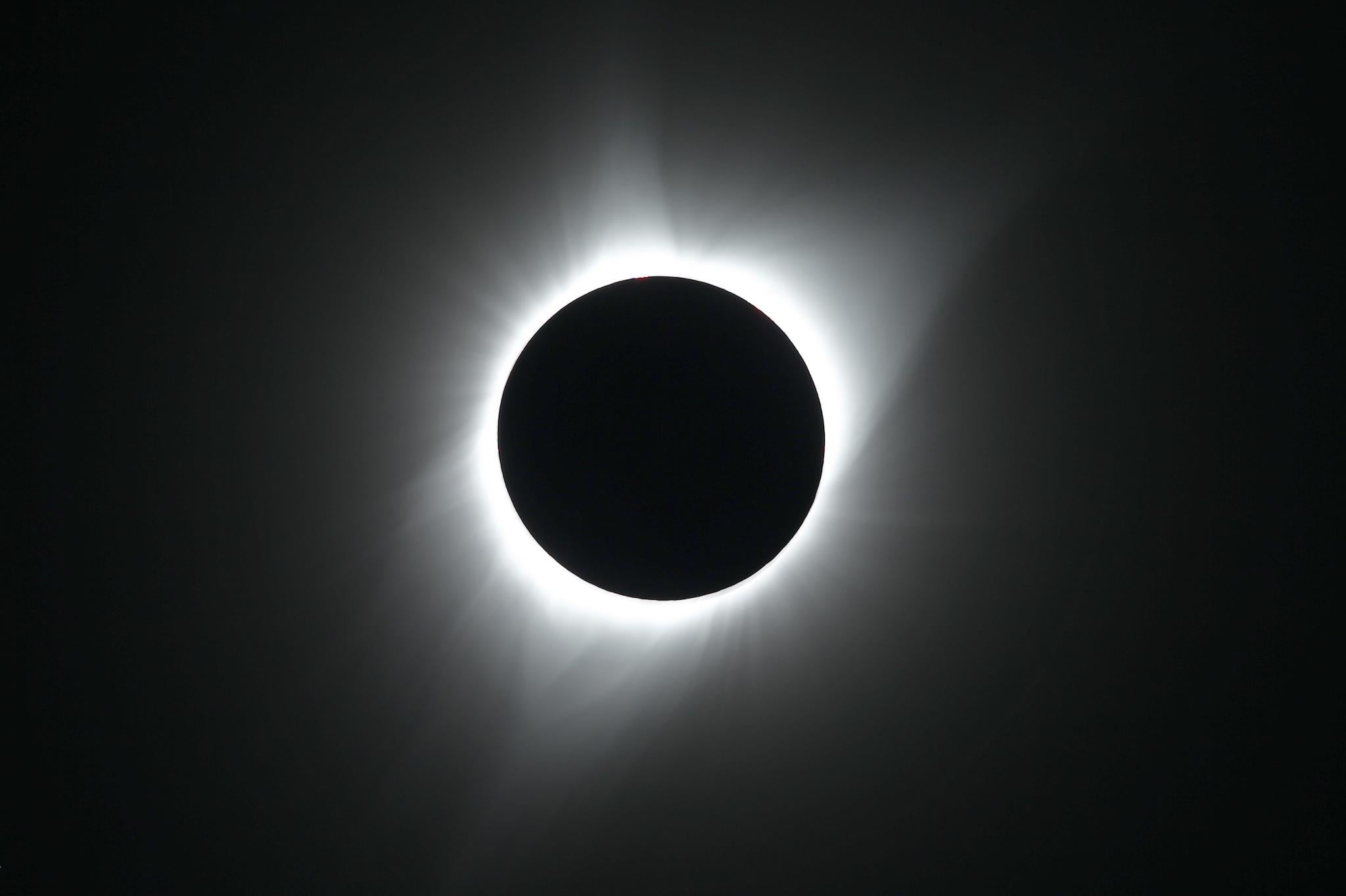
A solar eclipse is about to arrive, blacking out the sun and turning the world very temporarily dark.
Only a very limited number of people will be able to see it in person, as it passes over South America. But many more people can follow along at home, watching over the internet.
There will be live streams of the whole thing, allowing people to watch the goings on wherever they are. Nasa will be offering live video as well as analysis of what is happening in the sky.
For the most part, the eclipse will pass over areas where people will not actually be able to see it. It will spend much of the time passing over the Pacific Ocean, as well as trailing over the Andes mountain range.
It will make its way over a thin stretch of Argentina and Chile, however, and should be visible as it does. The total eclipse will arrive at around 4.40 eastern time or 9.40 in the UK, but there will be plenty of build-up before and after, with the full show lasting more than four minutes.
But helpfully, Nasa is offering detailed coverage through its TV channel, in both Spanish and English. The live feed will be streamed on YouTube, and programming will be offered that explains what is happening and what it might mean.
They will also include updates from Nasa’s Parker Solar Probe and Magnetospheric Multiscale missions. As well as being an impressive show in the sky, eclipses can be an important way for Nasa and other organisations to study the solar system.
In particular, the space agency can watch the solar radiation that drive space weather around Earth. That can have significant effects on the health of astronauts and the materials used to build spacecraft, and so the data gathered today could go on to inform the ways that Nasa plans for people to head to the Moon and Mars in the years to come.