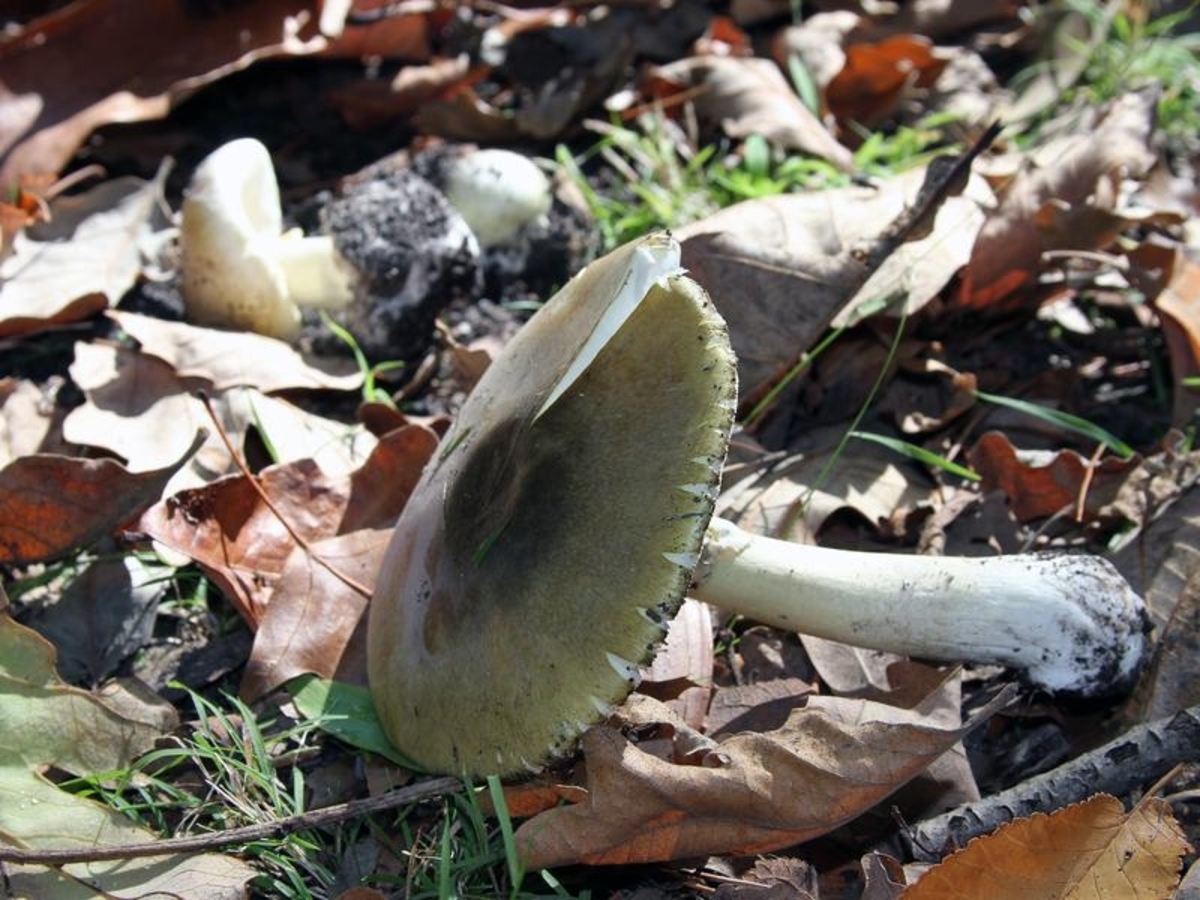
Aussie food lovers are being warned not to go foraging for wild mushrooms, with a soggy summer resulting in a bumper early crop of deadly deathcap fungi.
Deathcap mushrooms look similar to other edible wild mushrooms but a single one has enough poison in it to kill a healthy adult human.
The Food Safety Information Council is recommending people avoid gathering wild mushrooms altogether and only cook those they purchase at the supermarket.
"The toxin in deathcap mushrooms is not destroyed by peeling, cooking or drying," said the council's chair Cathy Moir.
"Symptoms of poisoning include vomiting, diarrhoea and stomach cramps and usually appear six to 24 hours after eating."
The symptoms may ease for a few days before a "terminal phase" of three to four days, she said.
"Without early, effective medical intervention people may go into a coma and die after two or three weeks of liver and kidney failure."
In 2012, two people died after eating the deadly mushrooms at a New Year's Eve party in Canberra and four others in the ACT were seriously poisoned two years later.
The deathcap is often found in the Canberra area, as well as around Melbourne, Tasmania and Adelaide.
While they usually appear in autumn, there have been sightings in the ACT and Adelaide Hills since Christmas, Ms Moir said.
The mushrooms, which usually grow near oak, hazel or chestnut trees, are not native to Australia.
The similar native marbled deathcap mushroom has been found in WA in eucalypt forests, although it may not be as toxic.
The deathcap is the most deadly mushroom in Australia but there are others that people should be wary of, Ms Moir said.
Various Cortinarius (webcap) and Galerina species, the ghost mushroom (commonly mistaken for oyster mushrooms) and the yellow stainer which resembles a field mushroom, are all dangerous to humans and can cause vomiting and diarrhoea.
At least a third of the calls to the NSW Poisons Information Centre in 2020 were concerning children under five being exposed to potentially life-threatening mushrooms.
"Remember that small children have a natural inclination to put things in their mouths, so keep an eye on them when outdoors," Moir said.
"Parents, schools and childcare workers should regularly check outdoor areas and gardens for mushrooms and remove them to reduce the risk of accidental poisoning. This will also protect your pets."
Anyone who does accidentally eat a deathcap mushroom should go straight to the emergency department, taking the mushroom with them in a container if possible.
If you have concerns about possible wild mushroom poisoning contact the Poisons Information Centre on 13 11 26