
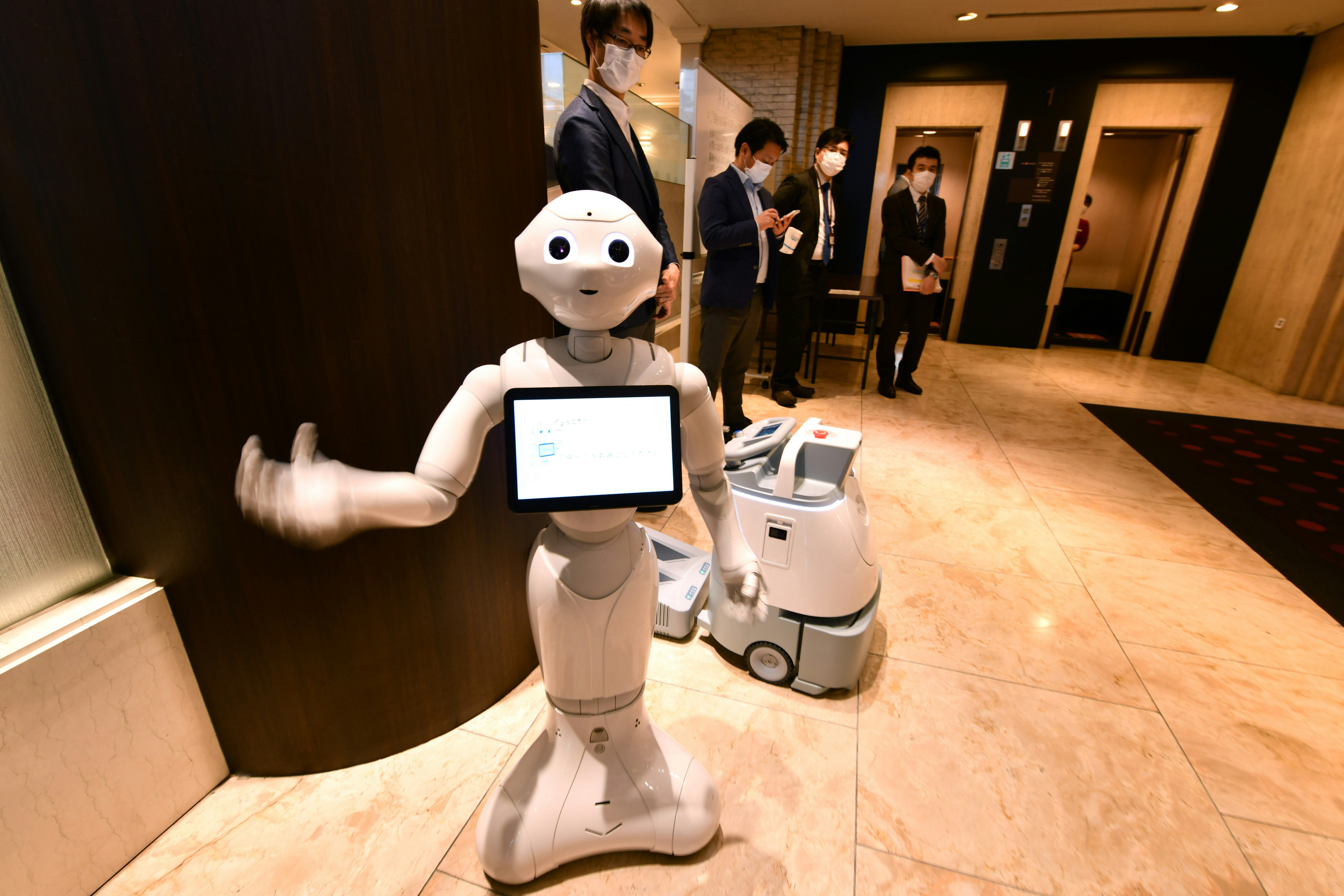
It seems that SoftBank is giving up on its efforts to create robots that can augment or even replace humans in certain environments, from customer service to hospitality. The BBC received a statement from the Japanese company stating that production has been paused and that it will restart manufacturing Pepper again “when it is needed.”
As a consequence of the decision, about half of SoftBank’s 330-person strong robotics operation will be cut loose.
Expensive and dumb —
Pepper has always been something of a novelty — exemplified best by the fact that the robot’s most public appearances have been at conferences, and standing in for spectators at a baseball game during the COVID-19 pandemic.
While SoftBank tested the humanoid robot in various applications, such as assisting travelers at airports and railways, Pepper is not actually very smart — which limits its attractiveness considering each unit was priced at $1,790. Reports indicate that only 27,000 units were ever made.
Certainly, robotics and automation have already replaced many jobs. But more repetitive ones, not ones that require a human touch. The problem with robots like Pepper is that, because they’re meant to look like humans, people might try to ask them general questions that they’re not able to answer. And the robot only needs to get confused once or twice before the illusion of intelligence disappears and people look for an actual human to assist them.
Computer intelligence —
In the field of machine learning, artificial general intelligence is the idea that a computer could someday understand or learn any task like a human being can, even experiencing self-awareness or consciousness. But experts believe that today’s artificial intelligence is decades away from such a reality. Rather today’s AI is still fairly crude — it has to be trained by a human to recognize every command that might be thrown at it and return the correct response. If it hasn’t been trained against a specific command, it won’t know how to respond. Computers cannot reason for themselves.
SoftBank CEO Masayoshi Son has long been a major proponent of AI, once saying back in 2019 that the technology would radically transform our lives. But after his company raised $100 billion to invest in such disruptive technologies, SoftBank’s Vision Fund struggled to meet its lofty ambitions as the challenge of computer intelligence proved tricky and further behind than hoped.