As wages rise and corporations drastically reduce their workforce, third-party labour provider Sodexo Thailand looks to the Eastern Economic Corridor (EEC) to drive its growth.
Sodexo is the largest French employer, but its nearly half-a-million employees form a ghost workforce in schools, offices, factories and hotels around the world.
In Thailand, the company employs more than 4,000 cooks, receptionists, security guards and technicians, many of whom are compensated at levels close to minimum wage.

Mr Bialecki says employees will gravitate to larger companies.
The tripartite national wage committee has resolved to increase the minimum wage by 5-22 baht to 308-330 baht per day. Retailers, restaurateurs, small and medium-sized enterprises (SMEs) and players in the industrial and textile industries have called on the government to reconsider how the measure will affect the margin and competitiveness of these sectors.
The minimum wage will have a measurable impact on Sodexo, one of the country's largest employers of low-skill workers, said Arnaud Bialecki, country president of Sodexo Thailand, but it is also an opportunity for the company to consolidate its market position in highly saturated markets like security services.
The policy will force the company to increase the wages of employees that are just above the minimum rate, but it will also make it easier to attract talent, he added.
"You have 3,000 security firms, but a lot of those are companies with 40-50 people that will struggle a lot with cash flow issues once the policy is in place," said Mr Bialecki.
Small security providers will find it hard to absorb the 5% increase themselves, and may face legal disputes if they try to pass them on to their clients, which will prevent them from paying their employees in time.
"These employees will then gravitate to larger companies like us," he said.
As wages rise, and human resources become more expensive relative to technological substitutes, a wave of organisations spearheaded by the likes of Siam Commercial Bank (SCB) are taking initiatives to drastically reduce their payrolls.
Last month SCB announced its plan to downsize its workforce from 27,000 to 15,000 employees, as it reduces its traditional banks from 1,152 to 400 branches by 2020.
Sodexo faces higher government-mandated wages, but it also faces the more troublesome possibility that the services of its clerks, technicians and security guards will no longer be in high demand in the near future as technology takes their place.
"SCB's announcement would have surely cause a riot in Europe. Unions would be demanding the head of the chief executive! But here you read about it in the newspaper and everyone is fine and it makes sense from a business perspective," Mr Bialecki said.
"It will be a challenge, of course. The first thing I did was call my HR manager, and said let us brainstorm about what we can do with these 1,200 clerks, along with I-don't-know-how-many thousands, because other banks will follow suit."
Sodexo, he said, already employs less people per project than other third party worker providers. "If other people hire 20 maids, we hire 15 and pay them better to do more."
However, Mr Bialecki said he is sceptical that such workforce reductions will be replicated in its core sectors, which include hospitality, security and food services.
"People in Thailand are very attached to a sense of service. In Malaysia you may have one person in a gas station, here you have 4-5 -- two guys to wipe out the windshield, one to fill the gas, and one to give you a bottle of water. Another good example: malls have a security guard to open the door for you, but you don't need that from a security perspective."
In some cases, the company, which also has an engineering division, has started substituting workers for digital alternatives.
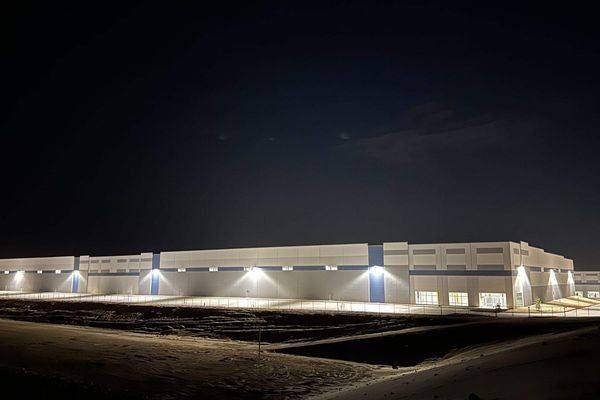
Sodexo recently entered into a joint venture with Chonburi-based industrial developer Amata to provide services in the company's industrial estates, where technology applications are less regulated by the government.
"We can install security cameras instead of security guards, and send a rescue team if something looks suspicious. We can control the lighting and perform other services that benefit both our security and engineering segments," he said.
Services in industrial complexes may come to represent an increasing proportion of the company's business, as additional facilities are built in the EEC, and developers move to provide services on those facilities, instead of just building and selling them.
"Developers are looking for a steady revenue stream, and selling services is the best way to achieve that."
The company entered a joint venture with Amata, in which the firms hold a 60% and 40% stake, respectively, to provide services in industrial complexes. By the end of this year, Sodexo and Amata will form a joint venture in Vietnam. In both cases, Sodexo will look after the common areas, maintain street lighting, and sell other services to factories that operate in these estates.
"The Eastern Economic Corridor [EEC] is something we definitely have in mind, and that was part of the logic behind tying up with a company like Amata, which is at the heart of the EEC. We are positioning ourselves to be part of Amata's continuous investment," Mr Bialecki said.
Amata projects revenue for this fiscal year will top 2.2 billion baht, up 37.5% from the last fiscal year.