Todays top Society news and comment
Welfare to work scheme "poor value," say auditors
Free prescriptions for chronically ill delayed by coalition
Simon Jenkins: "free schools" are a cover for demented centralism
Leader: protecting sex workers
All todays Society Guardian stories
Other news
• More than 7,000 new homes are under threat as a result of a £610m package of funding cuts and spending freezes, reports Inside Housing
• Haringey council has defended its decision to sack two social workers involved in the Baby P case, Maria Ward and Gillie Christou, reports Community Care
Making it work
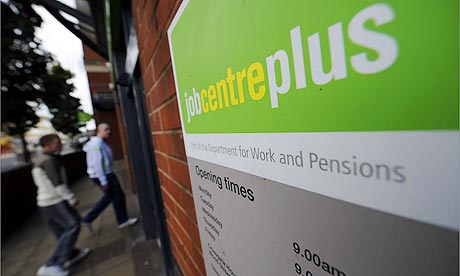
There were high hopes for the Pathways to Work welfare programme aimed at getting incapacity benefit claimants back to work. But as the National Audit Office (NAO) says today, the promise it showed in pilot schemes failed to materialise when the £800m scheme was rolled out nationally. The scheme's performance, as the Guardian reports this morning, was modest, value for money was poor, and the contracting model deeply flawed.
There is much food for thought in the report for the Coalition as it considers how to implement its welfare reforms. But one particular element stands out: the indifferent performance of the private and voluntary contractors. The National Audit Office press release states:
Pathways is led by Jobcentre Plus in some areas but is contracted out to third sector and private organisations in over 60 per cent of the country. The National Audit Office found that there is no evidence that the programme is performing better or costing significantly less in contracted out areas than in those run by Jobcentre Plus.
It is an article of faith for this government (as it was for the last that) private firms, charities and social enterprises have a better chance of getting to the "hard to reach" people entrenched on benefits and preparing them to return to work. More nimble, efficient, incentivised, "closer" to the client, tends to be the gist of their sales pitch (as opposed to the supposedly bureaucratic, sclerotic, monolithic state provider Jobcentre Plus).
And yet as the NAO points out, the private contractors were only really any good at the easy bits of the contract - the volunteer particpants in the scheme who were keen to get back into work. When it came to the really hard, time consuming, expensive cases - people who were reluctantly forced onto the scheme - no provider excelled, but the private sector performed even worse than Jobcentre Plus.
There is little profit in the scheme, it appears: one third of prime contractors (mainly private) and two thirds of subcontractors (third sector) are expecting to make a loss. Half say they will not bid for fresh contracts, at least not unless the financial terms are more generous. But there's another worrying aspect here:
"Our survey of prime contractors and subcontractors suggests that the financial risks and rewards are not allocated evenly, with evidence that subcontractors, most of whom are third sector organisations, are sharing a greater proportion of risk."
In other words, the private companies were ensuring that charities and social enterprises bore the brunt of the losses. Unsurprisingly, a third of these subcontractors (the very organisations that the Coalition is encouraging to participate more in public sector delivery) pulled out of contracts, on the grounds that the work had forced them onto their knees financially.
We also found that one in three prime contractor respondents said that there were potential subcontracting organisations they would like to work with on Pathways but these organisations had chosen not to participate, citing concerns about cash flow management in the context of a substantially outcome-based payment model.
On the face of it, it seems a familiar story: large private providers cherry pick the work most likely to allow them to meet their payment targets, and pass the financial risk onto hard-pressed small and medium sized subcontractors. This is a big problem for a government without a huge amount of cash to spare: how can it attract charities and social enterprises into a market they cannot afford to enter?
Day off
Society Daily will not be appearing on Monday 31 May.
Society Guardian blogs
Sarah Boseley's global health blog
Society Guardian events
National Commissioning conference 10. Beyond efficiencies, doing things differently. 15-16 June, Lowry Hotel, Manchester. Speakers include: Solace chief executive David Clark, former Department of Health lead on social care personalisation John Bolton, new Kings Fund chief executive Chris Ham, and Social Care Institute for Excellence chief executive Julie Jones.
The Public Procurement show. The UK's leading event for public sector procurement. 15-16 June, ExceL, London
Society Guardian social enterprise summit
We are starting to plan this year's Society Guardian Social Enterprise Summit. Last year's summit was a great success - you can read about it here. Once again we are looking to showcase inspiration, innovation and practical ideas on how social enterprises can deliver public services. Whether you are from the public sector or from a social business, we want you to tell us who you'd like to see and what you would like to see discussed. Email to charmian.walker-smith@guardian.co.uk. You can Follow Guardian Social Enterprise on Twitter
Society Daily blog
Society Daily blog editor: Patrick Butler
Email the editor: Patrick.Butler@guardian.co.uk
Follow Patrick Butler on Twitter
Sign up to Society Daily email briefing
Society Guardian Links
Follow Society Guardian on Twitter
Enter the Guardian Public Services Awards
Public - the Guardian's website for senior public sector executives
The Guardian's public and voluntary sector careers page
Hundreds of public and voluntary sector jobs
Society Guardian editor: Alison Benjamin
Email the SocietyGuardian editor: society@guardian.co.uk