Today's top society stories
Government has failed on its dementia promises, says spending watchdog
MPs say £4.2bn plan to boost jail places is costly mistake
Minister: ethnic minorities 'no longer automatically disadvantaged'
Sure Start Centres fail to help neediest families
Michael White on the elderly care scandal blame game
Other news and comment
• The government will set minimum prices for alcohol, doubling the cost of cheap booze, reports the Daily Telegraph
• A parish councillor who lodged 177 formal complaints against colleagues at a cost of £160,000, none of which were upheld, has received an 18-month ban from holding public office
• A London council may refuse social housing tenancies to "dangerous dog" owners, according to Inside Housing
Bonus question
One of the most unexpected beneficiaries of the city's controversial return to mega-bonuses could be the charity sector. An apparently chastened Goldman Sachs has let it be known that - in the US at least - it is considering forcing its employees to donate a percentage of their annual bonus to charity. Analysts are expecting Goldman's global bonus pool this year to be between US$19billion and US$22 billion; in the States there is speculation that this could realise US$700m for nonprofits. According to Time magazine this would dwarf both the amount Goldman executives gave to charities in 2008 ($130m) and the amount residing in its own charitable foundation ($200m).
If Goldman takes the plunge, other Wall street firms may feel obliged to follow, triggering further massive charity windfalls. The largest finance firms in the US are expected to hand out bonuses totalling US$140 billion in the next few days. In the (probably unlikely) event that all these firms adopted a mandatory minimum 5%-of-bonus donation, covering all staff, this would amount to US$7bn suddenly finding its way into the charity economy.
There is no guarantee that Goldman's UK employees would face a similar obligation. They are furious at Gordon Brown's imposition of a bonus windfall tax, and may fiercely resist a further cut of their winnings. But if they are pulled into line with their Wall Street colleagues, it could generate a windfall for charities of tens of millions of pounds at a time when third sector finances are bruised and battered
Why donate to charity? Giving to good causes is a classic public relations strategy, much loved by disgraced public figures as a way of polishing tarnished halos. As Martin Brookes, chief executive of New Philanthropy Capital (NPC) once said, recalling the knee-jerk philanthropy of the TV presenters Ant and Dec after they were caught up in a phone in rigging scandal some years ago:
"Pledging profits to 'charity' was seen as a suitable response, and it took pressure off Ant and Dec. Nobody asked which charities they would give the money to, how they would be chosen, or what the money was going to achieve. It was enough just to say the money would go to charity."
Non-profits are naturally rubbing their hands in anticipation. But the crucial questions, if the windfall does materialise, are: how would Goldman Sachs distribute the money, and which charities will benefit and why?
In the UK, the temptation for Goldman's PR advisers might be to throw the good-cause levy at popular, high-profile middle-England friendly charities. Alternatively, it could focus some of its legendary investment expertise (and some of its bonus donation pool) into ensuring the money is directed towards effective, high impact charities which guarantee a high rate of "social return". Which are not necessarily the charities beloved of middle England.
There's a model for this ruthlessly objective form of charitable investment, developed and championed by Brookes (a one-time Goldman Sachs economist) at NPC, which was set up, interestingly, by a pair of ex-Goldman partners, Gavyn Davies and Peter Wheeler, in 2002. Davies explains the genesis of the idea on the NPC website: "In financial markets in the late 1990s there was an enormous industry dedicated to putting capital to use where it gets the highest returns. So why couldn't the same be true of philanthropy?"
In the US critics are suggesting that Goldman would do well to review the social impact of its charitable choices: according to Time, among the recipients of its employee donations last year were "some of the nation's most elite private schools." Our judgement of Goldman's gesture - if it materialises - should be based not just on how much money they stump up, but on what charitable causes, and how seriously they take the creation of social value: changing beneficiaries lives for the better and tackling social problems.
In isolation
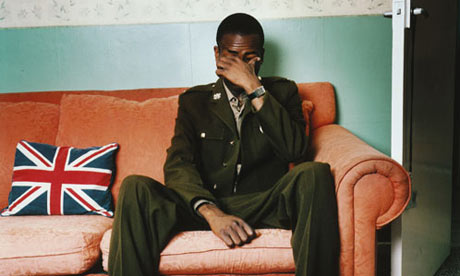
I first met the photographer Stuart Griffiths five years, ago. He'd sent in a set of portraits of homeless ex-servicemen on spec to Society Guardian and wondered, modestly, if we'd be interested. It didn't take long to decide that we were. We published them over five pages of Society Guardian and online in this gallery. Griffith's insights into the traumas and humiliations faced by former squaddies were no accident. He had been a paratrooper himself, and after leaving the army had spent time as a rough sleeper and in hostels before winning himself a place on a degree course to study photography. Stuart has since worked on other picture stories for us, at an old people's home, and another on Iraq war veterans. It's no surprise to learn that he is narrating a new film which follows the fortunes of former soldiers, many of them now disabled or suffering from ill health or post-traumatic stress. He's a naturally engaging character, of great charm and empathy. Here's a clip of the film, Isolation. You can see it at the Roundhouse in London, this Sunday, as part of the London short film festival.