Full coverage: the NHS white paper
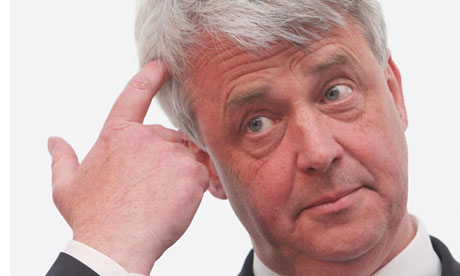
The health secretary has unveiled radical NHS reform proposals that propose to give power to patients, unleash a market in health, and hand GPs £80bn of public money to purchase health care.
NHS faces radical pro-market shake up
Private companies see potential to expand their role
Lansley promises patient information revolution
30,000 managers and administrators may lose their jobs
Thinktanks, union chiefs and charity executives give their response
Michael White: Andrew Lansley's £80bn adventure
Editorial: the change remains the same
Anne Robinson: we are doctors, not accountants
Read the NHS white paper: liberating the NHS
History of NHS reforms: A state of permanent revolution
Other comment on the NHS white paper
Nicholas Timmins: how power and accountability will transfer
Nick Seddon: An insurance system would be better than handing budgets to GPs
Jeremy Laurance: Why can't ministers leave the NHS to do its best for patients?
Financial Times leader: Lansley bets it all on swift reforms
Today's top Society Guardian news and comment
Stop vandals by training residents, Big Society report says
Drugs regulators scrutinise diabetes drug Avandia
Polly Toynbee: slashing housing benefit is social cleansing
Senior police officer backs community treatment for prisoners
Erwin James: Raoul Moat never really had a future
Inside the super-rich Gates foundation
All today's Society Guardian content
The NHS, privatisation and social enterprise
"Foundation trusts will not be privatised." So says theNHS white paper. But confusingly, it also says they will be be social enterprises.
"Our ambition is to create the largest and most vibrant social enterprise sector in the world."
Did no one tell the Department of Health that social enterprises are private companies? Privatisation is clearly not a concept with which even a bold and ideological politician like the health secretary, Andrew Lansley, feels comfortable, at least in the context of the NHS. Putting the word "social" before the word "business" is a good way of drawing the sting of privatisation, but does he have a full understanding what a social enterprise is?
There is, it has to be said, an ideological schism in the social enterprise movement about what a social business looks like. Some take a laissez-faire view that any company which can prove it delivers social benefit, however loosely, is a social enterprise. Others counter that this would enable the likes of, say, Microsoft or Barclays to market themselves as social enterprises.
The Social Enterprise Coalition, the sector's umbrella body, believes that companies worthy of the name must adhere to certain criteria, recognised in a charter mark (slogan: "trading for people and planet"). To qualify for the mark, companies must meet the following criteria:
• Does your company have social and/or environmental aims?
• Does your company have its own constitution and governing body?
• Are at least 50% of the company profits spent on socially beneficial purposes?
• Does the company earn at least 50% of its income from trading?
• Can your company demonstrate that social/environmental aims are being achieved?
• If your company ceased trading, would remaining assets be distributed for social/environmental purposes?
It would be an interesting experiment to subject foundation trusts to these criteria. I'm not sure many, if any at all, have "explicit social or environmental aims". Nor does it look like the proposed NHS regulator, Monitor, would be at all interested if they did, focused as it is on purely economic matters such as promoting competition and price regulation (see the NHS white paper pages 37-39).
Monitor would withdraw a hospital's licence if it failed to manage its finances well: but would it de-list a trust it if failed to demonstrate that it had created wider social or environmental value?
The rule of thumb definition of social enterprises is that, unlike ordinary commercial companies that concentrate solely on profit and shareholder value, they operate a triple bottom line – economic, social and environmental. Will foundation trusts explicitly lock in these obligations as part of their core business approach, or will we see pure profit-seeking accompanied by tokenistic, bolt-on corporate social responsibility departments?
And if Lansley hopes to create a level playing field "social" healthcare market, would private healthcare entrants have to prove social and environmental value too?
There is an expectation in the white paper that foundation trust staff "will have an opportunity to transform their organisations into employee-led social enterprises" (NHS white paper, page 36).
A John Lewis-style local hospital may sound very attractive, but where is the incentive for staff to go down this route? John Lewis employees are partners and are paid a dividend over and above their pay. Will the Treasury really allow NHS staff take a share of any financial profits earned by the trust?
Labour tried half-heartedly to persuade primary care trust staff such as community nurses to spin-off from the NHS into social enterprises. They had very few takers, and those that did show an interest did so on the basis that they kept their NHS pay rates and pensions. If Lansley hopes employee-led social enterprises will volunuteer to take some of the burden of the NHS pension deficit, he may be mistaken.
Social enterprise may sound a more palatable way of sending a message about NHS privatisation: but it is still privatisation. The danger is that the NHS concentrates on the profits, and forgets about its social and the environmental obligations.
Preview of tomorrow's Society Guardian supplement
The valuable work being done by council staff with so-called "non-jobs"
Interview: Sir David Varney on leaving the NHS after six months
Alan Travis: the real winners from Ken Clarke's prison reforms
How texting is alerting Manchester police to crimes
The "big society" way of community job creation
Craig Dearden-Phillips: a critical moment for social enterprise
Society Guardian blogs
Sarah Boseley's global health blog
Cutswatch: we monitor public sector cuts with the help of readers
Guardian awards
Guardian Public Services awards 2010
Society Guardian social enterprise summit
We are starting to plan this year's Society Guardian Social Enterprise Summit. Last year's summit was a great success - you can read about it here. Once again we are looking to showcase inspiration, innovation and practical ideas on how social enterprises can deliver public services. Whether you are from the public sector or from a social business, we want you to tell us who you'd like to see and what you would like to see discussed. Email to charmian.walker-smith@guardian.co.uk. You can Follow Guardian Social Enterprise on Twitter
Society Daily blog
Society Daily blog editor: Patrick Butler
Email the editor: Patrick.Butler@guardian.co.uk
Follow Patrick Butler on Twitter
Sign up to Society Daily email briefing
Society Guardian Links
Follow Society Guardian on Twitter
Enter the Guardian Public Services Awards
Public - the Guardian's website for senior public sector executives
The Guardian's public and voluntary sector careers page
Hundreds of public and voluntary sector jobs
Society Guardian editor: Alison Benjamin
Email the SocietyGuardian editor: society@guardian.co.uk