Today's top society stories
Harriet Harman plans to scrap forced retirement
Release of secret child punishment manual ordered
Lib Dems drop "non-essential" social policy commitments
Also in the news
• Up to nine Whitehall permanent secretaries set to leave after the general election, including Sir David Normington, top mandarin at the Home Office, claims the Times.
• Men are increasingly taking jobs once seen as "women's work" in deprived former industrial areas, reports the FT
• Tory plans to introduce a married couples tax allowance would do little to reduce child poverty, says a study by the Institute for Fiscal studies
Money talks
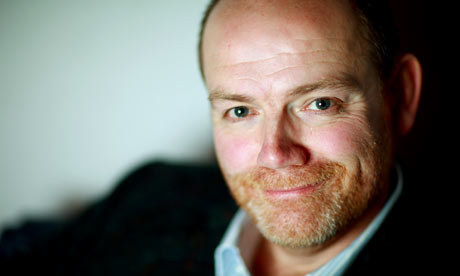
"We are not a county council. If you want someone to run BBC One or develop iPlayer, you need the very best people in the world." So said Mark Thompson, director general of the BBC, at the weekend while attempting to justify the high levels of executive pay at the BBC.
The ignorance and lazy prejudice contained in his remark is startling – but hardly original. Let's pick it apart: obviously the BBC is not a county council (although the budgets and numbers of employees are not dissimilar); but neither is it ITV, or Sky. It is publicly-funded, publicly-accountable, and yes, a public service. The notion that the BBC is competing in a global market for its executives perpetuates another lazy private sector myth (how many of the 46 or so BBC executives earning more than the prime minister (£192,000) are seriously at risk of being poached to work in US or European TV?).
But surely the biggest vanity is the idea that the role of director general of the BBC is really any different from the grandest of Whitehall mandarins (or local government supremos): the job is essentially administrative and political. Success for a director-general is not about profit or ratings, but ultimately about negotiating favourable budget agreements (the licence fee), and maintaining relations with political masters. Failure is not about collapsing share price, or even numbers of BAFTAs won, but the incompetent management of political anger or public opinion (the Jonathan Ross affair, the Gilligan fiasco).
Thompson appears to claim professional kinship with the CEOs of private media organisations; but the proper benchmarks for his pay are surely the likes of Sir Gus O'Donnell, Sir Nicholas Macpherson and Sir David Nicholson. So why is his annual salary, £834,000, roughly three times what they are paid?
Campaign trail
Similarly, the controversy over supposed financial profligacy in public services is not going to go away. The Times is continuing its campaign to expose the extravagant salaries of public sector workers. Yesterday it claimed that a Birmingham city council electrician was paid £124,000. Last week it claimed public sector pay was "racing away" from the private sector in the recession. The Guardian's own Ben Goldacre gave us a neat demolition of that particular argument at the weekend. But an electrician earning more than a junior BBC executive? Meanwhile the Independent of Sunday has launched an investigation into cost overruns in public sector projects – mostly IT systems or PFI buildings. It claims a PFI "partner" charged its public sector client £500 for replacing a lock, and £300 for changing an electrical socket.
Weekend stories
More children at risk as cases of neglect soar, charity warns
Number of armed forces' veterans in jail 'on the rise'
Tory adviser Julia Manning wants end to minor treatments on NHS
Doctors paid £15m to sign cremation forms
Call to lift ban on jury service for people with mental illness