Sign up to Society daily email briefing
Today's top SocietyGuardian stories
• Nick Clegg to vote against abortion counselling law
• Worldwide cancer rates 'could be cut by 2.8m with healthier lifestyles and diets'
• Childcare costs force poorest families into debt
• England riots to cost taxpayers at least £133m in policing and compensation
• Jailed rioters need help to turn their lives around, says Boris Johnson
• Franklyn Addo: How not to understand the riots
• Woman arrested in 'fake nurse' inquiry
• Cuts: who's going to look after the children?
• Are women more depressed or just better at getting help?
• Welfare post-riots: 'How could you make it any tougher?' - video
• Ibuprofen warning to pregnant women
• GPs need help to spot early signs of pancreatic cancer, says study
All today's SocietyGuardian stories
On today's SocietyGuardian pages
• Randeep Ramesh: Labour can prosper from NHS debate
• Zara Aziz: Cut NHS waste before rationing treatment
• Clare Allan: On mental health, it's wise to choose your words carefully
• No turning back on fit-to-work test
• Champions for the community - and the taxpayer
• Co-ops, mutuals and public services
• Collective action can help heal communities, says 9/11 campaigner
• Scotland goes its own way on spending and economic growth
Other news
• BBC: Parents 'in debt over childcare'
• Community Care: Learning disability hospital inspections soar
• Inside Housing: Campaigners protest at riot eviction hearing
• Localgov.co.uk: Sacrifice pay hikes and face the music, Pickles tells council chiefs
• Public Finance: Health and social care insolvencies rise by 49%
• Legal aid cuts would deny 6,000 vulnerable children, warns charity
• Third Sector: Citizens Advice bureaux funding 'cut by 10 per cent on average'
• Independent: Many MPs undecided on abortion counselling vote
• Telegraph: Boys with absent fathers likely to have children earlier
On my radar ...
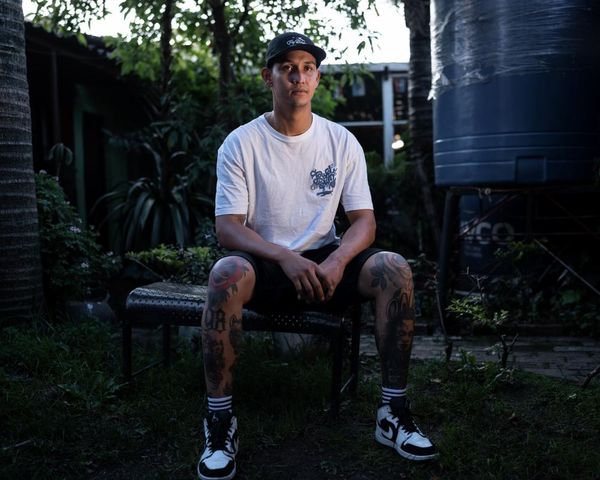
• A must-watch video from my colleague John Domokos, looking at the implications of post-riot proposals to strip claimants of benefits. As unemployed 20-year-old Daniel Robins tells Domokos:
"Social security is meant to be a human right, it is meant to empower you so you can find sustainable employment and start contributing yourself, but they have ... perverted the idea of what social security is."
• A fascinating audio interview with local minister the Rev Joyce Daley on last month's riots from the Hackney Citizen. Daley, who was on the Pembury estate on 8 August, tells interviewer Ena Miller:
"My biggest concern is that the community slips back into this lethargic state and they don't realise that this is a window of opportunity for them to band together and address issues that are affecting us particularly in the African and Caribbean community. A disproportionate number of our young people are dying on the streets, are in mental institutions and are incarcerated and we need to address those issues. We need to ask ourselves and see why that is happening and then we can look at the system and say look this is where we need to change. My fear is that we don't slip back into business as usual and the 8th August becomes another glitch in history."
Miller also spoke to a local teacher, who talks about trying to inspire her pupils and the challenge of trying to teach young people from homes where education isn't a priority.
Our Behind the riots series, in which sociologists living and working in areas affected by last month's unrest, continues today with a look at how bereaved father Tariq Jahan's dignified demeanour helped prevent an escalation violence in Birmingham, and Amanda Conroy looks at relations between young people and the police in the aftermath of rioting in Clapham, south London.
On the ConservativeHome blog, Jonty Olliff-Cooper argues that the prime minister, in order to fix "broken Britain", should create a social justice ministry. He concludes:
"At the end of the day, it's a question of focus. What should be the big priorities of government?
Conservatives seek to reduce the size of the state. But, the debate on the right now is how best to do that: to not simply cut back the supply of the state, or outsource problems to other sectors, but to reduce the underlying demand for government too – the need for it. An integrated Ministry is an important step towards that.
At present, departments are built around processes which make sense at the centre: ministries for paying out money, ministries for collecting it in, departments for operating hospitals, prisons or schools. But these are bureaucratic imperatives, not what citizens - especially those in deepest deprivation - need. A Ministry of Social Justice would be a start towards building government around you, not you around government. That is surely something which all conservatives can applaud."
Peter Wanless has also been looking at the issue of prevention in this post on the Big Lottery Fund blog.
• Rugby league, which is launching a campaign focusing on mental health. My colleague Andy Wilson writes that next weekend's final set of Super League fixtures will be called the State of Mind round, in an attempt to focus the minds of supporters and players on mental health issues. The round was prompted by the death last yearof Terry Newton, who was struggling to come to terms with a doping ban. In this video to explain the State of Mind project, leading players talk about the importance of sportsmen and their supporters taking their emotional health seriously.
• A lovely quote from disability rights campaigner John Evans, shared by Rich Watts' Arbitrary Constant blog:
"What does independent living mean to me?
What it means is, basically, it is my life, my work, what I do every day of my life, and the fact that I am able to do that through the support of others like the personal assistant sitting next to me is immense.
It is very hard I think to get that message across to people who perhaps are not dependent on others to support them in their day-to-day living.
But it has provided me with a life, my work – I have worked widely – and the opportunities and the choices to do the things I want, like you do.
I think with the restrictions somebody like myself has, with thekind of severe impairment I have, it is freedom. It is the freedom for me to be able to do what I want to do, when I want to do it[.]"
• A sparky post from Julian Dobson's Living with Rats blog, on why the arts should not be seen as a lever for regeneration. Following recent visits to the new Hepworth Gallery in Wakefield and the nearby Yorkshire Sculpture Park, Dobson writes:
"... locally the discussion is all about whether, at a cost of £35m, the Hepworth can help to revive Wakefield's fortunes. The gallery is considered in terms of the financial return on public spending, and in terms of whether its value in kick-starting the local economy is greater or less than the value in spending an equivalent amount on frontline public services like social work or education.
Peter Box, the council's leader, was quoted earlier this year as saying the 'real debate is the effect on the local economy'.
I agree with Cllr Box that local economies are important, but to see the arts as a form of civic boosterism is to reduce both the arts and the civic to numbers in a spreadsheet. The real debate is whether we have the courage, intelligence and humanity in hard times to keep valuing and exploring the aspects of life that lift us out of the mundane, stretch, surprise and disturb us. That is the value of the Miro exhibition and the Hepworth Gallery, and of countless small-scale art, theatre and music projects around the country.
Our consciousness of self and others, and of what lies beyond self and others, and our ability to explore the edges and depths and margins of being through all kinds of creativity, is one of the things that makes our existence much more than a mere perpetuation of a species. As the singer Leonard Cohen put it: 'There is a crack in everything. That's how the light gets in.'
The economic benefits, when they come, may be welcome but are incidental."
• A very interesting video on how charity chief executives can make the most of social media. Lasa asked a number of chief execs, including Mind's Paul Farmer and Sam Mauger of Age UK, about their own use of social media and effective and efficient use of technology.
• Dan Corry, a former policy adviser to Gordon Brown, who has been named as the next chief executive of New Philanthropy Capital. Corry, who takes up the post next month, writes on the NPC blog:
"... I care passionately about trying to tackle what many local government experts call the 'wicked issues', the ones that are so hard to solve. And in working to help improve the effectiveness of charities, voluntary sector groups and, increasingly, social enterprises, I believe that NPC can have a major impact on achieving that.
The economy is in an unhealthy state at present and money is going to be tight for everyone. Not only do the social and economic problems not go away but if anything in recessionary times they become more acute. We must all surely want every pound spent by any and every organization to be spent as well as it can and for funders – of all types – to aim their money where the bang for the buck is greatest.
Acting as a think tank and as a consultancy, that is what NPC must do."
• Charity the British Association for Adoption & Fostering, which has published new advice on how safe use of social media for adoptees wanting to contact birth relatives. BAAF says social media sites are increasingly being used to trace birth families, but there are risks involved. The ten top tips are aimed at adopted people, adoptive parents and birth family members. Julia Feast, BAAF's expert on search and reunion explained:
"Making contact with birth relatives can be a complex and emotional process. It is important that people have the opportunity to think about the issues and potential outcomes before they go forward. BAAF hopes that the "Top Ten Tips" series will help everyone involved be as safe as possible when tracing and making contact especially when using social media."
BAAF is also hosting a Twitter chat on the subject tomorrow from 7pm, see the hashtag #adoptfosterchat.
On the Guardian Professional Networks
• Professional associations, unions and expert groups assess the government's revised NHS reforms
• The health bill will strengthen public and patient engagement with the NHS - and that should be supported, argues Anita Higham
• How to get ahead in... social work. Debbie Andalo finds local authorities are offering graduates a fast-track route to social work despite cuts
Events and seminars
How can social and community enterprises access public sector assets?
14 September 2011, London
Examine the theory and practice behind the transfer process, learn about forthcoming legislation and explore which tactics and strategies are most effective for social enterprises.
16 September 2011, London
Explore the strategic role of events fundraising in charities. Learn to plan, market and deliver events aligned to your brand and wider strategies. Hear from experts, network with fellow fundraisers and share best practice to maximise participation and income.
Public Services Summit Scotland - Re-examining and innovating for better delivery
22 September 2011, Edinburgh
Challenge thinking, share innovations and debate the future of public services alongside other senior public services deliverers. Book before 26 August for a 20% early bird discount.
Social Media in Social Housing: How to do it
4 October 2011, London
Communication with tenants and increasing media coverage can be made easier with social media use. Join us for clear and practical examples on saving money, improving communications and writing a social media strategy.
SocietyGuardian blogs
Sarah Boseley's global health blog
SocietyGuardian on social media
Follow SocietyGuardian on Twitter
Follow Patrick Butler on Twitter
Follow Clare Horton on Twitter
Follow Alison Benjamin on Twitter
SocietyGuardian's Facebook page
SocietyGuardian links
Guardian cutswatch - tell us about the cuts in your area
Public Leaders - the Guardian's website for senior managers of public services
The Guardian's public and voluntary sector careers page
Hundreds of public and voluntary sector jobs
SocietyGuardian editor: Alison Benjamin
Email the SocietyGuardian editor: society@guardian.co.uk
SocietyGuardian.co.uk editor: Clare Horton
Email the SocietyGuardian.co.uk editor: editor@societyguardian.co.uk
Interested in education policy and news too? Sign up for the daily Cribsheet round-up