Sign up to Society daily email briefing
Today's top SocietyGuardian stories
• Ministers accused of ignoring Child Poverty Act
• Assisted dying campaigners split over right to die for those not terminally ill
• Historic buildings sold off by public sector to meet cuts shortfall
• Alzheimer's genetic link raises hopes of earlier tests
• Wembley 'supergig' for Japan cancelled
All today's SocietyGuardian stories
Other news
• At least six chief executives of top-tier councils are planning to resign their posts to fight to become elected mayors, reports the LCG.
• The NHS is "haemorrhaging" nurse leaders due to government targets on management cuts, according to Nursing Times.
• A housing scheme set up to encourage mixed communities has had the opposite effect, reports Inside Housing. The choice based lettings system was heralded as a solution to tensions in the 1990s and aimed to create ethnically and socio-economically mixed neighbourhoods in Bradford, Oldham and Burnley. But a study led by the Centre for Housing Research at the University St Andrews found that choice based lettings have effectively segregated communities.
• A 15-year-old boy with a rare medical condition which means he cannot eat protein has launched a highly unusual legal bid under the Human Rights Act to force a primary care trust to give him vital drugs, according to the Telegraph.
On my radar ...
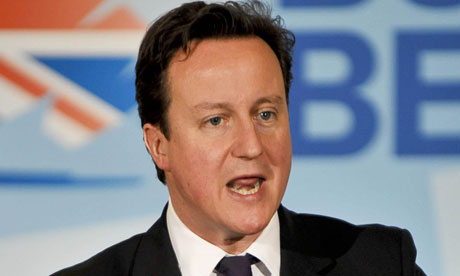
• The health and social care bill. So the prime minister appears poised to step in and delay Andrew Lansley's NHS reform plans. And thinktank Policy Exchange is to tell David Cameron to slow the pace of health reforms to ensure GPs feel comfortable in their new role. Lansley is to make a statement about the reforms in the Commons this afternoon. There's interesting insight in Toby Helm's Observer profile of the health secretary. And you'll find lots of links, comment and speculation on Twitter via the hashtag #nhs. My pick was tweeted by Derek Payne this morning
At times like this I wish Dr Richard Taylor was still in the Commons. But he lost his seat to a hedge fund manager.
• Work capacity assessments. The new tests designed to reassess recipients of incapacity benefit are being introduced today. See this useful post from the Same Difference blog for the background. A survey published by charity Mind reveals that the national rollout of benefits reassessment is causing widespread distress among incapacity benefit claimants with mental health problems. 87% of people told the charity that the prospect of reassessment had made them feel anxious and over a third said that this has led to them increasing their medication. On our Joe Public blog, Richard Hawkes of Scope says judging claimants on discrete physical tasks does not account for what working takes:
The additional million plus disabled people on IB who are likely to be found fit for work will be at a massive disadvantage.
Not only do they face stiff competition for jobs, they also have fewer opportunities to develop skills and get work experience, they face practical obstacles such as inaccessible transport, and they experience negative attitudes from employers.
Given the scale of the challenge, it seems obvious then that any assessment of a person's fitness for work should take such issues into account. Or so you would think. Unfortunately the test being rolled out does none of these things.
And on Twitter, Kaliya Franklin (@BendyGirl) has started a great project. Using the hashtag #fitforwork, users are being asked to "tweet the normal difficult bits" of their day, to highlight the issues which don't seem to have been taken into account by the new rules.
• Also on the subject of welfare reform, Patrick Butler's blogpost on Friday asked are charities getting a fair share of the 'back to work' business?
It prompted a follow up blog on the Spectator site by Martin Bright, who argued the Single Work Programme is not the Big Society:
The answer is that the contracts were designed in such a way that only a small number of large service companies were ever in the running. Payment by results means that anyone wishing to become a "prime provider" has to have the cash flow flexibility to bankroll the government for a number of years until they can prove they have put enough people into jobs. Only very few companies can afford to do this.
Sceptics in the third sector have already pointed out that the previous system of government contracting where charities and not-for-profit organisations would apply direct to the Department of Work and Pensions has been replaced by a system where they have to apply to a dozen or so private companies, who may or may not win the contracts themselves. A single monolithic bureaucracy has been replaced by a multitude of smaller ones. The workload for charities hoping to help put people back to work has therefore multiplied just when they can least afford it.
• Interesting speculation on the Labour Matters site about the merger plans between three London boroughs, which suggests that the proposals might be more about creating a 'super education department' than about cutting administrative costs by merging back offices:
Labour's concerns about the tri-borough education plans are fuelled by a Briefing Note produced by Westminster City Council's Education service Director, who says in a Note to Councillors:
"Obviously, education comprises a number of services and the nature of these services does vary across the 3 boroughs (e.g. size, remit, ethos and approach). This will require a great deal of careful consideration and work over many months to align and establish a cohesive tri-borough offer. During all the discussions and negotiations… all 3 boroughs have worked very closely to achieve the draft proposals which will be set out in the business plan. However, we do have very different services and different approaches and these have had to be worked through to arrive at a solution that all three are in agreement on."
• A nation of auditors? A new report from the New Local Government Network reckons that allowing citizens to have a role in auditing local government finance could be the way to improve trust in local councils. The report, Show Me the Money, warns that the abolition of the Audit Commission could have a disastrous effect on public faith in local government
• The wonders of Twitter, as explained in this superb blogpost from Fighting Monsters
• The Royal London Society for Blind People, which is calling for an investigation into programme makers at Channel 4 over their decision to allow a 'sick' joke about the blind autistic child of the model Katie Price. The charity's demand follows the revelation that the offensive remarks by comedian Frankie Boyle about the nine year old disabled child were considered and approved by senior management at Channel 4.
In case you misssed them ... SocietyGuardian weekend highlights
• £1.4m-a-year welfare entrepreneur picked by Cameron to get Britons off benefits and into work
• If you're named Darcy, you're likely to be one of the privileged rich
• Jobcentres 'tricking' people out of benefits to cut costs, says whistleblower
All Sunday's SocietyGuardian stories and features
All Saturday's SocietyGuardian stories and features
On the Guardian Professional Networks
• Live Q&A from noon: Transparency in social housing, how and why to do it.
• The government's ICT strategy is too top-down and neglects councils, argues Martin Ferguson, head of policy at IT managers' body Socitm.
• The Patient from Hell is disturbed by GPs' reaction to the King's Fund
report on their quality, particularly their lack of care about data,
patient empowerment or training on how to run patient consultations.
• To the structured world of local government, hack days might look like
chaos but they're bringing results, explains council communications officer Louise Kidney.
SocietyGuardian blogs
Sarah Boseley's global health blog
SocietyGuardian on social media
Follow SocietyGuardian on Twitter
Follow Patrick Butler on Twitter
SocietyGuardian's Facebook page
SocietyGuardian links
Guardian cutswatch - tell us about the cuts in your area
Public Leaders - the Guardian's website for senior managers of public services
The Guardian's public and voluntary sector careers page
Hundreds of public and voluntary sector jobs
SocietyGuardian acting editor: Anna Bawden
Email the SocietyGuardian editor: society@guardian.co.uk
SocietyGuardian.co.uk editor: Clare Horton
Email the SocietyGuardian.co.uk editor: editor@societyguardian.co.uk
Interested in education policy and news too? Sign up for the daily Cribsheet round-up