Socially distant geisha struggle to survive in coronavirus shadow
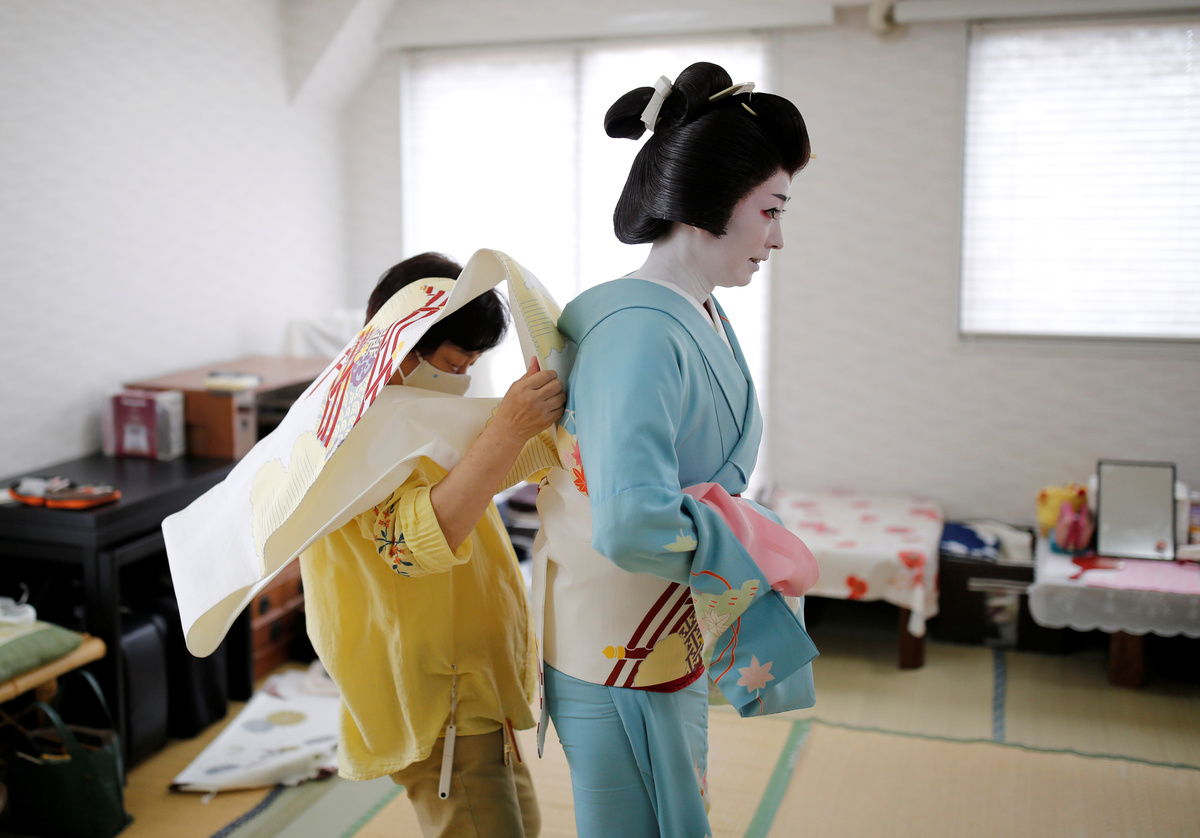
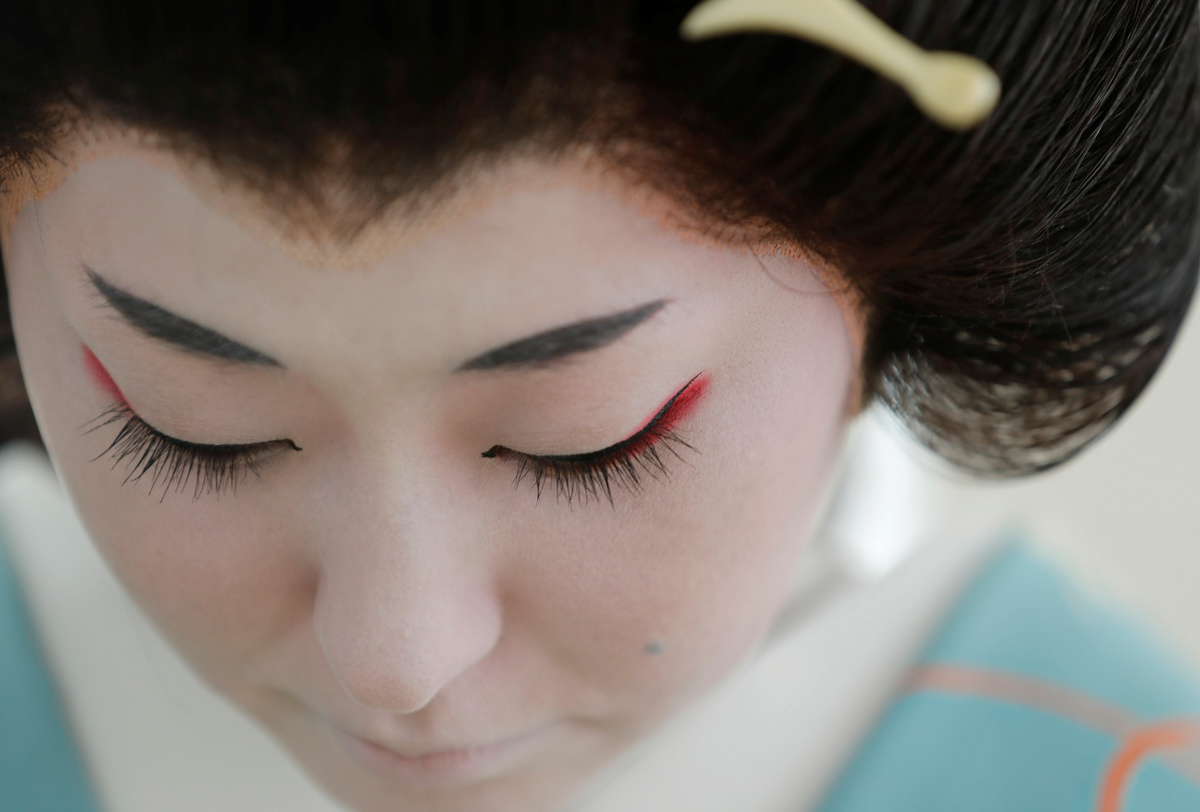
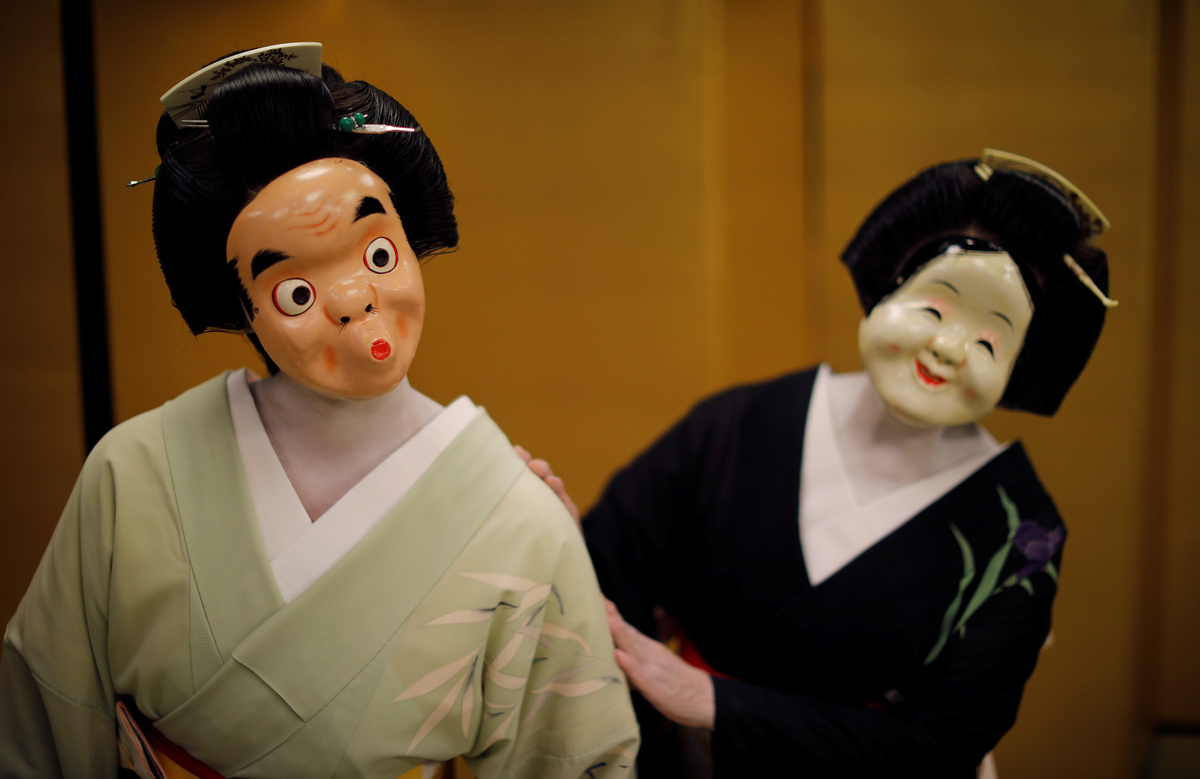
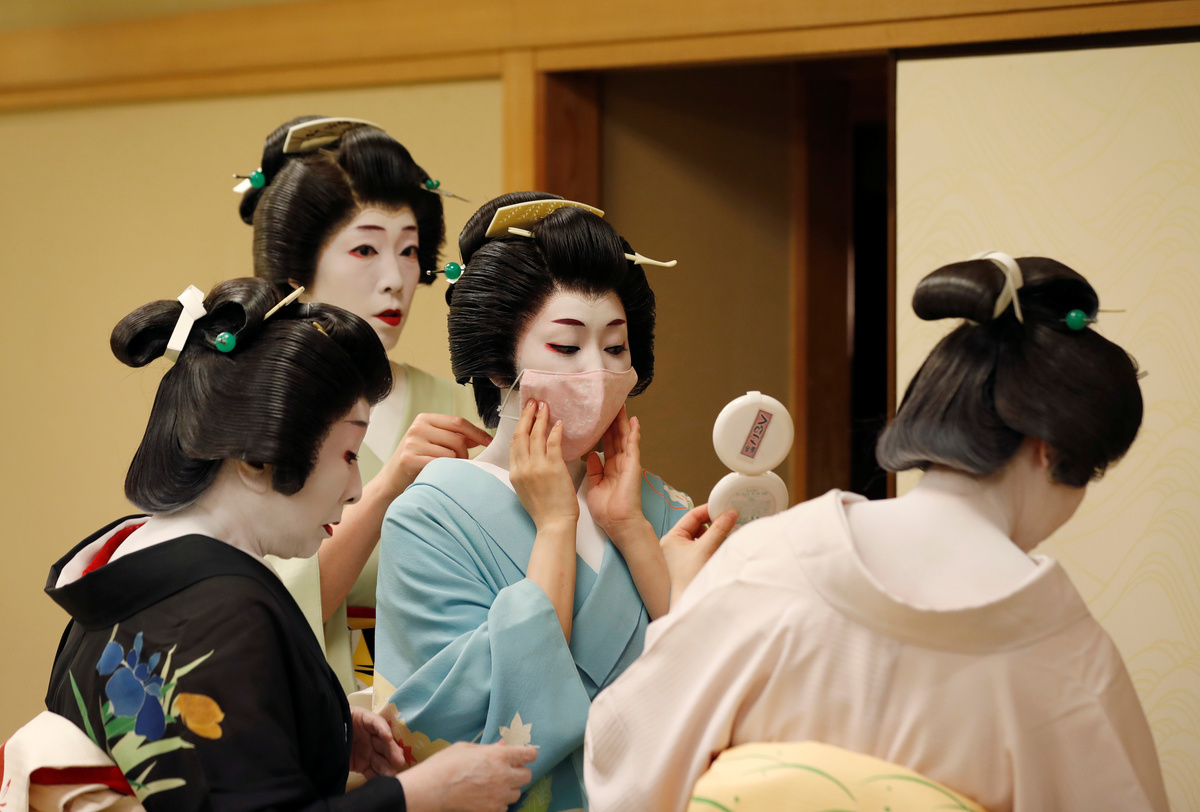
Mayu adjusts Koiku's kimono, both of who are geisha, as Koiku wears a protective face mask to pose for a photograph, before working at a party being hosted by customers, where they will entertain with other geisha, at Asada, a luxury Japanese restaurant, during the coronavirus (COVID-19) outbreak, in Tokyo, Japan, June 23, 2020. REUTERS/Kim Kyung-Hoon
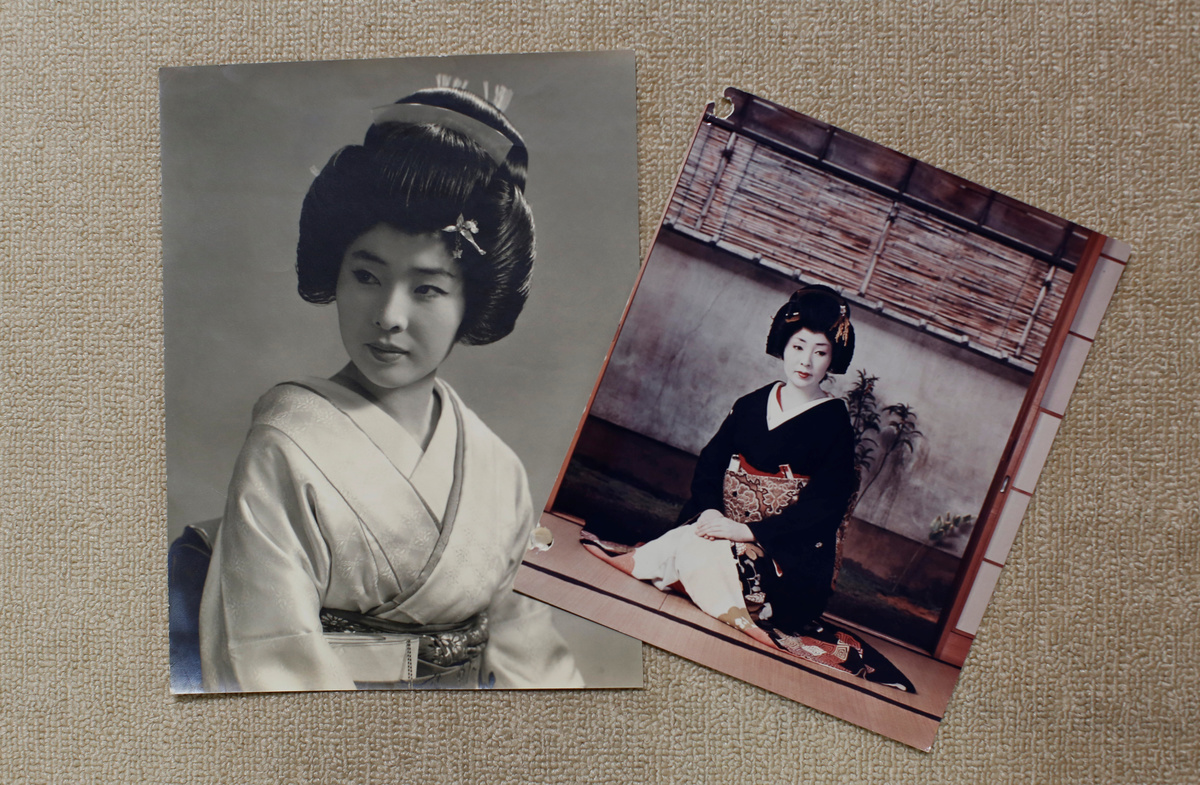
- Ikuko, the "big sister" of Tokyo's Akasaka geisha district, came to the capital to seek her fortune in 1964, the year Tokyo first hosted the Olympics. But the novel coronavirus pandemic has made her fear for her centuries-old profession as never before.
Though the number of geisha - famed for their witty conversation, beauty and skill at traditional arts - has been falling for years, Ikuko and her colleagues were without work for months due to Japan's state of emergency and now operate under awkward social distancing rules.
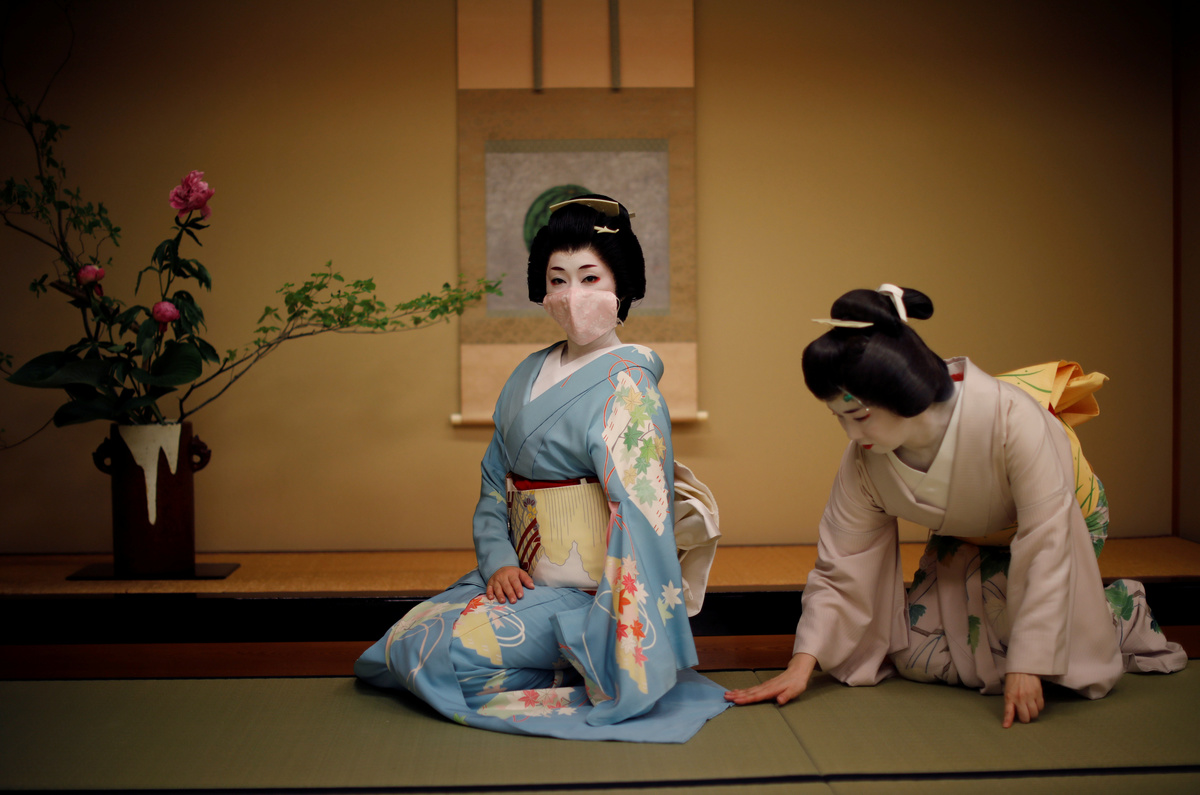
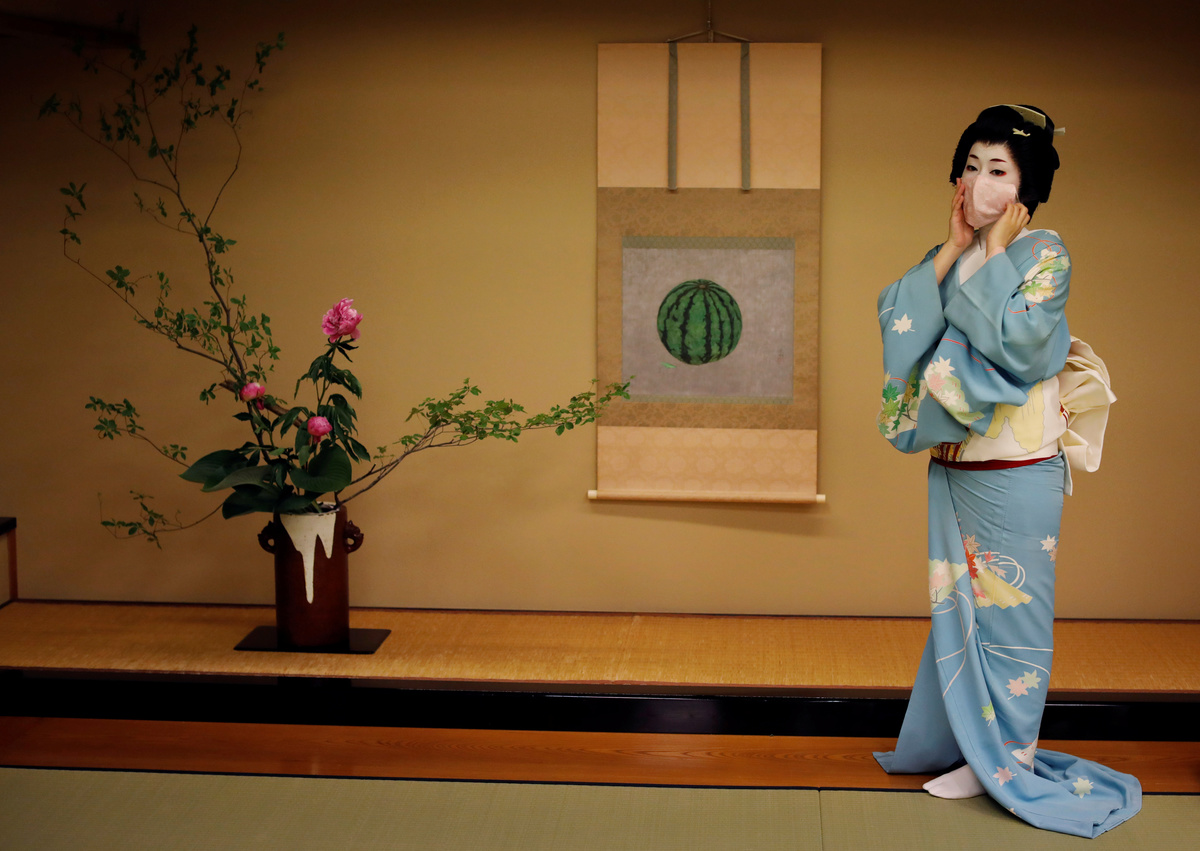
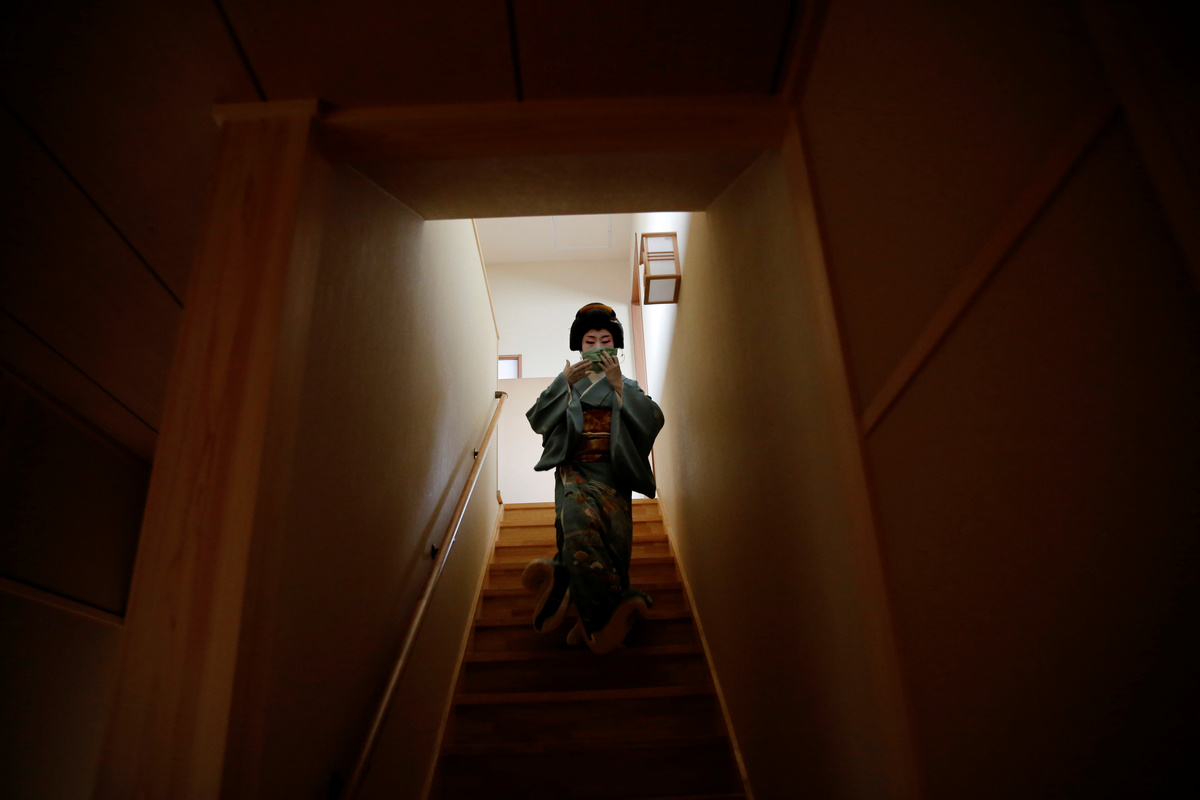
Koiku, who is a geisha, wears a protective face mask to pose for a photograph, before working at a party being hosted by customers, where she will entertain with other geisha, at Asada, a luxury Japanese restaurant, during the coronavirus disease (COVID-19) outbreak, in Tokyo, Japan, June 23, 2020. REUTERS/Kim Kyung-Hoon
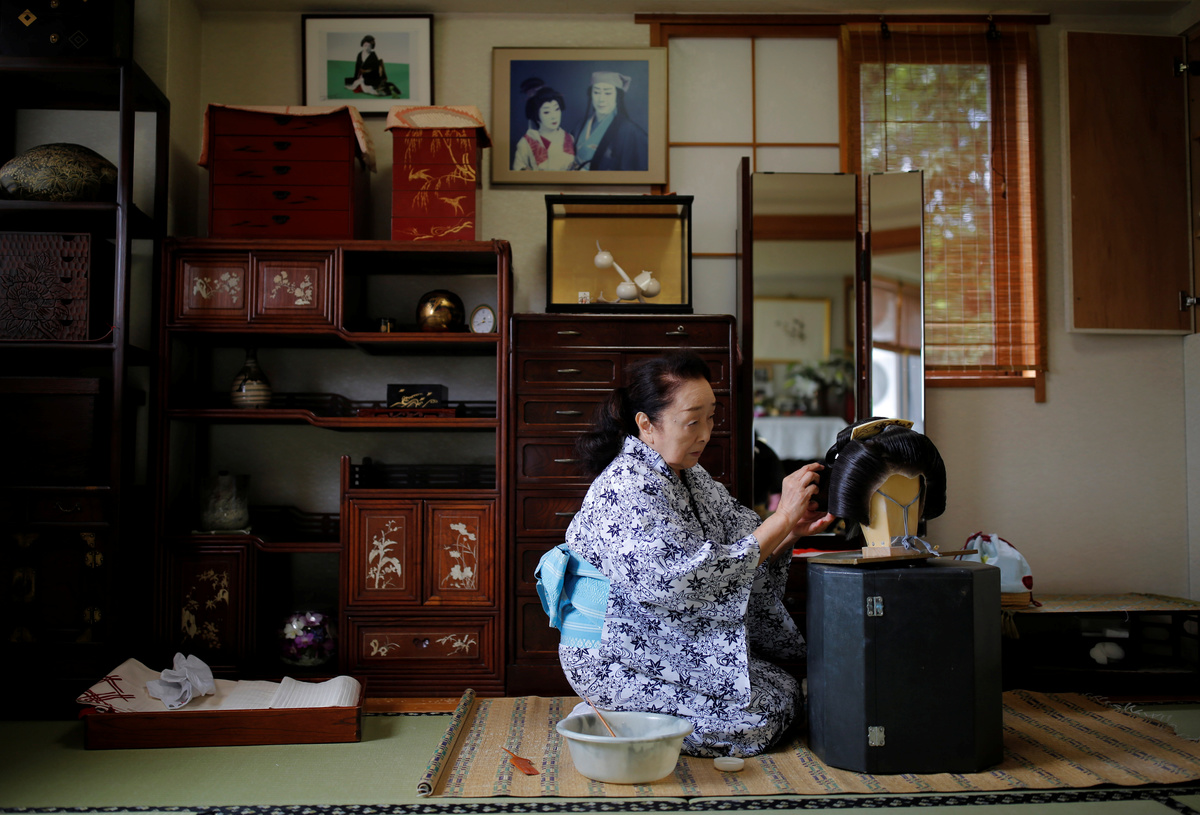
"There were more than 400 geisha in Akasaka when I came, so many I couldn't remember their names. But times changed," Ikuko, now 80, said.
These days, only roughly 20 remain, and there aren't enough engagements to take on new apprentices - especially now.
Coronavirus-induced austerity has slashed expense accounts, and many people remain wary of spending hours in the elegant but closed traditional rooms where geisha entertain.
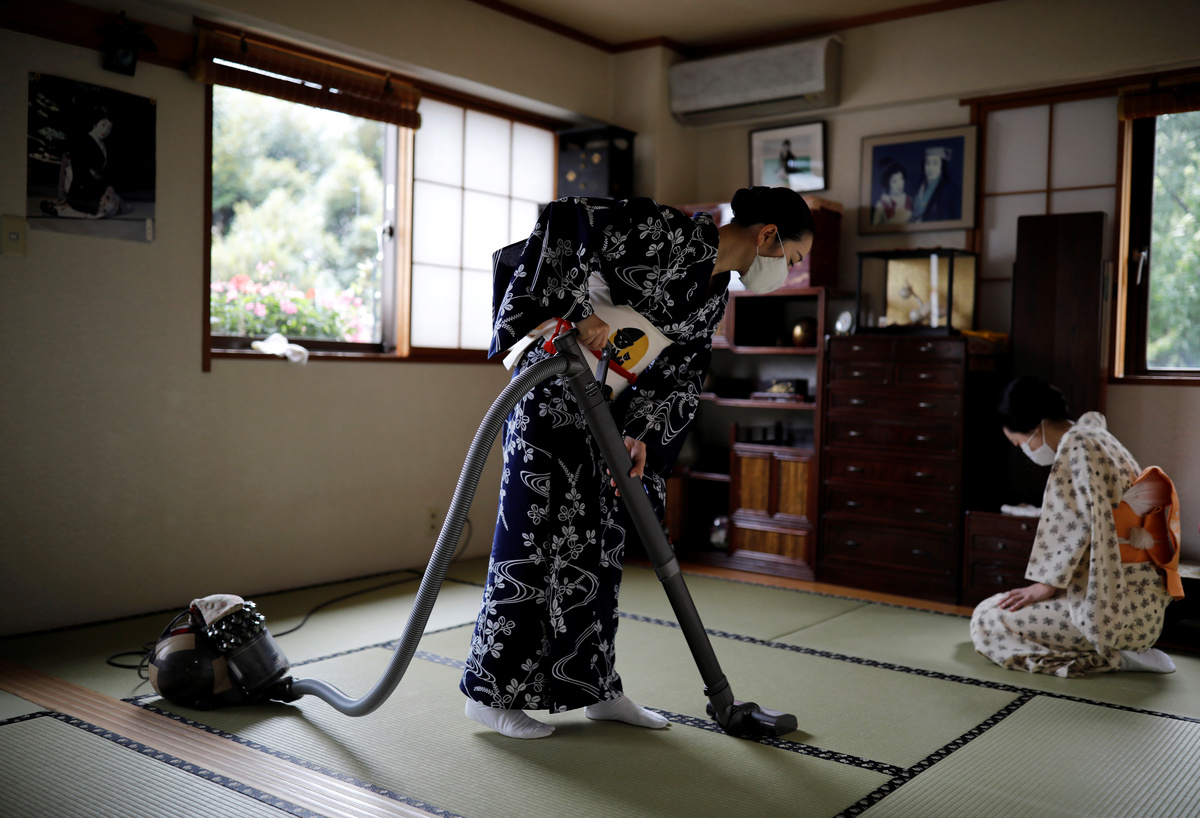
Koiku and Maki, who are geisha, clean Ikuko's living room before they have lunch together at Ikuko's home, during the coronavirus disease (COVID-19) outbreak in Tokyo, Japan, July 11, 2020. REUTERS/Kim Kyung-Hoon
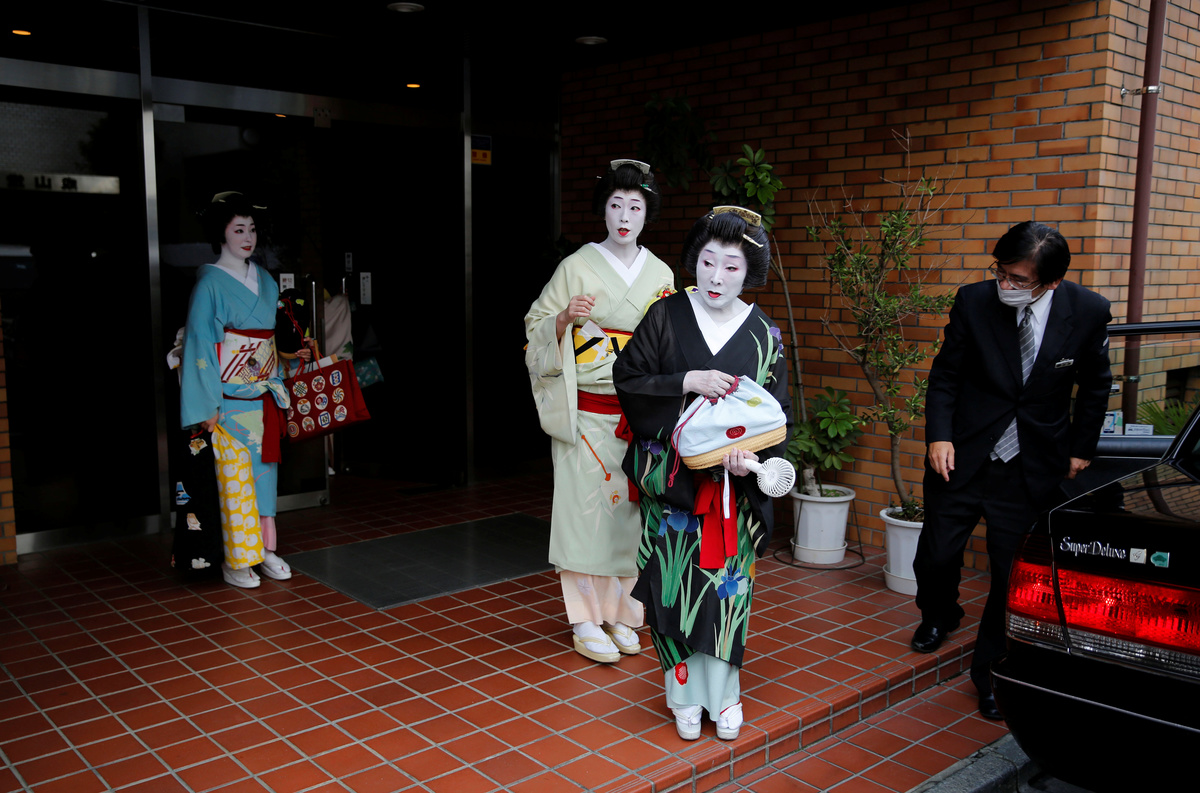
Engagements are down 95 percent, and come with new rules: no pouring drinks for customers or touching them even to shake hands, and sitting 2 metres apart. Masks are hard to wear with their elaborate wigs, so they mostly don't.
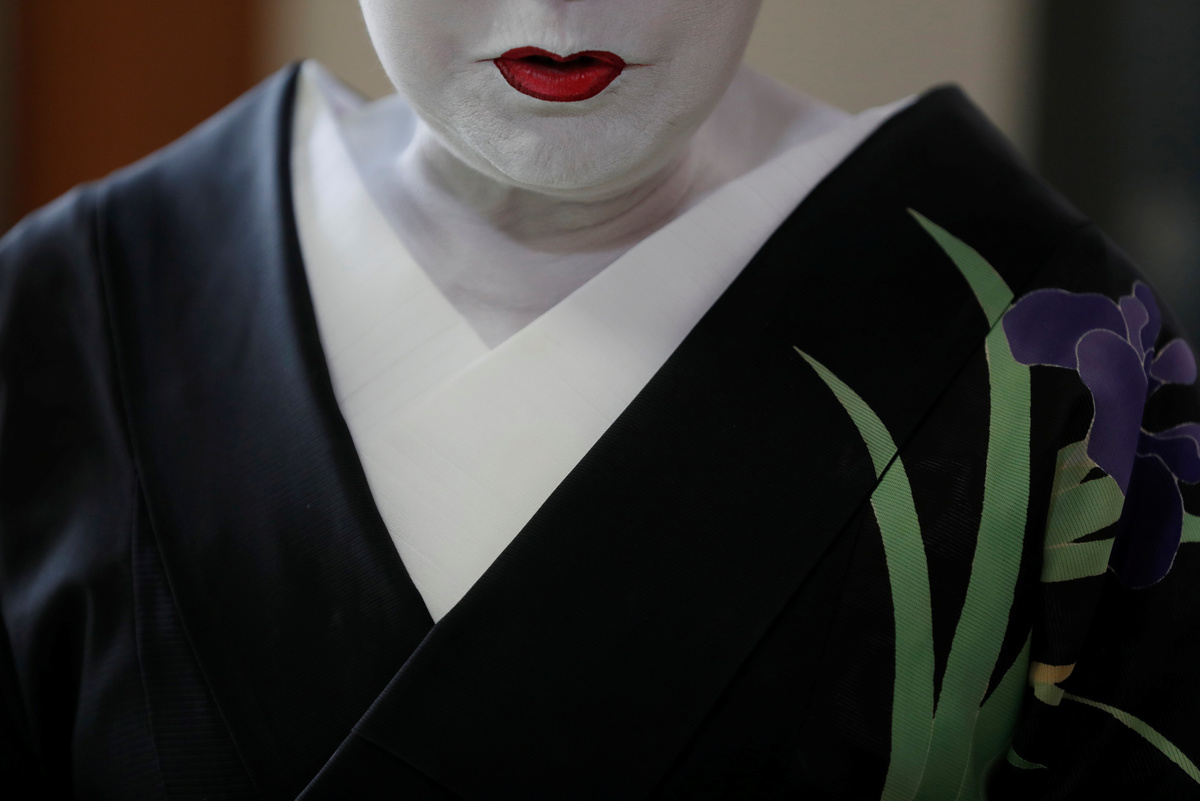
"When you sit close, you can talk with feeling, your passion comes through," Ikuko said, wearing a black silk kimono patterned with irises. "When you're two metres apart, conversation breaks down."
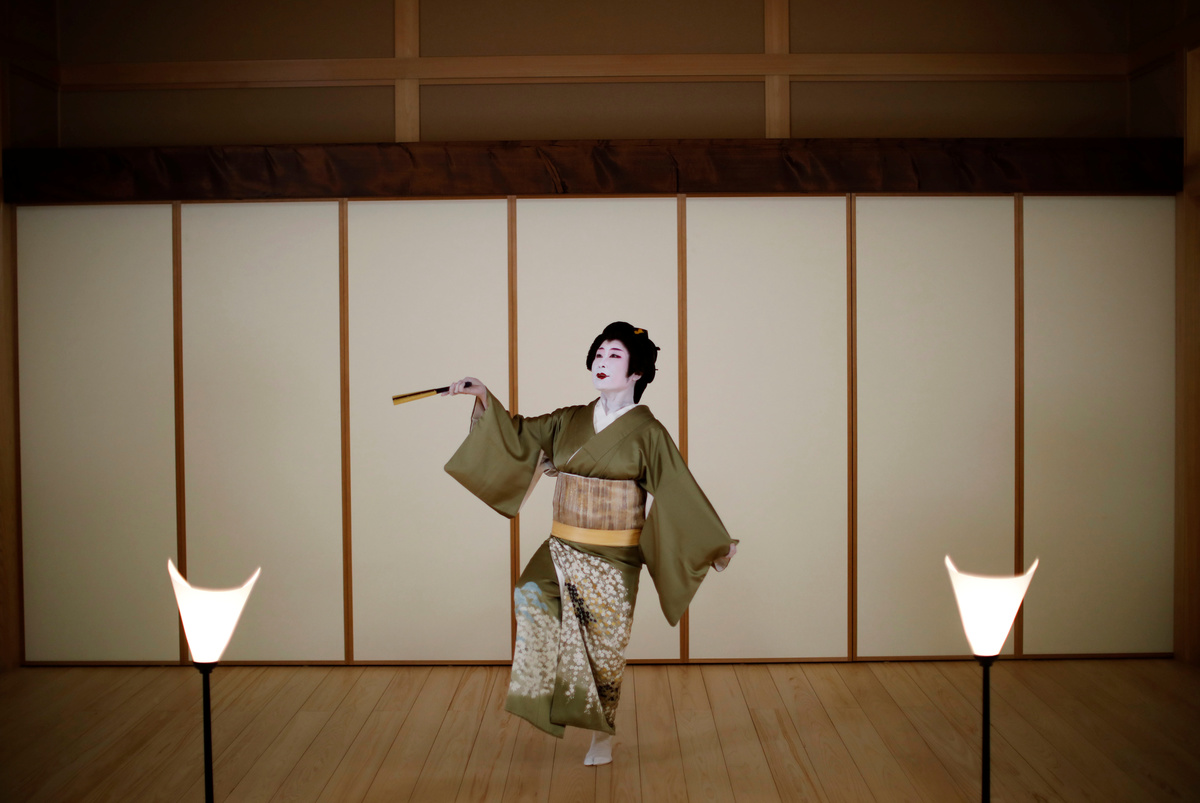
Geisha aren't the only Japanese artists in danger. Performers of "jiutamai," an ancient women's dance, as well as makeup artists, wig stylists and kimono dressers, confessed to worry the coronavirus could further imperil their niche professions.
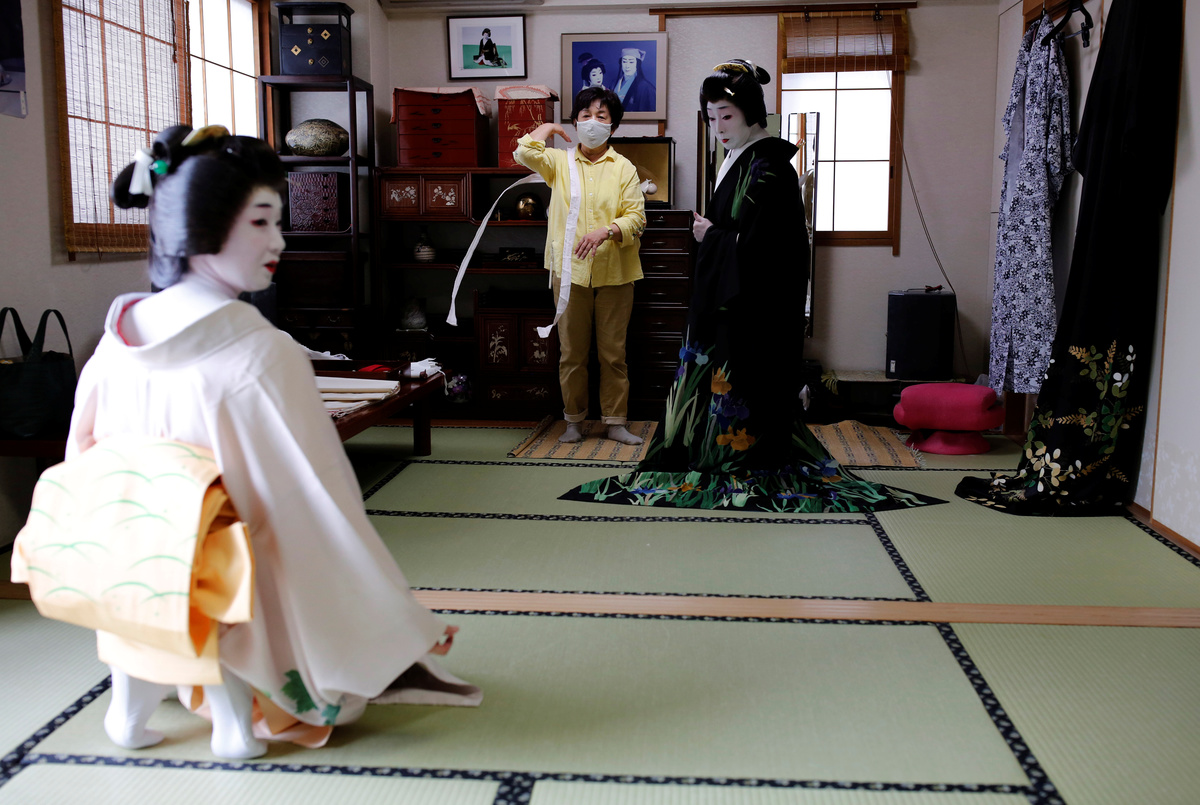
A kimono dresser helps Koiku, who is a geisha, put on her kimono as Koiku gets ready at Ikuko's home to work at a party being hosted by customers at a restaurant, where she will be entertaining with other geisha, during the coronavirus disease (COVID-19) outbreak, in Tokyo, Japan, June 23, 2020. REUTERS/Kim Kyung-Hoon
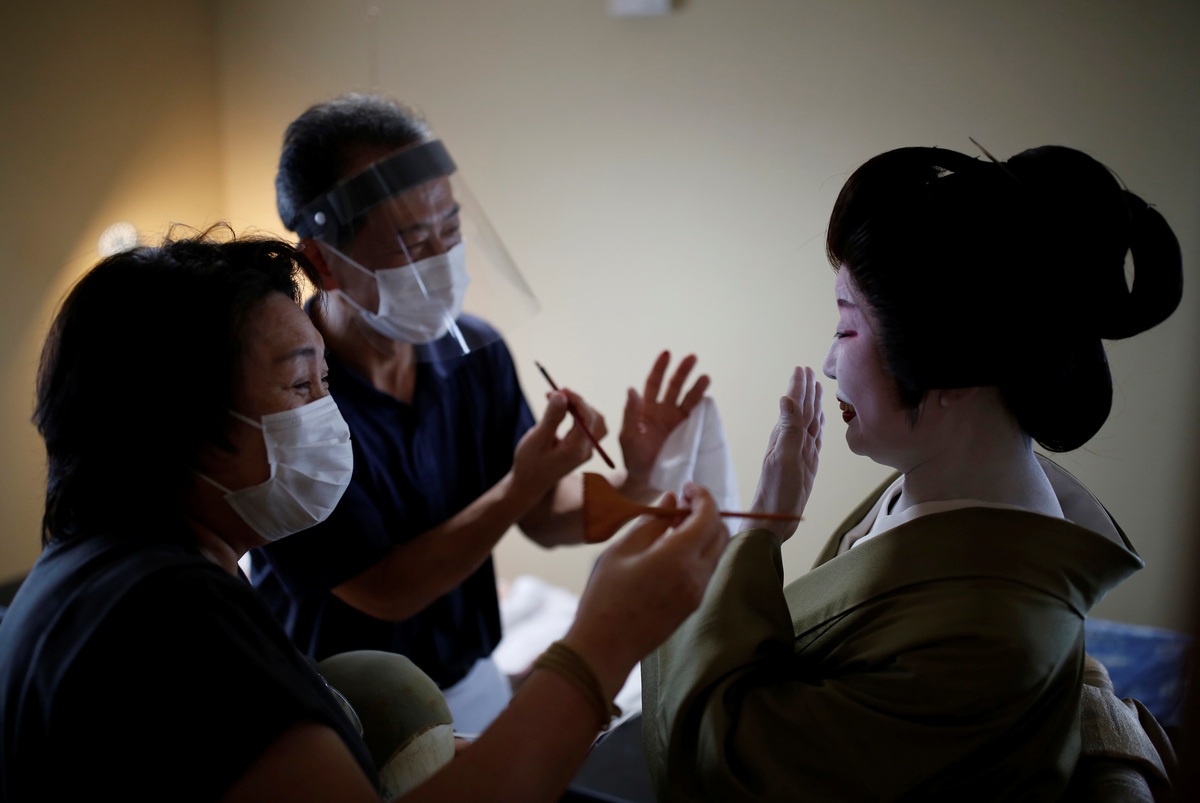
"Every single one of my events has been cancelled," said Mitsunaga Kanda, who has spent decades doing elaborate makeup for geisha and dancers.
"We touch their skin and their face, all over, and while we don't talk we're very close - something we're very aware of now," added Kanda, donning a mask and face shield to work on dancer Tokijyo Hanasaki.
A FADING PROFESSION
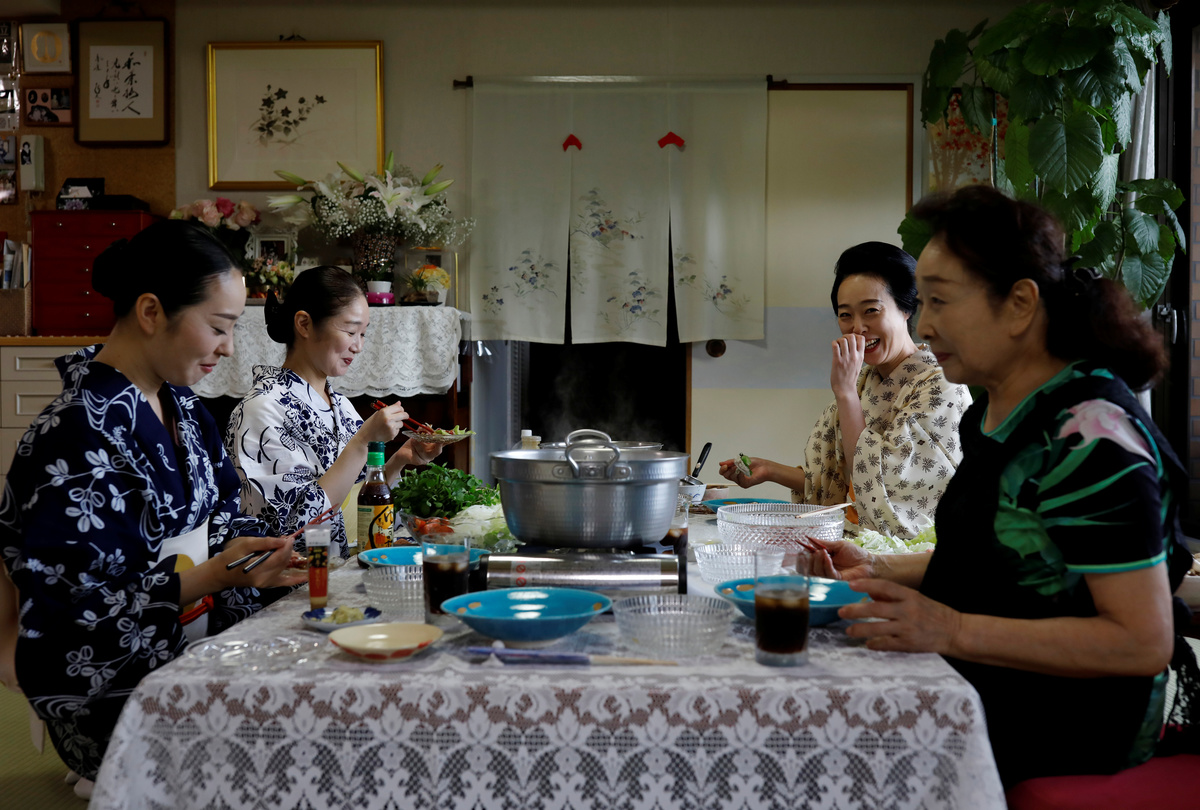
Koiku, Mayu, Maki and Ikuko, who are geisha, have lunch together at Ikuko's home, during the coronavirus disease (COVID-19) outbreak, in Tokyo, Japan, July 11, 2020. REUTERS/Kim Kyung-Hoon
Though the ancient capital of Kyoto is best known for geisha, Tokyo has six geisha districts of its own. But discouraged by the rigour of geisha life with its hours of artistic practice, fewer now join.
Akasaka had 120 geisha 30 years ago. Now all of Tokyo has only some 230.
Lessons and kimono are expensive, with pay dependent on popularity. And some skills, such as the witty conversation that make older geisha like Ikuko especially popular, can only be gained through time.
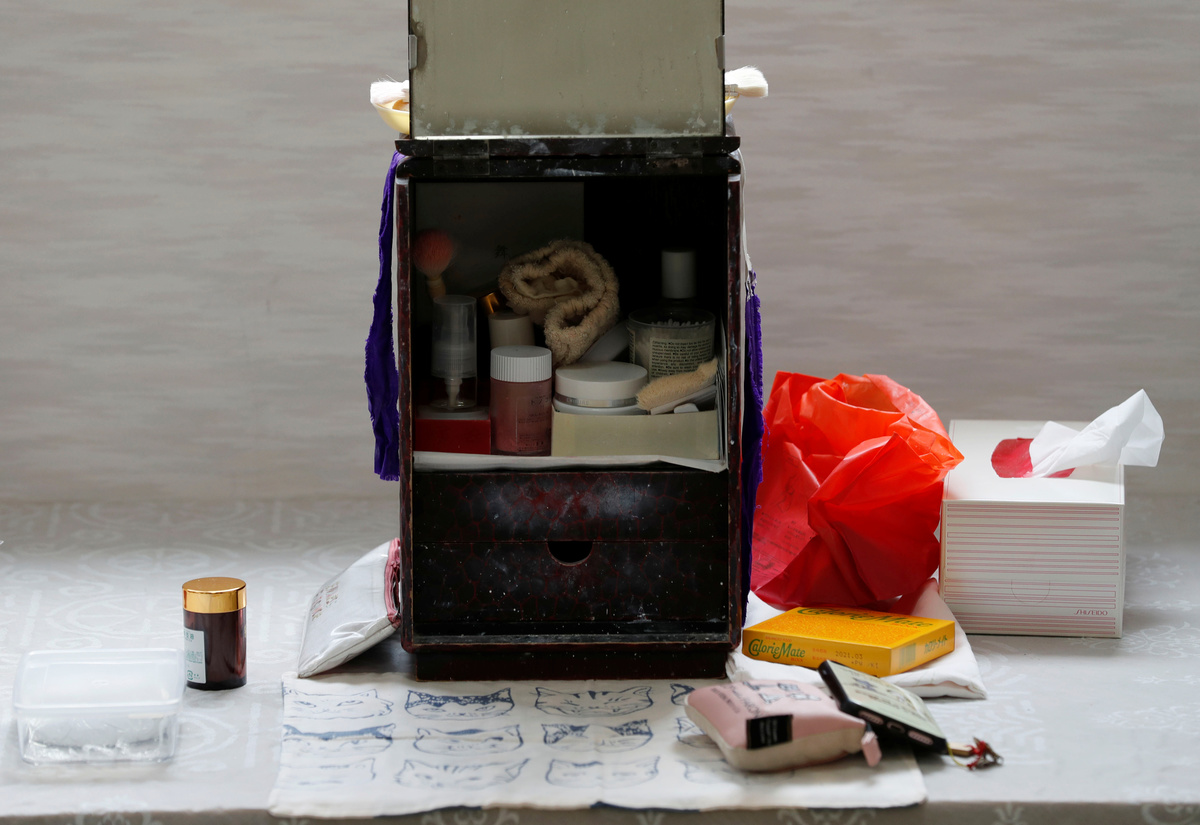
Makeup belonging to Maki, who is a geisha, is laid out as she gets ready at Ikuko's home to work at a party being hosted by customers at a luxury restaurant, where she will be entertaining with other geisha, during the coronavirus disease (COVID-19) outbreak, during the coronavirus disease (COVID-19) outbreak, in Tokyo, Japan, June 23, 2020. REUTERS/Kim Kyung-Hoon
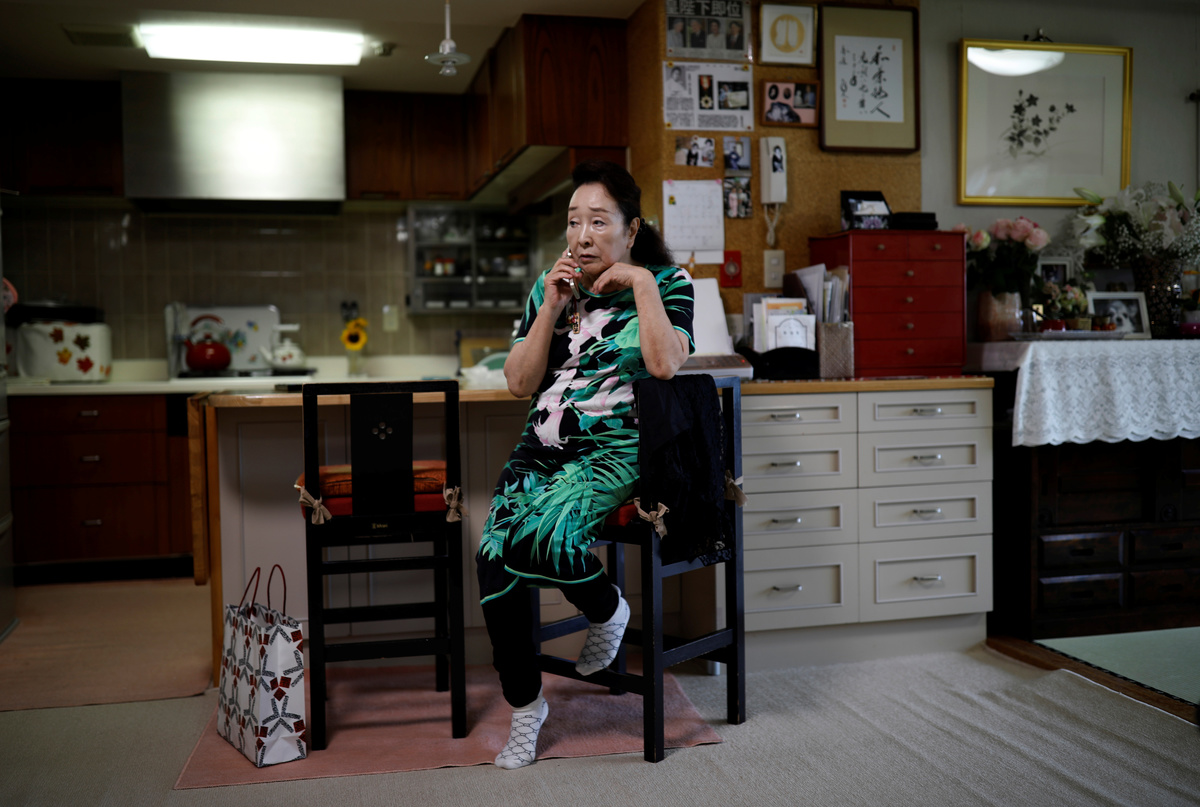
"Our income has been down to zero," Ikuko said. "I have a bit of wherewithal, but it's been very hard for the younger ones. The geisha association has helped with rent."
All geisha, as freelancers, can also apply for 1 million yen in government subsidies, which she believes most did.
"I was just full of anxiety," said fellow geisha Mayu, 47. "I went through my photos, sorted my kimonos..
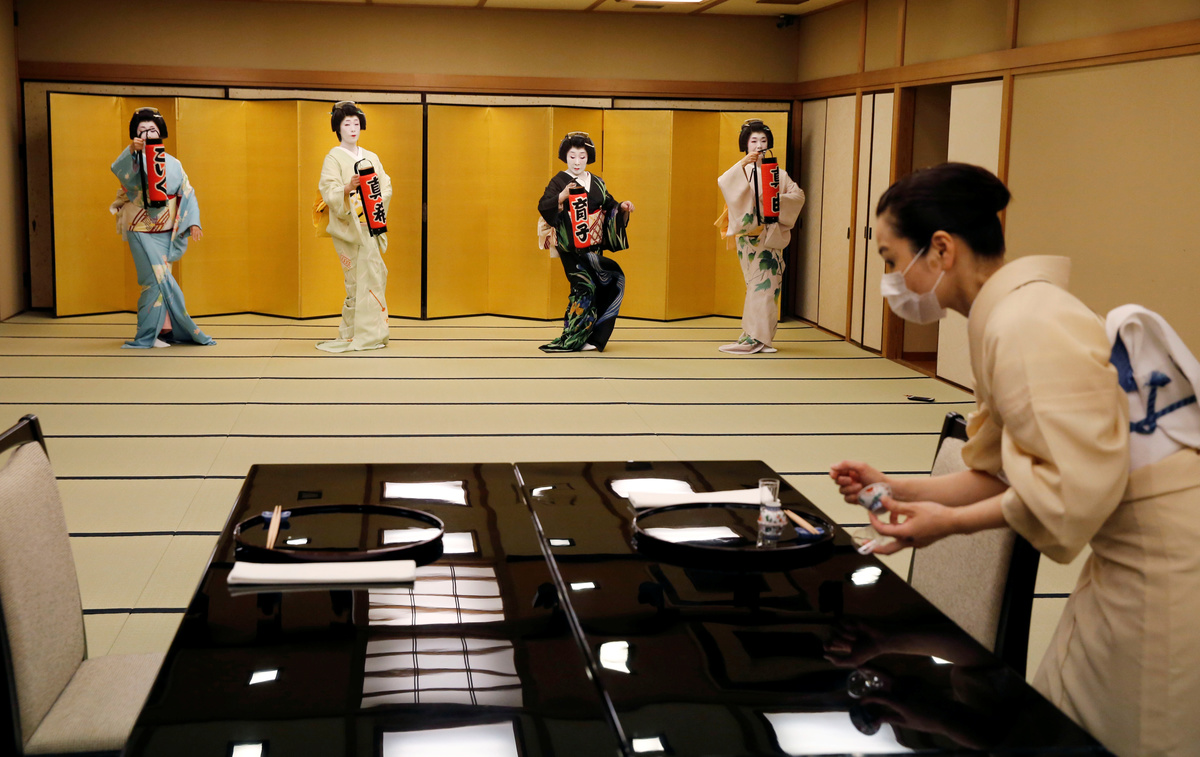
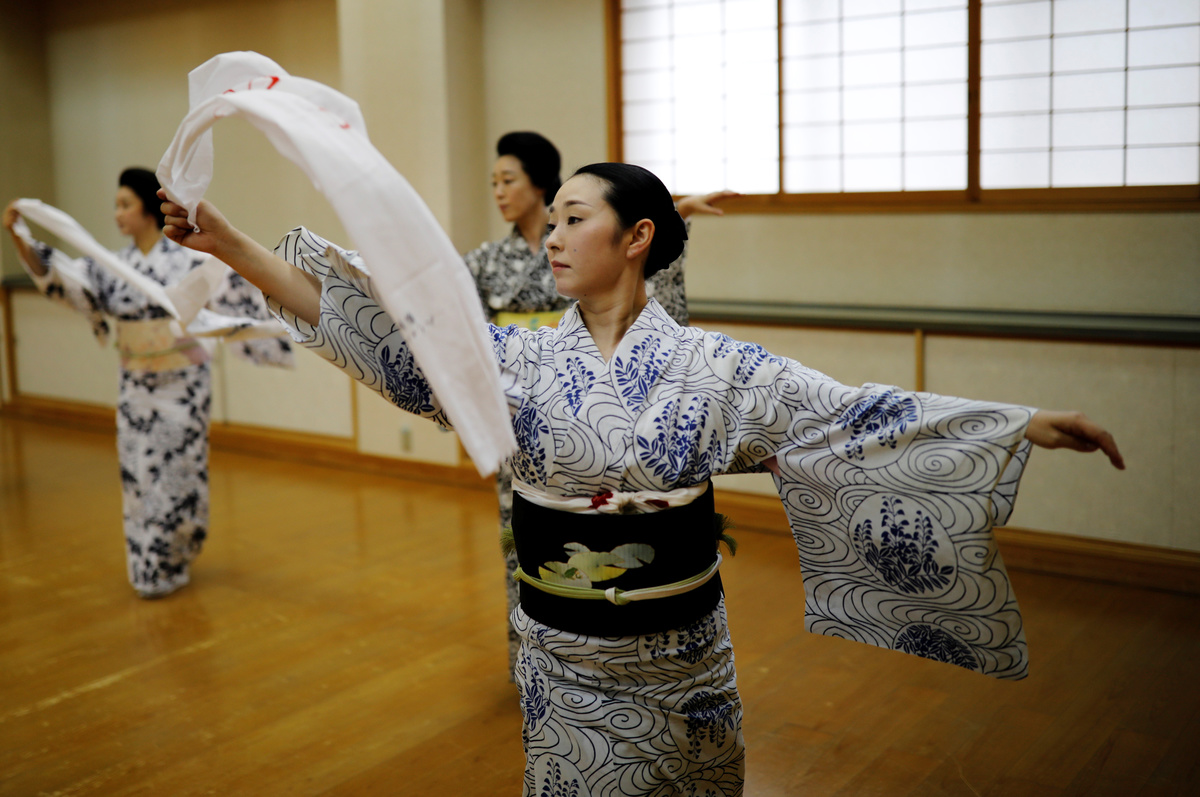
Koiku, Maki, Ikuko and Mayu, who are geisha, perform a dance routine for Reuters, before they work at a party being hosted by customers at Asada, a luxury Japanese restaurant, during the coronavirus disease (COVID-19) outbreak in Tokyo, Japan, June 23, 2020. REUTERS/Kim Kyung-Hoon
"The thought of a second wave is terrifying."
Still, every effort is being made.
"We arrange things in the largest room possible," said Shota Asada, owner of the luxurious restaurant where the geisha entertain. "Anything to keep this culture alive."
Koiku, who is a geisha, gets ready at Ikuko's home to work at a party being hosted by customers at a luxury restaurant, where she will be entertaining with other geisha, during the coronavirus (COVID-19) outbreak, in Tokyo, Japan, June 23, 2020. "I thought it was a world you couldn't enter unless you started training in your teens", said Koiku. "Of course traditional Japanese dance is completely different from ballet, and it was very hard for me to follow at first. It's still hard for me now." REUTERS/Kim Kyung-Hoon
CHANGE FOR SURVIVAL
Michiyo Yukawa, an ex-geisha who owns an Akasaka bar and hosts occasional geisha events, thinks geisha may need to adapt so that more ordinary people can appreciate their charm.
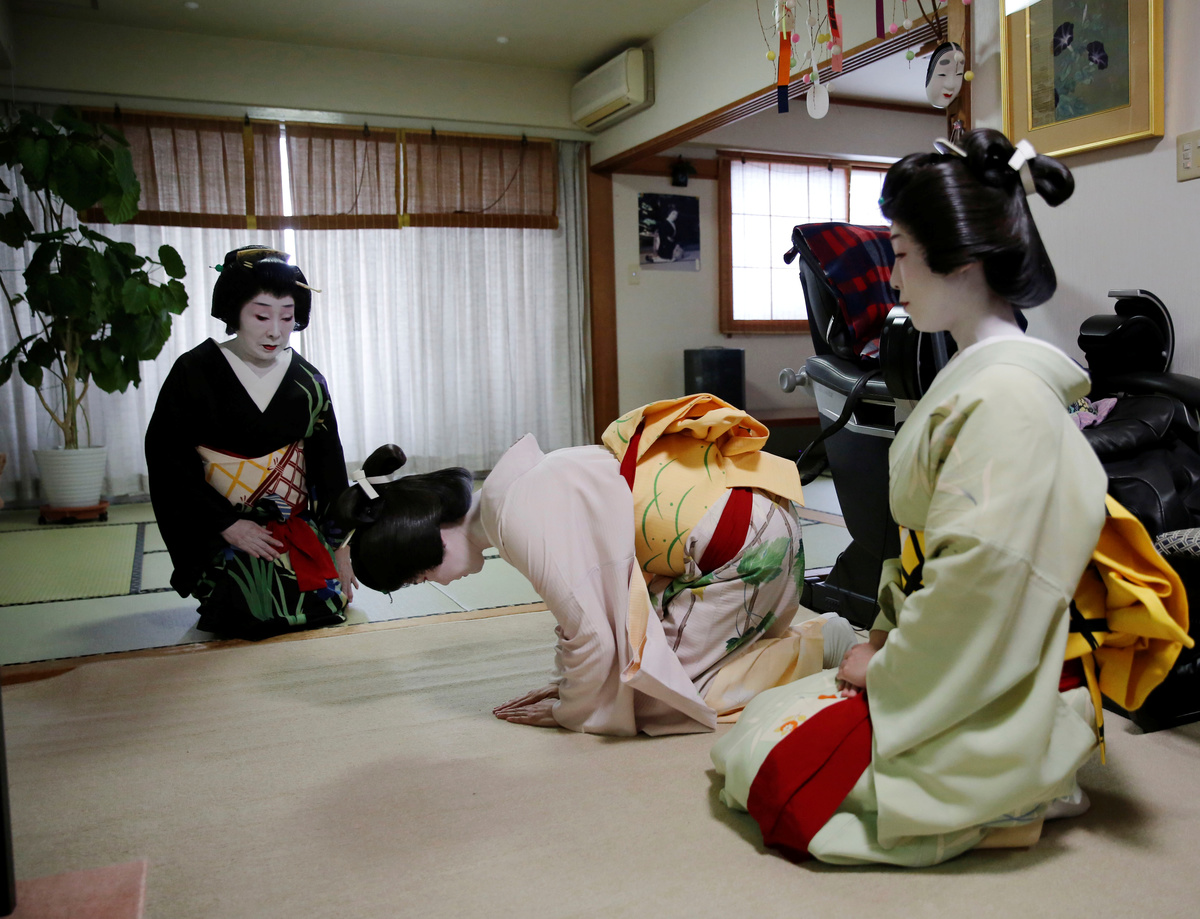
Maki, Mayu, Ikuko and Koiku, who are geisha, greet Fujima Hideka, a dance master of Japanese traditional dance, after attending a dance class for geisha only, during the coronavirus (COVID-19) outbreak, in Tokyo, Japan, July 13, 2020. REUTERS/Kim Kyung-Hoon
"They have a special beauty," she said. "They've gone through training other people haven't, they spend a lot of money on this - and it's made them special. Having this disappear would be sad."
Ikuko fears an extended pandemic could prompt some geisha to quit.
"Now is the worst of the worst," she said. "How are we going to get through? It'll take all of our body and soul."
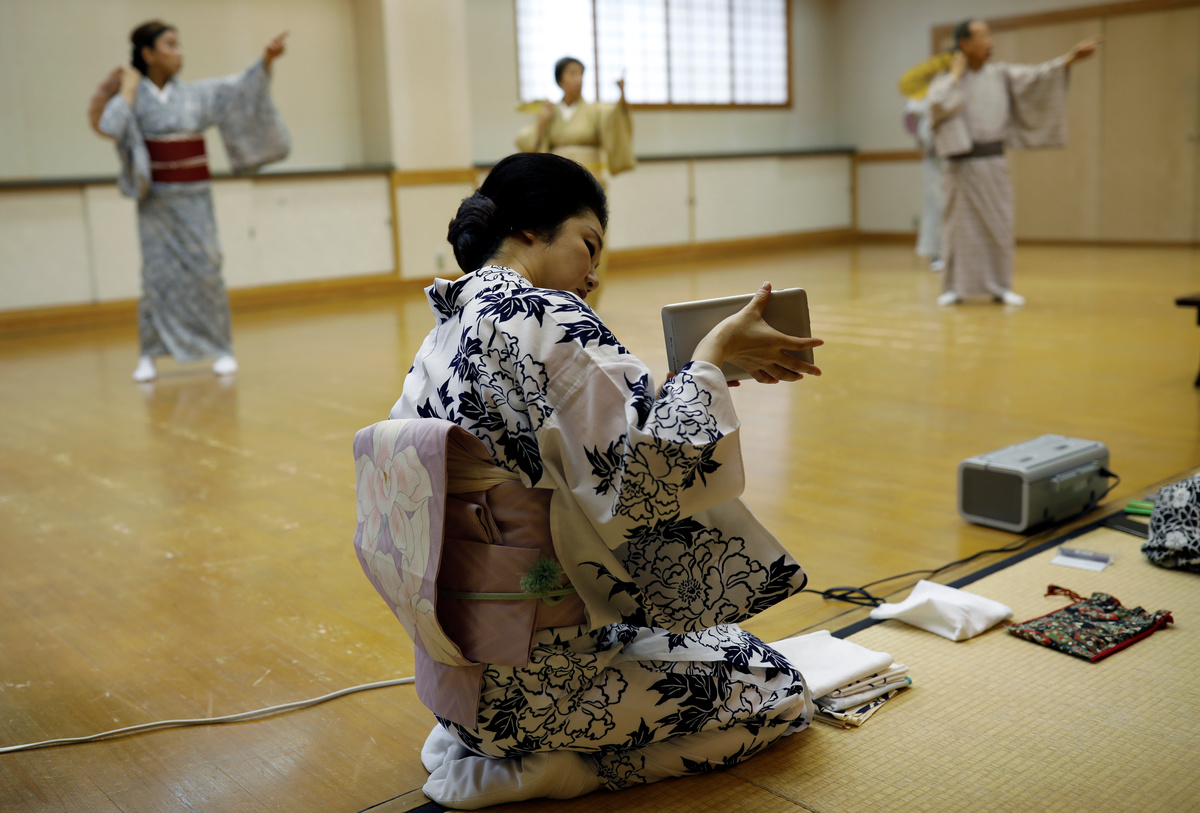
Mayu, Maki and Koiku, who are all geisha, practice a dance routine during a class for geisha only, during the coronavirus disease (COVID-19) outbreak, in Tokyo, Japan, July 13, 2020. "Sometimes we're so busy we go straight to practice without any sleep, but those times are way better than this", Mayu said. "When you have lots of time, you don't do anything." REUTERS/Kim Kyung-Hoon
(Reporting by Elaine Lies; Editing by Simon Cameron-Moore)
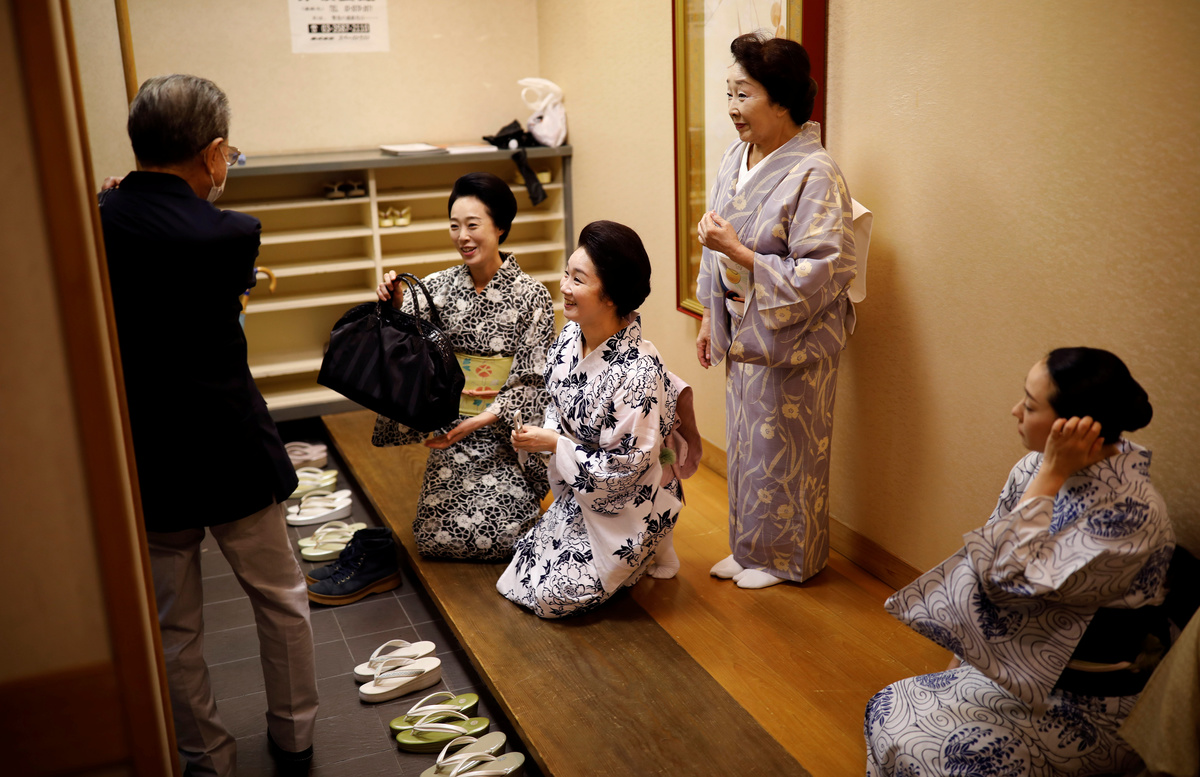
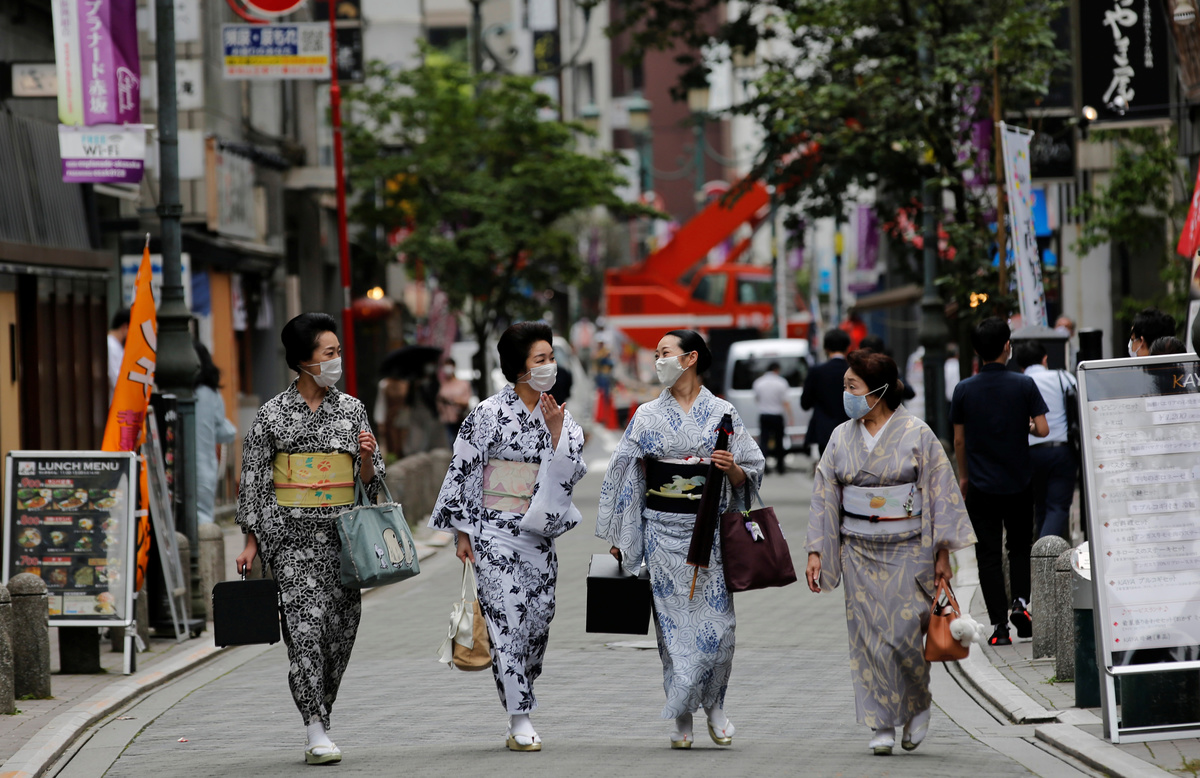
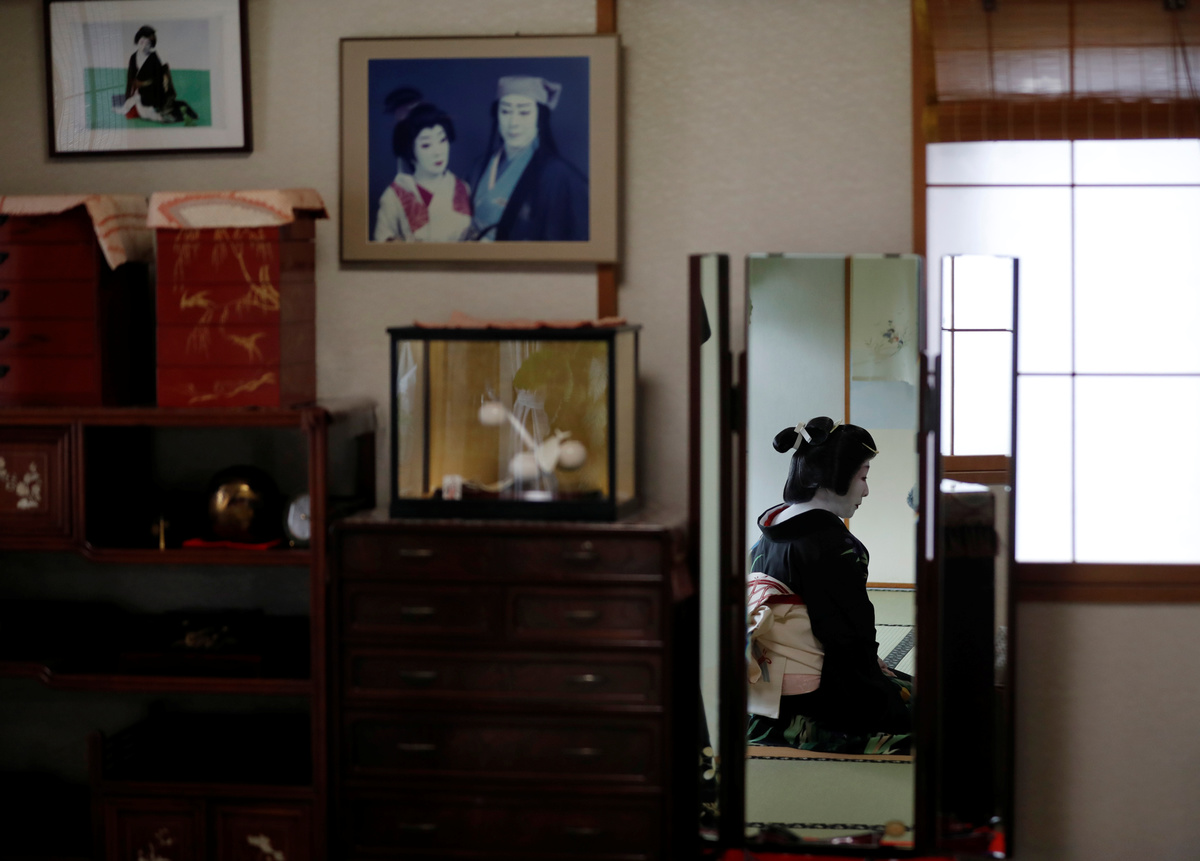
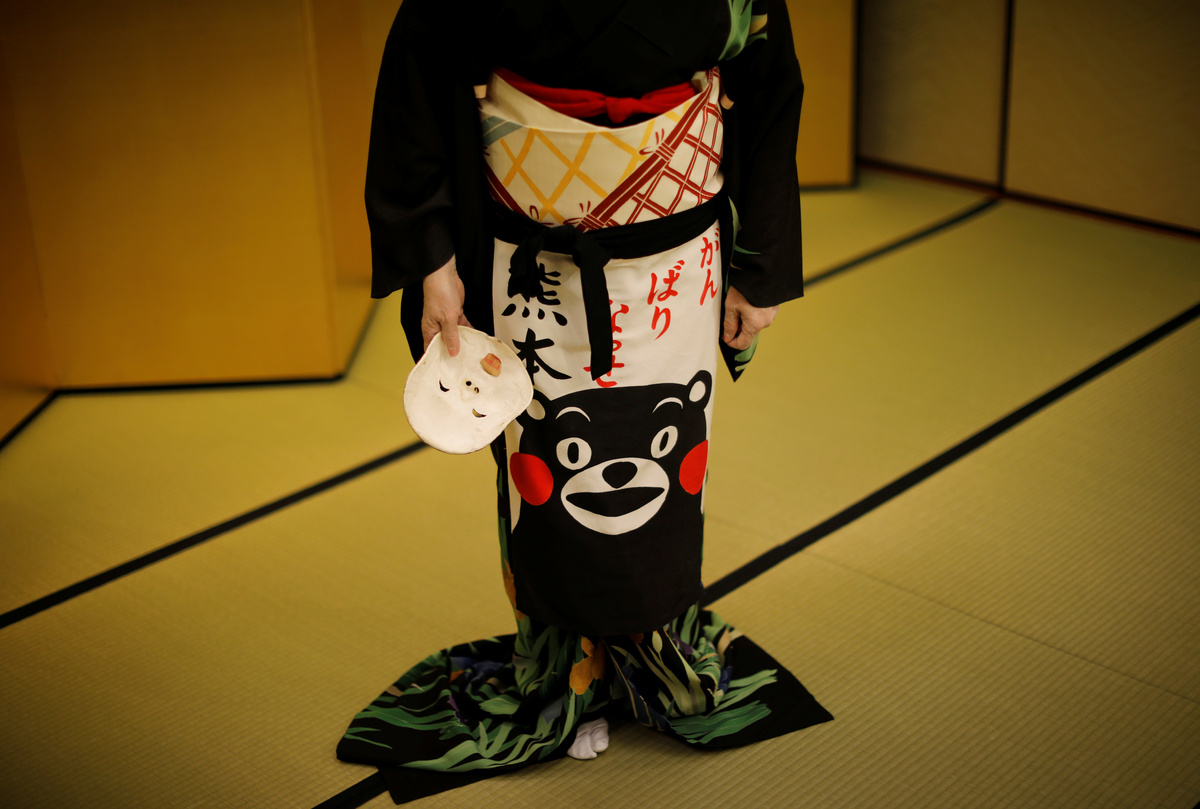
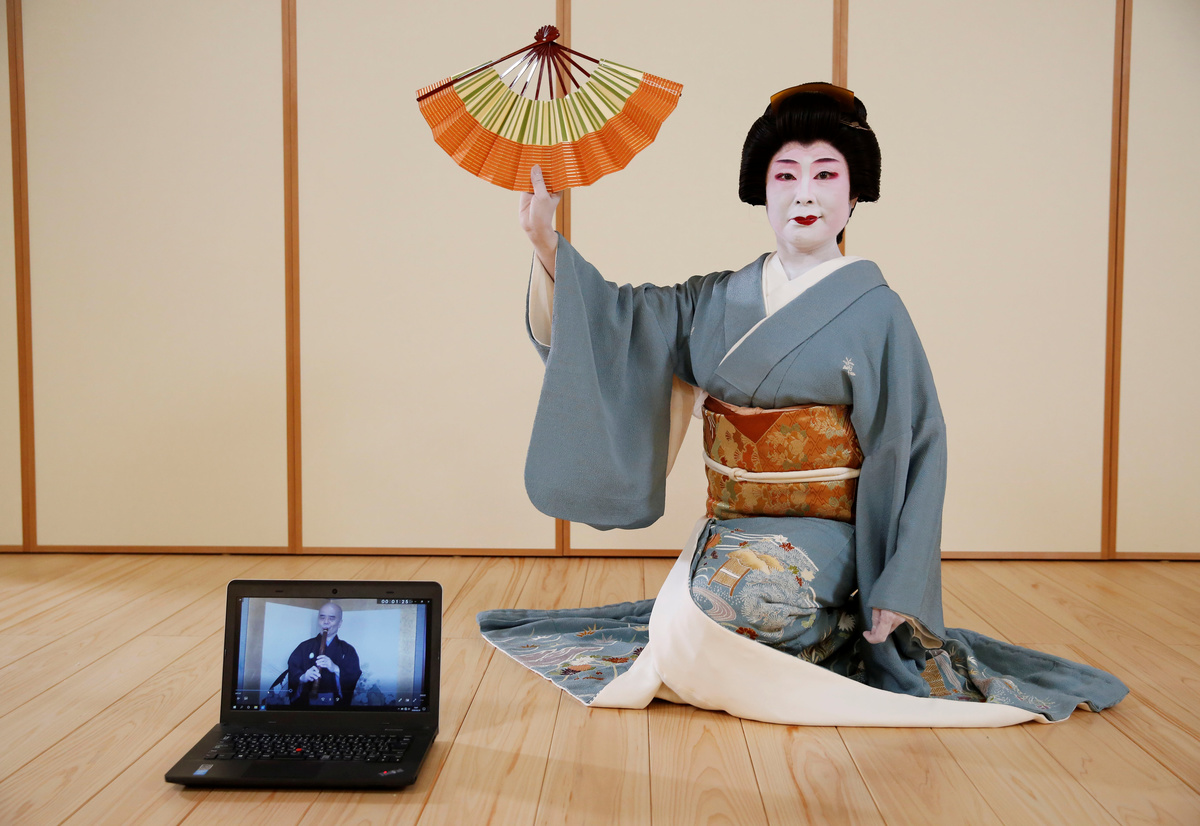
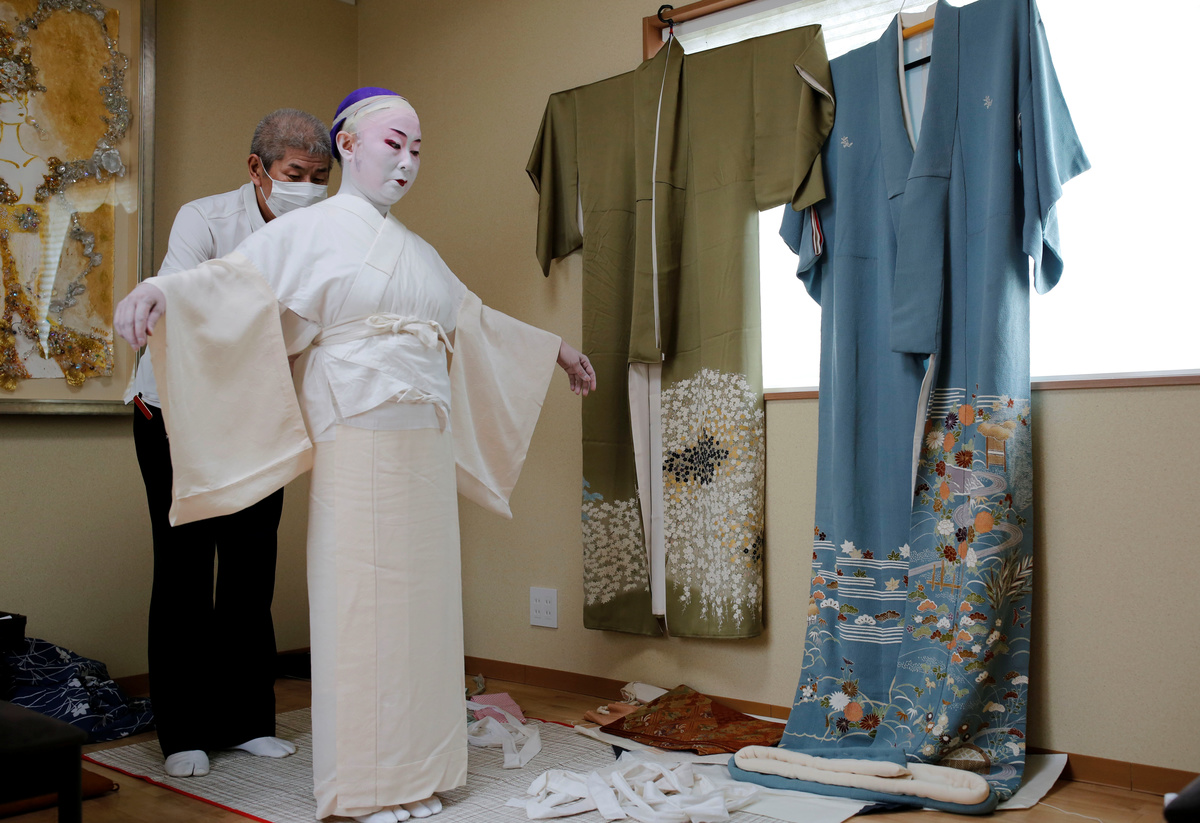
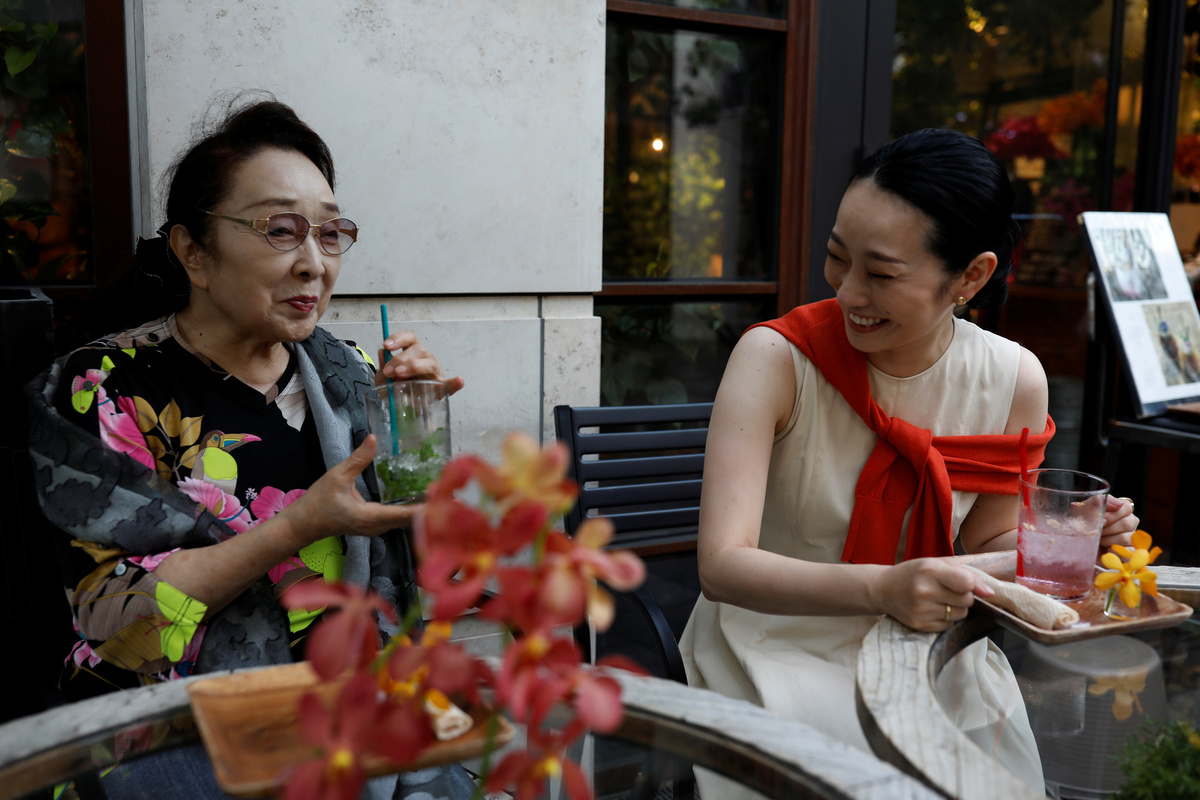
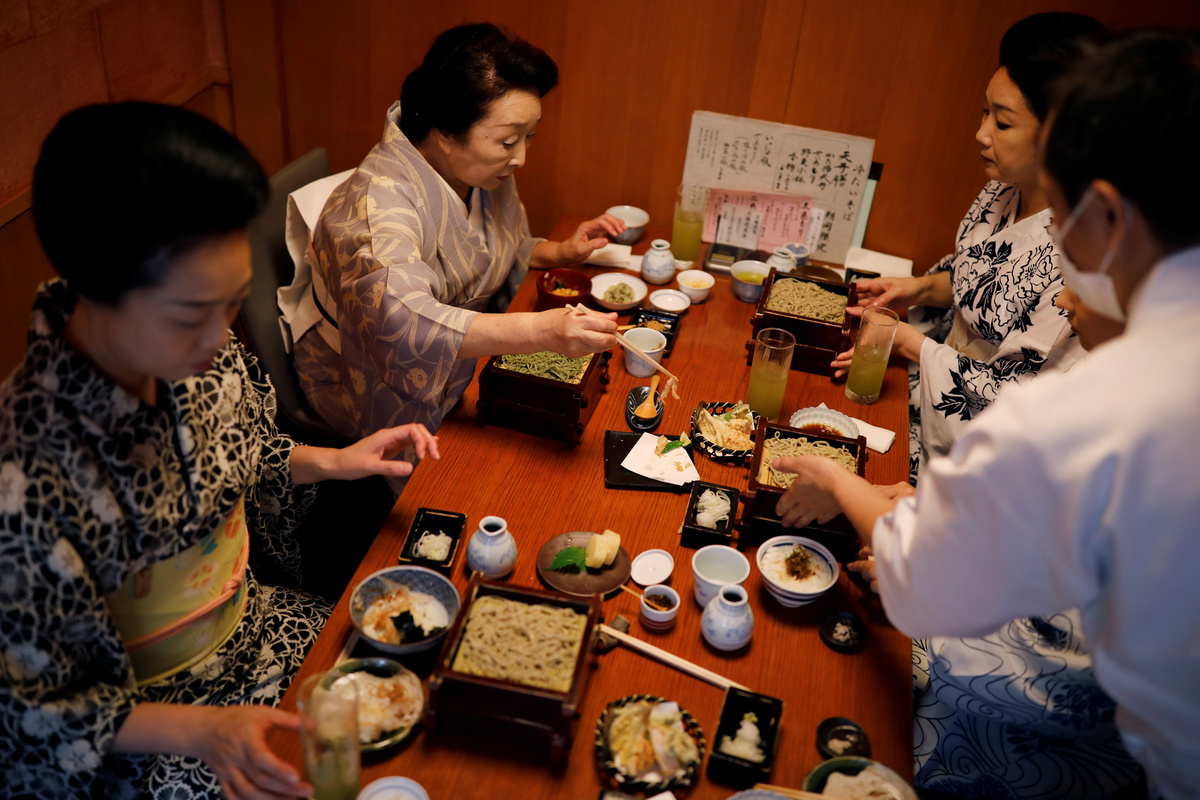
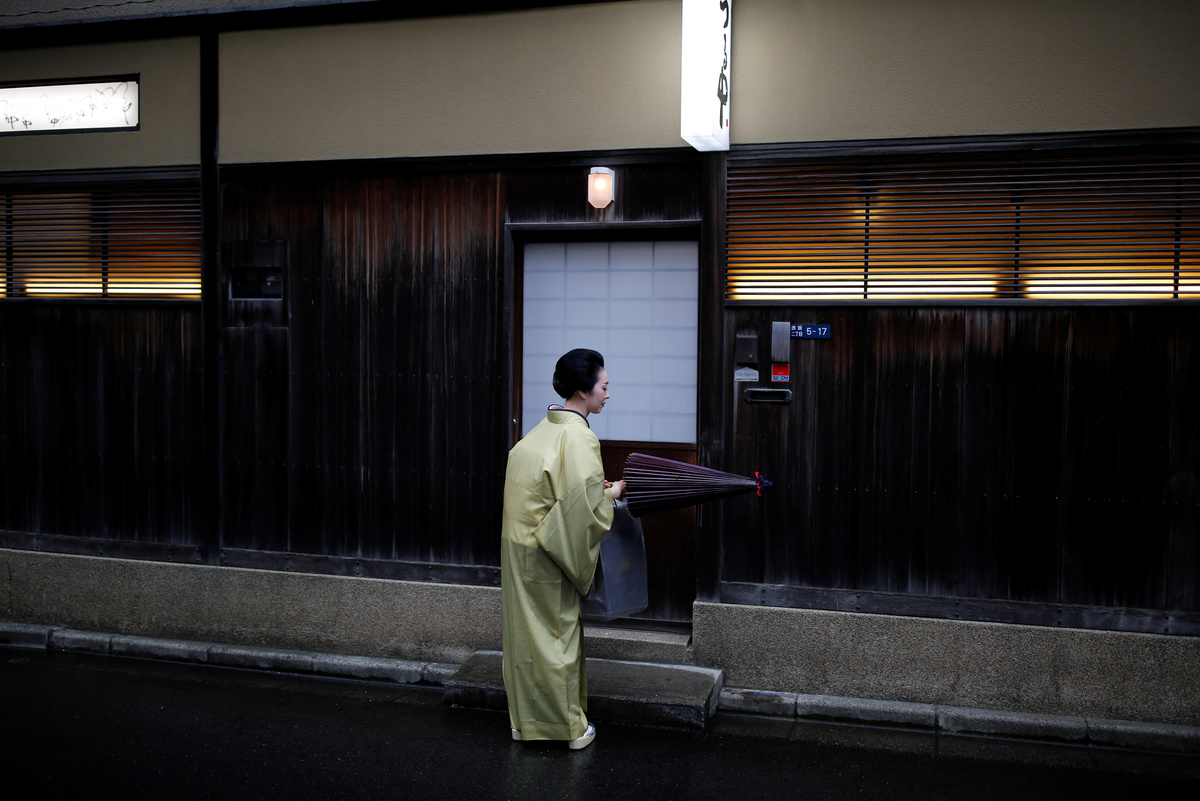
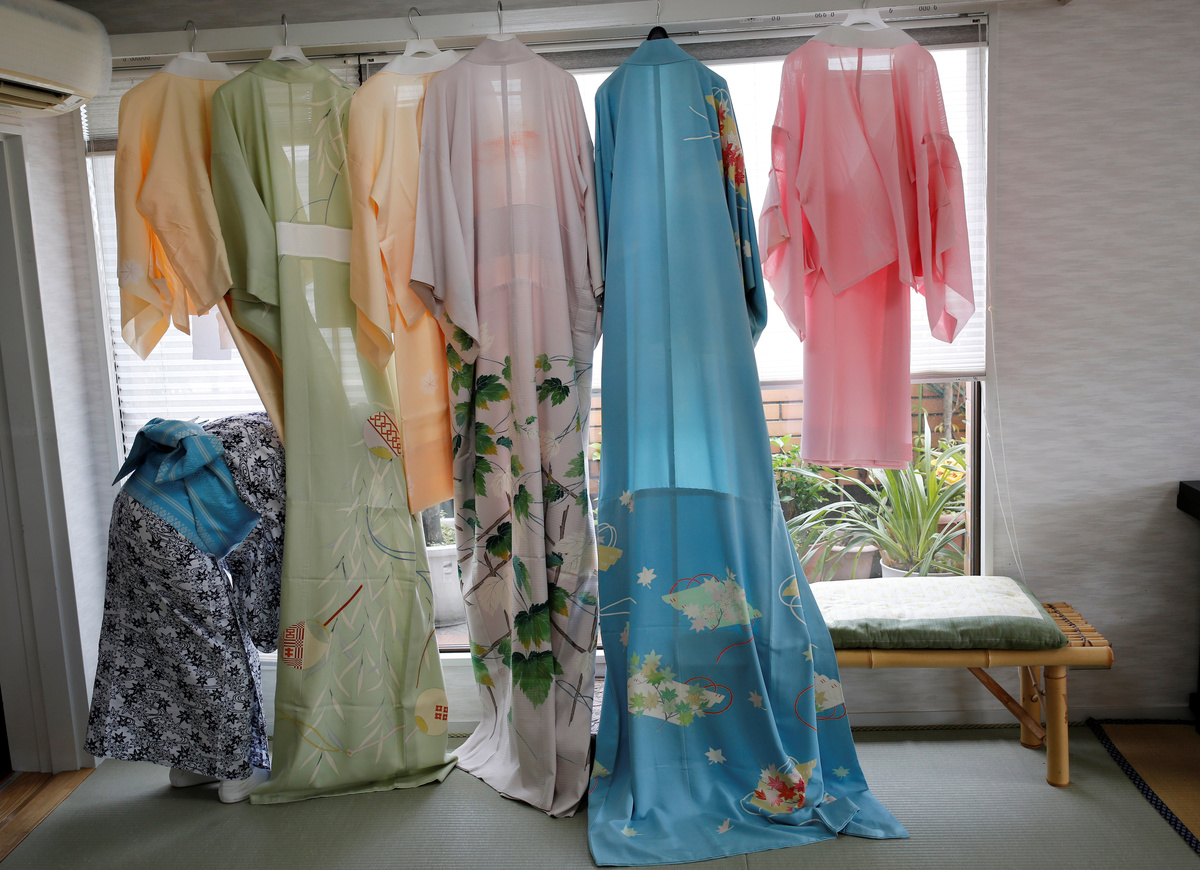
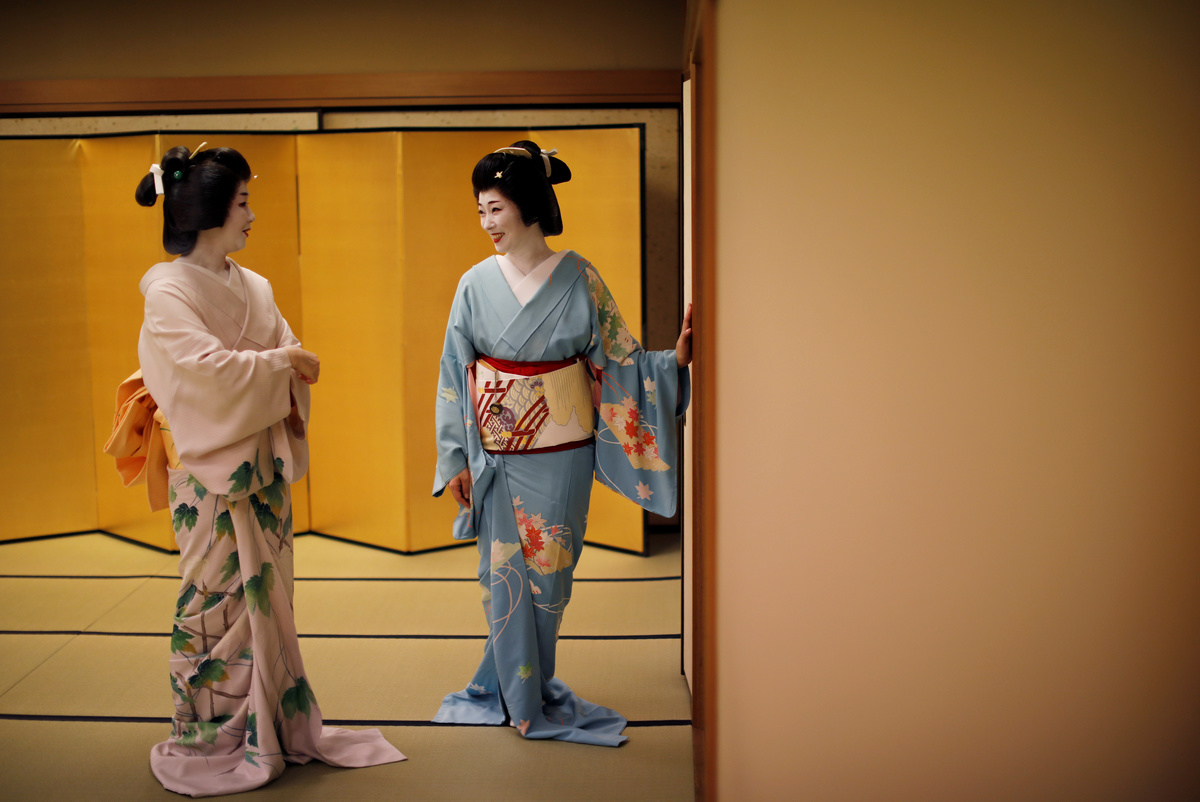
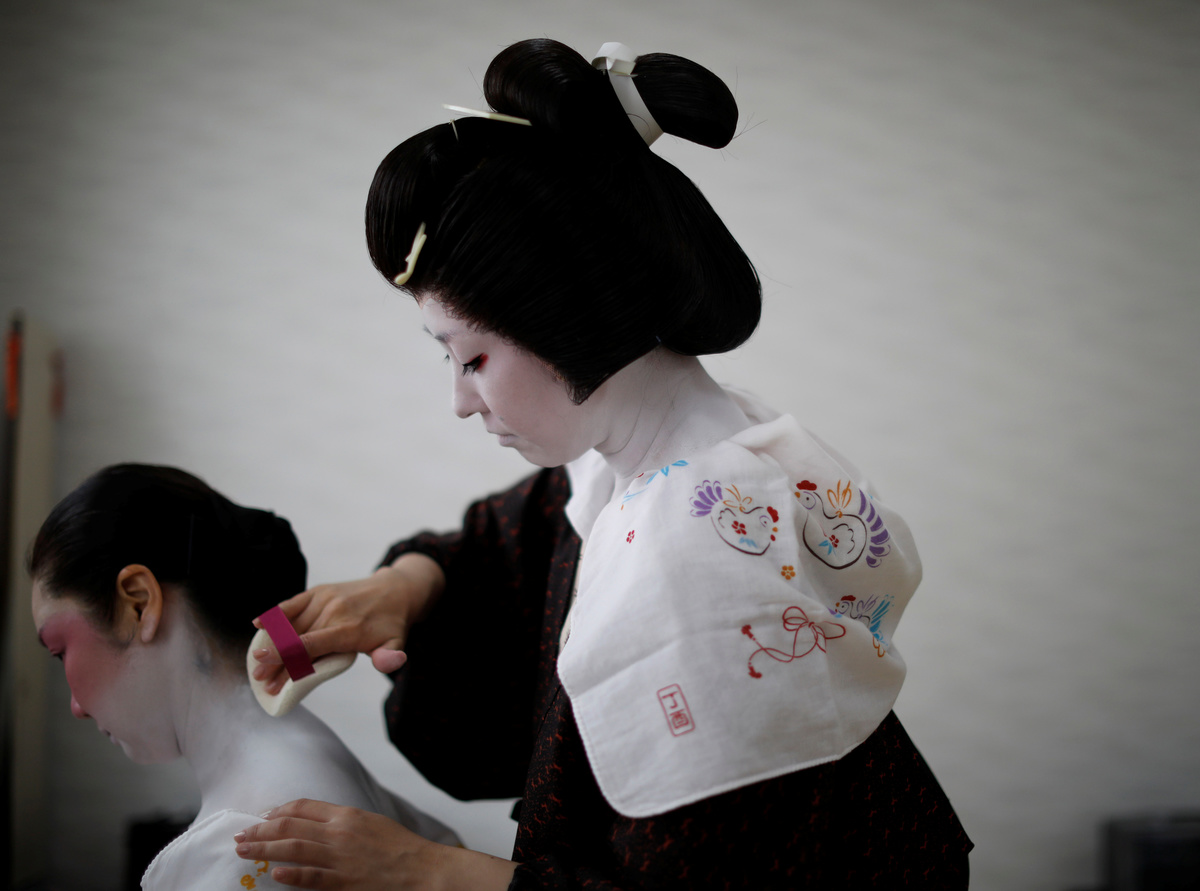
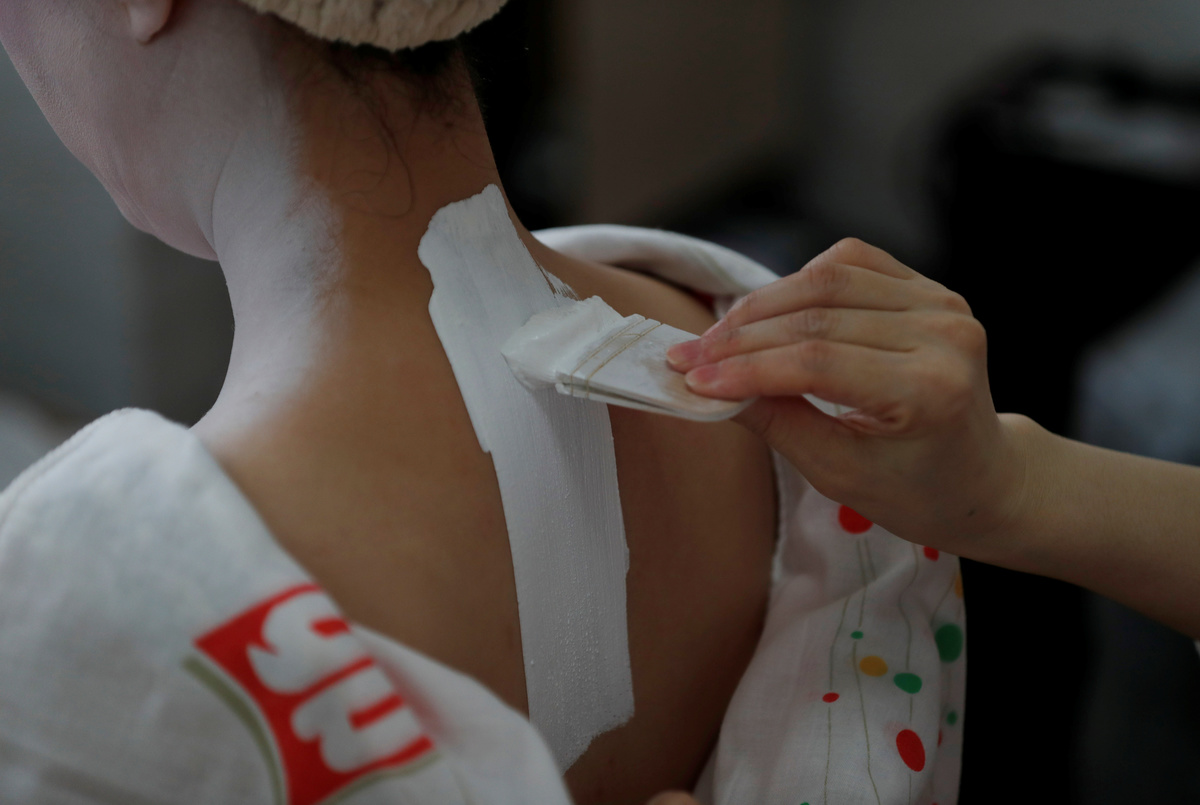
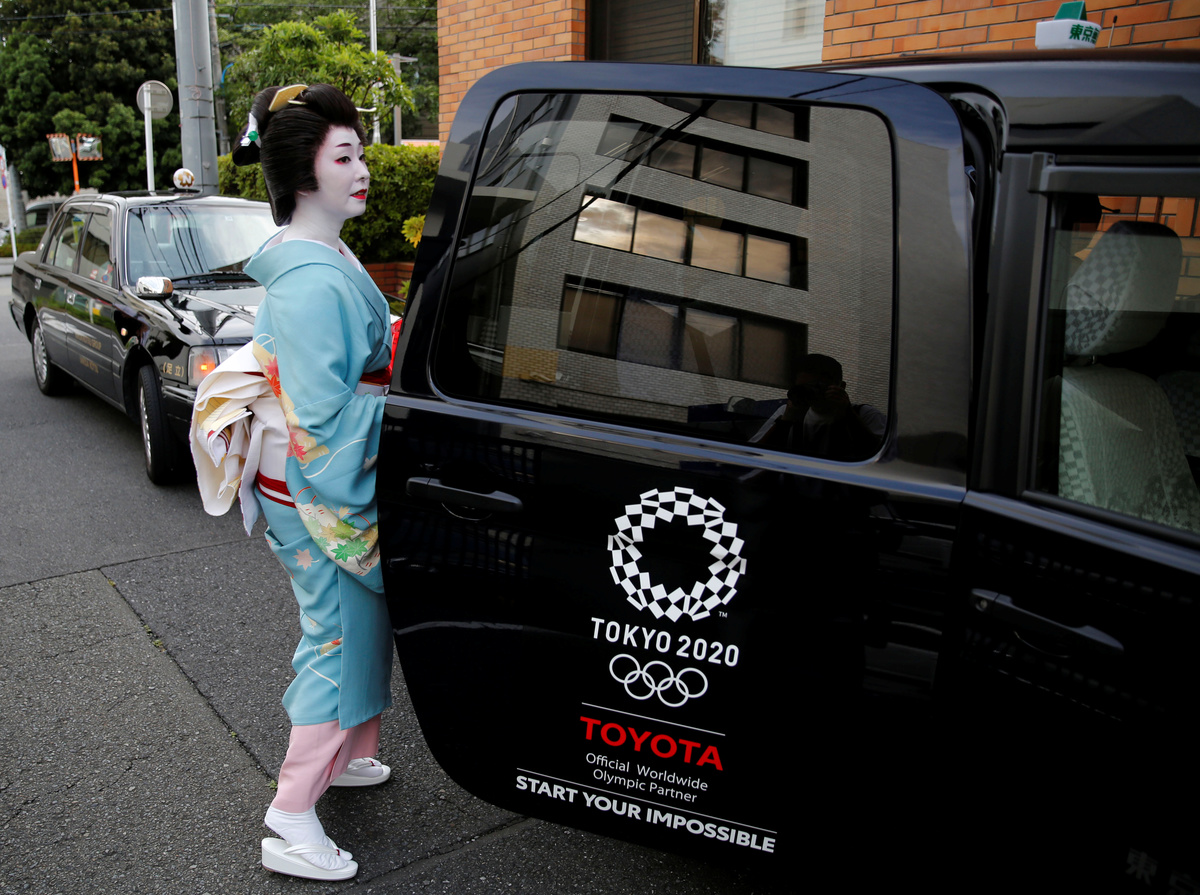
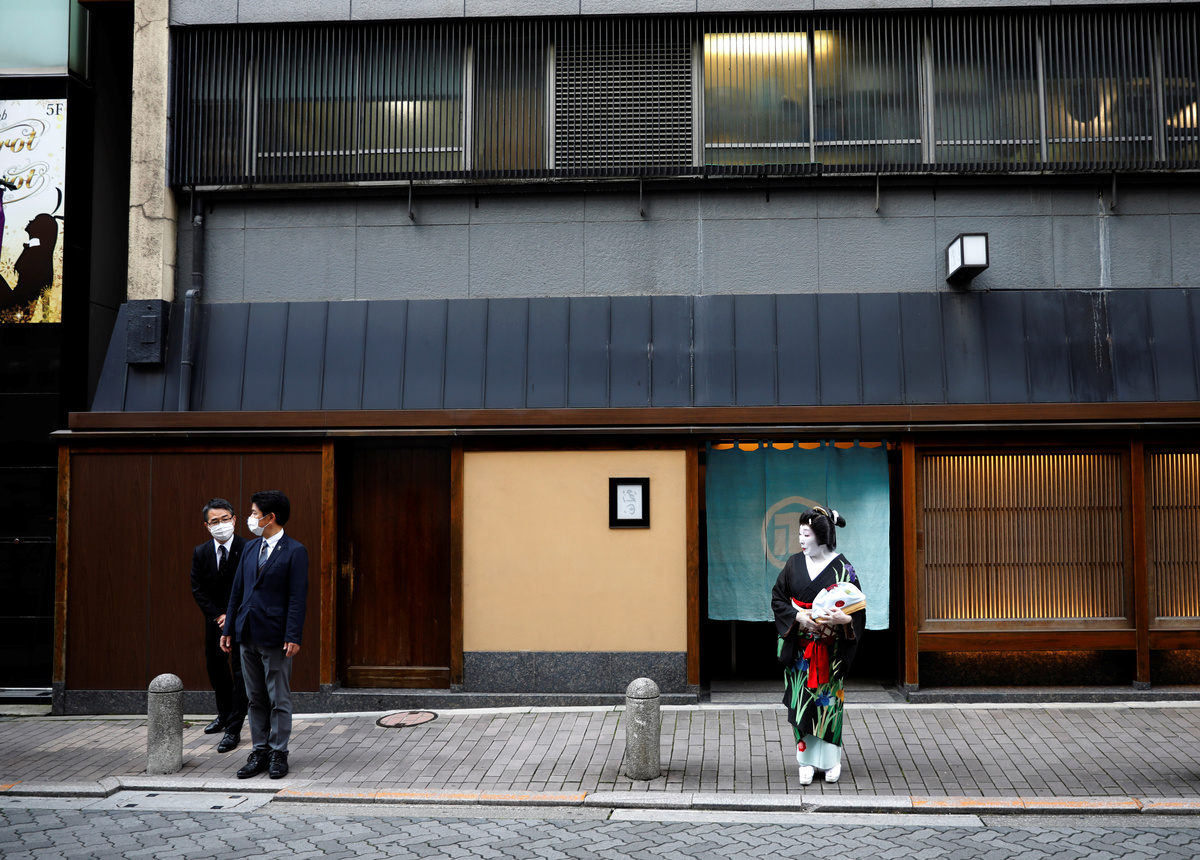
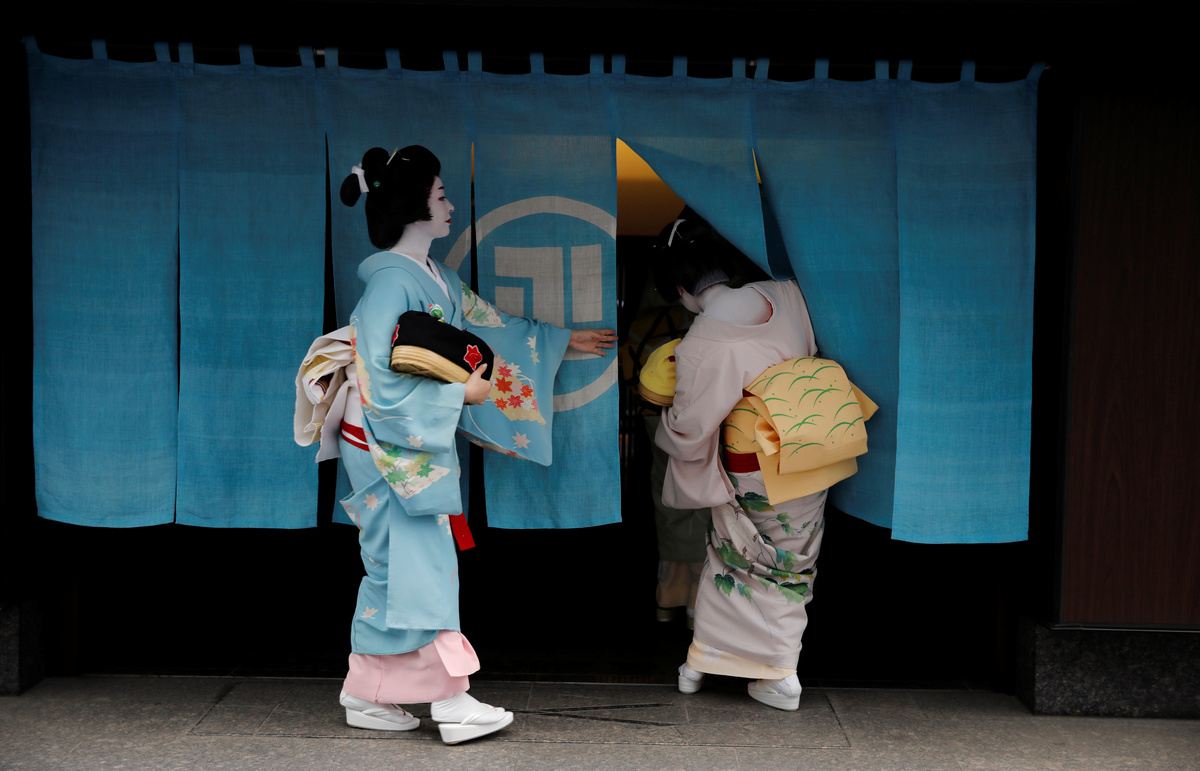
Maki, Mayu, Koiku and Ikuko, who are geisha, wear protective face masks as they walk to a restaurant after attending a dance class, during the coronavirus disease (COVID-19) outbreak, in Tokyo, Japan. July 13, 2020. Ikuko fears an extended pandemic could prompt some geisha to quit. "Now is the worst of the worst", she said. "How are we going to get through? It'll take all of our body and soul." REUTERS/Kim Kyung-Hoon Ikuko, who is a geisha, sits in front of a mirror in her living room as she gets ready to work at a party being hosted by customers at a luxury restaurant, where she will be entertaining with other geisha, during the coronavirus (COVID-19) outbreak, in Tokyo, Japan, June 23, 2020. REUTERS/Kim Kyung-Hoon Mitsunaga Kanda, a makeup artist and Yurie Hatanaka, a wig stylist, wear protective face masks and face shields as they work on Tokijyo Hanasaki, a jiutamai dancer, before he dances for a film being made that is supported by the Tokyo Metropolitan government in order to support artists during the coronavirus disease (COVID-19) outbreak, at a studio in Tokyo, Japan, June 29, 2020. "Every single one of my events has been cancelled", said Kanda. "We touch their skin and their face, all over, and while we don't talk we're very close - something we're very aware of now." REUTERS/Kim Kyung-Hoon Koiku, Maki and Ikuko, who are geisha, get into a taxi as they make their way to work at a party being hosted by customers at a luxury restaurant, where they will be entertaining with other geisha, during the coronavirus disease (COVID-19) outbreak, in Tokyo, Japan, June 23, 2020. REUTERS/Kim Kyung-Hoon Ikuko, who is a geisha, wears an apron printed with Kumamon, a mascot created by the government of the Kumamoto Prefecture where she was born, before working at a party being hosted by customers, where she will entertain with other geisha at Asada, a luxury restaurant, during the coronavirus disease (COVID-19) outbreak in Tokyo, Japan, June 23, 2020. REUTERS/Kim Kyung-Hoon Tokijyo Hanasaki, a jiutamai dancer, performs a dance routine for a film supported by the Tokyo Metropolitan government in order to support artists during the coronavirus disease (COVID-19) outbreak, at a studio in Tokyo, Japan, June 29, 2020. REUTERS/Kim Kyung-Hoon Tokijyo Hanasaki, a jiutamai dancer, poses for a photograph behind a laptop playing a musical performance which was filmed in advance in order to avoid physical contact, to accompany Hanasaki's dance performance for a film being made that is supported by the Tokyo Metropolitan government in order to support artists during the coronavirus disease (COVID-19) outbreak, at a studio in Tokyo, Japan, June 29, 2020. REUTERS/Kim Kyung-Hoon Ikuko, who is a geisha, sits in her home as she speaks on the phone, during the coronavirus (COVID-19) outbreak, in Tokyo, Japan, July 11, 2020. "Our income has been down to zero", Ikuko said. "I have a bit of wherewithal, but it's been very hard for the younger ones. The geisha association has helped with rent." REUTERS/Kim Kyung-Hoon Shoichi Sanagashi, a kimono dresser, wears a protective face mask as he dresses Tokijyo Hanasaki, a jiutamai dancer, before Hanasaki is recorded dancing for a film supported by the Tokyo Metropolitan government in order to support artists during the coronavirus disease (COVID-19) outbreak, at a studio in Tokyo, Japan, June 29, 2020. REUTERS/Kim Kyung-Hoon Ikuko, who is a geisha, combs her wig in her living room as she gets ready to work at a party being hosted by customers at a luxury restaurant, where she will be entertaining with other geisha, during the coronavirus (COVID-19) outbreak, in Tokyo, Japan, June 23, 2020. "There were more than 400 geisha in Akasaka when I came, so many I couldn't remember their names. But times changed", said Ikuko. Only 20 remain, and there aren't enough engagements to take on new apprentices - especially now. REUTERS/Kim Kyung-Hoon Ikuko and Koiku, who are geisha, wear causal clothes as they chat at a cafe, during the coronavirus disease (COVID-19) outbreak, in Tokyo, Japan, July 11, 2020. REUTERS/Kim Kyung-Hoon Maki, Ikuko, Mayu and Koiku, who are geisha, eat soba noodles at a restaurant after attending a dance class, during the coronavirus disease (COVID-19) outbreak, in Tokyo, Japan, July 13, 2020. REUTERS/Kim Kyung-Hoon Koiku, who is a geisha, folds a traditional umbrella made out of oli paper, as she arrives at a restaurant where she will work at a party hosted by her customers, where she will entertain, during the coronavirus disease (COVID-19) outbreak, in Tokyo, Japan, July 13, 2020. REUTERS/Kim Kyung-Hoon Ikuko, who is a geisha, gets ready at her home to work at a party being hosted by customers at a restaurant, where she will be entertaining with other geisha, during the coronavirus disease (COVID-19) outbreak, in Tokyo, Japan, June 23, 2020. "When you sit close, you can talk with feeling, your passion comes through", Ikuko said. "When you're two metres apart, conversation breaks down." REUTERS/Kim Kyung-Hoon Tokijyo Hanasaki, a jiutamai dancer, wears a face mask as she walks down a flight of stairs at a studio, during the coronavirus disease (COVID-19) outbreak, in Tokyo, Japan, June 29, 2020. REUTERS/Kim Kyung-Hoon Mayu, a geisha, uses a tablet to film other geisha practising a dance routine during a dance class for geisha only, during the coronavirus disease (COVID-19) outbreak, in Tokyo, Japan, July 13, 2020. "I was just full of anxiety", said Mayu. "I went through my photos, sorted my kimonos... The thought of a second wave is terrifying." REUTERS/Kim Kyung-Hoon Mayu and Ikuko, who are geisha, get ready at Ikuko's home to work at a party being hosted by customers at a luxury restaurant, where they will be entertaining with other geisha, during the coronavirus disease (COVID-19) outbreak, in Tokyo, Japan, June 23, 2020. REUTERS/Kim Kyung-Hoon Mayu and Maki bow to Ikuko, who are all geisha, before making their way to work at a party being hosted by customers at a luxury restaurant, where they will be entertaining with other geisha, at Ikuko's home, during the coronavirus disease (COVID-19) outbreak, in Tokyo, Japan, June 23, 2020. REUTERS/Kim Kyung-Hoon Kimonos that will be worn by Maki, Mayu and Koiku, who are geisha, are hung up at Ikuko's home, in preparation for a party that they will be working at later that day, hosted by their customers at a luxury restaurant, during the coronavirus disease (COVID-19) outbreak, in Tokyo, Japan, June 23, 2020. REUTERS/Kim Kyung-Hoon Maki and Ikuko, who are geisha, perform a dance routine for Reuters, as they wait for customers to arrive, who are hosting a party where they will be entertaining with other geisha, at Asada, a luxury Japanese restaurant, during the coronavirus disease (COVID-19) outbreak, in Tokyo, Japan, June 23, 2020. REUTERS/Kim Kyung-Hoon Old photographs of Ikuko that were taken after she moved to Tokyo in 1964, are seen at Ikuko's home in Tokyo, Japan, July 11, 2020. REUTERS/Kim Kyung-Hoon/Handout via REUTERS Mayu and Koiku, who are geisha, wait for their customers, who are hosting a party at Asada, a luxury Japanese restaurant, where they will entertain with other geisha, during the coronavirus (COVID-19) outbreak, in Tokyo, Japan, June 23, 2020. REUTERS/Kim Kyung-Hoon Koiku paints the back of Mayu's neck, both of whom are geisha, as they get ready at Ikuko's home to work at a party being hosted by customers at a restaurant, where they will be entertaining with other geisha, during the coronavirus disease (COVID-19) outbreak, in Tokyo, Japan, June 23, 2020. REUTERS/Kim Kyung-Hoon Senior geisha help Koiku put on a protective face mask to have a portrait photo taken of her wearing one for Reuters, before working at a party being hosted by customers, where she will entertain with other geisha, at Asada, a luxury Japanese restaurant, during the coronavirus disease (COVID-19) outbreak, in Tokyo, Japan, June 23, 2020. REUTERS/Kim Kyung-Hoon Koiku paints the back of Mayu's neck, both of whom are geisha, as they get ready at Ikuko's home to work at a party being hosted by customers at a restaurant, where they will be entertaining with other geisha, during the coronavirus disease (COVID-19) outbreak, in Tokyo, Japan, June 23, 2020. REUTERS/Kim Kyung-Hoon Koiku who is a geisha, gets into a taxi as she makes her way to work at a party being hosted by customers at a restaurant, where she will be entertaining with other geisha, during the coronavirus disease (COVID-19) outbreak, in Tokyo, Japan, June 23, 2020. REUTERS/Kim Kyung-Hoon Restaurant staff wear protective face masks as they stand on the street with Ikuko as they wait for another geisha to arrive outside Asada, a luxury Japanese restaurant, where the geisha will work at a party being hosted by customers, during the coronavirus disease (COVID-19) outbreak, in Tokyo, Japan, June 23, 2020. REUTERS/Kim Kyung-Hoon Koiku and Mayu, who are geisha, enter Asada, a luxury Japanese restaurant where their customers are hosting a party, which they will be entertaining at with other geisha, during the coronavirus disease (COVID-19) outbreak, in Tokyo, Japan, June 23, 2020. "We arrange things in the largest room possible", said Shota Asada, the owner of Asada. "Anything to keep this culture alive." REUTERS/Kim Kyung-Hoon
Sign up to read this article
Read news from 100’s of titles, curated specifically for you.