In December 2025, Australia became the first country in the world to ban social media for children under the age of 16.
This measure sparked debate among teenagers, parents, experts, and politicians around the world, reaching Europe too.
Not only countries like France, Greece, Spain, and Denmark are considering plans to forbid the use of social platforms to under 15s and under 16s, but also the European Union (EU) is exploring this option.
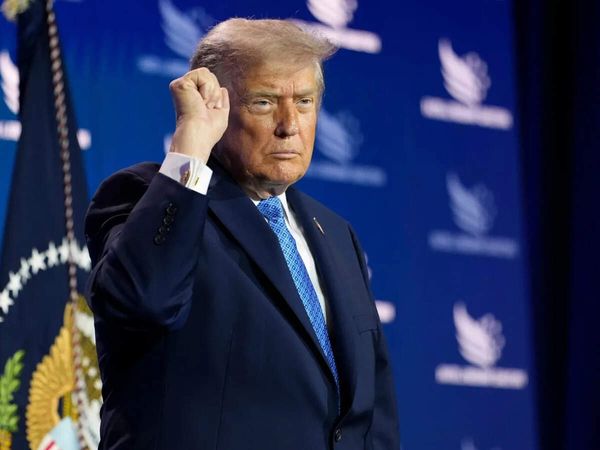
On Tuesday, the European Commission chief, Ursula von der Leyen, said the EU could propose a bloc-wide social media ban for children as early as this summer.
“We are witnessing the lightning speed at which technology is advancing – and how it penetrates every corner of childhood and adolescence. And the discussions about a minimum age for social media can no longer be ignored,” von der Leyen told delegates at the European Summit on Artificial Intelligence and Children in Copenhagen.
The experts’ perspective on the social media ban
The social media ban is a complex strategy on which experts do not see eye to eye.
Theo Compernolle, neuropsychiatrist and member of the supervisory board of the Belgian association Kids Unplugged, strongly agrees with the measure.
“If you’re three hours involved with your phone, just swiping, scrolling, you don’t learn anything,” he told Euronews Next. According to Compernolle, social media platforms take time away from healthier activities, such as sports, friends, and hobbies, which are crucial for children’s development.
In addition, Compernolle underlined that social media often targets children with problematic content, which can be harmful for vulnerable teenagers.
And finally, Compernolle argued that due to social media's addictive features, they should be highly regulated. “It’s like alcohol or smoking. It’s not a very good thing to do for adults, but there we also have age limits,” he said.
Giovanna Mascheroni, sociologist and vice coordinator of the research network EU Kids Online agrees with Compernolle on the negative effects of social media, but she’s sceptical that a ban could be a solution.
Mascheroni highlights that data collected in a study conducted by the Australian government in March 2026 on the social media ban show that the measure is far from successful. “Age verification doesn’t work, or at least in Australia,” she said. According to the study, despite an overall drop in children’s accounts, around 7 in 10 under-16s remain on major platforms.
In addition, Mascheroni underlined that in Australia, children banned from social media are migrating to less regulated platforms, like ChatGPT.
“This is problematic. We know that these chatbots are designed to be persuasive and psychophantic by design, which means that we are inclined to trust them not because of what they say is true, but because of the way they mimic human empathic conversation,” she told Euronews.
Mascheroni believes that children should not be banned from social media; instead, more responsibility should be put on platforms: “We should ban social media from accessing children unless they comply with some safety, privacy, and children’s rights by design,” she said.
The teenagers’ perspective on the social media ban
The social media ban is also a topic of debate among teenagers.
Some of them, like Pia and Vittoria, see the potential of the measure, but think the proposed age limits of 15 and 16, as discussed around Europe, are excessive.
“I think the age group for which social media use should be restricted should be a bit lower, perhaps 13 or 14. Because I think it’s a stage of life when it’s very important to socialise with others in a non-virtual way,” Vittoria told Euronews.
“They should put a little lower age limit, like 14 years old, because it seems to me that from 14 years old we are already more responsible, more mature, we also have learned how to handle ourselves in terms of technology,” Pia said.
Others, like Lena and Marine, agree with the measure, specifically because of the harmful content that teenagers are exposed to on the platforms.
“Teenagers under 15 or 16 are very focused on how their bodies look and on social media you see girls much older than us who eat very little or a high-protein diet, who do loads of sport, but they don’t necessarily show the other side of the story,” Marine told Euronews.
“I overall agree with the ban on social media for under-15s because at that age you’re not really mature enough to use those kinds of platforms,” said Lena.