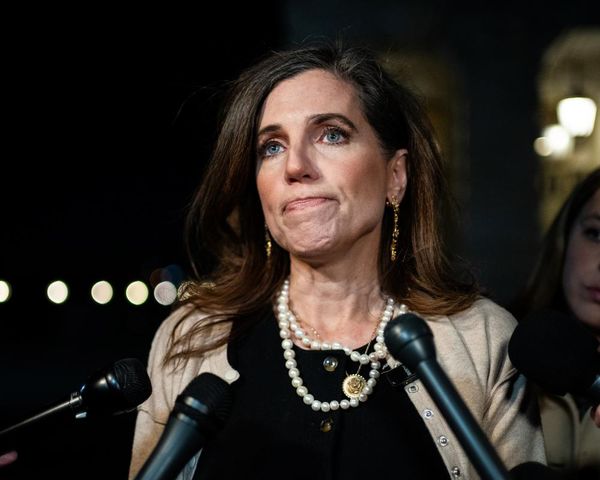
Claire Dove, OBE, is the CEO of the award winning Liverpool social enterprise Blackburne House and the chair of Social Enterprise UK (SEUK).
She recently joined other social enterprise experts at a policy dialogue in Accra, Ghana hosted by the British Council. The event focused on how to build a sustainable social enterprise ecosystem in Ghana, drawing on a new report which finds “no shortage of opportunities” for social enterprise in the country. It also marked the launch of the British Council’s social enterprise programme in the country.
We put some questions to her:
What has been your experience in Ghana?
It was very exciting to get invited to Ghana because my father was Ghanaian and it was my first time back in this beautiful country. I’m thrilled that I have the privilege of visiting one of the stable democracies in Africa, and also see the opportunities and challenges for myself. Meeting people and listening to what they have to say, I feel the immense thirst for knowledge and entrepreneurship.
I met the Minister of Education, Professor Naana Jane Opoku-Agyemang while speaking in Oxford two years ago and it was refreshing to have met her again this week at the Social Enterprise Policy Dialogue. Her enthusiasm about the social enterprise agenda makes her a good ambassador for Ghana.
What advice do you have for young Ghanaians considering social entrepreneurship?
When I was young there was never mention about careers in business or entrepreneurship. It was very much an upper class pursuit and very male dominated. In the social enterprise sector there are more women, young people and people from diverse backgrounds than in the traditional business sector. For young people it is about knowing that you can pursue that great idea with the right support.
My organisation back home worked with over 700 school children. They enjoyed working on entrepreneurial projects – one school started their own business. Opening young people’s minds to wider career possibilities is crucial but they do need support and coaching and I was pleased to hear at the conference how Ghana’s Minister of Trade and Industry, Dr Ekwow Spio-Garbrah, had launched a mentoring programme for young people.
Few Ghanaians know what a social enterprise is. How can we raise awareness and build support for social enterprise?
Social enterprises (SEs) in Ghana need to network together very much like we do in the UK [through SEUK]. The network leaders should lobby on their behalf, demonstrating their strength and the social and economic value they bring to the market.
If SEs in Ghana form a network, they could synergistically tackle their problems. They could have a joint website that lists all social enterprises. In the UK, the Buy Social campaign created a website to direct people to SEs from which they could buy things for social impact.
Ghana can try it. It will draw the government’s attention and the jobs, training and impact on the economy and environment created by SEs will become apparent.
Can a social enterprise survive without donor funding?
A social enterprise is like any other business so it might need start-up, angel donations and equity funding. But more importantly, it ought to make itself a sustainable business that is actually making money. SEs are for-profit organisations, except that the profit is reinvested into society.
There are strategies that can help fund SEs. In the UK, what’s happening now is that a traditional business can buy a social impact bond or shares in a SE and in return, “own” and report on the social impact. You [SEs] get what you want, they get what they want and society benefits.
Note that if people are going to invest in a social enterprise, they would want to see whether the business is or will be successful. That’s why a good business model is essential. You have to be hungry. You have to want to make it work. And you need to have a commodity or service that someone really wants to buy.
What can policy makers do to support social enterprise in Ghana?
In the Queen’s speech five years ago, she said the UK was going to invest in more SEs in the country. It was important for that message to come from such a high level.
The government of Ghana needs to take the lead in this effort. Like most countries, Ghana has systemic social ills that can be addressed by SEs. SEs may not solve all problems, but they are a vital ingredient and a complementary solution source.
Policymakers need to demonstrate to the world that Ghana is a business-friendly country with a successful economy, skilled workers and supportive infrastructure. Liverpool invested in the skills and knowledge economy in the 1980s when the economy was terrible. Looking back, that paid off. Social enterprises can only thrive when the right policy foundations exist.
Finally, Ghana ought to include SEs in trade missions abroad. We need to demonstrate that we recognise social enterprises, and that we are part of a growing movement.
More about Dove:
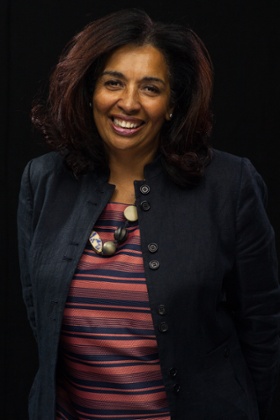
Claire Dove OBE, DL, has been a key player in the social enterprise movement since the early 1980s and has led the Blackburne House Group since its inception, using her entrepreneurial skills to help the organisation grow into an award winning and extremely successful social business.
One of the leading providers of adult and community education in the country, Blackburne House, a Beacon status college continues to expand its training remit for the women of Merseyside and our School for Social Entrepreneurs provide services across the Northwest of England.
Over the past 30 years, the Blackburne House Group has successfully established a number of highly acclaimed, award winning social enterprises, whose products and services are sought throughout the country. The businesses continue to support the educational aims of the organisation and provide tangible examples of how new markets can be used to serve local communities and support business development and growth.
Dove also works on a national, regional and local basis to form policy that supports the rights of individuals to education and training and to promote entrepreneurship and social enterprise opportunities across our many diverse communities. She was one of the three commissioners on the National Worklessness Panel that produced the Houghton Review.
Dove is chair of Social Enterprise UK (SEUK), the UK umbrella body for social enterprise, a member of the Alder Hey Hospital Trust and a board member for the Charity Commission. She has recently chaired the Liverpool Fairness Commission on behalf of Liverpool City Council and is currently serving on the Liverpool Mayoral Development Board and is chair of Society Advisory Board for the British Council.
Dove was awarded an MBE for her work in the mid-90s and has received the OBE in 2013 as well as being given the Queens Lifetime Achievement Award for Enterprise Promotion. She is also the recipient of an Honorary Fellowship of Liverpool John Moores University, a Fellowship of the Royal Society of Arts, was voted nationally as an exemplary leader in Regeneration and is Deputy Lieutenant for Merseyside.
Content on this page is paid for and provided by the British Council, sponsor of the international social enterprise hub